
Revolutionizing Reconstructive Surgery: The Advanced Future of 3D Bioprinted Human Skin
The field of 3D bioprinting has undergone a period of intense innovation and rapid development in recent years, pushing the boundaries of what is medically possible. This transformative technology has already led to remarkable breakthroughs, including the creation of 3D printed human cartilage and even functional ovaries. These exciting discoveries are not just scientific curiosities; they represent significant advancements that are actively paving the way for a future where medicine is more personalized, effective, and accessible. The continuous boom in research and development is steadily transforming the landscape of therapeutic interventions and regenerative medicine.
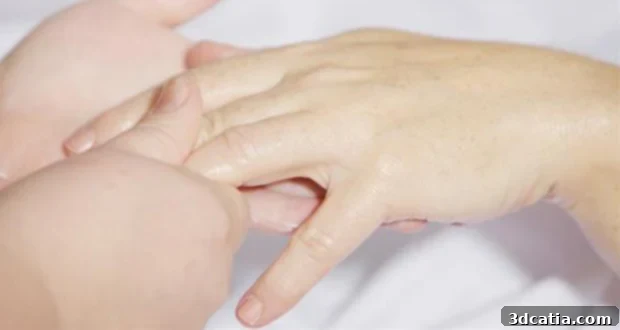
Among these groundbreaking developments, a recent announcement from researchers at the University of Science and Technology Pohang (POSTECH) in South Korea has garnered considerable attention. This team has successfully developed and demonstrated a novel method for 3D printing human skin, a discovery that holds immense potential to revolutionize reconstructive surgery and open new avenues in medical treatments. This advancement could dramatically impact patients suffering from severe burns, trauma, or dermatological conditions, offering hope for more effective and less invasive restorative procedures.
Addressing Critical Needs in Skin Reconstruction
Traditional methods for skin reconstruction, such as skin grafting, often present significant challenges. Patients requiring large areas of skin replacement, particularly those with severe burns or extensive injuries, frequently face issues like donor site limitations, painful recovery, risk of infection, and often less-than-ideal aesthetic and functional outcomes. The scarcity of suitable donor tissue, potential for immune rejection, and the inability to perfectly replicate the complex structure and function of natural skin remain substantial hurdles in current medical practice. The demand for viable, functional skin substitutes that can seamlessly integrate with the body is therefore immense and urgent.
It is against this backdrop that the POSTECH team’s research emerges as a beacon of hope. Their innovative approach promises to overcome many of these limitations, offering a scalable and biologically robust alternative for creating patient-specific skin tissues. This breakthrough signifies a crucial step towards personalized medicine, where custom-engineered skin can be generated to precisely match a patient’s needs, minimizing complications and improving recovery.
The POSTECH Breakthrough: A Hybrid Bioprinting Approach
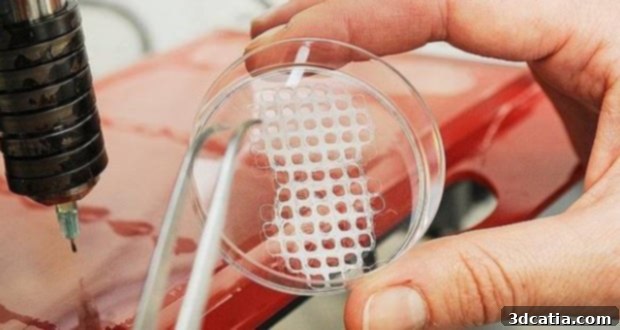
The details of this groundbreaking method were published in the prestigious Biofabrication journal, where the researchers meticulously described their system. They have developed a highly efficient and remarkably inexpensive process for printing functional skin, specifically optimized for reconstructive surgery applications. At the heart of their innovation lies a custom-developed hybrid 3D printer that ingeniously combines two distinct printing methods to create a sophisticated, multi-layered skin construct.
The Hybrid Printing Mechanism
The printer operates by utilizing both extrusion and inkjet modules simultaneously, a dual-action approach that allows for the precise deposition of different materials and cell types. The process begins with the extrusion of a collagen-based material, which forms the foundational scaffold of the skin. This material is carefully formulated to include a polycaprolactone (PCL) membrane and a biodegradable polyester. The PCL membrane provides crucial structural integrity, acting as a supportive framework, while the biodegradable polyester plays a vital role in preventing the collagen from contracting prematurely during the critical tissue maturation phase. This careful composition ensures that the printed skin maintains its intended shape and structure as it develops.
Following the extrusion of the structural base, the inkjet method comes into play. This technique is employed to precisely and evenly distribute keratinocytes, the predominant cells found in the outermost layer of human skin (the epidermis), onto the PCL membrane. By combining these two sophisticated printing methods, the POSTECH researchers have successfully engineered a human skin model that not only mimics the complex architecture of natural skin but also exhibits impressive biological viability and functionality.
This integrated approach addresses many of the limitations of previous bioprinting techniques, which often struggled to achieve the necessary structural stability, cellular integration, and biological fidelity required for practical applications. The POSTECH method is significantly more effective than existing alternatives and holds strong potential to become a widely feasible solution, greatly facilitating future surgical operations by providing ready-to-use, biologically compatible skin grafts.
Unparalleled Efficiency and Cost-Effectiveness
One of the most compelling aspects of this new technique is its unparalleled efficiency and affordability. As explained by the lead author, Professor Dong-Woo Cho, the cost-efficiency of their method is truly revolutionary. “Our new method is around 50 times cheaper than alternative methods, and requires 10 times less base material,” stated Professor Cho. This dramatic reduction in cost and material usage is a critical factor for the widespread adoption of bioprinted skin. Lower production costs can make advanced reconstructive procedures more accessible to a larger patient population, potentially alleviating the economic burden associated with current treatments.

Professor Dong Woo Cho
Beyond the immediate economic benefits, the researchers also anticipate that their innovative method will enable the creation of more advanced skin patterns. This capability will provide unprecedented opportunities to design versatile skin models that are highly functional and tailored for specific applications. Imagine skin models with integrated sensors, drug delivery systems, or even nerve and vascular networks – the possibilities for personalized medicine and advanced research are boundless. “We hope that this new single-step process could provide an attractive and useful platform for engineering fully functional human skin models,” Professor Cho added, highlighting the platform’s potential for broad application across biomedical research and clinical practice.
Impressive Biological Maturation and Characteristics
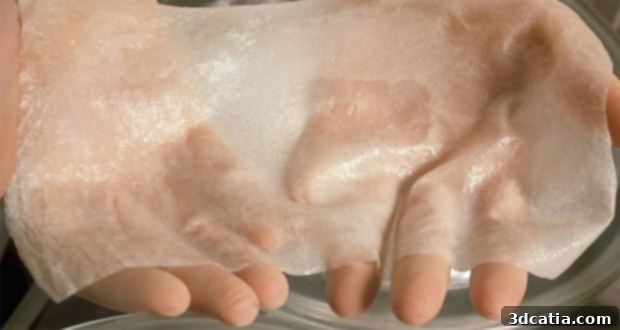
The team has already successfully produced a 3D printed skin model that demonstrates an extraordinary ability to mature without the need for commercial cell culture inserts, which are typically expensive and complicate the process. This self-supporting maturation is attributable to the robust 3D construct created in their single-step bioprinting process. The inherent design of the printed scaffold provides an optimal microenvironment for cell growth and tissue development, allowing the skin model to progress naturally.
The early biological characteristics observed in these models are nothing short of impressive. Within just 14 days, the printed skin exhibited a stabilized and fibroblast-stretched dermis. The dermis, the layer beneath the epidermis, is crucial for skin strength and elasticity, and fibroblasts are key cells responsible for producing collagen and other connective tissues. A stabilized and stretched dermis indicates proper structural integrity and cellular activity. Furthermore, the models developed a distinct stratified epidermis layer, a critical hallmark of functional human skin. Stratification refers to the multi-layered structure of the epidermis, which provides barrier protection, hydration, and defense against external pathogens. The rapid development of these complex biological features underscores the efficacy and promise of the POSTECH bioprinting technique.
Future Horizons: Beyond Reconstructive Surgery
The implications of 3D bioprinted human skin extend far beyond reconstructive surgery. While its potential to transform treatments for burns, severe injuries, and congenital skin defects is immense, this technology also opens doors to several other groundbreaking applications:
- Drug Testing and Cosmetic Research: The ability to produce realistic human skin models offers an ethical and accurate alternative to animal testing for pharmaceuticals and cosmetic products. Researchers can test the efficacy and toxicity of new compounds directly on human-like skin, leading to safer and more reliable products.
- Disease Modeling: Bioprinted skin can serve as an invaluable tool for studying various dermatological conditions, such as psoriasis, eczema, melanoma, and rare genetic disorders. By creating disease-specific skin models, scientists can gain deeper insights into disease mechanisms, test novel therapies, and accelerate the development of cures.
- Personalized Medicine: In the future, it might be possible to take a patient’s own cells, bioprint them into skin tissue, and graft it back onto their body. This approach would significantly reduce the risk of immune rejection and ensure a perfect genetic match, leading to superior clinical outcomes.
- Organ-on-a-Chip Technology: Integrated bioprinted skin models could become components of more complex ‘organ-on-a-chip’ systems, simulating multi-organ interactions for comprehensive drug screening and toxicity studies.
While challenges remain, such as achieving full vascularization (blood vessel formation) and innervation (nerve integration) within thicker skin constructs, the progress made by the POSTECH team is a monumental leap forward. Their method addresses fundamental issues of cost, efficiency, and biological fidelity, bringing the vision of widely available bioprinted human skin closer to reality. The future of medicine is undoubtedly intertwined with the advancements in 3D bioprinting, and this research marks a significant milestone on that exciting journey.
Is 3D printed human skin indeed the future of reconstructive surgery and beyond? We encourage you to share your thoughts and insights in a comment below, or join the conversation on our Facebook and Twitter pages. Don’t miss out on the latest advancements in this dynamic field; remember to sign up for our free weekly newsletter to receive all the breaking news in 3D printing directly in your inbox!