
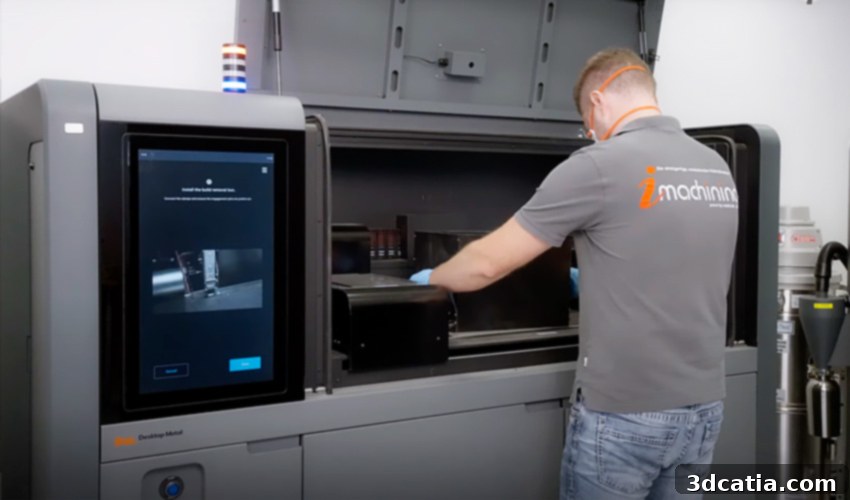
Integrating Additive Manufacturing into CNC Machine Shops: SolidCAM & Desktop Metal Pave the Way for Enhanced Productivity and Innovation
In the dynamic landscape of the manufacturing industry, the synergy between additive and subtractive manufacturing technologies is becoming an indispensable resource for driving innovation and efficiency. While these two methodologies might seem distinct, their complementary application can unlock unprecedented potential for part production and product development. However, despite the clear advantages, many sectors still face significant hurdles in fully integrating advanced techniques like 3D printing into their established production workflows. Common barriers include prohibitive initial costs, a prevailing lack of specialized knowledge, and a scarcity of qualified professionals capable of operating and optimizing these complex systems. Recognizing these challenges, SolidCAM, a globally recognized leader in developing sophisticated CAM (Computer-Aided Manufacturing) solutions, has taken a proactive stance to demystify and simplify the adoption of additive manufacturing. This initiative holds particular significance for traditional CNC machine shops, which are typically experts in subtractive machining methods but often overlook or underestimate the transformative benefits that modern additive systems can bring. SolidCAM’s strategic partnership with Desktop Metal, a pioneer in metal 3D printing, has been instrumental in making additive manufacturing significantly more accessible and practical for machine shop environments.
A CNC machine shop is fundamentally defined by its expertise in employing highly complex subtractive manufacturing processes. These facilities typically leverage advanced CNC machine tools and precision cutting technologies to produce intricate parts from various materials, including metals, plastics, and composites. For such operations, the integration of additive manufacturing represents a compelling opportunity to expand capabilities beyond traditional methods. This includes not only rapid prototyping but also the efficient production of functional end-use parts. As 3D printing continues its rapid evolution, it is increasingly proving its value in low and medium volume production scenarios, positioning itself as a crucial tool for companies striving to maintain competitiveness in today’s fast-paced market. This is precisely where SolidCAM’s expertise becomes invaluable. Through its collaboration with Desktop Metal and the latter’s innovative Metal Binder Jetting technology, the path to additive adoption has been dramatically smoothed. Desktop Metal’s acclaimed Shop System stands out as the first comprehensive additive manufacturing platform specifically engineered to bring robust metal 3D printing capabilities directly to the machine shop floor. Understanding the intricacies of this process and the myriad benefits it offers to manufacturing companies is key to unlocking its full potential.
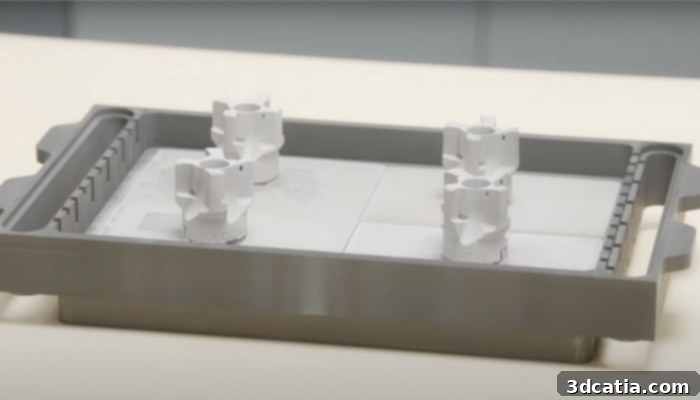
The seamless integration of additive manufacturing empowers companies to achieve greater competitiveness and agility.
Addressing the Unique Needs of CNC Machine Shops with Additive Manufacturing
One of the primary challenges that CNC machine shops frequently encounter when contemplating the adoption of additive manufacturing is a fundamental disconnect: many additive technology suppliers fail to fully grasp the stringent demands and specific requirements of a typical machining environment. Machine shops operate with a relentless focus on precision, speed, and cost-effectiveness, needing solutions that can deliver high-quality parts rapidly and within acceptable budget constraints. Given its extensive daily engagement with machine shops, providing them with cutting-edge CAM software for optimal CNC machine programming, SolidCAM possesses an unparalleled understanding of these unique needs. This deep insight allows SolidCAM to effectively guide its customers towards additive processes that are not only logical but also genuinely cost-effective and productive. Both SolidCAM and Desktop Metal unequivocally recognize that successful additive adoption extends far beyond merely acquiring a metal 3D printer and placing it on the shop floor. It necessitates a comprehensive and nuanced understanding of how to establish an optimal in-house additive manufacturing infrastructure that supports efficient production and, crucially, how to ensure its harmonious synergy with existing subtractive technologies. This holistic perspective is vital for smooth integration and maximizing returns.
To successfully implement this integrated approach, a multitude of factors must be meticulously considered and addressed. Key among these are the principles of designing for additive manufacturing (DfAM) – an approach that optimizes part geometry and structure specifically for 3D printing capabilities – and the critical process of selecting the most appropriate applications for additive production. It is equally essential for machine shop personnel to gain proficiency in managing the entire metal additive manufacturing workflow. This encompasses everything from initial CAD file preparation and optimization for printing, through the actual 3D printing and subsequent sintering processes, and culminating in the necessary CNC machining for post-processing to achieve final dimensional accuracy and surface finish. Industry experts consistently emphasize the paramount importance of optimizing this entire end-to-end process to ensure that the highest production and quality standards are consistently met. SolidCAM’s profound manufacturing knowledge, combined with the advanced capabilities of Desktop Metal’s state-of-the-art 3D printing systems, plays a crucial role in simplifying what can often be a complex and daunting process. This collaborative effort aims to significantly increase productivity and enhance part yield, all while minimizing the need for extensive operator involvement, thereby streamlining operations and reducing operational overhead.
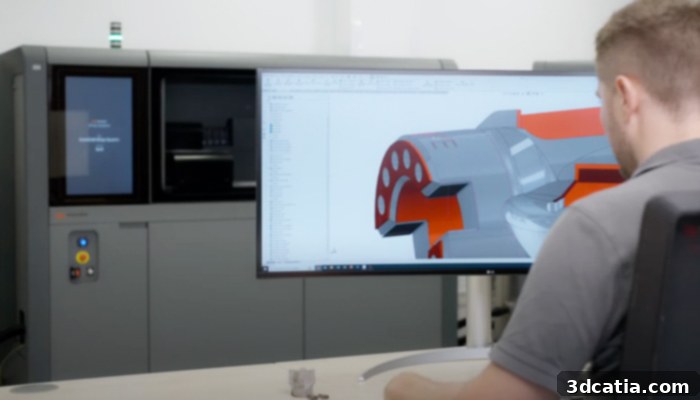
SolidCAM provides comprehensive support for companies throughout their technology adoption journey, from initial design to final production.
Achieving Seamless End-to-End Technology Integration
The journey to successful 3D printing adoption typically commences with fundamental 3D design steps. Here, SolidCAM’s integrated approach to CAD/CAM software offers a distinct and powerful advantage. Its robust CAM functionality is designed to operate seamlessly within leading CAD modeling software environments such as SolidWorks and Autodesk Inventor. Both of these platforms are equipped with extensive design capabilities that are well-suited for additive manufacturing, allowing engineers to create optimized geometries from the outset. This integration empowers users to leverage the most advanced design tools and then utilize the exact same 3D model for critical CNC programming functions, including sophisticated operations like iMachining and Advanced Mill-Turn. Furthermore, SolidCAM is actively developing an innovative new module specifically tailored for hybrid machines, which are capable of performing both 3D printing and traditional machining operations on a single platform. This forward-thinking development perfectly aligns with Desktop Metal’s holistic philosophy towards additive manufacturing, which spans the entire production lifecycle, from the creation of proprietary metal powders to the final sintering of the printed parts, ensuring a cohesive and optimized workflow.
In both additive and subtractive manufacturing methodologies, the technical expertise and procedural know-how are as critically important as the underlying technology itself. To comprehensively address both these aspects and provide further invaluable support to machine shops navigating this integration, SolidCAM has established specialized Centers of Excellence. These centers are strategically designed to integrate the best practices of 3D printing with advanced CNC machining techniques. The overarching goal of these facilities is twofold: firstly, to serve as practical demonstration sites showcasing precisely how to implement additive manufacturing effectively, and secondly, to offer production services for companies that may not yet be ready or equipped to commit fully to an in-house additive solution. Dr. Emil Somekh, the visionary founder and CEO of SolidCAM, articulates the profound impact of this integration, stating, “By intelligently combining these two powerful technologies, companies are empowered to tackle complex engineering challenges in entirely new and innovative ways. It is important to recognize that while metal 3D printing offers incredible geometric freedom, printed parts will almost always require subsequent post-processing with CNC machining to achieve the exact finish specifications and tight tolerances demanded by customers. SolidCAM is uniquely positioned as the undisputed leader in CAM solutions, constantly adapting and evolving its software technology to effectively post-process the rapidly expanding market of additively manufactured parts.” This forward-looking perspective underscores SolidCAM’s commitment to remaining at the forefront of manufacturing innovation.
It is unequivocally clear that the profound manufacturing expertise cultivated by SolidCAM, seamlessly combined with Desktop Metal’s groundbreaking 3D printing solutions, is proving instrumental in facilitating the widespread adoption of additive manufacturing across numerous industries. This strategic partnership is not merely about providing tools; it’s about delivering comprehensive solutions that empower businesses to embrace the future of production. Reinforcing this strategic position and looking towards the future, Dr. Somekh concludes, “SolidCAM views additive manufacturing not as a replacement, but as a vital complement to the operations of our 24,000 CNC subtractive manufacturing customers worldwide. The ability to efficiently print highly complex metal parts, with remarkable speed and consistent repeatability, is no longer exclusive to large corporations; it is now well within the reach of even the smallest job shops and specialized workshops. We have made a resolute commitment to becoming a leading resource in this transformative space for all our SolidCAM CNC customers, ensuring they have the tools and knowledge to thrive in the evolving manufacturing landscape.” This commitment highlights the dedication of both companies to democratizing advanced manufacturing technologies. For those eager to delve deeper into these innovative solutions and explore how they can revolutionize their production processes, more comprehensive information can be found on the SolidCAM website HERE.
What are your thoughts on the transformative integration of additive manufacturing into traditional CNC machine shops? We invite you to share your insights and opinions in a comment below, or connect with us on our Linkedin, Facebook, and Twitter pages! Don’t miss out on the latest advancements and industry news; sign up for our free weekly Newsletter here, delivering the freshest 3D printing updates directly to your inbox! Additionally, you can discover all our engaging videos and educational content on our YouTube channel.
*All Photo Credits: SolidCAM