
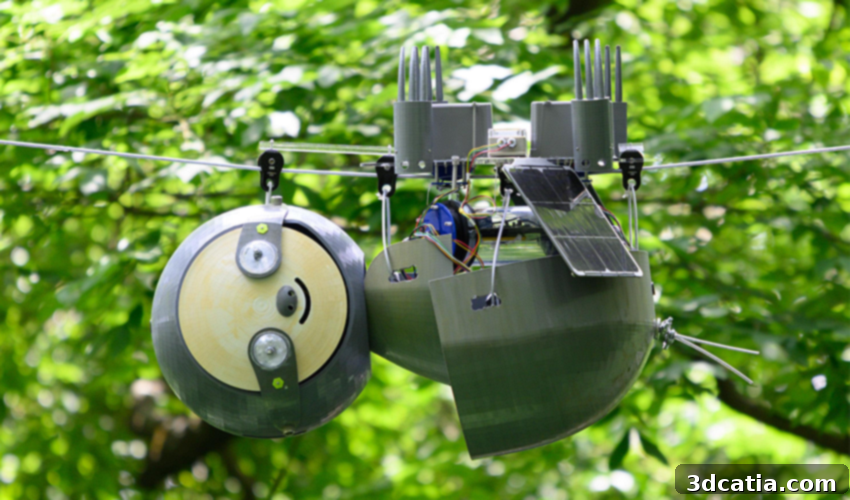
SlothBot: The 3D-Printed Robot Revolutionizing Environmental Monitoring and Conservation
In an era where technological innovation increasingly intersects with urgent environmental needs, the development of specialized robots is paving the way for groundbreaking solutions. Among these, the 3D-printed robot, SlothBot, stands out as a remarkable achievement from a team at Georgia Tech. This inventive creation, a collaborative effort by students Gennaro Notomista and Yousef Emam under the expert supervision of Professor Magnus Egerstedt, leverages additive manufacturing to address critical ecological challenges. SlothBot’s unique design and slow, deliberate approach offer a novel perspective on long-term environmental observation. This article delves into the fascinating characteristics of SlothBot, exploring its development, the crucial role of 3D printing in its construction, and the expansive range of applications envisioned for this pioneering robotic system in safeguarding our planet.
The genesis of SlothBot can be traced back to 2019, drawing direct inspiration from its namesake, the sloth. Professor Egerstedt’s travels in Costa Rica, where he observed sloths gracefully navigating forest canopies on ropes, sparked the initial concept. This natural inspiration transcends mere aesthetics; SlothBot’s design intricately mimics the sloth’s characteristic slow locomotion, a deliberate choice that underpins its operational efficiency and effectiveness. This deliberate slowness is not a limitation but rather a core advantage, enabling the robot to conserve energy and remain unobtrusive in sensitive natural environments. The primary objective behind SlothBot’s development is to provide continuous, long-term data collection, specifically measuring temperature fluctuations and carbon dioxide levels. This vital environmental data is paramount for understanding subtle ecological shifts and, crucially, for developing strategies to protect endangered plants and animals facing existential threats from climate change and habitat degradation.
During its rigorous development phase, it became unequivocally clear that SlothBot would require unparalleled resilience to withstand prolonged exposure to varying weather conditions. This necessity led the researchers to a powerful and versatile solution: 3D printing. Specifically, an FFF (Fused Filament Fabrication) 3D printer was utilized to create a robust and protective outer shell for the robot’s delicate internal electronics. FFF 3D printing offered several compelling advantages for this project. Firstly, the inherent freedom of design provided by additive manufacturing allowed for the creation of an organically shaped, aesthetically pleasing cover that helps SlothBot blend seamlessly into its natural surroundings. This is a critical consideration, especially in areas frequented by visitors, where the robot needs to be perceived as an integrated part of the environment rather than an intrusive mechanical device. The ability to craft complex, biomimetic forms ensures that SlothBot is not viewed as a nuisance, thereby enhancing public acceptance and minimizing disturbance to both wildlife and human observers.
Beyond mere aesthetics and protection, FFF 3D printing offered an even more significant advantage: substantial weight reduction. Creating lightweight components is crucial for SlothBot, as it is powered entirely by solar cells. Every gram saved contributes directly to greater energy efficiency, extending the robot’s operational lifespan and minimizing its reliance on external power sources. The ability to design intricate internal geometries, such as lattice structures, which are impossible to achieve with traditional manufacturing methods, allows for the creation of parts that are both incredibly strong and remarkably light. This optimization is fundamental to SlothBot’s long-term sustainability and autonomous operation in remote or inaccessible locations. The selection of materials for 3D printing was also carefully considered, with a focus on durability, UV resistance, and weatherproofing to ensure the robot’s longevity in harsh outdoor conditions. This combination of design flexibility, weight efficiency, and material suitability underscores the indispensable role of 3D printing in bringing SlothBot from concept to a functional, field-ready environmental monitoring tool.
Steve W. Chaddick of the Georgia Tech School eloquently articulated the profound implications of SlothBot’s distinctive developmental approach: “This is not the way robots are normally developed today, but if SlothBot is slow and energy efficient, it can linger in the environment to observe what we can only see if we are present for months or even years without interruption.” This statement highlights a fundamental shift in robotic design philosophy. Unlike traditional robots designed for speed and rapid task completion, SlothBot’s strength lies in its patience and persistence. Its ability to maintain a continuous, low-energy presence in a specific ecological zone allows for the collection of unprecedented datasets over extended periods. This persistent surveillance capability is critical for detecting subtle, long-term environmental trends, animal behaviors, or plant responses that would be missed by intermittent human observations or more active, energy-intensive robotic systems. SlothBot represents a new paradigm in environmental monitoring, emphasizing endurance and unobtrusiveness over agility, thereby unlocking deeper insights into complex natural systems.
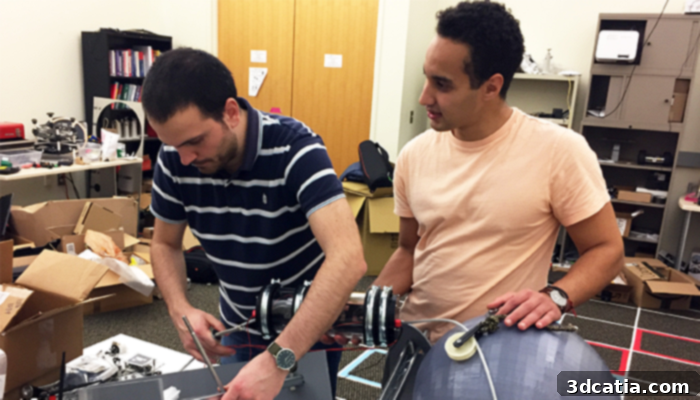
Yousef Emam and Gennaro Notomista assemble the SlothBot in the office of professor Egerstedt for the first time.
Applications of the SlothBot: A New Frontier in Environmental Monitoring
The innovative capabilities of SlothBot are already being put to practical use in the lush environment of a botanical garden in Atlanta. Here, the robot diligently traverses along a taut rope system, spanning an impressive distance of almost 30 meters. This initial deployment serves as a crucial testing ground, demonstrating SlothBot’s ability to operate autonomously and collect valuable environmental data in a controlled yet complex ecosystem. The data gathered includes vital metrics such as ambient temperature and carbon dioxide concentrations, offering real-time insights into the microclimates affecting various plant species within the garden. The system’s unobtrusive movement ensures minimal disturbance to both the botanical specimens and the visitors, truly embodying its sloth-inspired design. The success of this initial phase paves the way for more ambitious applications.
Looking ahead, the vision for SlothBot extends far beyond botanical gardens. Researchers anticipate deploying SlothBots to monitor expansive forest areas, covering up to 30 hectares or more. Achieving this scale will simply require the strategic installation of additional rope pathways, creating a network that allows the robots to access and monitor vast swathes of land. A key aspect of SlothBot’s energy-efficient operational strategy is its “stay put” philosophy. Rather than constantly moving, the robot is designed to remain stationary for extended periods, conserving energy while continuously observing its immediate surroundings. It only initiates movement when specific environmental measurements of temperature and carbon dioxide are scheduled or triggered by predefined conditions. This intelligent locomotion minimizes energy consumption, maximizing its operational time and enhancing its effectiveness as a long-term environmental sentinel. This unique approach distinguishes SlothBot from more active robotic platforms, proving that sometimes, slowness and patience yield superior results in complex monitoring tasks.
The environmental data meticulously collected by SlothBot is instrumental in fostering a deeper understanding of our ecosystems and bolstering conservation efforts. By providing continuous, localized readings of temperature and CO2, scientists can track subtle changes in microclimates, assess the health of specific plant communities, and identify areas under environmental stress. This granular data is invaluable for protecting endangered plants and animals, allowing conservationists to implement targeted interventions and adaptive management strategies. Mr. Coffey, the insightful owner of the botanical garden where SlothBot is currently deployed, underscores its profound potential: “With the rapid loss of biodiversity and the potential extinction of more than a quarter of the world’s plants, SlothBot offers a great opportunity to work towards the conservation of the rare species.” His statement powerfully articulates the urgent need for innovative solutions like SlothBot to combat the ongoing biodiversity crisis and safeguard the planet’s invaluable natural heritage. This robotic ally provides a unique lens through which to observe, understand, and ultimately protect our vulnerable flora and fauna.
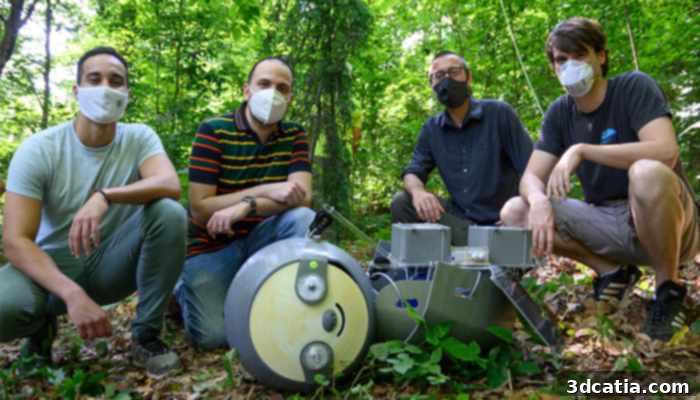
In the long term, the applications for SlothBot are projected to expand significantly, with plans to deploy a network of these robotic observers across various environments. Beyond forest monitoring, there’s immense potential for SlothBots to oversee vast agricultural lands. In this context, they could provide invaluable observations that would aid in the early detection and prevention of pest infestations, reducing crop losses and minimizing the need for chemical pesticides. Imagine a future where SlothBots tirelessly patrol fields, identifying early signs of disease or pest presence, allowing farmers to take precise, localized action. This proactive approach not only enhances agricultural sustainability but also contributes to more efficient resource management and healthier food production systems. Furthermore, the data collected could inform strategies for optimizing irrigation, nutrient delivery, and overall crop health, ushering in an era of intelligent, data-driven precision agriculture. The project holds the promise of transforming how we monitor and manage our natural and cultivated landscapes, offering a sustainable and technologically advanced solution to some of the most pressing environmental and agricultural challenges of our time. Additional detailed information about this pioneering project and its ongoing developments can be explored through the official Georgia Tech research channels.
What are your thoughts on this truly innovative and environmentally focused robot? Do you believe its slow, persistent monitoring approach represents the future of ecological conservation? We encourage you to share your insights and comments below, or engage with us on our vibrant Facebook and Twitter pages! Don’t miss out on the latest advancements in additive manufacturing; remember to sign up for our free weekly Newsletter. Receive all the groundbreaking news on progress, cutting-edge research, and inspiring entrepreneurs in the dynamic world of 3D printing, delivered directly to your inbox every week!