
NASA’s Refabricator: Pioneering Sustainable 3D Printing and Recycling for Space Exploration
The cosmos, vast and unforgiving, presents humanity with unprecedented challenges as we venture beyond Earth’s protective embrace. Among these, the logistical hurdles of resupply and waste management stand out. Enter the Refabricator, NASA’s innovative recycling system designed to tackle these very issues, slated for deployment to the International Space Station (ISS). Developed by Tethers Unlimited Inc. (TUI), this groundbreaking technology promises to transform plastic waste and other discarded objects into usable, printable materials directly on board the space station, ushering in a new era of sustainable in-space manufacturing.
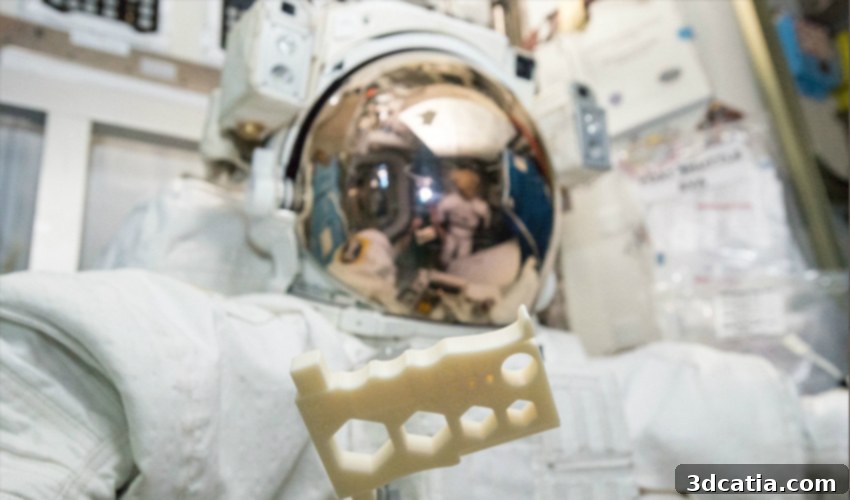
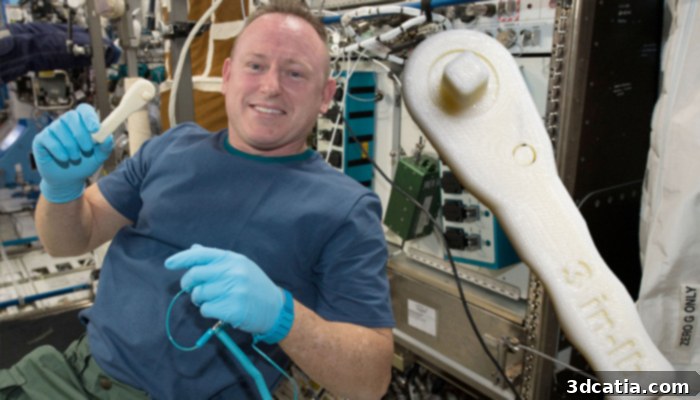
At the core of modern space exploration and habitation efforts lies the ever-evolving field of 3D printing technologies, also known as additive manufacturing. Its potential applications span the entire lifecycle of a space mission, from the initial design and creation of satellite components on Earth to the on-demand production of critical parts during a mission. Companies like Made in Space have been at the forefront of this revolution, partnering with NASA to develop the first 3D printer capable of operating effectively in zero-gravity conditions. This innovation has already proven invaluable, enabling astronauts to manufacture spare parts, essential medical equipment, and various other miscellaneous items, thereby reducing reliance on costly and time-consuming resupply missions from Earth. Looking further ahead, additive manufacturing holds the promise of accelerating the development of dwellings on the Moon or on Mars, laying the foundation for future extraterrestrial outposts.
The genesis of the Refabricator project dates back to 2015 when NASA formally recognized the immense potential of TUI’s vision. A significant research and innovation agreement, valued at $750,000, was signed between the two entities. This partnership marked the official commencement of the Refabricator’s development, signaling a strategic investment in creating sustainable systems for long-duration space missions. The agreement underscored NASA’s commitment to fostering technological advancements that could reduce mission costs, enhance operational autonomy, and minimize the environmental footprint of human spaceflight.
The necessity of such a system is eloquently articulated by Niki Werkheiser, In-Space Manufacturing Manager at NASA’s Marshall Space Flight Center. She explains, “It simply won’t be feasible to send along replacement parts or tools for everything on the spacecraft, and resupplying from Earth is cost and time prohibitive. The Refabricator will be key in demonstrating a sustainable logistics model to fabricate, recycle, and reuse parts and waste materials.” This statement highlights a core challenge of space travel: every kilogram launched from Earth costs thousands of dollars, making every item a precious commodity. For missions of extended duration or those venturing deeper into space, where resupply windows are infrequent or impossible, the ability to produce what’s needed, when it’s needed, from available resources, becomes not just convenient but critical for mission success and astronaut safety. The Refabricator directly addresses this by creating a closed-loop system, mitigating the reliance on Earth-based supply chains.
The Refabricator system functions as a ‘plastics-to-parts’ recycler and 3D printer. It takes various forms of plastic waste – such as packaging materials, old tools, or even failed prints – and processes them into high-quality filament suitable for 3D printing. This involves shredding the plastic into small granules, heating and extruding it into a uniform filament, and then feeding this new material into a connected 3D printer. The initial deployment of this revolutionary space recycling system was scheduled for April 2018. Upon its arrival on the ISS, the Refabricator was integrated with a 3D printer created by Made in Space, forming a cohesive manufacturing and recycling hub. This integrated system allows astronauts to not only print essential items like medical tools and spare components but also to regenerate their printing feedstock from materials that would otherwise be considered waste, thus closing the loop on resource utilization in orbit.
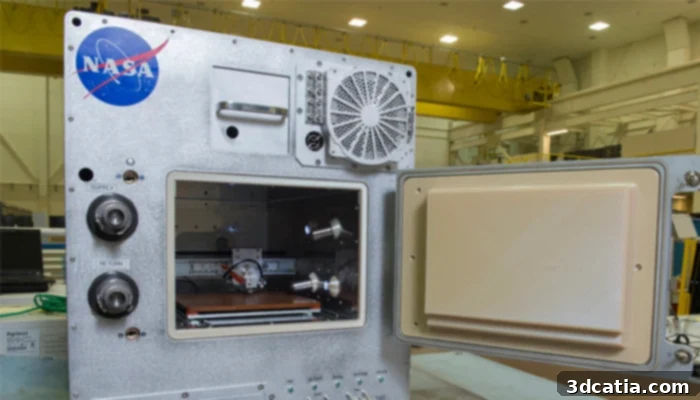
The Refabricator
Rob Hoyt, CEO of TUI, further elaborated on the broader implications of the Refabricator, stating, “The Refabricator demonstration is a key advance toward our vision of implementing a truly sustainable, in-space manufacturing ecosystem. Astronauts could use this technology to manufacture and recycle food-safe utensils and turn what is now inconvenient waste into feedstock to help build the next generation of space systems. We believe re-using the waste could reduce the cost and risks for NASA and private space exploration missions.” This vision extends beyond simple tool creation. Imagine astronauts having the ability to recycle and print new, hygienic utensils on demand, reducing the need to store and dispose of numerous single-use items. More significantly, the transformation of waste into valuable feedstock has the potential to dramatically reduce the up-mass requirements for future missions, leading to substantial cost savings and a significant reduction in mission risks by fostering greater self-sufficiency and resource independence for human crews far from Earth.
While the current iteration of the Refabricator is focused on the reuse of plastic waste, the long-term potential for this technology is truly expansive. Future advancements could see similar systems capable of handling metal 3D printing, enabling the fabrication of more complex and structurally critical components in space. Furthermore, the concept of a full-fledged “fablab” – a fabrication laboratory – on the International Space Station, as announced by NASA with plans for implementation around 2020, promises to further accelerate the creation of parts in space. Such a facility would provide astronauts with a dedicated workspace equipped with advanced manufacturing tools, including various 3D printers and potentially even robotics, to support their missions more effectively. This would not only facilitate the rapid production of necessary items but also allow for on-the-spot experimentation, repair, and innovation, significantly enhancing the autonomy and productivity of astronauts in orbit.
The impact of technologies like the Refabricator extends far beyond the confines of the ISS. As humanity looks towards establishing permanent bases on the Moon and Mars, the ability to utilize local resources (In-Situ Resource Utilization, or ISRU) and efficiently recycle waste will be paramount. Refabricator represents a crucial step towards this future, demonstrating the feasibility of closed-loop systems that can reduce the need for constant resupply from Earth. This self-sustaining approach will be vital for long-duration deep-space missions, where resupply is simply not an option. By transforming consumables and waste into useful materials, the Refabricator helps pave the way for true off-world manufacturing, enabling future generations of explorers to build, maintain, and expand their presence across the solar system with unprecedented independence.
The future of 3D printing in space, exemplified by initiatives like the Refabricator and the proposed ISS fablab, is brimming with possibilities. It promises not just convenience but a fundamental shift in how we approach space travel and colonization – moving from a consumer model to a producer model. This transition is essential for making deep space exploration truly sustainable and for building a lasting human presence beyond our home planet. What do you think the future holds for 3D printing in space? Let us know your thoughts in a comment below or connect with us on our Facebook and Twitter pages! Don’t forget to sign up for our free weekly Newsletter, with all the latest news in 3D printing delivered straight to your inbox!