
Empowering Rural Communities: How 3D Printed Violins Are Revolutionizing Music Education
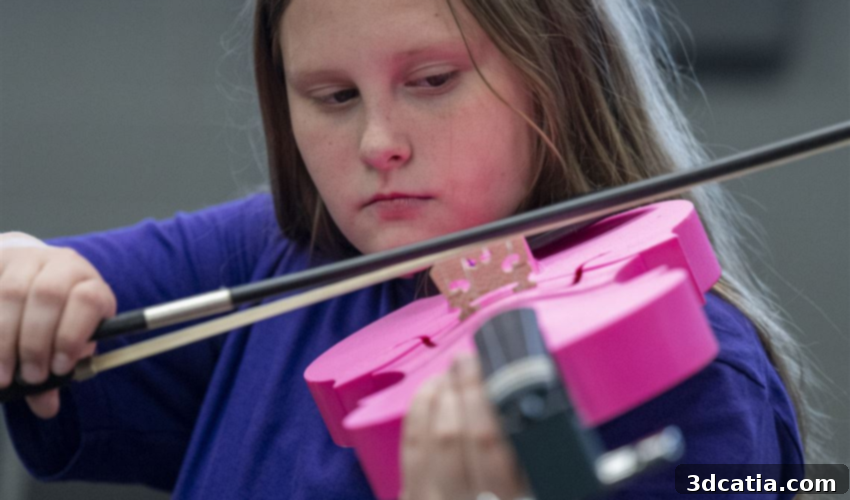
In a remarkable demonstration of educational innovation, a rural school district nestled in Pennsylvania has unveiled a groundbreaking project that is fundamentally reshaping how children access music education. The California Area School District, located in Coal Center, is utilizing the power of 3D printing technology to provide affordable, 3D printed violins to students who would otherwise face significant barriers to participating in music programs. This initiative is not merely about providing instruments; it’s about opening doors to artistic expression, fostering community, and showcasing the immense potential of additive manufacturing in unexpected fields.
Traditionally, the path to musical instruction often begins with a substantial financial commitment. For many families, particularly those in underserved communities, the cost of renting or purchasing a musical instrument can be an insurmountable hurdle. Dr. Laura Jacob, the dedicated superintendent of the California Area School District, keenly recognized this pervasive challenge. She observed firsthand how the annual rental fees for instruments, often soaring into the hundreds of dollars, created an immediate and significant obstacle for aspiring young musicians. Given that over 70% of the students within her district hail from low-income households, Dr. Jacob felt a profound responsibility to find a more equitable, sustainable, and accessible solution that would allow every child the opportunity to explore the world of music.
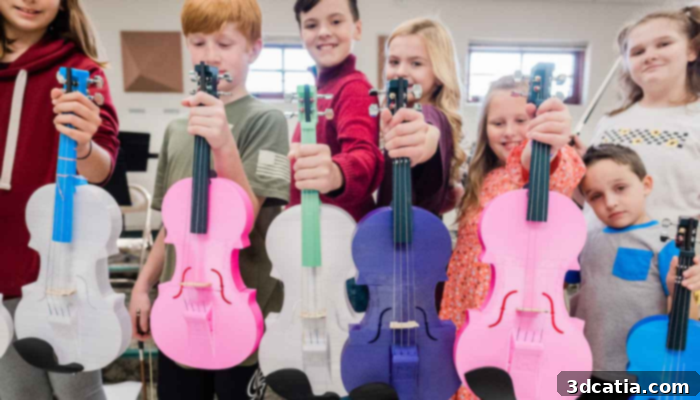
The inspiration for this transformative project struck Dr. Jacob after watching a YouTube video featuring musicians performing on 3D printed instruments. This moment sparked an idea that would soon grow into a district-wide movement. She began to delve into the possibilities of digital violin models, exploring various designs available on open-source file-sharing platforms for 3D printing. What started as a modest experiment with just two 3D printers housed in her office quickly blossomed into a vibrant workshop, now equipped with more than thirty machines dedicated to the cause. This expansion underscores the initial success and the growing commitment to the project.
The journey from digital model to functional instrument was, predictably, one of continuous trial and error. Creating a musical instrument that not only prints successfully but also produces a strong, resonant, and effective sound requires meticulous attention to detail and a deep understanding of both acoustic principles and additive manufacturing processes. Dr. Jacob and her team experimented with various materials, printer settings, and design modifications. They tweaked dimensions, wall thicknesses, infill patterns, and even experimented with different filament types to achieve the desired acoustic properties and structural integrity. Each iteration brought them closer to perfection, refining the design to ensure both playability and durability. This iterative process is a testament to the scientific and engineering principles embedded within the project, making it a powerful example of STEAM (Science, Technology, Engineering, Arts, Mathematics) education in action.
The tangible results of this initiative have been nothing short of transformative for the California Area School District and its students. The financial efficiency is staggering: each 3D printed violin costs approximately $50 in raw materials, a stark contrast to the hundreds of dollars typically required to rent or purchase a traditional instrument. In an impressive feat, Dr. Jacob and her dedicated fleet of printers have manufactured more than 200 violins within a span of just under five years, all of which have been provided to students completely free of charge. This massive reduction in cost has eliminated a major barrier, making music accessible to every child, regardless of their family’s economic situation.
Beyond the instruments themselves, Dr. Jacob has also established a weekly 3D violin club. This club serves a dual purpose: it not only teaches students how to play the violin but also introduces them to the fascinating world of 3D printing technologies. Here, students gain hands-on experience with the machines, learn about design principles, material science, and the practical applications of additive manufacturing. This unique blend of arts and technology fosters a holistic learning experience, preparing students with valuable skills for the future while nurturing their creative talents. It’s an environment where technical knowledge and artistic expression converge, demonstrating how modern technology can enrich traditional disciplines.
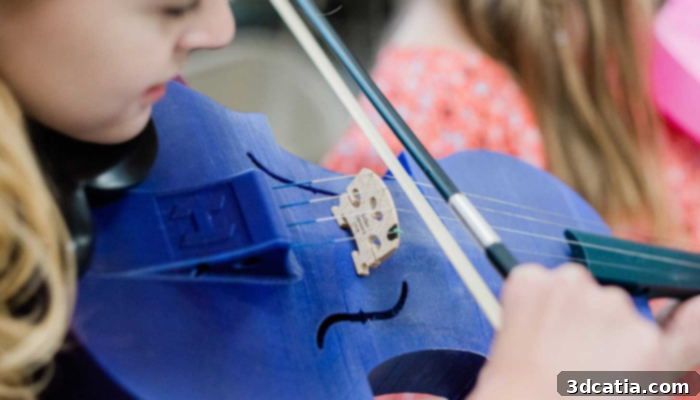
For many of the students involved, this program transcends the simple act of receiving a cheaper instrument. It’s about empowerment, community, and personal growth. Leyla Knox, a student participating in the district’s program, eloquently captured this sentiment, stating, “It makes me feel powerful because it’s just a big group and we can all do it at the same time.” This quote highlights the profound impact of collective participation and the sense of belonging that such programs can cultivate. Learning music together builds camaraderie, teaches collaboration, and provides a platform for shared achievement. These experiences contribute significantly to students’ confidence, self-esteem, and motivation to pursue their interests, particularly in the arts. Dr. Jacob herself emphasized that the true value of the project extends far beyond mere cost savings. For her, the ultimate goal is to ignite a lasting passion for music within her students. She affirms, “If that sticks with them, then to me it’s worth it.” This philosophy underscores the belief that fostering intrinsic motivation and lifelong engagement is the most valuable outcome of any educational endeavor.
This innovative project in the California Area School District stands as a powerful testament to a growing trend in modern education. It showcases how 3D printing and additive manufacturing are evolving beyond their traditional roles as tools solely for industrial prototyping or scientific research labs. Instead, they are increasingly recognized as powerful facilitators for broadening access, fostering creativity, and driving innovation in disciplines as diverse and unexpected as the arts. The ability to rapidly design, produce, and iterate on complex objects at an accessible cost is democratizing creative and educational opportunities. For this forward-thinking school district in Pennsylvania, it has translated into transforming ordinary printers into extraordinary instruments of opportunity, shaping the future generations of musicians, engineers, and innovators. This initiative serves as a blueprint for other districts worldwide, demonstrating how strategic integration of technology can dismantle barriers and unlock the full potential of every student.
We’d love to hear your thoughts on this inspiring program! How do you envision the future intersection of music and 3D printing impacting education and creative industries? Share your insights in a comment below, or connect with us on our LinkedIn or Facebook pages. Don’t forget to sign up for our free weekly Newsletter to receive the latest 3D printing news directly in your inbox. You can also explore all our engaging videos on our YouTube channel for more insights into the world of additive manufacturing!
*All Photo Credit: California Area School District