
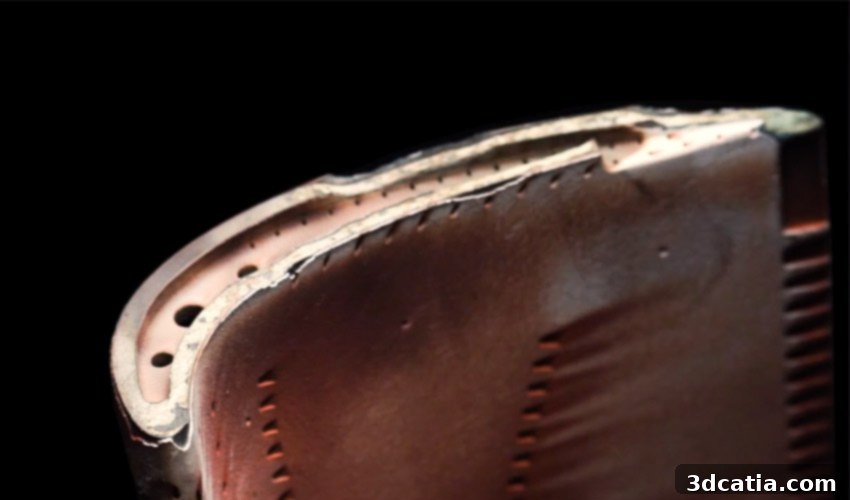
Siemens Energy Pioneers Hybrid Additive Manufacturing for Advanced Gas Turbine Blade Repair
Siemens Energy, a distinguished global leader in the energy sector and a key division of the prominent German Siemens group, is at the forefront of designing, manufacturing, and servicing thermal power plants. With an unwavering commitment to innovation and efficiency, the company continuously seeks advanced solutions to enhance its offerings. A cornerstone of this strategy is its growing reliance on additive manufacturing (AM), also known as 3D printing, to develop groundbreaking applications across various energy systems. Recently, Siemens Energy has unveiled a pioneering digital repair line specifically engineered to significantly improve the performance, durability, and lifespan of critical components like gas turbine blades. This innovative approach leverages a novel hybrid laser powder bed fusion (L-PBF) process, allowing Siemens Energy to proactively address and prevent premature component failure by precisely integrating advanced cooling structures directly into the most critical, high-stress areas of the blades. This strategic implementation of additive technology marks a pivotal advancement in maintaining and optimizing energy infrastructure.
Gas turbines, vital power-generating workhorses in countless industrial and utility applications, operate under some of the most extreme conditions imaginable. Their fundamental function is to efficiently convert the kinetic energy of rapidly moving fluids, typically hot combustion gases, into mechanical energy. This is achieved as these high-velocity gases impinge upon and force numerous precisely engineered blades, affixed to a central rotor, to spin at exceptionally high speeds. While incredibly efficient, this relentless operation places immense strain on the turbine blades. They are constantly subjected to a punishing combination of factors, including extremely high temperatures, corrosive environments, and significant mechanical stress from the sheer speed and force of gas displacement. These harsh operational parameters inevitably lead to material fatigue and degradation over time. A common and particularly problematic issue is the weakening and eventual material loss at the blade tips, often manifesting as “burn-off.” Siemens Energy experts articulate the severity of this issue: “This process leads to a vicious circle: with greater gap formation, the temperature of the blade material increases due to the overflowing hot gas, which in turn leads to even faster material loss and further increases the gap between blade tip and ring segment.” This escalating degradation compromises turbine efficiency and reliability, making the search for robust repair and enhancement solutions absolutely critical. Traditional repair methods often struggle to provide the intricate reinforcements needed in these highly stressed zones, highlighting why advanced techniques like additive manufacturing emerged as a highly promising and effective option.
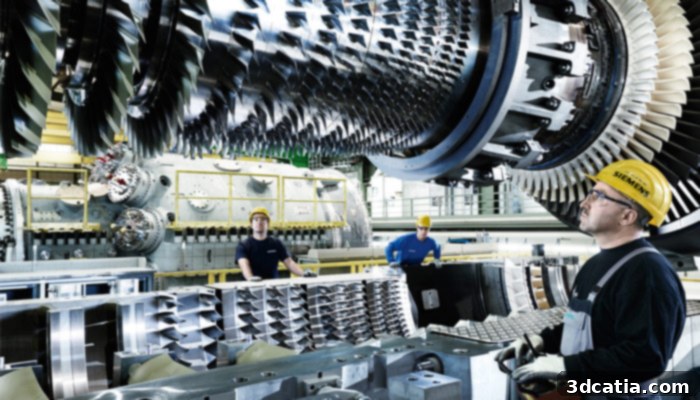
Turbine blades undergo heavy stress (photo credits: Siemens AG)
To address these significant challenges, the Siemens Energy team opted for an innovative application of the laser powder bed fusion (L-PBF) process. This choice might seem counterintuitive to those familiar with additive manufacturing repair strategies, as Directed Energy Deposition (DED) is traditionally regarded as the go-to additive manufacturing technology for part repair and refurbishment. DED, which typically involves melting material as it is deposited, is excellent for adding material to existing structures and repairing larger defects. However, Siemens Energy’s approach with L-PBF represents a significant paradigm shift. Their specialized process, aptly named Hybrid L-PBF Repair, or more broadly known as “HybridTech,” is not merely about adding material but about creating highly precise, intricate internal features that DED might struggle to achieve with the same level of resolution and complexity. This advanced repair methodology is a cornerstone of a comprehensive research project involving a consortium of nine distinguished partners, including leading industrial players like Siemens, alongside renowned research institutions such as Fraunhofer and BAM (Bundesanstalt für Materialforschung und -prüfung – the German Federal Institute for Materials Research and Testing). Initiated in July 2020, the overarching goal of this collaborative endeavor is to rigorously develop and implement cutting-edge technologies that redefine the standards for repairing and maintaining high-value industrial components, ensuring their longevity and optimal performance.
The true power and differentiation of HybridTech technology lie in its unprecedented capability to design and integrate complex internal cooling channels within an already existing turbine blade structure. This is a game-changer for component refurbishment, as conventional repair methods are largely incapable of modifying internal geometries. To achieve this, Siemens Energy has developed a sophisticated digital CAD-CAM (Computer-Aided Design and Computer-Aided Manufacturing) chain. This advanced workflow begins with a precise 3D scan, which meticulously digitizes the exact geometry of the existing blade, particularly focusing on the tip area where degradation is most pronounced. This digital twin of the damaged component is then fed into the system, enabling the HybridTech technology to precisely tailor every aspect of the laser’s operation – including its power, beam shape, and displacement path – to perfectly match the unique contours and requirements of that specific part. This bespoke approach is critical, as turbine blades, even from the same series, can exhibit slight variations due to manufacturing tolerances or operational wear. Furthermore, the development teams faced significant material science challenges. The material chosen for repairing and reinforcing the blade tips needed to possess exceptional properties, particularly high resistance to oxidation and extreme temperatures, to withstand the arduous environment within a gas turbine. The ability to deposit and integrate such advanced materials with precision, while simultaneously embedding intricate cooling channels, underscores the breakthrough nature of Siemens Energy’s HybridTech solution.
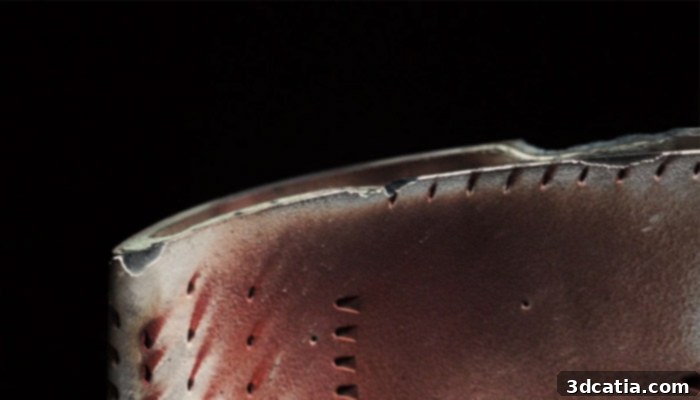
HybridTech technology will repair damaged blades (photo credits: Siemens Energy)
The strategic incorporation of internal cooling channels directly addresses the root cause of premature blade degradation. By optimizing thermal management within the blade structure, the HybridTech process ensures that critical areas, especially the vulnerable blade tips, remain within acceptable temperature limits during operation. This enhanced cooling capability significantly mitigates the effects of hot gas overflow and localized overheating, thereby slowing down material loss and preventing the rapid escalation of the “vicious circle” described earlier. The ability to precisely control the internal geometry for optimal heat dissipation not only extends the operational life of the blades but also contributes to improved overall turbine efficiency. Cooler-running blades can often withstand higher operational loads or simply last longer under existing conditions, translating into reduced downtime for maintenance and considerable cost savings over the lifespan of a power plant. This targeted internal modification is a hallmark of additive manufacturing’s unique capabilities, offering a level of control and customization unattainable through conventional manufacturing or repair techniques.
The implementation of HybridTech is already yielding promising results. To date, Siemens Energy reports successful repairs on a number of gas turbine blades, demonstrating the practical viability and effectiveness of this advanced additive manufacturing approach. While the initial focus has been on turbine blades, the potential applications of this technology are far-reaching. Siemens Energy is actively working towards establishing comprehensive criteria and robust standards for these innovative repair processes. This crucial step is vital for scaling up the technology, ensuring consistent quality, and gaining wider industry acceptance. It is anticipated that this versatile method will be extended to a broad spectrum of other critical components across various energy systems, significantly impacting both maintenance strategies and overall production processes. By enabling the repair and upgrade of high-value parts that would otherwise be scrapped, HybridTech not only reduces operational costs but also contributes to more sustainable industrial practices by extending component lifecycles and minimizing material waste. This represents a strategic shift towards a circular economy model within the energy sector, leveraging the precision and flexibility of additive manufacturing to create more resilient and efficient infrastructure. For more in-depth information and official statements, you can find the press release directly from Siemens Energy HERE.
* Cover photo credits: Siemens Energy
What do you think of the groundbreaking HybridTech technology used by Siemens Energy for turbine blade repair? Let us know your thoughts in a comment below or join the discussion on our Facebook and Twitter pages! Don’t miss out on the latest advancements in 3D printing; sign up for our free weekly Newsletter here, delivering the most important additive manufacturing news straight to your inbox!