
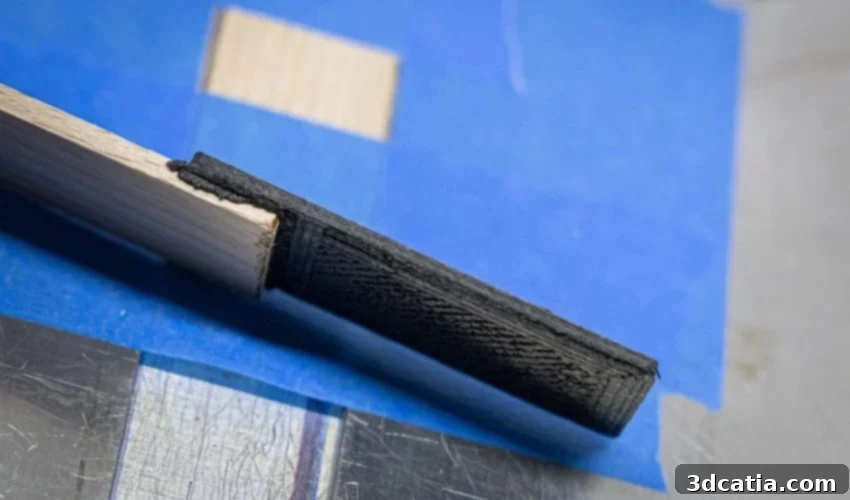
Revolutionizing Wood-Plastic Bonds: AddJoining’s Glue-Free Additive Manufacturing Approach
Imagine a future where plastic and wood are seamlessly joined without a single drop of traditional adhesive or harsh chemicals. This vision is rapidly becoming a reality, thanks to groundbreaking research from a dedicated team at Graz University of Technology in Austria. They have pioneered an innovative technique called “AddJoining,” leveraging the power of additive manufacturing to create remarkably strong, chemical-free bonds between these two disparate materials. This method involves the precise deposition of various materials onto wood, layer by layer, in a way that allows the deposited material to physically penetrate the wood structure, resulting in an exceptionally robust interface.
The AddJoining technique represents a significant leap forward in sustainable manufacturing. Researchers have meticulously tested several materials, including polyamide and a high-performance carbon-fiber-reinforced polyphenylene sulphide, applying them to both oak and beech wood samples. The initial results have been more than just encouraging; they point towards a paradigm shift in how we approach material joining. By eliminating the reliance on industrial glues and adhesives, the Graz University team aims to dramatically reduce the environmental footprint associated with current manufacturing processes, paving the way for more eco-friendly products and easier recycling.
The Environmental Imperative: Moving Beyond Traditional Adhesives
The pervasive use of industrial glues and adhesives poses a substantial environmental challenge that often goes unnoticed. These bonding agents are predominantly synthetic, derived from hydrocarbon by-products and extensive chemical processes. Their chemical composition often renders them non-biodegradable, meaning they persist in the environment for centuries. Furthermore, their presence in composite products makes the recycling of individual components extremely difficult, if not impossible, contributing significantly to landfill waste and hindering circular economy initiatives. While there has been a growing trend towards “natural” and supposedly “biodegradable” glue solutions, these often fall short of truly sustainable alternatives, with their production processes or long-term degradation properties still raising environmental concerns.
Recognizing this critical problem, the innovative researchers in Austria conceptualized and developed the AddJoining technique as a direct response to the urgent need for greener, more sustainable bonding methods. Their approach not only eliminates harmful chemicals but also redefines the very mechanism of adhesion, moving from a superficial bond to an integrated material interface.
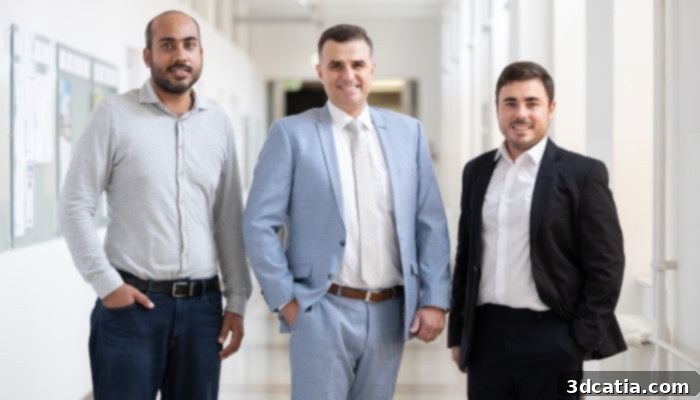
From left to right: Awais Awan, Sergio Amancio and Gean Marcatto from the Institute of Materials Science, Joining and Forming at TU Graz (photo credits: Wolf – TU Graz).
How AddJoining Creates Unprecedented Bonds
At its core, AddJoining ingeniously adapts additive manufacturing principles. Instead of printing on a conventional build plate, the material is deposited directly onto an untreated wood surface. This direct printing approach is central to creating the unique joints between the two materials. The technique capitalizes on the porous nature of wood. As the molten plastic or polymer is deposited, it is forced under controlled conditions to infiltrate these microscopic pores and channels within the wood structure. Upon solidification, this intermingling of materials creates a mechanical interlocking effect that is far stronger and more durable than a simple adhesive layer.
The scientific evidence supporting the robustness of AddJoining is compelling. Gean Marcatto, one of the leading researchers on the project, elaborated on their findings: “After the joint fractured, we were able to find polymer in the wood pores and broken wood fibers in the polymer, which suggests that the fracture occurred in the wood and polymer, but not at the joint.” This observation is crucial. It indicates that the bond formed by AddJoining is not merely strong; it is stronger than the wood itself and the polymer material, causing failure to occur within the materials rather than at their interface. This characteristic is a hallmark of exceptionally engineered joints and highlights the immense potential of this technique for applications demanding high structural integrity and longevity.
Enhancing Adhesion and Streamlining Processes
While the current AddJoining method delivers impressive results, the research team is also exploring avenues for further optimization. They theorize that even more satisfying outcomes could be achieved by pre-treating the wood surface, for instance, through nanostructuring via laser engraving. This process would effectively increase the surface area and pore density of the wood, thereby improving the mechanical interlocking and overall adhesion between the plastic and wood. However, the researchers emphasize their commitment to simplicity and avoiding chemical involvement. Sergio Amancio, another key member of the Graz team, explained their initial philosophy: “But we wanted to work with as few steps as possible and, above all, without chemicals. We can use this technology particularly well with complicated 3D geometries because the components are printed directly onto the surface – in whatever geometry is required.”
This commitment to a minimal-step, chemical-free process underscores the method’s practicality and its alignment with sustainable manufacturing principles. The ability to directly print components onto a surface, regardless of its complexity, opens up a myriad of design possibilities for intricate 3D geometries that would be challenging or impossible to achieve with conventional bonding techniques. This makes AddJoining particularly attractive for industries looking to innovate in product design and assembly, offering both functional and aesthetic advantages.
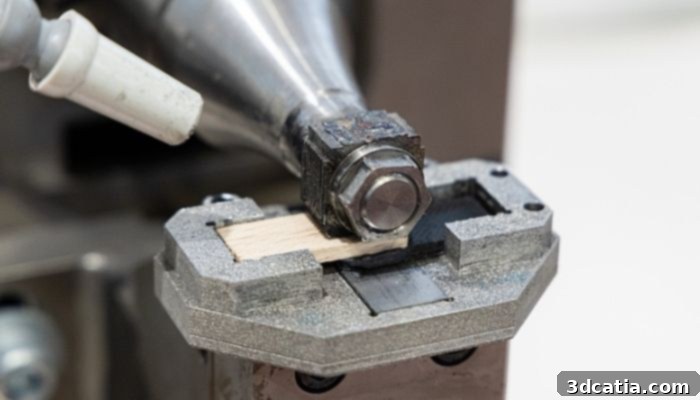
Ultrasonic Joining (photo credits: Wolf – TU Graz)
A Complementary Innovation: Ultrasonic Joining
In parallel to their work on AddJoining, the Graz University of Technology team has also explored another innovative, glue-free joining method: Ultrasonic Joining. This technique operates on fundamentally different principles than additive manufacturing. Ultrasonic Joining involves bringing two materials together and applying high-frequency ultrasonic vibrations, which generate localized heat at the interface. This heat, combined with pressure, causes the materials to soften and fuse, forming a strong bond without the need for external adhesives. While distinct from AddJoining, Ultrasonic Joining shares the common goal of eliminating chemical glues and offers another promising avenue for sustainable material integration in various industrial applications. For a more detailed exploration of both these cutting-edge methods and their potential in sectors like automotive and aircraft manufacturing, further information can be found by clicking HERE.
The Future of Sustainable Material Integration
The advancements made by the Graz University of Technology team with AddJoining and Ultrasonic Joining signify a pivotal moment for sustainable material science and advanced manufacturing. By offering viable, robust alternatives to traditional chemical adhesives, these techniques hold the promise of transforming multiple industries, from construction and furniture design to automotive and aerospace. The ability to create strong, durable bonds between dissimilar materials like plastic and wood, without compromising environmental integrity, will enable new design possibilities, enhance product recyclability, and contribute significantly to a more circular economy.
The immediate and long-term implications are far-reaching. Products manufactured using AddJoining could boast longer lifespans, easier end-of-life recycling, and a significantly reduced carbon footprint throughout their entire lifecycle. This research not only pushes the boundaries of additive manufacturing but also reinforces the critical role that universities and scientific innovation play in addressing global environmental challenges. The Graz team’s dedication to developing practical, eco-friendly solutions serves as an inspiring example for future advancements in material engineering.
What are your thoughts on the innovative AddJoining method and its potential to reshape manufacturing? Let us know in a comment below or connect with us on our LinkedIn, Facebook, and Twitter pages! Don’t forget to sign up for our free weekly newsletter here for the latest 3D printing news straight to your inbox! You can also find all our videos on our YouTube channel.
*Cover Photo Credits: Wolf – TU Graz