
Top 5 Revolutionary 3D Printing Innovations Shaping Additive Manufacturing’s Future
Welcome to this week’s essential guide to the groundbreaking world of additive manufacturing! We’ve curated five highly informative videos that showcase the incredible diversity and transformative potential of 3D printing technology. From sustainable material innovations to life-saving medical applications and scalable industrial processes, these advancements highlight why additive manufacturing is at the forefront of engineering and design. Dive in to explore how companies and researchers are pushing the boundaries, creating solutions that were once deemed impossible. Get ready to witness the future unfold, one layer at a time, across various sectors including sustainable materials, healthcare, industrial production, construction, and specialized engineering components.
Top 1: Sustainable Futures with 3D Printed Recycled Biocomposites
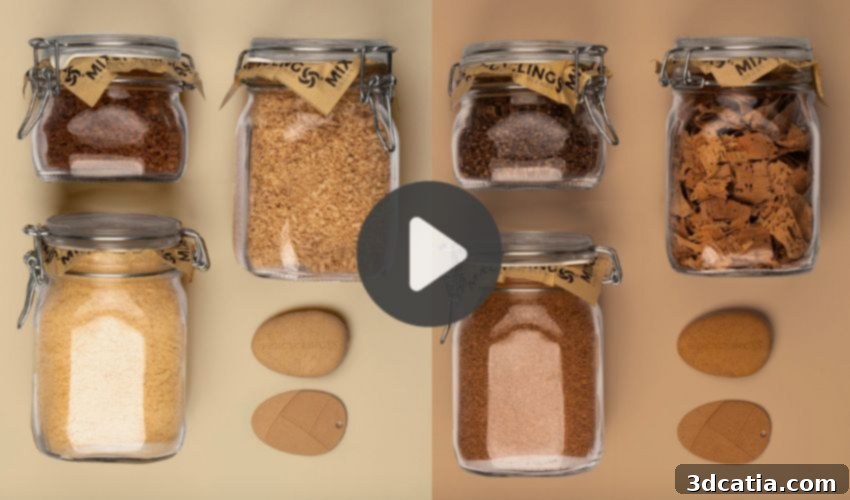
The pursuit of sustainability in manufacturing is more critical than ever, and additive manufacturing is playing a pivotal role. This segment introduces Breton, a renowned Italian multi-sector industrial group celebrated for designing and building sophisticated machines and plants, including advanced solutions for large-scale additive manufacturing. In this enlightening video, we delve into how Breton is revolutionizing sustainable production by utilizing recycled biocomposites. These innovative materials, derived from natural and reclaimed sources like cork, wood, bamboo, coconut, and even denim, are integrated into high-performance additive manufacturing processes. By combining their expertise with Mixcycling’s eco-friendly material innovations and Stylplex’s design capabilities, Breton is not only reducing waste and operational costs but also maintaining exceptional product performance. This approach exemplifies a true circular economy model within additive manufacturing, proving that environmental responsibility can go hand-in-hand with technological advancement. Discover how Mixcycling crafts these remarkable materials and the significant environmental and economic impact they are poised to make, setting a new benchmark for sustainable industrial practices.
Top 2: Revolutionizing Cardiology with 3D Printed Bioresorbable Heart Valves
Medical innovation is one of the most impactful frontiers for additive manufacturing, and this next video showcases a truly life-changing breakthrough. Researchers at Georgia Tech have successfully 3D printed a bioresorbable heart valve that holds immense promise for cardiac patients. Unlike traditional prosthetic valves, which often necessitate repeated surgeries as patients, especially children, grow or as valves degrade, this bioresorbable alternative is designed to promote natural tissue regeneration within the body. This means the valve gradually dissolves over time, leaving behind healthy, functional tissue, potentially eliminating the need for subsequent invasive procedures. With over five million Americans diagnosed with heart valve disease annually, this pioneering technology offers a transformative solution for both adult and pediatric patients, drastically improving their quality of life and long-term health outcomes. The ability to customize these valves to individual patient anatomies using 3D printing further underscores its potential, paving the way for personalized medicine in cardiology. This research represents a significant leap forward in addressing a widespread and critical medical challenge, providing hope for millions.
Top 3: Visitech’s Multihead Scrolling Technology for Unprecedented Mass Production
The industrial adoption of additive manufacturing has long sought solutions for true mass production without compromising precision or cost-effectiveness. Visitech, a leading DLP (Digital Light Processing) systems company specializing in high-performance solutions for direct imaging lithography and additive manufacturing subsystems, is now poised to deliver this. Their innovative multihead scrolling light engine technology represents a significant leap forward in scaling 3D printing. Traditionally, DLP printers have a fixed build area limited by the size of their projector. Visitech’s breakthrough involves multiplying the effective build area per photo head by utilizing scrolling light engines. This ingenious design allows a machine builder to configure an expansive build space with exceptional micrometer accuracy, critically, without sacrificing throughput or incurring prohibitive costs. The practical implication is profound: manufacturers can theoretically utilize a print bed of virtually any size that the photoheads can traverse. This removes a major bottleneck for large-scale production, enabling the additive manufacturing of massive components or high volumes of smaller parts with the speed and precision required by demanding industrial applications. Visitech’s technology democratizes access to large-format and high-volume 3D printing, paving the way for broader integration of additive manufacturing into conventional production lines.
Top 4: Building a Resilient Future with Emergent 3D Printed Homes in Los Angeles
In regions susceptible to natural disasters, particularly wildfires, the structural integrity and resilience of homes are paramount. Additive manufacturing offers a revolutionary answer to this challenge, with 3D printed homes emerging as a vital solution for safety and sustainability. This segment highlights Emergent 3D, a visionary Northern Californian company that has already made significant strides in this area. They have successfully 3D printed several fire-resistant homes made from concrete in Redding, demonstrating the viability and protective qualities of this construction method. These homes offer enhanced safety in disaster-prone zones, providing peace of mind for residents. Building on their success, Emergent 3D has now secured its first contract with a family in Los Angeles, signaling a growing acceptance and demand for this innovative approach to housing. The company plans further construction projects in the city, addressing housing needs with speed, efficiency, and superior resilience. The 3D printing construction process not only accelerates build times but also significantly reduces material waste and labor costs. This video explores the intricate details of their 3D printing method and underscores its immense promise in providing durable, safe, and rapidly deployable housing solutions for communities affected by natural calamities, thereby building a more resilient urban landscape.
Top 5: Additive Manufacturing Enhances Flexibility in Filtration and Flow Control Components
Optimizing filtration and flow control systems is critical across countless industries, from petrochemical to pharmaceutical, requiring components that minimize pressure drop, maximize efficiency, and reduce energy consumption. These systems frequently depend on intricate, specially designed geometries that are often challenging, if not entirely impossible, to produce using conventional manufacturing methods like machining or casting. The geometric complexities—such as highly optimized internal channels, porous structures, and organic shapes—are precisely where additive manufacturing shines. To expand the production possibilities for these vital components, Mott Corporation, a global leader in porous metal filtration and flow control, partnered with Renishaw, a world-renowned engineering technology company. Renishaw supplied Mott Corporation with its cutting-edge RenAM 500S Flex machine, a sophisticated metal additive manufacturing system designed for high productivity and flexibility. This partnership has unlocked unprecedented design freedom, allowing Mott to create advanced filtration and flow control components with previously unattainable internal features and performance characteristics. The video details the significant benefits of this collaboration, showcasing how additive manufacturing provides the flexibility and precision needed to engineer superior solutions that lead to enhanced system performance, reduced operational costs, and greater innovation in critical industrial applications. This collaboration underscores the power of additive manufacturing in pushing the boundaries of traditional engineering.
These five videos offer a compelling glimpse into the dynamic and ever-expanding world of additive manufacturing. From creating sustainable biocomposites that address environmental concerns to fabricating life-saving medical devices, enabling mass industrial production, building resilient homes, and optimizing complex engineering systems, 3D printing is continuously redefining what’s possible. Each innovation presented here underscores the technology’s capacity to drive efficiency, foster sustainability, and deliver unprecedented solutions across diverse sectors. We hope these insights inspire you as much as they inspire us, highlighting the incredible strides being made in materials science, healthcare, construction, and advanced manufacturing. The future, undoubtedly, is being 3D printed.
What are your thoughts on the transformative potential of 3D printed biocomposites and these other groundbreaking applications? Share your insights and join the conversation by leaving a comment below or engaging with us on our social media platforms: LinkedIn, Facebook, and Twitter! To stay updated with the very latest developments in the fast-paced world of 3D printing, don’t forget to sign up for our free weekly Newsletter here, delivering cutting-edge news directly to your inbox. You can also explore our full library of insightful videos on our dedicated YouTube channel for more in-depth content.
*Cover Photo Credit: Organic materials that form biocomposites. Credit: Mixcycling