

General Motors: Driving Automotive Innovation with 3D Printing and the Future Corvette Concept
The automotive industry is in a perpetual state of transformation, continuously seeking advanced methodologies to enhance efficiency, enable customization, and promote sustainability. At the forefront of this industrial evolution is additive manufacturing, often referred to as 3D printing. This groundbreaking technology has seen widespread adoption across various sectors, with its impact particularly profound within the automotive realm. From refining the exterior aesthetics and optimizing the interior ergonomics of a vehicle to streamlining intricate production processes, additive manufacturing offers an unparalleled suite of advantages. Its inherent ability to produce complex components with greater ease, speed, and design freedom—compared to traditional manufacturing techniques—positions it as a true game-changer. Moreover, 3D printing empowers engineers and designers to swiftly iterate on digital designs, produce tangible test prints, rigorously evaluate and refine prototypes, and then rapidly transition these validated innovations into reality. This agile and iterative development cycle has been vividly demonstrated by General Motors with their unveiling of a visionary new Chevrolet Corvette concept car, presented at the brand’s cutting-edge UK design studio, offering a compelling foresight into what drivers can anticipate from future vehicles.
General Motors, a leading global automotive manufacturer, has been a steadfast proponent of additive manufacturing for nearly three decades. This enduring commitment underscores the technology’s integral role across numerous application areas within the company. 3D printing actively supports and accelerates critical design processes, facilitates advanced product and material construction, optimizes vehicle manufacturing workflows, and extends its utility into aftersales services, enabling the direct production of specific components for customer needs. More concretely, General Motors leverages 3D printing technologies for the rapid creation of early-stage prototypes, which are crucial for validating design concepts and functional aspects before committing to costly traditional tooling. Beyond prototyping, additive manufacturing is instrumental in producing specialized tools, jigs, and fixtures that significantly simplify assembly operations, enhance precision, and boost overall efficiency across various stages of vehicle production. This strategic integration of 3D printing not only results in substantial cost savings by reducing reliance on expensive traditional tooling and minimizing material waste but also fosters a more sustainable and responsive production ecosystem, aligning with modern environmental and operational imperatives.

New design studio for General Motors in Birmingham
The transformative power of 3D printing is exceptionally showcased at General Motors’ recently established Global Design Studio in Birmingham, UK. This state-of-the-art facility is already yielding impressive results from its dedicated team. Among their first public unveilings is a strikingly futuristic concept design for the renowned Chevrolet Corvette model, a car that has long symbolized American automotive innovation. The new design team stationed at this studio bears a specific mandate: to lead the innovative concept design for all future General Motors vehicles, pushing the boundaries of creativity and engineering possibility. Their ambitious objective is to actively shape “the future of mobility,” translating visionary ideas into tangible designs. This involves concretely forming our perceptions of what vehicles could realistically look like and how they might function not just in the near future, but ten or even twenty years down the line. By exploring radical aesthetics, integrating advanced functionalities, and reimagining the very essence of vehicle interaction and performance, this team is setting new benchmarks for automotive design.
While the new Chevrolet Corvette concept car is not earmarked for immediate mass production, its strategic importance to General Motors’ long-term vision cannot be overstated. Instead, it serves as an innovative target, a tangible aspiration that will undoubtedly drive the company’s production capabilities, technological advancements, and overall manufacturing strategies forward. This concept car is more than a mere design study; it represents a bold statement about GM’s future manufacturing ambitions and its commitment to embracing disruptive technologies. A significant portion of this visionary vehicle is anticipated to be produced using advanced additive manufacturing techniques. This approach is absolutely essential for realizing its audacious and futuristic design, which conspicuously draws direct inspiration from the sleek, aerodynamic aesthetics inherent in aviation. The intricate curves, complex internal lattice structures, and functionally optimized forms envisioned for this concept would be incredibly challenging, if not entirely impossible, to achieve through conventional manufacturing methods. Additive manufacturing unlocks unparalleled freedom in design, allowing for the creation of such organic and highly integrated geometries, thereby pushing the boundaries of what vehicle design can achieve. Furthermore, initial specifications regarding the concept’s striking dimensions have already been published: the vehicle will stand just under 1 meter high, span 2 meters in width, and stretch an impressive 4.7 meters in length, underscoring its futuristic and performance-oriented stance.
The ambitious future production standards that General Motors aims to achieve, particularly those being innovated and refined within its new UK Design Studio, are inextricably linked to the transformative capabilities of additive manufacturing. This synergistic relationship further solidifies 3D printing’s indispensable role as a sustainable, forward-looking, and revolutionary technology within the dynamic automotive sector. The inherent ability of additive manufacturing to produce lightweight parts, consolidate complex assemblies into single components, significantly reduce material waste, and enable true on-demand manufacturing directly contributes to GM’s sustainability goals and enhances operational efficiency across its global operations. Beyond mere future aspirations, General Motors emphatically states that additive manufacturing is already delivering immense, tangible advantages in the present-day automotive industry. These include dramatically accelerated product development cycles, offering unprecedented flexibility for design changes, vastly enhanced customization options for end-users, and the agility to rapidly respond to fluctuating market demands and emerging consumer preferences. The inherent flexibility of 3D printing allows for quick tooling adjustments and facilitates localized production, thereby minimizing logistical complexities and reducing the overall environmental footprint. Furthermore, the continuous evolution of materials compatible with additive processes, ranging from advanced polymers to high-performance metals and composites, continues to expand the possibilities for functional integration and performance enhancement in critical automotive components. We eagerly await the groundbreaking concepts and production methodologies that this innovative new design team will unveil in the future, as they continue to redefine the boundaries of automotive design and manufacturing innovation.
The comprehensive integration of additive manufacturing into General Motors’ long-term strategic planning extends far beyond merely crafting aesthetically pleasing concepts. It represents a fundamental shift towards creating a more resilient, profoundly efficient, and perpetually innovative global supply chain. By embracing 3D printing, GM can actively explore and implement new manufacturing paradigms, such as highly decentralized production networks and truly mass customization, ultimately offering consumers vehicles that are not only technologically advanced but also uniquely tailored to their individual preferences and needs. This strategic embrace of additive technologies is absolutely vital in an increasingly competitive global market where differentiation through continuous innovation and unique offerings is paramount. The unwavering emphasis on sustainable production practices, a concerted effort to significantly reduce material waste, and the optimization of resource utilization through additive processes also aligns perfectly with burgeoning global environmental initiatives and growing consumer demand for more eco-friendly products. The Chevrolet Corvette concept car, therefore, serves as a powerful and inspiring testament to what can be achieved when visionary design principles seamlessly merge with cutting-edge manufacturing technology. It is a bold and unequivocal statement that General Motors is not merely participating in the unfolding future of mobility; it is actively shaping and creating that future. For more comprehensive information regarding GM’s advanced design initiatives and their strategic use of innovative technologies, you can find additional details HERE.
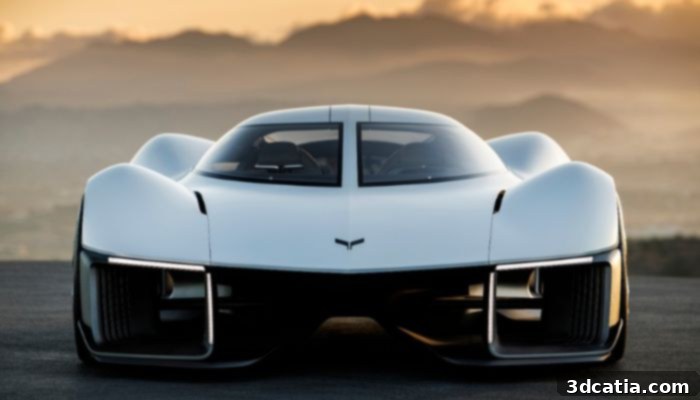
Chevrolet Corvette concept car
What are your informed thoughts on General Motors’ audacious new Chevrolet Corvette 3D printed concept car? Do you envision this revolutionary design making its way into future production models, thereby fundamentally transforming the landscape of automotive manufacturing and consumer expectations? We are eager to hear your insightful perspectives and predictions! Please share your comments below or join the ongoing conversation on our LinkedIn, Facebook, and Twitter pages! Don’t forget to sign up for our completely free weekly Newsletter here to ensure you receive the very latest breaking 3D printing news, insights, and analyses directly to your inbox. You can also explore all our compelling and informative videos on our dedicated YouTube channel. For more extensive news, reports, and updates from the dynamic automotive and transportation sector concerning the evolving world of 3D printing, you can find a wealth of additional information HERE.
*All Photo Credits: General Motors