
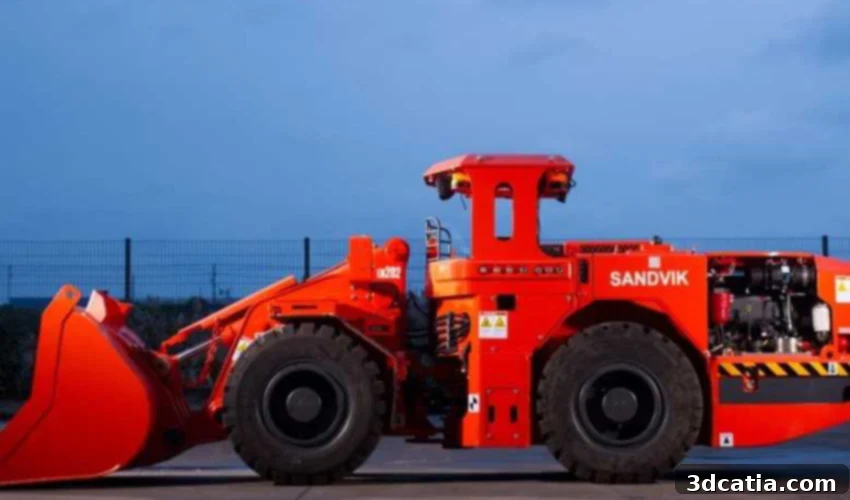
Sandvik’s $25 Million Investment Ignites the Future of Metal 3D Printing and Advanced Powder Metallurgy
The landscape of manufacturing is undergoing a profound transformation, with metal 3D printing, also known as metal additive manufacturing, emerging as a pivotal technology. Over the past year, the metal 3D printing market has witnessed an unparalleled surge in activity and innovation, a trend that shows no signs of slowing down as we move further into the decade. At the forefront of this evolution, industrial giants like Sandvik, a Sweden-based engineering and tools group with a global footprint, are making strategic moves to shape the industry’s future. The company recently unveiled ambitious plans, including a substantial $25 million investment dedicated to establishing a state-of-the-art specialist facility for metal powders—the fundamental building blocks of metal additive manufacturing.
This significant investment underscores Sandvik’s commitment to advancing additive manufacturing capabilities. According to company statements, the new facility will be strategically focused on producing high-quality metal powders from commonly utilized and strategically important 3D printing materials, such as advanced nickel and titanium alloys. These materials are critical for high-performance applications across various demanding sectors. Speaking on this development, a President within Sandvik’s Materials Technology division emphasized the burgeoning importance of this sector, stating, “the metal powder segment and the additive manufacturing business are of increasingly strategic importance to us.” This declaration highlights the company’s long-term vision and its recognition of additive manufacturing as a key pillar for future growth and technological leadership.
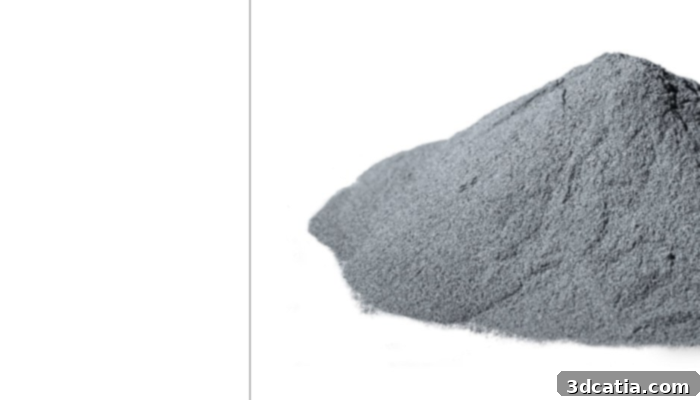
Sandvik are developing metal powders for 3D printing for industries such as healthcare and space.
Who is Sandvik? A Legacy of Engineering Excellence
To truly appreciate the magnitude of this investment, it’s essential to understand Sandvik’s position within the global industrial landscape. Sandvik is far from a newcomer; it is a venerable and highly respected name in the engineering and tools industries, boasting a rich history that spans back to its founding in 1862. With over 160 years of innovation and experience, the company has established itself as a leader in advanced materials and manufacturing solutions. Sandvik employs over 47,000 people worldwide, a testament to its scale and impact. Its expertise extends across various sectors, from mining and rock excavation to metal-cutting tools and advanced materials. Crucially, Sandvik already possesses extensive experience in powder metallurgy, providing a diverse range of metal powders for traditional manufacturing processes like metal injection molding (MIM). This deep-rooted knowledge in powder production gives them a significant advantage as they expand their focus on additive manufacturing.
While Sandvik currently supplies high-quality powders made of essential materials such as stainless steel, nickel, and cobalt-chromium for various applications, this new $25 million investment signifies a dramatic expansion of their capabilities. The establishment of this cutting-edge facility will significantly enhance Sandvik’s capacity to produce specialized titanium and nickel 3D printable powders. These materials are specifically engineered for advanced additive manufacturing processes, including Direct Metal Laser Sintering (DMLS), Selective Laser Melting (SLM), and Electron Beam Melting (EBM). These processes are central to creating highly complex and high-performance metal parts for critical industries, and the quality of the powder directly impacts the final product’s integrity and mechanical properties.
The Strategic Imperative: Why Nickel and Titanium?
The strategic focus on titanium and nickel in this substantial investment is not arbitrary; it’s a direct response to burgeoning market demand and the unique properties these materials offer. Titanium alloys are renowned for their exceptional strength-to-weight ratio, excellent corrosion resistance, and biocompatibility, making them indispensable in aerospace, medical implants, and defense sectors. Nickel-based superalloys, on the other hand, are prized for their superior high-temperature strength, creep resistance, and oxidation resistance, which are critical for components in jet engines, gas turbines, and other high-stress, high-temperature environments. The potential for growth within industries that rely on these materials, such as the automotive, aerospace, and space exploration sectors, is immense and shows no signs of abating. These industries are constantly pushing the boundaries of material science to develop lighter, stronger, and more efficient components. Metal 3D printing, especially with high-quality nickel and titanium powders, offers very lucrative rewards for achieving high-quality parts with unprecedented design freedom and performance characteristics. The ability to produce complex geometries, optimize internal structures, and significantly reduce material waste makes additive manufacturing a game-changer for these demanding applications.
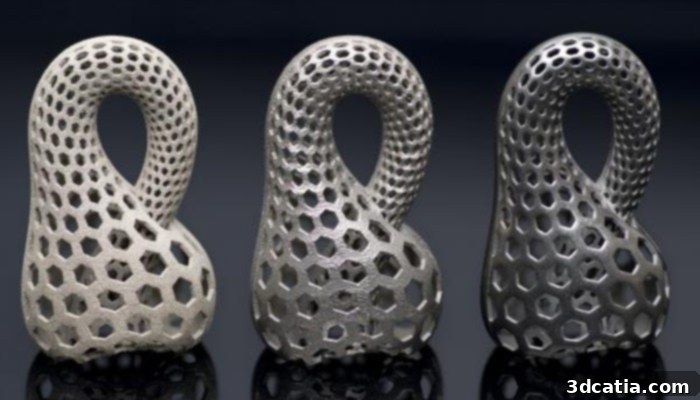
3D printing metal allows for less parts and more complex shapes than other manufacturing methods.
Metal 3D Printing: A Game-Changer for Modern Manufacturing
While this announcement from Sandvik brings incredibly encouraging news for the additive manufacturing industry, the specialized facility is not slated to commence operations immediately, with a scheduled opening in 2020. This allows for meticulous planning, construction, and outfitting of a facility designed to meet the rigorous demands of high-quality powder production. Once operational, this advanced facility is expected to play a pivotal role in enabling Sandvik to create even higher quality 3D printing materials. These enhanced materials will, in turn, provide significant benefits to critical sectors such as the aerospace and automotive industries, catalyzing further innovation and efficiency. We are already observing how the application of metal 3D printing allows for the consolidation of multiple components into a single, complex part. This design simplification dramatically reduces the number of parts required to create essential objects, particularly those vital for spaceflight and advanced aircraft. For instance, fabricating intricate engine components or structural elements as single units rather than assemblies of dozens of smaller pieces not only streamlines production but also inherently enhances the reliability and performance of the final product.
Furthermore, the ability to optimize part geometries through additive manufacturing directly translates to the production of lighter aircraft and spacecraft. By precisely placing material only where it is needed for structural integrity and performance, manufacturers can achieve significant weight reductions. This lightweighting is not merely an aesthetic advantage; it translates into substantial operational savings through improved fuel efficiency for aircraft and reduced launch costs for space vehicles. Beyond aerospace, the automotive industry also stands to gain immensely. From creating lightweight components for electric vehicles to enabling rapid prototyping of intricate engine parts and even facilitating the production of highly customized, high-performance components for niche markets, metal 3D printing offers unparalleled flexibility and speed. This capability allows for faster design iterations, reduced tooling costs, and the creation of parts with previously unachievable internal structures, leading to enhanced performance, durability, and customization options.
The Road Ahead: Sandvik’s Vision for Additive Manufacturing
The establishment of this new metal materials factory by Sandvik will undoubtedly be a transformative force, reshaping the dynamics of the metal powder industry. The significant $25 million investment is a resounding declaration of strong confidence in the robust and expansive future of 3D printing, particularly in its metal-based applications. It signals a strategic long-term commitment from one of the world’s leading engineering groups, validating the potential of additive manufacturing to revolutionize industrial production. This bold move by Sandvik makes us firmly believe that 3D printing, especially metal 3D printing, possesses a remarkably bright future, characterized by continuous innovation, broader adoption, and increasingly sophisticated applications across a multitude of industries. This investment is poised to accelerate the development of advanced materials, enabling new design possibilities and driving efficiency improvements that will benefit manufacturers and consumers alike. As the facility becomes operational and begins producing these advanced metal powders, it will contribute to a more resilient, agile, and innovative global manufacturing ecosystem.
What are your thoughts on Sandvik’s monumental $25 million investment in this state-of-the-art facility? We are keen to hear your perspectives on how this development will impact the metal 3D printing industry and its various applications. Please share your insights and comments below, or engage with us on our Facebook and Twitter pages! For all the latest news, breakthrough innovations, and essential updates in the dynamic world of 3D printing, don’t forget to sign up for our free weekly Newsletter, delivered directly to your inbox!