
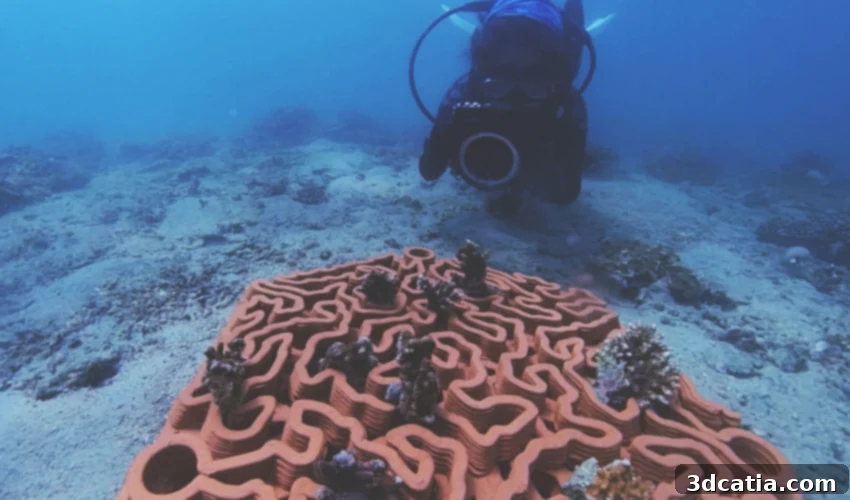
Revolutionizing Marine Conservation: UAE Uses 3D Printing to Restore Coral Reefs
The United Arab Emirates has recently announced a groundbreaking partnership that leverages cutting-edge 3D printing technology to safeguard the nation’s vital and often fragile marine ecosystems. This ambitious initiative is specifically designed to bolster the health of the UAE’s extensive coral reefs, particularly within the Ras Ghanadah protected area, which proudly hosts the largest coral reef system in the region. Spanning an impressive nearly 55 square kilometers, this critical wildlife zone encompasses 7.1 square kilometers of vibrant coral, making its preservation an ecological imperative for the entire Gulf.
In a move that underscores its commitment to environmental stewardship, the Abu Dhabi city government formally signed a memorandum of understanding with Archireef. Archireef is a pioneering climate technology company renowned for its innovative nature-based solutions, particularly those focused on the restoration of coral reefs and the enhancement of coastal biodiversity. This collaboration represents one of the most ambitious undertakings in the Middle East, marking a significant merger of advanced additive manufacturing techniques with large-scale environmental restoration efforts. It sets a new precedent for how technology can be harnessed to address pressing ecological challenges.
The partnership was officially celebrated and formalized during the prestigious 2025 World Conservation Congress held in Abu Dhabi. At its very core, this agreement embodies a shared vision aimed at rehabilitating deteriorating coral habitats through a combination of advanced engineering principles and carefully selected sustainable materials. Archireef, a leader in this specialized field, employs innovative 3D printed terracotta reef tiles. These specially designed tiles are crucial in the ongoing effort to replenish coral populations lost due to the adverse effects of global warming, ocean acidification, pollution, and other anthropogenic factors.
The terracotta tiles are central to the restoration strategy. Meticulously designed to mimic the intricate and complex structures of natural coral, they provide an ideal foundation for new life. Given their organic material composition, these tiles create a stable, non-toxic, and healthy environment, which is absolutely essential for the successful attachment, growth, and proliferation of new coral fragments. This biomimetic approach not only accelerates the restoration process but also ensures that the newly growing corals have the best possible chance of thriving and contributing to a resilient marine ecosystem.
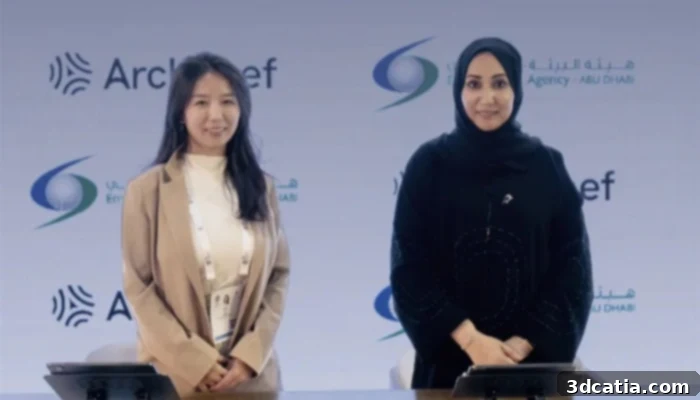
A photo from the signing of the memorandum between Archireef and the Environmental Agency of Abu Dhabi during the 2025 World Conservation Congress. (Photo Credit: Environmental Agency Abu Dhabi)
Archireef’s innovative reef tiles are meticulously produced using advanced 3D printing technology, which enables the creation of incredibly precise, biomimetic shapes. These shapes are directly inspired by the diverse and complex geometries found in natural coral formations, ensuring optimal integration into existing reef systems. The tiles are crafted from non-toxic terracotta clay, offering a completely eco-friendly and biodegradable alternative to many conventional artificial reef materials that often rely on concrete or metals, which can have long-term environmental drawbacks.
A key design feature of these tiles is their unique geometry, which includes integrated “legs” or elevated structures. This clever design prevents the tiles from sinking into soft seabed sediments, a common challenge with other restoration methods. By remaining elevated and stable, the tiles provide the necessary robust support to encourage and sustain diverse marine life. The efficacy of Archireef’s tiles has been rigorously tested in pilot projects across the Middle East, demonstrating an impressive coral survival rate of approximately 95 percent. This figure significantly outperforms traditional restoration methods, establishing the terracotta tiles as a highly effective and reliable solution for marine habitat rehabilitation.
Coral reefs are not merely beautiful underwater landscapes; they are critical ecosystems that provide immense ecological and economic benefits. They are often referred to as the “rainforests of the sea” due to their extraordinary biodiversity, supporting an estimated 25% of all marine species, despite covering less than 0.1% of the ocean surface. These vibrant habitats serve as crucial nurseries for countless fish and invertebrate species, underpinning global fisheries and providing food security for millions. Beyond their biological importance, reefs act as natural breakwaters, protecting coastlines from erosion, storm surges, and rising sea levels, thereby safeguarding coastal communities and infrastructure.
Furthermore, healthy coral reefs contribute significantly to local economies through tourism, particularly scuba diving and snorkeling, attracting visitors from around the world. They also hold immense value for scientific research, offering unique insights into marine biology, climate adaptation, and potential new pharmaceutical compounds. The loss of coral reefs, therefore, has far-reaching consequences, impacting not just the marine environment but also human livelihoods, economies, and coastal resilience. The UAE’s commitment to protecting its reefs through this partnership is a recognition of these multifaceted values.
By seamlessly integrating this innovative 3D printing technology with the Environment Agency – Abu Dhabi’s deep expertise in local marine conservation and environmental management, the partnership aims to significantly strengthen the resilience of Abu Dhabi’s coral reefs. This is particularly crucial in the face of escalating global threats posed by climate change. The holistic approach taken by this collaboration reflects a growing and urgent global shift toward merging advanced manufacturing capabilities with critical ecological restoration efforts. This innovative model offers a scalable and replicable framework for other coastal regions worldwide that are grappling with similar environmental degradation and biodiversity loss.
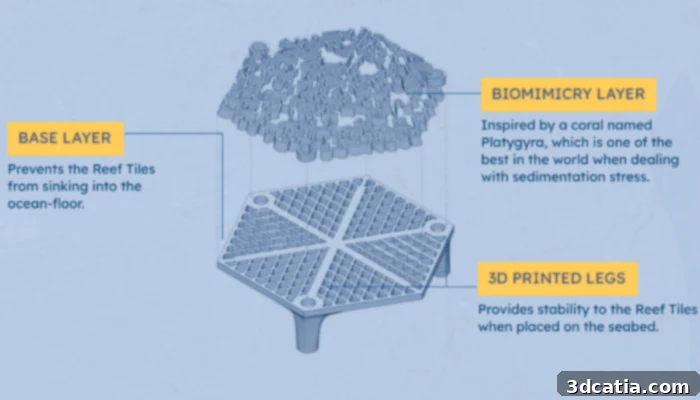
The biomimicry layer sits on top of 3D printed legs that prevent the tiles from sinking into sand. (Photo Credit: Archireef)
This pioneering collaboration positions Abu Dhabi as a definitive leader in utilizing modern technological tools to proactively address complex environmental challenges, all while honoring its rich maritime heritage and long-standing connection to the sea. It serves as a powerful demonstration of how emerging technologies like 3D printing can transcend their conventional industrial and manufacturing applications to play an absolutely vital and transformative role in global ecological preservation, climate adaptation, and the proactive safeguarding of our planet’s natural wonders. The success of this initiative could inspire similar projects, fostering a new era of conservation driven by innovation.
The ongoing and intensifying impact of climate change continues to pose an existential threat, not only to the vibrant coral reefs of Abu Dhabi but to these invaluable ecosystems worldwide. The alarming rise in sea temperatures, the increasing frequency and intensity of destructive storms, and the relentless progression of ocean acidification are collectively causing unprecedented harm to delicate reef structures and the diverse marine life they support. Scientific estimates paint a sobering picture: since the 1950s, it is believed that a staggering 50 percent of the world’s coral reefs have already perished. This dramatic loss underscores the urgency and necessity of innovative interventions.
Partnerships such as the one between the UAE and Archireef brilliantly highlight how cutting-edge technology, combined with invaluable local expertise and unwavering governmental commitment, can synergistically work together to build much-needed resilience in vulnerable ecosystems. By strategically pairing the precision and versatility of 3D printing with targeted, data-driven restoration strategies, they offer a compelling and practical model for how coastal communities globally can proactively adapt to the undeniable realities of a warming planet. This approach not only provides hope but also a clear pathway forward for marine conservation in the 21st century.
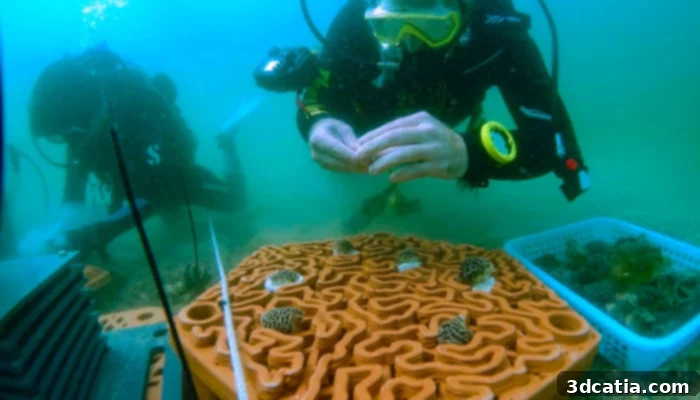
Archireef previously used their 3D terracotta tiles to help restore coral in Hong Kong. (Photo Credit: Archireef)
What are your thoughts on this inspiring recent partnership between the UAE and Archireef? How do you envision 3D printing or additive manufacturing continuing to help solve complex issues related to climate change and environmental degradation across various sectors? We encourage you to share your insights and opinions in a comment below, or join the conversation on our LinkedIn or Facebook pages! Furthermore, don’t miss out on the latest advancements and news in the 3D printing world—be sure to sign up for our free weekly Newsletter to receive all the breaking stories and updates directly to your inbox. You can also explore our extensive library of videos and visual content on our official YouTube channel for more in-depth coverage.
*Cover Photo Credits: Archireef