
Revolutionizing Housing: How Earthquake-Proof 3D Printed Homes Address South Africa’s Crisis
Natural disasters, particularly earthquakes, continue to pose significant threats to communities worldwide, causing immeasurable devastation, loss of life, and widespread displacement. The tragic events in Turkey and Syria earlier this year, which claimed over 50,000 lives in Turkey alone, alongside countless injuries and missing persons, serve as a stark reminder of humanity’s vulnerability to seismic forces. These catastrophic incidents underscore an urgent global need for resilient infrastructure and housing solutions capable of withstanding nature’s fury. In a remarkable demonstration of innovation meeting pressing societal needs, a recent earthquake in Johannesburg, South Africa, on June 11th, has catalyzed a groundbreaking initiative that could redefine construction in disaster-prone regions.
In response to this seismic event and South Africa’s long-standing housing crisis, the South African Housing & Infrastructure Fund (SAHIF) has announced ambitious plans to implement concrete 3D printed housing across the nation. This revolutionary approach not only promises to accelerate the provision of much-needed homes but also introduces an additional, critical benefit: inherent earthquake resistance. This dual advantage positions 3D printing as a transformative force, offering a sustainable, rapid, and secure solution for millions in dire need of safe and affordable shelter.
South Africa has grappled with a severe housing shortage for many years, a complex issue exacerbated by escalating construction costs, bureaucratic delays in land release and project approval, and the sheer scale of demand. Estimates suggest that approximately 12 million people nationwide are in urgent need of adequate housing, a statistic that highlights a profound social and economic challenge. Traditional construction methods, often labor-intensive and time-consuming, struggle to keep pace with this demand, leading to the proliferation of informal settlements that are frequently vulnerable to environmental hazards and lack essential services.
Globally, the construction 3D printing sector has emerged as a powerful tool for rapidly and economically delivering housing solutions to vulnerable populations. Organizations like Habitat for Humanity have successfully pioneered the use of additive manufacturing to build affordable homes, with notable projects including their first 3D printed home in Virginia and another in Arizona. These initiatives demonstrate the technology’s capacity to reduce construction timelines significantly—often from months to mere days—and lower material and labor costs by optimizing resource utilization and minimizing waste. The adoption of 3D printing in South Africa, therefore, represents not just a technological upgrade but a strategic pivot towards addressing systemic housing inequalities and building a more resilient future. The ability to construct homes that are inherently resistant to seismic activity adds an invaluable layer of protection, safeguarding residents from future natural disasters and ensuring long-term stability and quality of life.
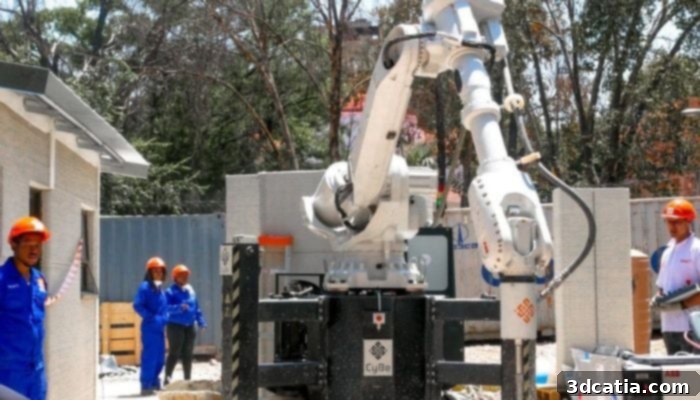
Construction 3D printing at the University of South Africa (photo credits: CyBe)
The Rise of Earthquake-Proof 3D Printed Housing: A Technological Leap for Resilience
The groundbreaking endeavor in South Africa is a direct result of a strategic partnership between SAHIF and CyBe Construction, a renowned Netherlands-based construction technology company. CyBe has distinguished itself in the additive manufacturing industry for its pioneering work in developing robust 3D printing housing solutions that are engineered to be both earthquake-proof and hurricane-proof. This expertise is particularly critical for regions like South Africa, which faces various environmental challenges. CyBe’s innovative approach lies in leveraging the intrinsic flexibility and adaptability of concrete 3D printing, which allows for the creation of highly customized and structurally optimized buildings. Unlike conventional construction, 3D printing offers unparalleled design freedom, enabling architects and engineers to tailor structures specifically to environmental demands, including those required to withstand seismic forces effectively.
At the heart of CyBe’s earthquake-resistant technology is its proprietary material, CyBe Mortar. This specialized, earthquake-resistant concrete mixture is meticulously formulated for 3D printing applications. It ingeniously combines high-strength aggregates with advanced fibers, creating a composite material that exhibits exceptional durability and flexibility. Traditional concrete structures are often rigid, making them susceptible to cracking and collapse under the dynamic stresses of an earthquake. In contrast, CyBe Mortar’s unique composition allows buildings to absorb and dissipate seismic energy more effectively. The integrated fibers enhance the material’s ductility, meaning it can deform significantly without fracturing, while the high-strength aggregates provide the necessary load-bearing capacity. This combination ensures that the printed walls maintain their structural integrity even during intense ground motion, significantly reducing the risk of catastrophic failure and enhancing occupant safety. The automated, layer-by-layer printing process also allows for the integration of optimized structural geometries, such as curved walls or internal reinforcement patterns, that are difficult and costly to achieve with traditional methods, further bolstering seismic resilience.
Beyond earthquake resistance, CyBe Mortar and the 3D printing process offer a suite of additional benefits. The precision of additive manufacturing minimizes material waste, contributing to more sustainable construction practices. The rapid curing properties of the mortar mean that layers can be built upon quickly, dramatically shortening construction timelines. Furthermore, the ability to print complex geometries allows for the integration of enhanced thermal insulation properties directly into the wall structure, leading to more energy-efficient homes and reduced long-term living costs for residents. These combined advantages make 3D printed housing not only a robust solution for safety but also an economically viable and environmentally responsible choice for large-scale housing projects.
Rali Mampeule, CEO of SAHIF, eloquently summarized the profound impact of this initiative, stating, “The demand for affordable quality housing in South Africa far outstrips the supply. We can better address this challenge by reducing the cost of materials and [labor], speeding up the construction process, and improving the quality of the finished houses. Not only are 3D houses more affordable and time efficient to build, but we know they are durable enough to withstand the kinds of seismic forces that surprised us all this week.” Mampeule’s vision underscores the multifaceted benefits of this partnership: addressing the housing deficit through accelerated construction, reducing financial barriers through cost efficiencies, and crucially, enhancing safety and longevity by building homes engineered for resilience against natural phenomena. This commitment to quality, affordability, and safety represents a paradigm shift in how South Africa plans to tackle its housing challenges, offering dignity and security to millions.
The implementation of earthquake-proof 3D printed housing in South Africa holds the potential for far-reaching positive impacts. On an economic front, it can stimulate local economies by creating new job opportunities in the advanced manufacturing and construction sectors, particularly in areas like printer operation, material production, and specialized finishing work. The reduced construction time allows for faster occupancy, generating immediate returns on investment and alleviating social pressures associated with homelessness. Environmentally, the technology promotes sustainability through optimized material usage, reduced on-site waste, and the potential for incorporating locally sourced or recycled aggregates into the printing mortar. Furthermore, by providing stable and safe homes, this initiative contributes significantly to social well-being, fostering stronger communities and improving public health outcomes.
The success of this pilot project in South Africa could serve as a powerful blueprint for other nations facing similar housing crises and environmental risks. The scalability of 3D printing technology means that entire communities could be developed rapidly, providing safe and modern infrastructure where it is most needed. This innovative approach demonstrates a proactive stance against the devastating effects of natural disasters, moving beyond reactive relief efforts to preventative, resilient development. As the world continues to grapple with climate change and increasing seismic activity, construction 3D printing offers a compelling path towards a more secure and equitable future, transforming how we build our homes and protect our communities. You can discover more about CyBe’s pioneering earthquake-proof 3D printed housing solutions and their broader mission by visiting their website HERE.
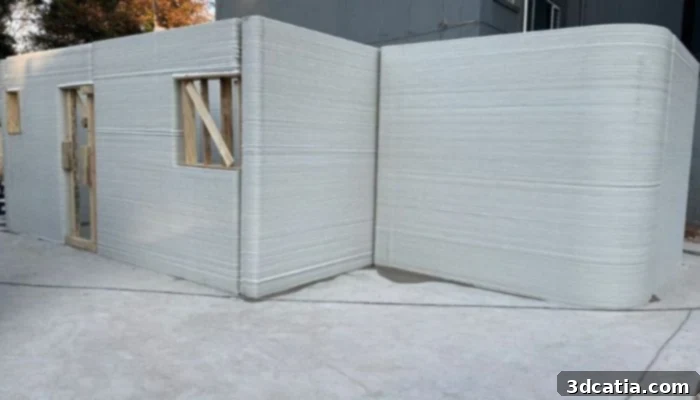
A partially completed concrete 3D printed house in South Africa (photo credits: CyBe)
What are your thoughts on this innovative earthquake-proof 3D printed housing solution for South Africa? Do you envision this technology becoming a global standard for disaster-resilient construction? Would you consider living in a 3D printed home designed to withstand seismic forces? We invite you to share your perspectives and engage in the conversation by leaving a comment below or by connecting with us on our LinkedIn, Facebook, and Twitter pages! Don’t forget to sign up for our free weekly Newsletter here to receive the latest updates and breaking news in the world of 3D printing directly to your inbox! You can also explore all our insightful videos and interviews on our YouTube channel for more in-depth content.
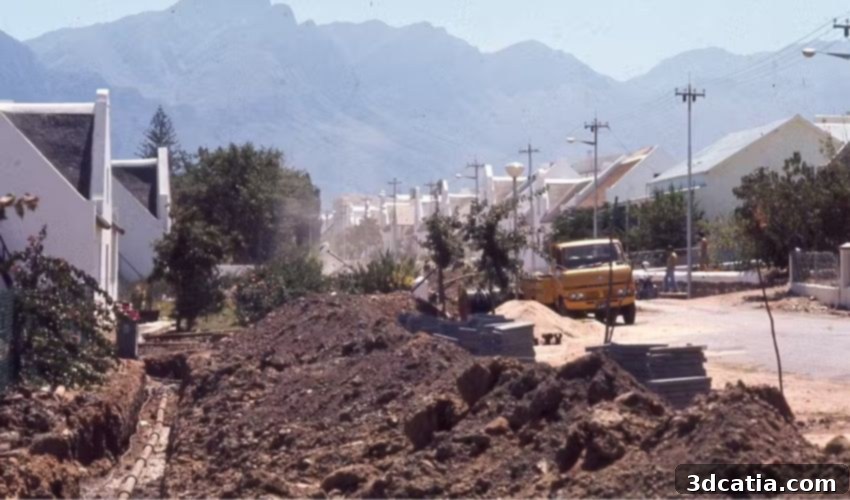
*Cover Photo: Damage from one of the biggest South African earthquakes (photo credits: Fagan Architects)