
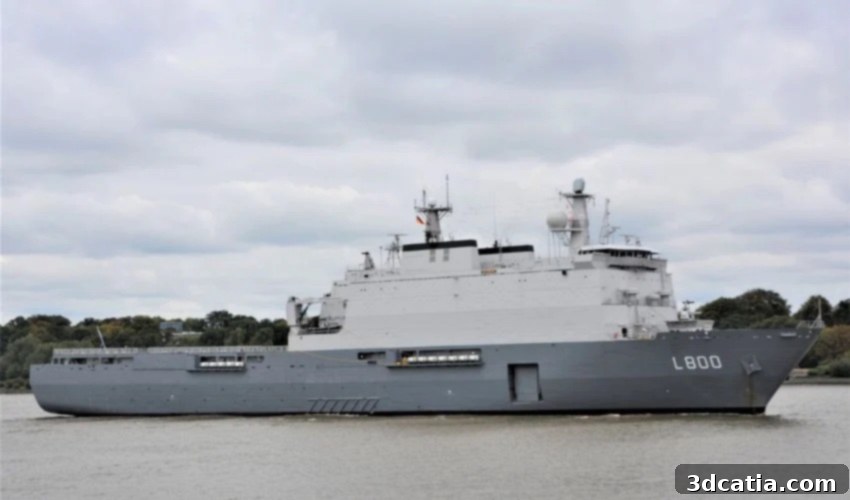
Royal Dutch Navy Pioneers Onboard 3D Printing with Nanoe’s Zetamix for Enhanced Maritime Readiness
The integration of additive manufacturing into naval operations is rapidly transforming maritime logistics and defense capabilities worldwide. Numerous examples already highlight how sea-based naval stations are leveraging 3D printing to enhance efficiency and responsiveness. A prime illustration of this forward-thinking approach is the U.S. Navy, which has actively deployed 3D printing technology from manufacturers like ICON to ensure swift reactions in potential crisis scenarios at sea. This innovative trend is not confined to the United States; Europe is also making significant strides. Our focus now shifts to the Netherlands, where the Royal Dutch Navy has forged a strategic partnership with the pioneering additive manufacturing company Nanoe. This collaboration aims to revolutionize the production of critical components for their Landing Platform Dock (LPD) ships, vessels specifically designed for amphibious operations and crucial during wartime, often integrating a landing station. The ambitious plan involves utilizing Nanoe’s advanced Zetamix filaments to manufacture these vital parts directly, signaling a new era of self-sufficiency and operational flexibility for the Dutch fleet.
This pivotal move by the Royal Dutch Navy underscores a broader paradigm shift within global defense forces towards decentralizing manufacturing and improving supply chain resilience. Traditional naval supply chains, often linear and vulnerable to disruption from geopolitical instability, natural disasters, or logistical bottlenecks, are increasingly being supplemented or replaced by agile, on-demand production methods. By adopting additive manufacturing, naval forces can significantly mitigate delays, reduce reliance on external suppliers for spare parts, and ensure that critical components are available precisely when and where they are needed, even in remote or contested environments. The ability to print parts directly on a vessel or at a forward operating base dramatically shortens the lead time for repairs and replacements, translating directly into enhanced operational readiness and reduced downtime for essential naval assets. This strategic foresight is crucial for maintaining a competitive edge in modern naval warfare and humanitarian operations alike, offering unparalleled responsiveness in dynamic situations.
Nanoe: A Pioneer in Ceramic and Metal 3D Printing Filaments
Headquartered in Ballainvilliers, France, Nanoe has distinguished itself as a leader in advanced materials since its inception in 2008. The company initially concentrated on the production of specialized materials within the ceramic sector, building a strong foundation of expertise in high-performance materials. A decade later, in 2018, Nanoe introduced its groundbreaking Zetamix solution, a significant innovation comprising a range of ceramic and metal filaments specifically engineered for additive manufacturing. This innovation was heralded as a breakthrough, offering the industry’s first accessible ceramic and metal filaments, thereby democratizing the production of high-strength, durable components using widely available Fused Filament Fabrication (FFF) 3D printers. The development of Zetamix filaments represented a pivotal moment, opening new possibilities for industries that previously found ceramic and metal 3D printing cost-prohibitive or overly complex, making advanced materials more attainable for diverse applications.
Zetamix filaments are ingeniously designed to simplify the intricate process of metal and ceramic additive manufacturing. Traditionally, printing with these advanced materials often required highly specialized, expensive equipment such as Selective Laser Melting (SLM) for metals or binder jetting for ceramics, accompanied by complex and time-consuming post-processing steps. Nanoe’s approach, however, intelligently leverages the widespread accessibility of FFF technology. These innovative filaments consist of a high percentage of finely ground metal or ceramic powder uniformly embedded in a polymeric binder. After the initial 3D printing phase, the resulting “green part” undergoes a two-stage post-processing sequence: first, debinding to meticulously remove the polymer binder, and then sintering, where the part is heated to near-melting point to consolidate the powder particles into a dense, solid, and robust component. This sophisticated post-processing results in final parts with mechanical properties comparable to, or even exceeding, those produced by conventional manufacturing methods, but with the added benefits of geometric freedom, rapid prototyping, and customization inherent to 3D printing. The compatibility with standard FFF printers drastically lowers the entry barrier for organizations seeking to experiment with and adopt advanced material 3D printing, making it an attractive solution for various industrial and defense applications.
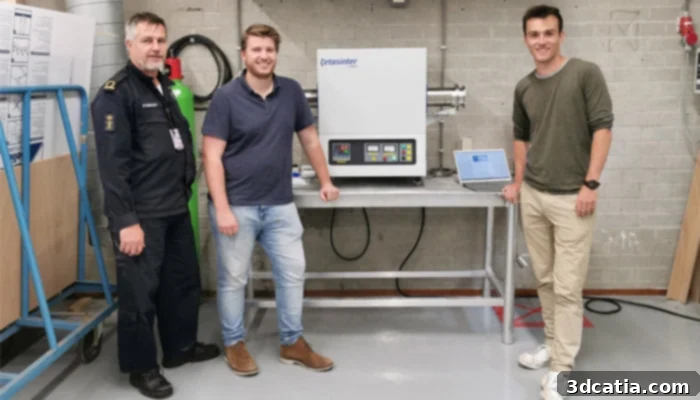
Oscar Koenig, 3D printing engineer, and Max Nijpels, additive manufacturing specialist at the Dutch Navy, demonstrate the integration of 3D printing technology. (Photo credits: Nanoe)
Strategic Collaboration: Nanoe and the Royal Dutch Navy
The partnership between Nanoe and the Royal Dutch Navy marks a significant and forward-looking step in the adoption of advanced manufacturing for maritime defense applications. As a cornerstone of this collaboration, the Dutch Navy has acquired a complete Zetamix system, which is currently undergoing an extensive and rigorous evaluation and testing phase. This initial period is absolutely critical, as it focuses on meticulously determining the essential properties and performance characteristics of 3D printed parts produced using Zetamix filaments. Key parameters under intense scrutiny include the overall quality of the components, their dimensional accuracy, the crucial surface finish, and, perhaps most importantly, their mechanical strength and durability. Given the exceptionally demanding operational environment of naval vessels, where parts are routinely exposed to extreme conditions such as relentless corrosion from saltwater, high pressures, constant vibrations, and wide temperature fluctuations, these evaluations are paramount. The printed parts must not only perform reliably under these harsh conditions but also withstand the severe realities of sustained sea operations, ensuring the integrity and safety of the vessel and its crew.
A primary objective of this comprehensive testing phase is to ensure that the 3D printed components can achieve the stringent certifications required for naval use. Certification within the defense sector is an exceptionally rigorous and multi-faceted process, involving strict adherence to complex international and national standards for safety, operational performance, and material integrity. The ability to consistently produce certified parts through additive manufacturing would represent a monumental achievement for both Nanoe and the Royal Dutch Navy, allowing the fleet to implement these cutting-edge technologies with unwavering confidence across its entire range of vessels. This certification process typically involves extensive mechanical testing, including analyses of tensile strength, fatigue resistance, impact resistance, and creep. Furthermore, non-destructive testing (NDT) techniques are employed, along with often long-term environmental exposure simulations, to thoroughly validate the reliability, longevity, and structural integrity of the printed parts. The successful completion of this phase will unequivocally pave the way for widespread adoption, transforming onboard 3D printing from an experimental endeavor into a standard and indispensable practice for naval maintenance and operations.
A significant and strategic factor in the Royal Dutch Navy’s decision to partner with Nanoe lies in the inherent compatibility of Zetamix filaments with FFF 3D printers. FFF, or Fused Filament Fabrication, stands as one of the most widely utilized and accessible forms of 3D printing globally. Its relative simplicity, robust nature, and significantly lower equipment costs compared to other metal or ceramic additive manufacturing techniques make it an exceptionally ideal choice for onboard deployment where space, power, and operational complexity are critical considerations. This compatibility offers dual, transformative benefits: it substantially reduces the capital expenditure and initial investment associated with acquiring specialized ceramic and metal 3D printing machinery, and, crucially, it effectively shortens manufacturing times from weeks or months to mere hours or days. For naval operations, particularly in scenarios where space is often limited, and rapid deployment and repair are paramount, the ability to leverage existing or easily deployable FFF systems for advanced material printing is an absolute game-changer. This translates directly into quicker turnaround times for urgently needed spare parts, enabling faster repairs, minimizing ship downtime, and significantly reducing the overall logistical footprint of naval missions.
Revolutionizing Onboard Maintenance and Logistics
Beyond the initial testing and certification phases, the Royal Dutch Navy harbors ambitious and visionary plans to directly equip its ships with these transformative 3D printing technologies. This strategic vision aims to confer unparalleled levels of flexibility, autonomy, and resilience upon the fleet. By integrating additive manufacturing capabilities directly onboard, naval vessels can essentially become self-sufficient, mobile mini-factories, capable of producing custom parts, specialized tools, and vital prototypes entirely on demand. This capability profoundly diminishes the traditional reliance on complex and often slow global supply chains, which are inherently vulnerable to a myriad of disruptions, including geopolitical instability, natural disasters, and logistical bottlenecks. Imagine a critical component failing while a ship is deployed in a remote or hostile location; instead of waiting days or even weeks for a replacement part to be shipped across vast distances, it could be precisely printed and installed within a matter of hours, dramatically reducing downtime and maintaining mission effectiveness without interruption. This empowers naval forces to operate with greater independence and sustained operational tempo.
Max Nijpels, the distinguished additive manufacturing specialist at the Royal Netherlands Navy, articulates this conviction with clarity: “Printing metal parts directly on board would be a significant progress as it would help the Navy in increasing combat readiness and in reducing the logistical footprint.” This insightful statement encapsulates the profound and multifaceted impact of onboard additive manufacturing. Increased combat readiness stems directly from the ability to rapidly repair or replace vital parts, ensuring that ships remain fully operational and capable of executing their diverse missions without compromise. Whether it’s a simple bracket, a complex valve, a specialized repair tool, or a custom fitting, the immediate ability to produce these items on the spot minimizes mission interruptions and enhances tactical agility. Furthermore, reducing the logistical footprint is equally critical for modern naval strategy. It means fewer physical spare parts need to be meticulously stored on the ship or at distant shore bases, thereby freeing up invaluable space, reducing overall transportation costs, and decreasing the complexity of supply lines. This leaner, more efficient logistical approach not only conserves resources but also significantly enhances operational security by making the supply chain less exposed to threats and vulnerabilities, contributing to a more resilient and agile naval presence.
The Strategic Advantages for LPD Ships and Beyond
The particular focus on LPD (Landing Platform Dock) ships for this pioneering initiative is exceptionally strategic. LPDs are incredibly versatile vessels, serving crucial roles in amphibious warfare, humanitarian aid missions, and disaster relief operations. They are designed to carry significant numbers of troops, various types of vehicles, and landing craft, making them critical assets in a wide array of operational scenarios. The newfound ability to 3D print parts for these complex ships means that repairs, custom modifications, and even on-the-fly adaptations can be performed with unprecedented rapidity, even while the vessel is actively deployed in distant waters. For instance, a broken bracket for a landing craft, a worn-out pump impeller requiring urgent replacement, or a specialized tool for critical vehicle maintenance could be fabricated precisely on demand. This ensures that the LPDs can maintain their rigorous operational tempo and readiness, effectively supporting diverse missions without being hampered by traditional part availability issues. The implications of this capability extend far beyond routine maintenance; it opens exciting new avenues for the rapid prototyping of mission-specific tools or immediate adaptations necessitated by unforeseen circumstances, thereby significantly enhancing the adaptability and responsiveness of the fleet in dynamic and unpredictable operational environments.
Moreover, the judicious use of Zetamix ceramic and metal filaments provides distinct and complementary advantages for naval applications. Metal parts, fabricated with Zetamix metal filaments, offer superior strength, ductility, and durability, which are absolutely essential for structural components, high-load applications, or parts subjected to significant wear and tear. Ceramic parts, on the other hand, fabricated using Zetamix ceramic filaments, boast exceptional hardness, remarkable heat resistance, and outstanding corrosion resistance. These properties make them ideally suited for components exposed to aggressive chemicals, extremely high temperatures, or the corrosive rigors of seawater environments, such as pump components, sensor housings, or specialized insulation parts. By expertly combining these diverse material capabilities with the inherent flexibility and accessibility of FFF 3D printing, the Royal Dutch Navy gains a powerful and versatile toolkit for addressing an incredibly wide spectrum of maintenance, repair, and customization needs. This sophisticated multi-material approach ensures that the optimal material can be meticulously selected for the specific application, thereby maximizing performance, extending the operational lifespan of critical ship components, and ultimately enhancing the overall reliability of the fleet.
The Future of Naval Additive Manufacturing
The groundbreaking partnership between the Royal Dutch Navy and Nanoe is a clear and compelling indicator of the profound transformative potential that additive manufacturing holds within the maritime defense sector. It represents a proactive and visionary step towards building more resilient, agile, and self-sufficient naval forces capable of operating effectively in the complex geopolitical landscape of the 21st century. As 3D printing technology continues its rapid evolution, we can confidently anticipate even more sophisticated materials, advanced processes, and integrated solutions becoming available, further expanding the vast range of applications for onboard manufacturing. While challenges such as ensuring material consistency, managing post-processing requirements in constrained environments, and developing a skilled workforce for these advanced technologies remain, collaborations like this one are absolutely crucial for overcoming these hurdles and driving relentless innovation forward. The strategic implications of this shift are immense and far-reaching, impacting every facet of naval operations, from initial design and procurement to routine maintenance, emergency repairs, and strategic operational deployment. Ultimately, this integration is poised to redefine how navies operate, maintain readiness, and project power in the modern era.
This initiative not only solidifies the Netherlands’ position at the absolute forefront of defense innovation but also serves as an invaluable blueprint and inspiring example for other nations actively considering similar technological integrations within their own naval forces. The long-term vision is a naval fleet that is not only robust, technologically advanced, and exceptionally capable but also inherently adaptable to unforeseen challenges with unprecedented speed, independence, and efficiency. The “factory at sea” concept, once merely a futuristic dream confined to science fiction, is rapidly becoming a tangible and operational reality. This promises a future where naval vessels are truly self-reliant, always mission-ready, and capable of sustained operations regardless of their geographical location or the complexities of their mission, fundamentally enhancing global maritime security and operational capabilities.
What are your thoughts on this groundbreaking partnership between the Royal Dutch Navy and Nanoe? How do you foresee onboard additive manufacturing changing the landscape of naval operations and global maritime defense strategy? Share your insights and opinions in a comment below! You can also connect with us and stay updated on the latest 3D printing news and industry developments by following our official pages on LinkedIn, Facebook, and Twitter. Don’t miss out on important industry developments – sign up for our free weekly Newsletter here to get the freshest 3D printing news, exclusive articles, and expert insights delivered straight to your inbox! Additionally, explore a wealth of informative content, exclusive interviews, and captivating demonstrations on our dedicated YouTube channel for an in-depth look at the world of additive manufacturing.
*Cover Photo Credits: Royal Netherlands Navy