
The Future of Vision: Exploring the Leading Innovations in 3D Printed Eyewear
The medical sector, along with countless other industries, has been revolutionized by the advent of 3D printing technology, primarily due to its unparalleled ability to create fully customizable and highly precise parts. It comes as no surprise, then, that one of the most rapidly expanding applications of additive manufacturing is within the eyewear industry. This burgeoning market for 3D printed glasses and sunglasses is projected to soar from $182 million in 2018 to an impressive $3.4 billion by 2028. The core appeal lies in the technology’s capacity to tailor eyeglass frames to perfectly fit each individual’s unique facial contours. This bespoke approach results in eyewear that is not only lighter and more comfortable but also more durable and aesthetically pleasing than traditionally manufactured alternatives. The freedom of design offered by 3D printing allows for intricate geometries and innovative features that were previously impossible to achieve, truly transforming how we perceive and wear glasses. From prescription eyewear to advanced smart glasses and athletic sunglasses, 3D printing is pushing the boundaries of what’s possible. We have delved deep into the market to showcase the leading examples of 3D printing in both optical and sunglass applications, providing a comprehensive overview of the innovative solutions currently available. These pioneering companies, listed here in alphabetical order, represent the cutting edge of this exciting technological shift.
Pioneering Brands and Their 3D Printed Eyewear Solutions
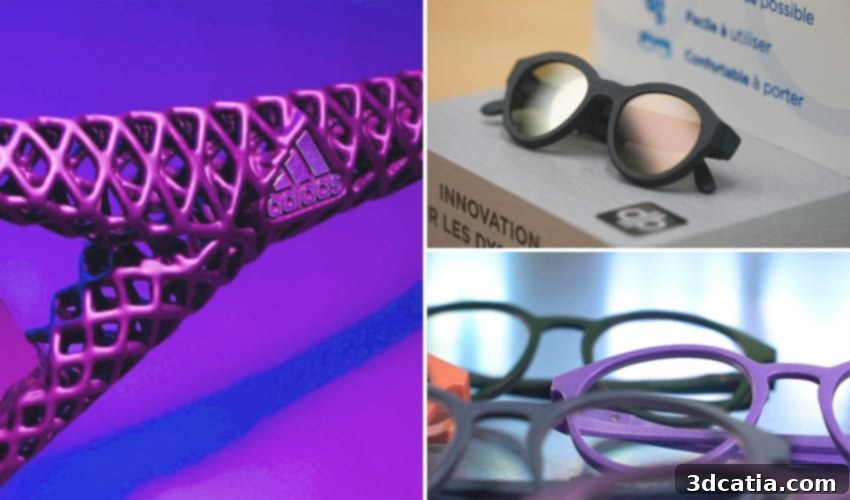
Abeye: 3D Printed Smart Glasses for Dyslexic Children (Lexilens)
Abeye, a dynamic French startup nurtured within the ATOL Les Opticiens incubator, stands at the forefront of developing electronic glasses designed to significantly enhance the well-being of its wearers. Among its most innovative offerings is the Lexilens range, a groundbreaking solution specifically engineered to alleviate the challenges faced by individuals suffering from dyslexia. These ingenious glasses empower the wearer to activate a specialized filter with a simple press, effectively eliminating the distracting “mirror images” often perceived by dyslexic individuals. The impact of such a feature is profound, improving reading comprehension and reducing eye strain for many. The pivotal role of additive manufacturing in the extensive research and development phase of this project cannot be overstated. By utilizing advanced 3D printing technologies like HP Multi Jet Fusion, Abeye’s engineering teams were able to rapidly iterate and test a multitude of different frame designs. This agility in prototyping allowed for efficient design optimization, ensuring that the final Lexilens frames are not only functional but also comfortable and durable for young users. The ability to quickly produce and evaluate numerous design variations significantly accelerated the development cycle, bringing this transformative technology to those who need it most.

Photo Credits: Abeye
Adidas: High-Performance 3D Printed Sunglasses (3D CMPT)
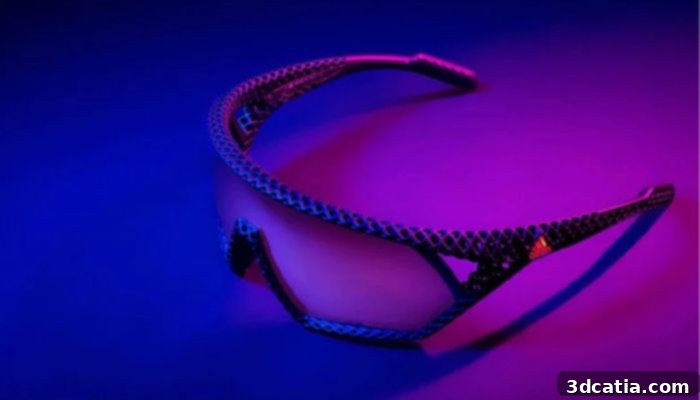
The world of sports and athletic gear has widely embraced additive manufacturing for its potential to create high-performance products, and Adidas, a global leader in sportswear, is certainly no exception. The renowned German sports brand recently unveiled its innovative use of 3D printing to craft the frames for their latest line of sunglasses. Dubbed 3D CMPT, these cutting-edge frames are the result of a strategic collaboration with Marcolin Group, a distinguished eyewear company known for its partnerships with luxury brands such as Tom Ford, Moncler, and Guess. The 3D CMPT model stands out remarkably, not only for its astonishingly light weight, coming in at a mere 20 grams, but also for its distinctive spiral structure. This unique design is achieved through the use of flexible nylon, enhanced with a special coating that imparts a rubberized effect, ensuring both flexibility and a premium feel. Furthermore, Adidas has integrated non-slip contact points onto the nose pads, significantly improving stability and maximizing comfort, especially during rigorous physical activity. This commitment to combining advanced manufacturing techniques with ergonomic design underscores Adidas’s dedication to providing athletes with superior eyewear that performs under the most demanding conditions.
BRAGi: Personalized and Bespoke 3D Printed Eyewear
For those in pursuit of additively manufactured eyewear that exemplifies exceptional tactile quality and striking aesthetic appeal, BRAGi offers a compelling solution. This brand is dedicated to creating customized and truly bespoke 3D printed eyewear, integrating advanced 3D scanning, sophisticated parametric design, and cutting-edge 3D printing technology throughout its entire production process. BRAGi leverages a proprietary scanning system that is capable of precisely identifying an impressive 72 key points on the wearer’s face. This intricate data serves as the fundamental basis for the subsequent design of the glasses’ frame, ensuring an unparalleled level of personalization and fit. The accuracy of this scanning process is crucial for creating eyewear that feels like a natural extension of the wearer’s face, eliminating common issues of discomfort or slippage. Regarding the 3D printing phase, BRAGi utilizes a high-performance 3D printer from a reputable German manufacturer. While the company maintains discretion about the specific model of the printer and the exact medical bioprinting materials employed, their commitment to advanced technology and precision engineering is evident in the quality of their final products. BRAGi’s approach underscores the immense potential of 3D printing to deliver highly individualized and premium eyewear experiences.

Photo Credits: BRAGi
Fitz Frames: 3D Printed Glasses for Every Age, Optimized for Fit
Fitz Frames operates on the foundational belief that everyone, regardless of age, deserves to look and feel fantastic in their glasses, considering they are worn from dawn until dusk. To achieve this, the company specializes in producing a comprehensive range of 3D printed glasses, including prescription lenses, blue light filtering options, and sunglasses, catering to both adults and children aged three years and older. The company’s innovative approach ensures the best possible fit for every face through its intuitive app, which precisely measures the exact dimensions of the user’s face. This data then informs the 3D printing process, allowing Fitz Frames to create what they proudly claim are the best-fitting glasses ever. Users are presented with a wide array of frame shapes and colors, enabling extensive personalization to match individual styles and preferences. While a one-time purchase is available for $96, complete with a reassuring 30-day guarantee, Fitz Frames also offers an attractive annual subscription plan at $185. This plan provides unlimited frames, offering peace of mind against accidents or the desire for new styles. Like many other innovators in our list, Fitz Frames utilizes laser-based additive manufacturing, most likely Selective Laser Sintering (SLS) technology, though the specific process is not explicitly named. This technology allows for the creation of durable, lightweight, and perfectly tailored eyewear, enhancing comfort and style for all.

Hoet: Combining Tradition with Innovation in Titanium 3D Printed Glasses
The Hoet family, custodians of a prestigious fifth-generation optical store nestled in the historic heart of Bruges, has recently unveiled their exquisite ‘Made in Belgium’ collection of 3D laser-printed eyeglasses crafted from titanium. With a rich heritage dating back to its establishment in 1945, the family-owned shop embarked on an ambitious four-year journey of dedicated research and development. Their unwavering goal was to seamlessly blend modern technological advancements with timeless elegance and distinctive style. The culmination of this profound commitment is the breathtaking 3D printed “Hoet Couture” collection. This collection brilliantly showcases the transformative power of additive manufacturing, yielding eyeglass frames with astonishingly intricate details that would be utterly unachievable through conventional production methods. The use of titanium, a material renowned for its strength, lightweight properties, and hypoallergenic nature, further elevates the collection. Beyond the aesthetic and functional benefits, Hoet’s innovative production process also prioritizes sustainability, minimizing waste and utilizing environmentally conscious materials. This strategic embrace of 3D technology not only enables unprecedented design options but also vividly demonstrates the significant advantages that additive manufacturing brings to the high-end eyewear market, truly combining the best of tradition and innovation.
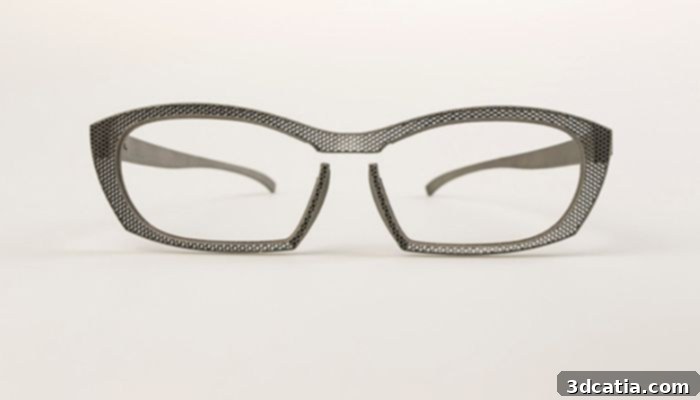
Photo Credits: Hoet
Klenze & Baum: Durable and Repairable 3D Printed Eyewear
Klenze & Baum has established a notable presence in Munich with its distinctive production of additively manufactured eyewear, emphasizing durability and user-friendliness. A standout feature in the design and production of their glasses, particularly in the VOYOU and SUMO collections, is their specially patented ball joint. This innovative hinge mechanism offers a unique and highly practical function: if a temple (arm) of the glasses is subjected to excessive force or is overstretched, it is designed to give way and can even safely detach. This ingenious design prevents breakage of the frame itself. Crucially, the hinge can be effortlessly reattached within mere seconds with a simple flick of the wrist, allowing for quick and convenient repairs without the need for specialized tools. Thanks to the inherent advantages of additive manufacturing, these virtually indestructible glasses are not only remarkably lightweight but also champion a significant sustainability aspect. Their easy repairability negates the necessity of purchasing an entirely new pair should an incident occur, thereby reducing consumer waste. Furthermore, by embracing 3D printing, Klenze & Baum actively contributes to preventing overproduction, aligning with environmentally conscious manufacturing practices. This commitment to intelligent design and sustainability sets Klenze & Baum apart in the eyewear market.
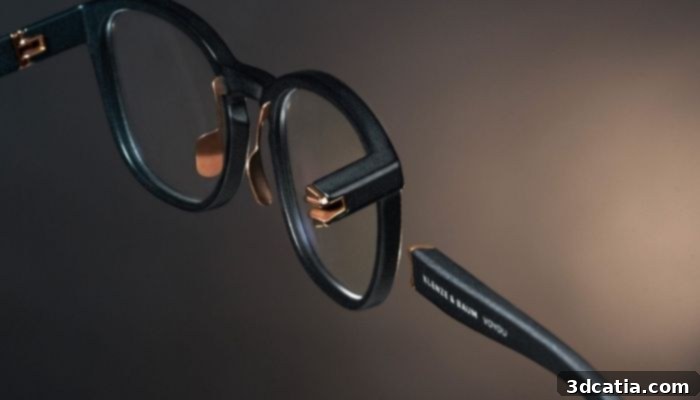
Photo Credits: Klenze & Baum
Luxexcel: The Innovation of 3D Printed Lenses
While many examples highlight the incredible advancements in 3D printed frames, Luxexcel, based in the Netherlands, introduces an even more groundbreaking innovation: actual 3D printed lenses. This company has pioneered a revolutionary approach to eyewear by offering the capability to 3D print both prescription glasses and specialized lenses. Their comprehensive solution, aptly named VisionPlatform, integrates a purpose-built 3D printer, proprietary software, and specially adapted materials, creating an end-to-end process for lens manufacturing. The core of Luxexcel’s technology relies on a sophisticated process of depositing tiny droplets, which are then meticulously formed layer by layer to construct the final optical lens. This additive process allows for unprecedented control over lens geometry and properties, potentially enabling features that are difficult or impossible to achieve with traditional lens fabrication methods. The ability to directly print custom lenses opens doors for highly personalized vision solutions, integrating functions like filters, guides, or even micro-electronic components directly into the lens itself. In the accompanying video, Joost van Abeelen, CPO of Luxexcel, provides an insightful overview of the fundamental principles and transformative potential of this cutting-edge technology, demonstrating how 3D printing is revolutionizing vision correction from the ground up.
Materialise: Driving Sustainable and Optimal 3D Printed Eyewear
The Belgian company Materialise holds a prominent position in the global 3D printing industry, renowned for its extensive portfolio of projects and its pioneering contributions since its founding in 1990. With decades of experience, Materialise has collaborated with a myriad of companies across diverse sectors. However, a significant focus since 2013 has been dedicated to the production of 3D printed glasses, with an unyielding commitment to identifying optimal technologies and sustainable materials. Recognizing the unique and stringent requirements inherent in eyewear manufacturing, Materialise has made substantial investments in researching and developing various applications of 3D printing for this specific market. Their expertise extends from working with niche designer ateliers, creating exclusive and intricate designs, to partnering with mainstream consumer brands to scale production and integrate additive manufacturing into broader product lines. In every collaboration, Materialise has consistently exceeded expectations, transforming each project into a distinctive experience that yields unique and innovative results. Their unwavering dedication to innovation, quality, and environmental responsibility positions Materialise as a key influencer in shaping the future of 3D printed eyewear, ensuring both performance and sustainability.
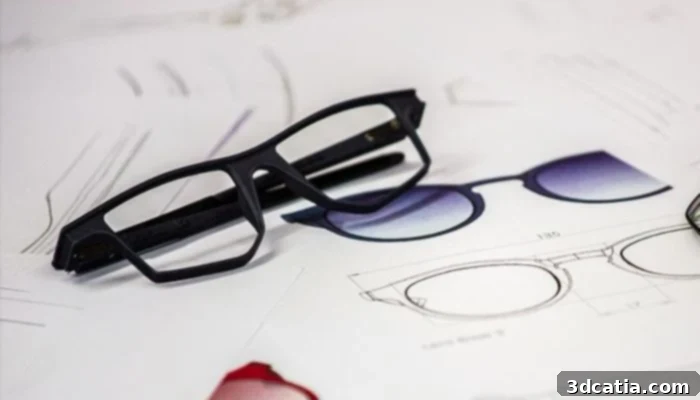
Photo Credits: Materialise
Monoqool: Diverse 3D Printed Glasses Collections Focused on Comfort
Hailing from Denmark, Monoqool is driven by the ambition to leverage cutting-edge technologies and advanced materials to craft the most innovative eyewear possible, with a paramount emphasis on wearer comfort. Monoqool’s extensive range of 3D printed glasses showcases a rich variety of frame styles and colors, all meticulously produced using high-quality polyamide and laser-based additive manufacturing, strongly suggesting the use of industrial Selective Laser Sintering (SLS) printers. This technology allows for the creation of incredibly lightweight and flexible frames. According to the company, the intricate printing process for a single pair of glasses can take up to 24 hours, highlighting the precision and complexity involved. Their acclaimed Slider series exemplifies this dedication, with frames composed of up to 600 super-fine layers. Following the printing, these frames undergo an exhaustive post-processing regimen, involving more than 30 distinct steps. These include critical treatments such as glassblasting for surface refinement, expert coloring to achieve vibrant hues, protective coating for enhanced durability, and meticulous polishing to achieve a flawless finish, all before the final product is ready for the consumer. This meticulous attention to detail ensures that Monoqool delivers eyewear that is not only visually striking but also exceptionally comfortable and long-lasting.
MYKITA: The MYLON Collection, Serially Produced 3D Printed Eyewear
MYKITA, a distinguished German eyewear company, draws its unique name from its origins in 2003, when it was situated in an old “Kita” (German for daycare). This brand is deeply committed to integrating modern technologies to produce innovative, durable, and aesthetically pleasing glasses. As expected, MYKITA has embraced 3D printing with its groundbreaking MYLON collection. The MYKITA MYLON collection is particularly significant as it represents the brand’s first serially produced line of eyewear utilizing advanced 3D printing technology. This collection encompasses both stylish sunglasses and high-quality optical glasses, catering to a wide range of visual needs and fashion preferences. The frames within the MYLON collection are meticulously crafted using Selective Laser Sintering (SLS) technology with high-grade polyamide powder. This choice of material and process results in frames that are exceptionally lightweight, offering outstanding comfort for extended wear, while also maintaining impressive strength and flexibility. The MYLON collection embodies MYKITA’s philosophy of combining cutting-edge manufacturing processes with timeless design, delivering eyewear that is both technologically advanced and exquisitely crafted, pushing the boundaries of what is achievable in modern eyewear design and production.
Netlooks: French Custom Eyewear Through Additive Manufacturing
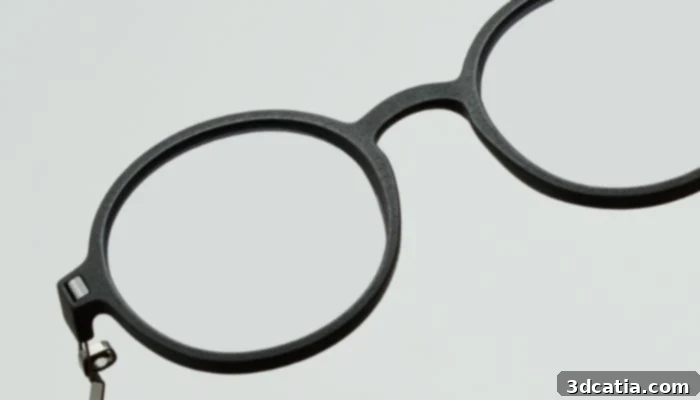
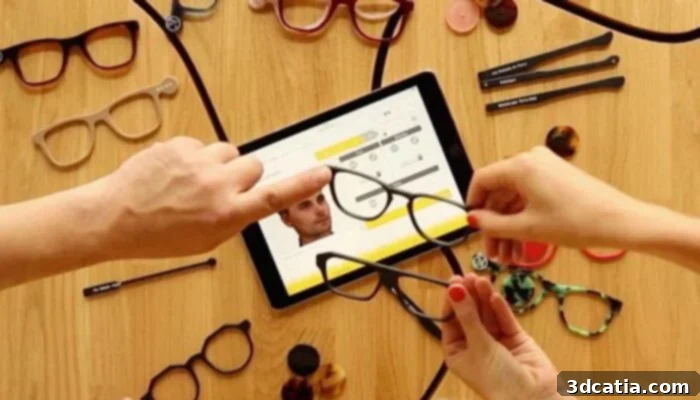
Netlooks, an innovative French eyewear manufacturer, has forged a strong and successful partnership with the renowned 3D printing service provider Sculpteo, a collaboration that has spanned over three years. This alliance has enabled Netlooks to specialize in designing and producing highly customized eyewear through the power of additive manufacturing, specifically utilizing the powder sintering process. The company employs PA12, a durable and versatile polyamide, to create frames that are meticulously adjusted to the wearer’s precise morphology. This includes critical measurements such as the length of the temples, the overall face width, and even the preferred color of the glasses. The wearer is granted significant freedom in choosing the frame color, ensuring a final product that is not only perfectly adapted to their physical dimensions but also aligns flawlessly with their personal style and aesthetic preferences. This level of customization ensures a superior fit and a truly unique piece of eyewear that conventional manufacturing methods simply cannot replicate. Netlooks’ commitment to tailored solutions, facilitated by advanced 3D printing techniques, represents a significant step forward in personalized vision care and fashion.
Odette Lunettes: High-Performance 3D Printed Eyewear for Sportsmen
The Belgian company Odette Lunettes has recently made waves with the launch of an exciting new collection of 3D printed eyewear, specifically designed with sports enthusiasts in mind. This innovative range leverages the capabilities of HP Multi Jet Fusion technology and utilizes a biosourced polyamide, PA11, meticulously developed by BASF. The collection, aptly named “Odette Lunettes X Tom Boonen,” is the result of a compelling collaboration with the celebrated Belgian cyclist Tom Boonen. The primary objective behind this partnership was to craft glasses that are not only perfectly suited for athletic pursuits but also maintain a high standard of design and aesthetics. Sports eyewear demands unique properties, including durability, a secure fit during movement, and lightweight construction, all of which are expertly addressed by 3D printing with advanced materials. Odette Lunettes is currently collaborating closely with Materialise, a leader in 3D printing solutions, who is entrusted with the precise and efficient printing of the frames. This partnership highlights a synergy between design expertise and manufacturing prowess, bringing to market a collection that caters to the specific needs of athletes without compromising on style or sustainability, thanks to the use of biosourced materials.
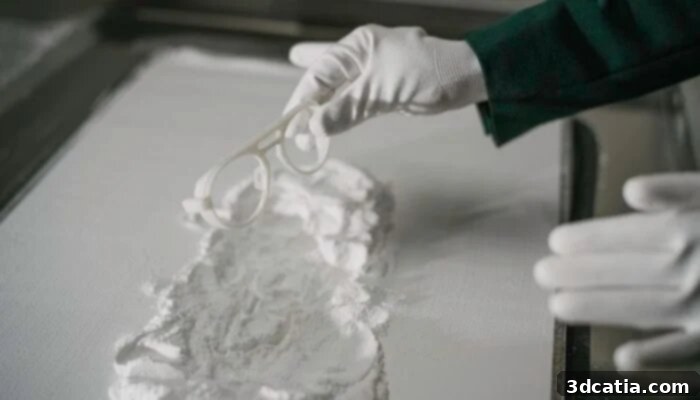
Photo Credits: Odette Lunettes
Rolf Spectacles: Sustainable Castor Bean 3D Printed Glasses
Rolf Spectacles, an innovative Austrian manufacturer, is making a significant mark with its commitment to sustainable 3D-printed eyewear. Their additively manufactured glasses are crafted with a truly eco-conscious approach, primarily utilizing materials derived from castor beans. This choice of a renewable and eco-friendly resource offers distinct advantages: the powder-based material, composed of castor beans and water, results in frames that are not only flexible and durable but also inherently natural and skin-friendly. This focus on natural, plant-based materials positions Rolf Spectacles at the forefront of environmentally responsible eyewear production. While they are most recognized for their pioneering work with plant-based materials, Rolf Spectacles also showcases expertise in creating eyewear from a diverse range of other premium materials, including exquisitely crafted wooden frames, robust titanium, elegant stone, and luxurious horn. A notable design and manufacturing advantage of Rolf’s glasses is that they are often printed as a single, cohesive piece. This innovative approach eliminates the need for separate suppliers to provide additional parts, streamlining the production process, reducing assembly complexity, and further enhancing the structural integrity and aesthetic purity of the eyewear. Rolf Spectacles truly embodies a blend of advanced manufacturing, natural materials, and sophisticated design.
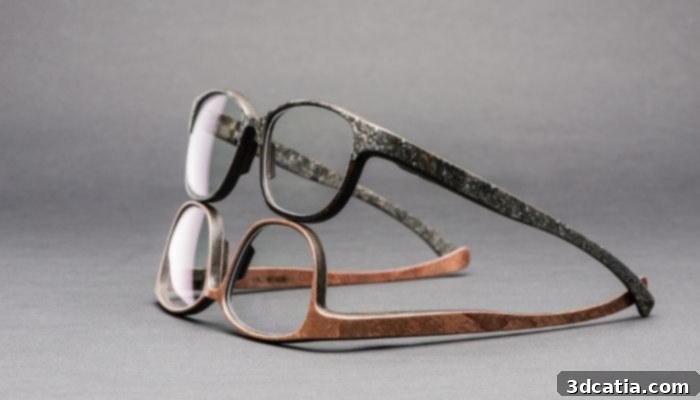
Photo Credits: Rolf Spectacles
Wire Glasses: British-Designed, Eco-Friendly 3D Printed Eyewear
Wire Glasses, a brand that marries innovative design with a strong commitment to environmental responsibility, offers sustainably crafted eyewear that is designed in London and meticulously handcrafted in Italy. Their core mission revolves around combining contemporary style with eco-friendly choices, striving for zero-waste production. Available as both optical glasses and sunglasses, much like many other versatile options featured on our list, their frames are a testament to sustainable manufacturing. These frames are 3D printed from a bio-plastic derived from castor beans, a renewable resource that significantly reduces environmental impact. Complementing the bio-plastic frame, each pair incorporates a single, elegantly designed stainless-steel wire, expertly crafted by eyewear specialists in Northern Italy. The lenses, manufactured in France, are made from an ecological resin, specifically bio-polyamide, further emphasizing their commitment to sustainable materials. Wire Glasses’ dedication extends beyond materials to include fair labor practices and a rigorous pursuit of zero waste throughout their production cycle. While the company maintains discretion regarding the precise 3D printing process they employ, their decision to embrace additive manufacturing is undeniably driven by its inherent benefits in significantly reducing material waste and enabling more sustainable production methods, showcasing a holistic approach to ethical and eco-conscious eyewear.
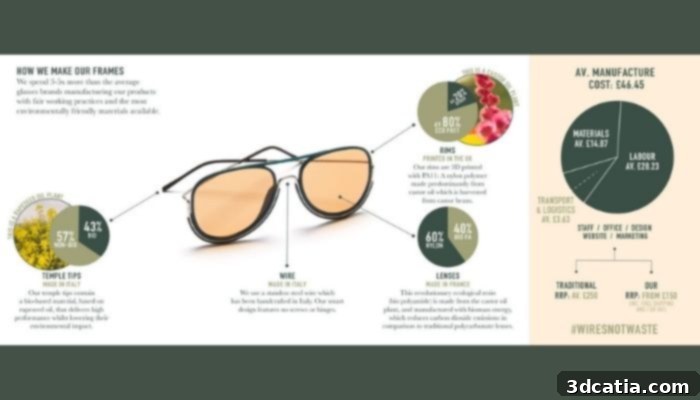
Photo Credits: Wire Glasses
YOU MAWO: Personalized 3D Printed Frames with Face Scanning Technology
YOU MAWO, an acronym for “Your Magic World,” is a German-based company that champions the highest standards of individuality and personalization in the additive manufacturing of its eyewear. By ingeniously leveraging advanced 3D technologies, YOU MAWO is able to precisely tailor the characteristics of its glasses to meet the unique needs and preferences of each wearer, ensuring a truly bespoke fit and aesthetic. The company employs EOS’s renowned Selective Laser Sintering (SLS) process for its 3D printing, a technology celebrated for its ability to produce highly complex and durable parts from powdered materials. For the crucial post-processing stage, YOU MAWO has adopted DyeMansion’s cutting-edge technology, which allows for superior surface finishing, coloring, and other treatments, elevating the quality and appearance of the final product. The personalization journey begins with a remarkably swift and convenient 20-second 3D scan, easily performed via a cell phone or tablet. This precise facial data is then meticulously used by YOU MAWO to design, adapt, and ultimately 3D print spectacle frames that perfectly conform to the wearer’s facial structure and style choices. This seamless integration of scanning, design, and advanced additive manufacturing ensures an unparalleled level of customization and comfort, truly bringing the “magic world” of personalized eyewear to life.
The Transformative Impact and Future Outlook of 3D Printed Eyewear
The innovative companies highlighted in this article unequivocally demonstrate that 3D printing is not merely a fleeting trend but a foundational technology that is rapidly reshaping the eyewear industry. The ability to create fully customizable frames and even lenses addresses a critical consumer need for perfect fit, enhanced comfort, and personalized style – aspects that traditional manufacturing struggles to deliver efficiently. Beyond individual customization, 3D printing offers significant benefits in terms of design freedom, enabling intricate geometries and lightweight structures previously unattainable. This leads to more ergonomic and aesthetically diverse products, from high-performance sports sunglasses to medical-grade smart glasses. Furthermore, a substantial number of these innovators are leveraging 3D printing to advance sustainability goals, utilizing bio-based materials, minimizing waste through on-demand production, and designing easily repairable products. As the technology continues to evolve, we can anticipate even greater advancements in material science, printing speed, and cost-efficiency. This will undoubtedly democratize access to bespoke eyewear, making advanced, personalized solutions available to a broader audience. The future of vision is increasingly digital, and 3D printing stands as a cornerstone of this exciting evolution, promising a world where every pair of glasses is as unique as the individual wearing them.
What are your thoughts on this exciting revolution in 3D printed eyewear? Are there other groundbreaking companies or innovations you believe we should have included in our list? We invite you to share your insights and opinions by leaving a comment below, or by engaging with us on our LinkedIn, Facebook, and Twitter pages! For the very latest news and updates from the world of additive manufacturing, don’t forget to sign up for our free weekly Newsletter here, delivered straight to your inbox. You can also explore all our insightful videos and content on our YouTube channel.