
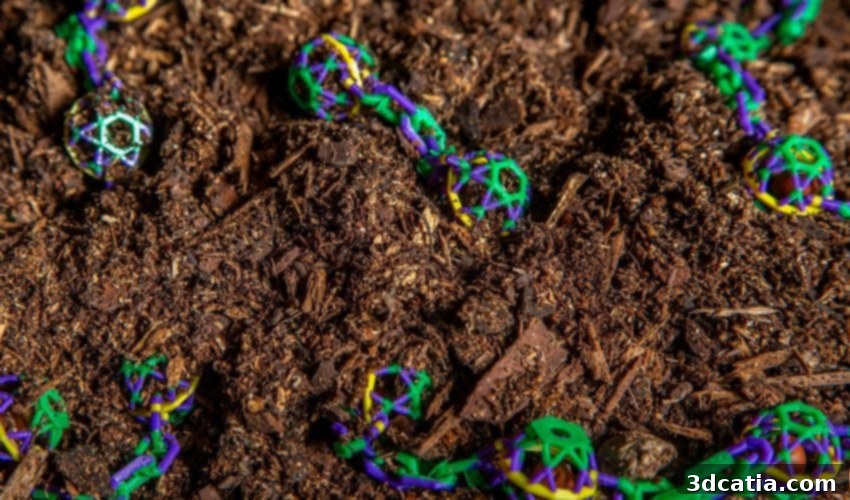
Embracing Sustainability: How 3D Printed, Biodegradable Beads Are Revolutionizing Mardi Gras
Mardi Gras, an annual celebration renowned for its vibrant parades, lively music, and unique traditions, is fast approaching. Historically centered around New Orleans, Louisiana, the festive period typically kicks off on January 6th and culminates on Fat Tuesday, a day of exuberant revelry before the solemnity of Lent. While the city transforms into a spectacle of color and sound, one iconic symbol of its parades, the ubiquitous Mardi Gras beads, presents a significant environmental challenge. These green, yellow, and purple necklaces, thrown from floats and eagerly caught by revelers, contribute to an enormous volume of waste. As global consciousness shifts towards sustainability, a pressing question arises: can innovative technology like 3D printing offer a solution to this long-standing environmental dilemma?
The tradition of tossing and collecting colorful beads is deeply ingrained in Mardi Gras culture. Throughout January and February, these plastic adornments can be seen draped over trees, buildings, and people, symbolizing the joyous spirit of the season. However, once the festivities conclude, these beloved trinkets quickly transform into a massive waste problem. The environmental repercussions are stark and well-documented. In past years, discarded Mardi Gras beads have severely clogged storm drains, leading to localized flooding and posing substantial dangers to aquatic life in the region’s delicate ecosystems. The financial burden is equally staggering; in 2014 alone, the New Orleans government reportedly spent an astounding $1.5 million to clear approximately 1,500 tons of Mardi Gras-related waste, a significant portion of which consisted of these plastic beads. The severity of the issue has even led some Mardi Gras krewes (parade organizations) to implement bans on traditional bead throwing, seeking more eco-friendly alternatives.
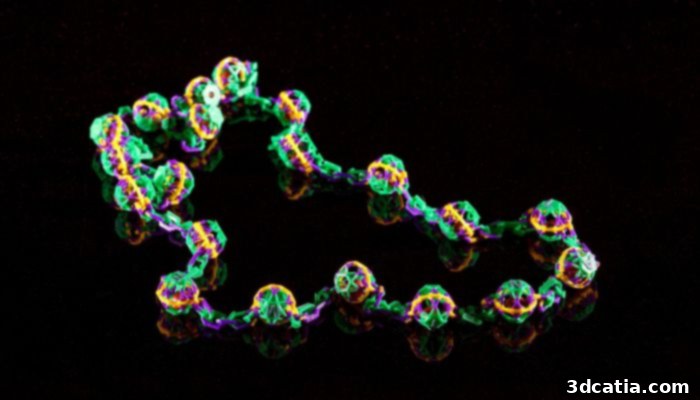
A closer look at LSU’s innovative 3D printed Mardi Gras beads, designed for sustainability.
Introducing PlantMe Beads: A Biodegradable Breakthrough
Amidst these environmental concerns, a groundbreaking solution has emerged from Louisiana State University (LSU). A dedicated team of researchers has pioneered the development of 3D printed, biodegradable Mardi Gras beads. But their innovation goes beyond mere biodegradability. These revolutionary beads are ingeniously designed to include seeds within their structure, transforming them into “PlantMe Beads.” This means that wherever these beads land and naturally decompose, they have the potential to sprout into Earth-friendly plants, actively contributing to ecological restoration rather than pollution. This visionary approach offers a promising path towards a more sustainable Mardi Gras celebration, blending cherished traditions with responsible environmental stewardship.
The Science Behind Sustainable Mardi Gras Beads
The innovative project to develop sustainable Mardi Gras beads was spearheaded by two talented students in Dr. Naohiro Kato’s LSU Lab, Alexis Strain and Lauren Rogers. Their primary objective was clear: to create viable alternatives to traditional plastic beads that would drastically reduce the monumental waste generated during the Carnival season. This current iteration of biodegradable beads builds upon Dr. Kato’s earlier research, which explored producing beads from microscopic algae. While that initial concept proved effective in terms of biodegradability, its high production cost presented a significant barrier to widespread adoption and commercial viability.
The new version of these eco-friendly beads represents a considerable advancement. It addresses the cost-effectiveness issue by integrating readily available 3D printing technology with bio-based plastics. These specialized plastics are designed to degrade efficiently in natural environments, particularly with the assistance of soil bacteria and emergent plant roots. The inclusion of seeds within each bead is a critical component, inspiring their apt name: PlantMe Beads. The underlying scientific principle is that as the seeds germinate and their roots emerge, they naturally attract soil bacteria. This microbial activity significantly accelerates the breakdown process of the surrounding plastic, ensuring that the beads not only decompose but also actively contribute to new plant life, truly embodying a circular, regenerative approach to waste management.
The LSU team is meticulously researching and testing various biopolymers to identify the most suitable materials for these innovative beads. Polyhydroxyalkanoates (PHAs), naturally produced by bacteria, are considered ideal candidates due to their excellent biodegradability. However, current challenges include limitations in 3D printing quality and achieving consistent color vibrancy with PHA materials. On the other hand, Polylactic Acid (PLA), a widely used bioplastic in the 3D printing industry, is biodegradable but only under specific composting conditions, making it less ideal for spontaneous outdoor decomposition. This nuance highlights the complexity of creating a truly effective solution. Consequently, the team is actively exploring optimal combinations of various bio-based polymers and investigating the specific types of plants and soil bacteria that can most effectively accelerate the degradation process, according to recent press releases from LSU. Their rigorous scientific approach aims to perfect a product that can withstand the rigors of a parade while remaining environmentally benign post-celebration.
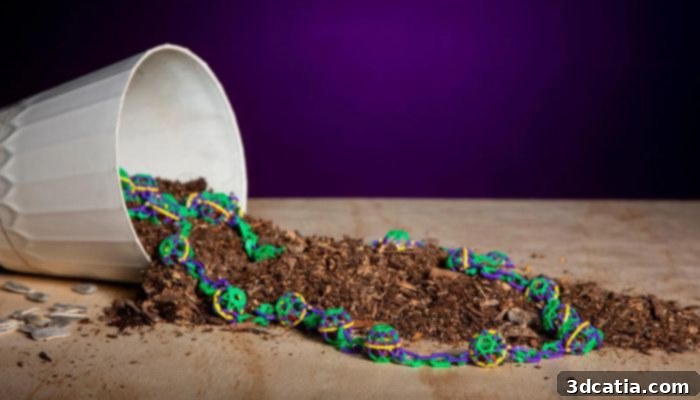
The ultimate goal: for these 3D printed Mardi Gras beads to biodegrade naturally, planting seeds and significantly reducing waste.
The Strategic Advantages of Additive Manufacturing for Eco-Friendly Beads
The selection of 3D printing, also known as additive manufacturing, as the core production method for these biodegradable Mardi Gras beads was a deliberate and strategic choice. This advanced manufacturing technique offers a multitude of benefits that are perfectly aligned with the project’s goals of sustainability, cost-effectiveness, and scalability. One significant advantage is the potential for decreased production costs in the long run, especially as materials become more refined and processes more optimized. Furthermore, 3D printing facilitates a “do-it-yourself” approach, potentially empowering communities or smaller krewes to produce their own eco-friendly beads locally, reducing reliance on distant manufacturers and complex supply chains. Most importantly, 3D printing provides an unparalleled ability to scale the production process efficiently through the implementation of 3D printing farms, allowing for the mass production required to meet the demands of an event as large as Mardi Gras.
Alexis Strain, one of the leading students on the project, eloquently articulated the broader vision for integrating 3D printing into environmental solutions. She stated, “I see 3D printing as a potential solution to some broader issues with plastic, because you can print things that are very specific to your needs without the need for transport and shipping, which can add additional ecological costs. I always wanted to be involved in some environmental aspect of Louisiana. I think here we have some beautiful wildlife, some beautiful wetlands, and that’s something that’s worth preserving.” Her comments underscore the potential of additive manufacturing to localize production, minimize transportation emissions, and create highly customized products that serve specific environmental purposes. This technology offers a paradigm shift from traditional mass production, enabling more agile, resource-efficient, and environmentally conscious manufacturing practices.
From Vision to Reality: The Future of Sustainable Celebrations
While the LSU team’s groundbreaking project will not be ready for mass deployment during Mardi Gras 2025, the researchers are diligently working towards a more ambitious target: making these 3D printed biodegradable beads widely available for Mardi Gras 2026. This timeline allows for further refinement of materials, optimization of the 3D printing process, and comprehensive testing to ensure both durability during the parade and effective biodegradation afterward. The team has already initiated promising discussions with the Krewe of Freret in New Orleans, one of the city’s largest and most influential parade organizations. Significantly, the Krewe of Freret made a pioneering decision this year to cease throwing traditional plastic beads, demonstrating a strong commitment to environmental responsibility. Their potential adoption of PlantMe Beads could serve as a powerful precedent, encouraging other krewes to embrace this sustainable innovation and collectively transform the environmental footprint of Mardi Gras. This initiative represents more than just a new type of bead; it embodies a cultural shift towards celebrating tradition in a manner that respects and preserves the natural beauty of Louisiana and beyond. You can find more details on LSU’s official blog HERE.
Beyond New Orleans: A Blueprint for Global Sustainability
The innovation from LSU has implications far beyond the vibrant streets of New Orleans. The development of 3D printed, biodegradable beads that also contain seeds presents a compelling blueprint for how festivals and large-scale events worldwide can mitigate their environmental impact. Many celebrations, from parades and concerts to sporting events, rely heavily on single-use plastics and disposable items that contribute to significant waste streams. This project demonstrates that with creative thinking and advanced manufacturing technologies like 3D printing, it is possible to maintain beloved traditions while simultaneously fostering ecological responsibility. Imagine music festivals where biodegradable glitter nourishes the soil, or sports events where commemorative items naturally integrate back into the environment. The PlantMe Beads concept highlights the potential for innovative materials and design to transform transient celebratory objects into agents of environmental renewal, paving the way for a new era of eco-conscious event planning and consumer products.
What are your thoughts on these innovative 3D printed Mardi Gras beads and their potential to revolutionize sustainable celebrations? We invite you to share your insights and opinions in a comment below or join the discussion on our LinkedIn, Facebook, and Twitter pages! Don’t forget to sign up for our free weekly Newsletter here to receive the latest 3D printing news directly to your inbox. You can also explore all our videos and interviews on our dedicated YouTube channel.