
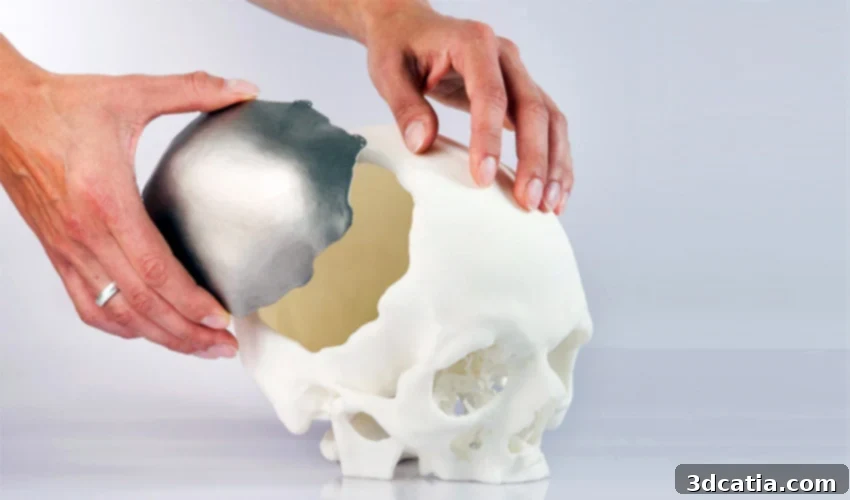
Revolutionizing Healthcare: The Transformative Power of 3D Printed Medical Implants
The medical sector is experiencing a profound revolution thanks to advancements in additive manufacturing, commonly known as 3D printing. This innovative technology has become a cornerstone for personalized medicine, offering the unprecedented ability to create unique, patient-specific models and devices. Among its most critical applications is the development of medical implants. These external elements are meticulously designed to be introduced into the human body, replacing compromised functions or treating various diseases. Optimal compatibility and functionality are paramount, making custom design essential. This imperative explains why 3D printing has transitioned from a novel concept to an indispensable tool in this highly specialized field.
The 3Dnatives team has curated an insightful selection of cutting-edge implants produced through 3D printing to illuminate the current state of development and future potential. This overview showcases implants that have already received regulatory approval, alongside others still undergoing intensive research and development. Each example vividly demonstrates the remarkable capabilities and continuous progress of additive manufacturing within the medical landscape, promising enhanced patient outcomes and entirely new therapeutic avenues.
3D Printed Implants for Auditory Ossicles (Ear Bones)
Within the intricate structure of our inner ear lie the hammer, anvil, and stirrup—three tiny bones, collectively known as ossicles. These are the smallest bones in the human body, reaching their full size at birth and playing a critical role in sound transmission. Their precise shape, size, and alignment are therefore crucial for proper hearing. Unfortunately, these delicate bones can be damaged or fractured, necessitating replacement. A remarkable case unfolded in South Africa, where a patient received 3D printed titanium ossicles after a severe car accident. Surgeons utilized a 3D scan of the patient’s middle ear to meticulously model bespoke implants. These custom bones were then precisely manufactured using a powder bed laser fusion machine. Titanium was the material of choice, highly favored for its exceptional biocompatibility, superior strength, and proven inertness within the human body, ensuring both patient safety and long-term durability for restored hearing.
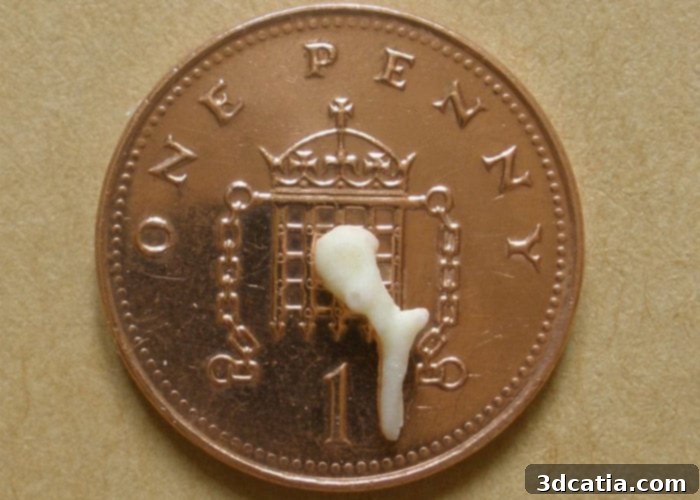
Ossicles are among the smallest bones in the human body. The picture shows a real ossicle and not the implant.
Revolutionary 3D Printed Jaw Implant Following Tumor Resection
Anelia Myburgh, an Australian resident from Melbourne, experienced a dramatic improvement in her quality of life thanks to the advancements in additive manufacturing technologies. After being diagnosed with a malignant tumor affecting her jaw and teeth, doctors were compelled to surgically remove a significant portion of her jaw—over 80%—resulting in considerable facial disfigurement. This complex case inspired maxillofacial surgeon George Dimitroulis to explore the transformative potential of 3D printing for creating custom medical models and implants. Dr. Dimitroulis successfully designed and produced a sophisticated jaw implant featuring a titanium framework, engineered to seamlessly integrate bone grafts. The extensive surgery, lasting over five hours, followed by several months of recovery, was ultimately a resounding success. This remarkable application of 3D printing not only restored Anelia’s facial structure and functionality but also significantly boosted her self-confidence and overall well-being, underscoring the profound impact of personalized additive manufacturing solutions in reconstructive surgery.
Renishaw’s Customized 3D Printed Rib Cage
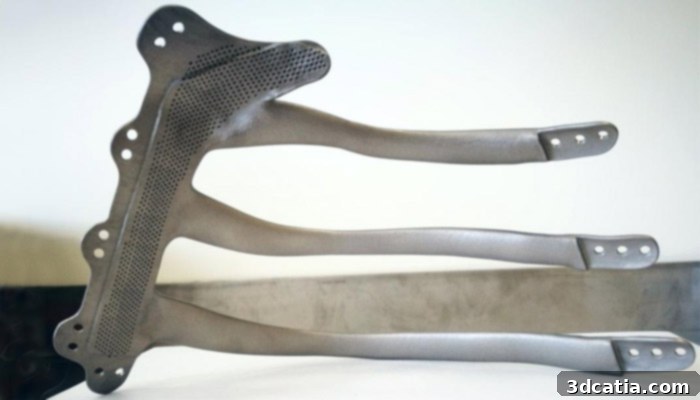
Peter Maggs, a 71-year-old Welshman, faced a life-altering challenge due to breast cancer, requiring an extensive eight-hour operation to remove the tumor. During the surgical procedure, three of his ribs and a portion of his sternum were excised, leaving a significant void. To address this complex reconstructive need, his medical team sought innovative solutions to replace the missing skeletal components. They turned to metal additive manufacturing, specifically leveraging technologies from Renishaw, a leader in precision engineering. This approach enabled the creation of a high-quality, biocompatible rib cage model perfectly tailored to Peter’s unique anatomy. Cardiothoracic surgeon Ira Goldsmith highlighted a key benefit of using a 3D printed prosthesis: the unparalleled ability for complete customization, ensuring an exact fit and optimal function for the patient. This personalized solution provided Maggs with a rapid and highly effective restoration, demonstrating the critical role of custom additive manufacturing in complex thoracic reconstructions.
Innovating with 3D Printed Silicone Heart Valves
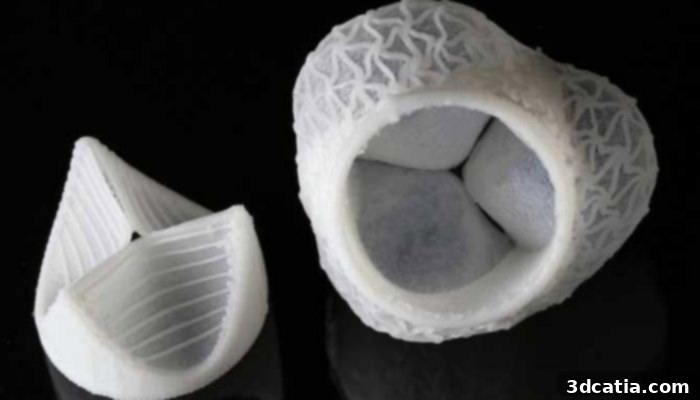
While bone implants are more commonly developed due to their structural nature, 3D printing’s capabilities extend far beyond rigid tissues to encompass intricate organic structures. A prime example is the emergence of bioinspired heart valve prostheses, meticulously crafted using silicone additive manufacturing. This groundbreaking innovation is the result of a collaborative effort between researchers from ETH Zurich and the South African company Strait Access Technologies. These artificial 3D printed heart valves are designed to address the increasing need for valve replacements, particularly within an aging global population. The choice of silicone as the primary material is strategic, given its excellent compatibility with the human body, minimizing adverse reactions. Furthermore, 3D printing enables the production of valves that achieve a near-perfect match to individual patient anatomies, promising superior physiological function. Although initial results from this research are highly promising, experts estimate that it will take approximately another decade before these advanced 3D printed heart valves become widely available on the market for clinical use, pending rigorous testing and regulatory approvals.
A Groundbreaking 3D Printed Carbon Artificial Retina
Beyond skeletal and cardiac applications, 3D printing is also making significant strides in restoring sensory functions. An exceptional case involves the development of a 3D printed artificial retina, composed entirely of carbon, with the potential to help visually impaired individuals regain their sight. Dr. Matthew Griffith from the University of Sydney made a pivotal discovery: he conceptualized the human body, much like a computer, as a carbon-based semiconductor system. This insight led him to theorize that an eye’s function could be replicated by creating a carbon-based device that is fully biocompatible, capable of absorbing light, and subsequently generating an electronic charge—mimicking the natural process of vision. A key advantage of this approach lies in the low-cost manufacturing capabilities offered by 3D printing, which has made it feasible for Dr. Griffith to personally design and iterate on this artificial retina. While the device is still under development and clinical studies are anticipated within the next three to five years, Dr. Griffith harbors strong optimism that this innovation will provide a vital solution for patients who have lost their sight, with the exciting prospect of even restoring color vision—a capability currently unattainable with existing prosthetic technologies.
Advanced Restorative Oral-maxillofacial Implants
AB Dental stands at the forefront of innovation in the oral-maxillofacial field, leveraging Selective Laser Sintering (SLS) technology to produce highly customized implant systems. Their advanced system empowers dental and maxillofacial surgeons to meticulously plan complex facial and dental restoration treatments with unparalleled precision, far surpassing the capabilities of conventional methods. AB Dental offers a comprehensive range of restorative 3D printed implants designed to meet diverse patient needs. These include specialized solutions for sinus roof augmentation, critical orbital bone repair, and innovative subperiosteal implants specifically engineered for cases involving severely resorbed jaws. The customization afforded by SLS technology ensures that each implant is perfectly matched to the patient’s unique anatomy, leading to superior fit, function, and long-term success in oral and facial reconstruction.
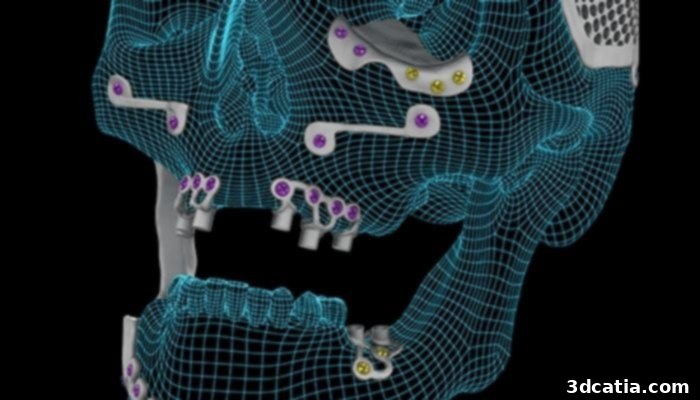
Photo Credit: AB Dental
Particle3D: Innovating with Customized Microporous Bones
Embodying their trademarked motto, “We Print Bone,” Particle3D was founded in 2014 by two visionary medical engineering students and their professor. Their core mission was to develop groundbreaking solutions for replacing bone tissue that had been destroyed or surgically removed. Today, Particle3D is actively advancing the field of patient-specific bone implants. Their process begins with a patient’s own CT/MRI scans, which serve as the blueprint for creating precisely tailored 3D printed implants. What sets these implants apart is their unique, bone-like internal architecture, meticulously designed to incorporate both micro- and macro-porosities. This intricate porous structure closely mimics natural bone, promoting superior integration with surrounding tissues and facilitating natural bone regeneration, thereby offering a more effective and biocompatible alternative for skeletal reconstruction.
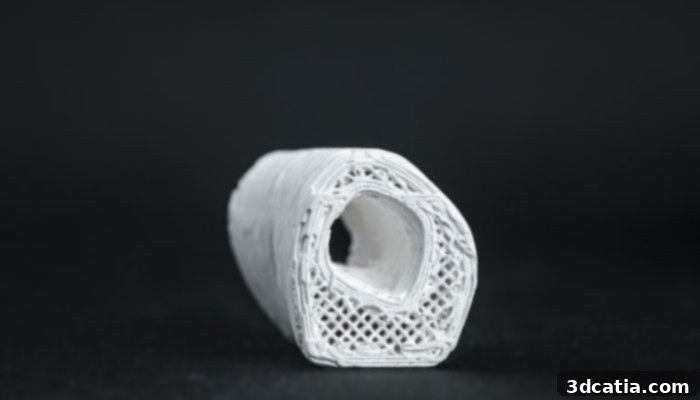
Partially 3D Printed Cartilage Implants to Combat Osteoarthritis
In both humans and canines, a vital, thin layer of cartilage serves to protect joint surfaces, enabling smooth and frictionless movement between bones. Regrettably, over time, this crucial cartilage can degrade, leading to the debilitating condition of osteoarthritis, characterized by chronic joint pain and reduced mobility. To address this widespread issue, researchers at North Carolina State University have developed an innovative solution: a textile-based implant embedded with cartilage derived from the patient’s own stem cells. This advanced implant, partly fabricated using 3D printing techniques, has demonstrated remarkable success in trials involving a group of dogs suffering from hip problems. The trial involved splitting the group into two, with one receiving the implant and the other serving as a control. As anticipated, the dogs that received the 3D printed cartilage implant exhibited a full recovery and restored mobility within just four months post-operation, highlighting the significant potential of this hybrid additive manufacturing approach in regenerative medicine for joint diseases.

Photo Credit: Deposiphoto
Arcomedlab: Crafting the World’s Largest 3D Printed Cranial Implant
The pioneering startup Arcomedlab has achieved an extraordinary feat by successfully creating the world’s largest cranial implant using state-of-the-art 3D printing technology. Since its inception, Arcomedlab has managed over 600 complex clinical cases, primarily specializing in cranial reconstruction with highly customized implants and intricate facial reconstructions. Their expertise extends to carrying out a diverse array of complex surgical planning procedures, leveraging their profound understanding of patient-specific needs. Currently, Arcomedlab possesses the capability to fully reconstruct the skulls of patients across all age groups, as well as any facial bone structure, employing both FDM (Fused Deposition Modeling) and SLA (Stereolithography) 3D printing technologies for medical applications. Through these significant technological advances, Arcomedlab is continuously pushing the boundaries of reconstructive medicine, delivering innovative, tailor-made solutions that address the unique anatomical requirements of each patient, thereby enhancing both functionality and aesthetic outcomes.
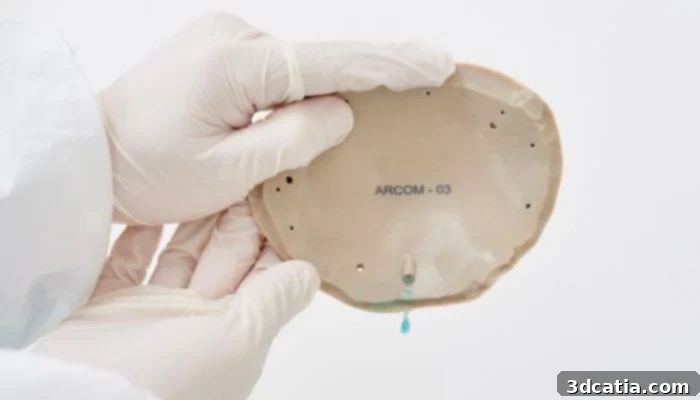
The ELAINE Research Project: Electrically Active Implants for Bone Regeneration
The ELAINE (Electrically Active Implants) research project, spearheaded by researchers at the University of Rostock, is focused on developing revolutionary bioactive structures for bone replacement. While titanium implants are widely used today, they present certain limitations, including imperfect adaptation to individual anatomical conditions and the potential for loosening over time, which can lead to long-term complications. To overcome these challenges and significantly enhance the treatment of bone defects, scientists are intensely exploring the possibilities offered by advanced additive manufacturing. They are specifically working on electrically active implants designed to mimic the intricate behavior of natural bone structures, drawing profound inspiration from bone physiology. The material of choice for this innovative approach is barium titanate, a unique substance capable of releasing ions upon contact with bodily fluids, thereby promoting biological activity. The technology employed for creating these implants is LCM (Lithography-based Ceramic Manufacturing), a sophisticated light-curing technique. This process involves the use of polymers loaded with piezoceramic particles, which are then photohardened within a 3D printer to form fine, intricate structures, imbuing the material with its essential biocompatibility. A major advantage of 3D printing here is the ability to manufacture tailor-made implants, precisely adapted to each individual patient’s anatomy and specific needs. Although the ELAINE project is still in its research phase, there is great anticipation that these advanced implants could be integrated into clinical use within the next decade, offering a significant leap forward in bone defect treatment.
(Photo Credits: University of Salzburg)
The ‘MyBone’ Bioprinted Nose Graft: A Triumph in Reconstructive Surgery
A groundbreaking collaboration between Toulouse University Hospital, the Claudius Regaud Institute, and the Belgian company CERHUM culminated in 2022 with the successful reconstruction of a cancer patient’s nose using advanced 3D printing technology. This remarkable procedure involved the creation of a custom bioceramic implant, aptly named ‘MyBone,’ meticulously engineered to mimic the properties of human bone. This innovative material actively promotes osseointegration (the direct structural connection between living bone and the surface of a load-bearing implant) and osteoconductivity (the property of a material to serve as a scaffold for bone growth). Following a highly detailed scan of the patient’s face, the implant was precisely 3D printed using stereolithography. In a pioneering two-stage process, the ‘MyBone’ implant was initially placed in the patient’s forearm. This strategic placement encouraged vascularization and cellular colonization, allowing the patient’s own cells to grow into and integrate with the implant’s intricate structure. Once adequately vascularized, the bioprinted nose was skillfully transplanted to the patient’s face, where it was connected to her existing blood vessels through delicate microsurgery. This comprehensive method ensured a high level of biocompatibility and long-term durability, significantly reducing the risk of infection and the potential need for future replacements. The procedure resulted in the successful transplantation of a fully functional and aesthetically pleasing nose, powerfully underscoring the immense potential of 3D printing in performing complex and major reconstructive surgeries, offering renewed hope and quality of life to patients.
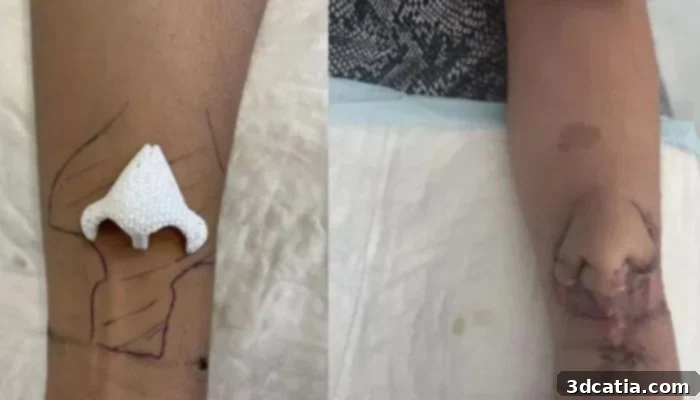
(Photo Credits: Toulouse University Hospital)
BellaSeno: Advancing Breast Reconstruction with 3D Printed Implants
BellaSeno is at the forefront of innovation in breast reconstruction, manufacturing sophisticated breast implants from polycaprolactone, a widely used and clinically safe suture material, using advanced 3D printing techniques. These customized 3D printed implants are specifically designed for individuals who have undergone mastectomy due to breast cancer or suffer from other breast diseases, offering a transformative solution for reconstructive and plastic surgery. BellaSeno has developed a proprietary 3D printing solution that supports the use of these clinically compatible and resorbable materials. A key feature of these implants is their design to completely resorb within a period of five years. During this time, the implant acts as a scaffold, gradually being replaced by the patient’s natural fat cells, leading to a natural-looking and feeling breast reconstruction. The initial trials involving ten patients have yielded highly promising results, characterized by positive patient evaluations and an excellent safety profile for the 3D implants. Surgeons involved in the trials have also provided enthusiastic feedback regarding the efficacy and ease of use of these innovative 3D printed breast implants, marking a significant step forward in personalized reconstructive options.
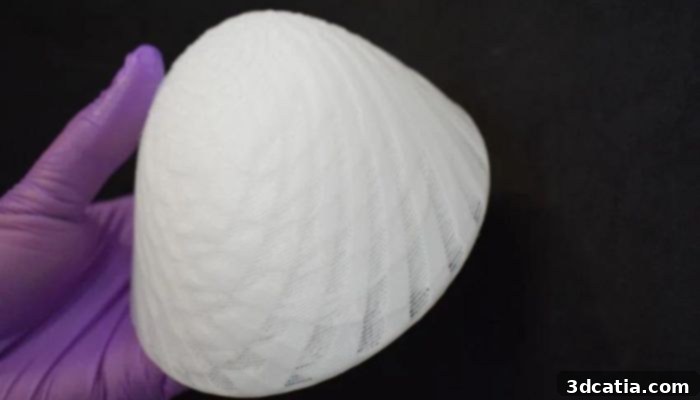
(Photo Credits: BellaSeno)
Nanochon’s Chondrograft™: A 3D Printed Implant for Knee Cartilage Repair
Nanochon is dedicated to revolutionizing cartilage replacement and repair for patients enduring debilitating knee injuries. To achieve this critical objective, the company leverages cutting-edge 3D printing technology, particularly the extrusion technique, to create an advanced implant specifically engineered to replace damaged or lost cartilage. This innovative device, named Chondrograft™, is fabricated from a proprietary biocompatible composite material that actively promotes natural tissue regeneration within the knee joint. The Chondrograft™ is produced through a molten filament manufacturing process, utilizing Nanochon’s unique composite. What truly distinguishes this implant is its sophisticated, multi-level structure: in addition to its visible microstructure, it incorporates submicron porosity. Following a specialized post-treatment process, this characteristic imbues the implant with enhanced flexibility and malleability, crucial for adapting to joint movements, while simultaneously maintaining its superior structural integrity and durability. This thoughtful design aims to provide a more effective and long-lasting solution for cartilage repair, offering renewed mobility and pain relief to patients.
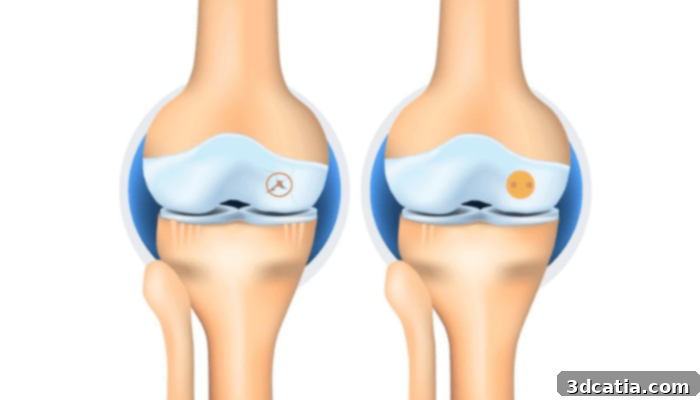
(Photo Credits: Nanochon)
Matricelf Bone Marrow Implant: A Breakthrough in Spinal Cord Repair
In a monumental achievement in 2022, Matricelf, an innovative Israeli regenerative medicine company, announced a significant breakthrough: the successful testing of 3D printed spinal cord implants on mice suffering from chronic paralysis. These experimental implants demonstrated an impressive 80% success rate in restoring the ability to walk in the paralyzed mice. Matricelf’s pioneering technology begins with a biopsy of the patient’s omental tissue, a fatty tissue in the abdomen. This tissue then undergoes a proprietary decellularization process, yielding a durable and biocompatible hydrogel scaffold. Concurrently, induced pluripotent stem cells (iPSCs) are derived from the patient’s own mature cells and seamlessly integrated into this hydrogel. This sophisticated process culminates in the development of patient-specific neural implants, meticulously designed to repair and regenerate damaged spinal cord tissue. While these transformative implants are currently in the experimental stage, undergoing rigorous animal testing, researchers are highly optimistic about their profound potential to revolutionize treatment for severe spinal cord injuries resulting from accidents and sports-related trauma. Matricelf has proactively filed patent applications in both the USA and Europe, as they continue to advance their crucial research towards human clinical applications, promising a future where spinal cord injuries might no longer lead to permanent paralysis.
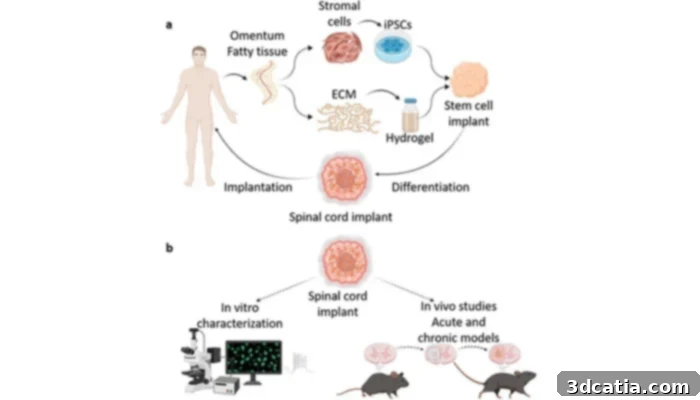
(Photo Credits: Matricelf)
Macquarie University’s Advanced 3D Printed Ankle Replacement Implants
The Limb Reconstruction Centre at Macquarie University has made extraordinary advancements in ankle replacement surgery through their innovative application of 3D printed implants. These cutting-edge prostheses offer significant relief and restore crucial mobility to patients suffering from severe ankle arthritis or joint deterioration caused by trauma. Crafted from advanced synthetic materials, such as hydroxyapatite, these implants are meticulously designed to mimic the natural bone structure, thereby facilitating superior osseointegration—the direct structural and functional connection between the implant and living bone. This ensures long-term durability and significantly reduces the risk of complications post-operation. Unlike traditional ankle fusions, which severely limit mobility, or conventional prosthetics, which may lead to secondary joint issues, these 3D printed replacement implants are engineered to preserve natural joint movement while effectively alleviating pain. The procedure, expertly led by orthopedic surgeons Dr. Tim O’Carrigan and Dr. Mustafa Alttahir since 2022, remarkably minimizes the reliance on invasive ankle screws and the extensive removal of joint cartilage. This approach results in faster recovery times for patients, coupled with substantially enhanced mobility and improved quality of life.
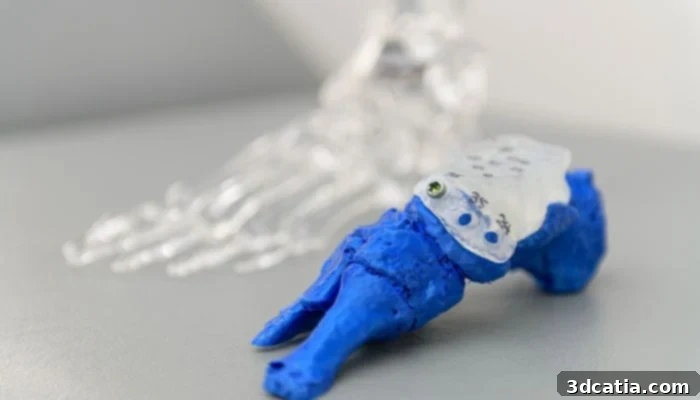
(Photo Credits: Macquarie University)
The First 3D Printed Skull Cap for a Child
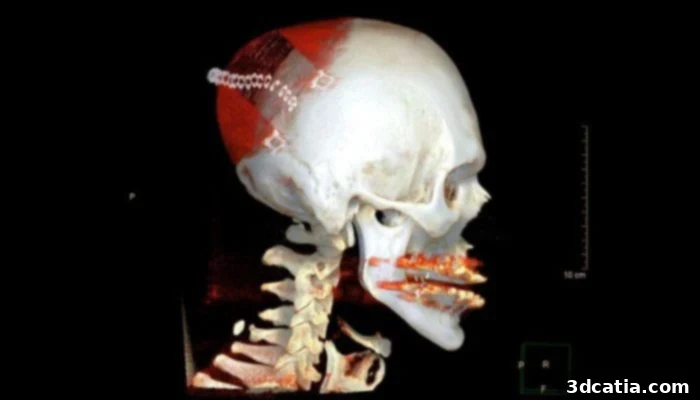
Towards the end of 2023, 10-year-old Felix experienced a severe accident where a piece of metal tragically struck his head, penetrating his skull. This devastating incident not only resulted in vision loss but also, despite emergency surgery, left a substantial portion of his skull cap severely damaged. Faced with this complex challenge, doctors at the Salzburg Regional Hospital embarked on a pioneering solution: re-imaging the skullcap in 3D. The primary hurdle was the complete reconstruction of the skullcap, specifically tailored to Felix’s previous state, based solely on existing CT images. In an incredible display of rapid innovation, the medical team successfully fabricated a PEEK (polyether ether ketone) implant for the skull cap within a mere five days. This custom-made implant was then successfully implanted during surgery. This landmark procedure marks the first recorded instance of a 3D-printed implant being utilized on a child. The PEEK material is expected to be entirely biocompatible with Felix’s body for many years, only requiring replacement with a larger model as his growth necessitates, ensuring his long-term health and well-being with minimal intervention.
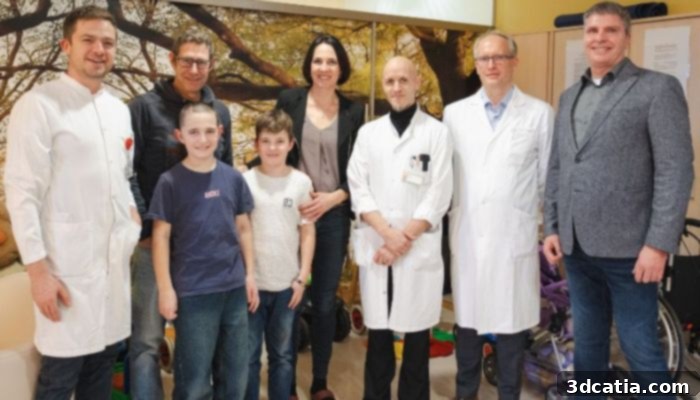
(Photo Credits: Salk / Leon Bernhofer)
The examples above powerfully illustrate the dynamic and life-changing potential of 3D-printed medical implants. From restoring hearing and facial structure to pioneering regenerative solutions for spinal cord injuries and knee cartilage, additive manufacturing is consistently redefining the boundaries of personalized healthcare. This technology not only offers custom-fit solutions that improve patient comfort and recovery but also paves the way for treatments that were once considered impossible. As research continues to advance, we can anticipate even more sophisticated and integrated implants, further enhancing the quality of life for countless individuals worldwide.
We hope you found this overview of 3D-printed medical implants insightful. If you have additional examples or insights you believe we might have overlooked, please feel free to share your thoughts in the comment section below, or engage with us on our Facebook and Twitter pages! Don’t forget to sign up for our free weekly Newsletter to receive all the latest news and updates in 3D printing directly in your inbox!