
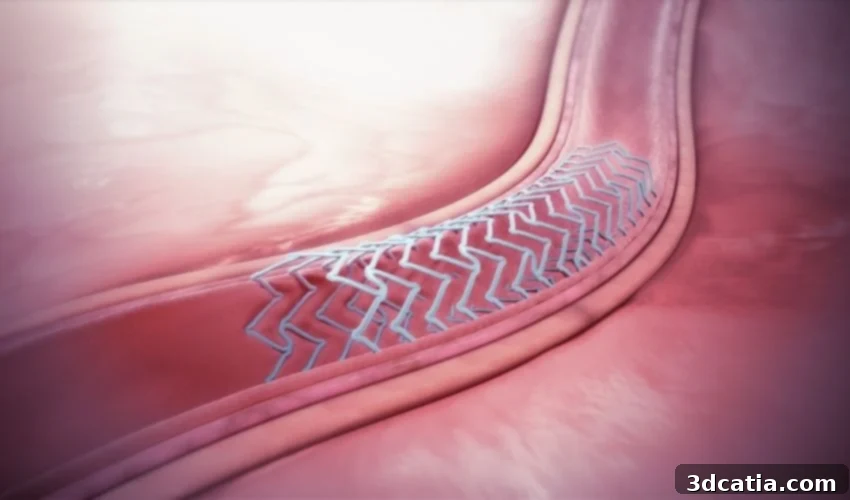
Revolutionizing Medical Miniaturization: BMF and 4D Biomaterials Pioneer Micro 3D Printing with Bioresorbable Materials
The medical sector is continually seeking innovative solutions to enhance patient care, and micro 3D printing has emerged as a truly transformative technology in this pursuit. Its remarkable ability to fabricate intricate, incredibly small components opens new frontiers for customized medical devices, offering unprecedented precision and personalization for patients. In a groundbreaking development that underscores this trend, Boston Micro Fabrication (BMF), a leader in micro-precision additive manufacturing, and 4D Biomaterials, an innovator in advanced material science, have announced a significant leap forward. This collaboration marks the first successful instance of printing micro-scale geometries utilizing 4Degra® bioresorbable materials, setting a new benchmark for implantable medical devices.
Bioresorbable materials represent a critical advancement in medical technology. By definition, these are specialized substances engineered to safely degrade and be absorbed by the body over time after fulfilling their intended function. Their importance in medicine, particularly for implants and other temporary medical devices, cannot be overstated. Unlike traditional permanent implants that might necessitate additional surgery for removal once healing is complete, bioresorbable devices are designed to facilitate the body’s natural healing processes and then gradually disappear, minimizing patient discomfort, reducing recovery times, and avoiding secondary surgical interventions. This inherent advantage makes them ideal for applications ranging from orthopedic fixations to cardiovascular stents and drug delivery systems. While many companies have made impressive strides in 3D printing medical devices, the partnership between BMF and 4D Biomaterials distinguishes itself by being the first to successfully apply micro additive manufacturing techniques to bioresorbable materials, effectively pushing the boundaries of what is achievable in personalized, temporary implants.

BMF is renowned for its micro medical devices; this collaboration marks their pioneering use of bioresorbable materials at the micro-scale (photo credits: BMF)
The market for bioresorbable polymers is experiencing robust growth, signaling a clear demand for these advanced materials in healthcare. According to a recent press release from BMF, the global market for bioresorbable polymers was estimated at approximately USD 1.0 billion in 2021 and is projected to reach USD 1.6 billion by 2026. This upward trajectory underscores a growing recognition of the benefits these materials offer, driven by factors such as an aging global population, increasing demand for minimally invasive procedures, and a greater emphasis on patient-centric care. By combining this burgeoning market demand with BMF’s unparalleled expertise in creating ultra-precise micro-scale medical devices, the two companies are poised to profoundly transform the landscape of biocompatible and bioresorbable micro-scale medical solutions. The potential applications are vast and diverse, spanning numerous critical areas. These include, but are not limited to, the fabrication of micro-scale rigid orthopedic devices and fixations designed to support bone healing without requiring subsequent removal, as well as sophisticated micro-scale soft tissue applications that can assist in regeneration and repair. This fusion of material innovation and manufacturing precision promises to unlock a new generation of medical interventions that are both highly effective and significantly less burdensome for patients.
At the core of this innovative project is the synergistic application of BMF’s proprietary Projection Micro Stereolithography (PµSL) approach alongside 4D Biomaterials’ specialized resin inks. PµSL technology is celebrated for its ability to achieve micron-level resolution and incredibly fine feature details, a capability essential for creating truly micro-scale medical devices. This combination is critical for addressing both intricate design requirements and stringent biocompatibility challenges that are inherent in implantable medical applications. The partnership aims to resolve these complexities, thereby opening up a wealth of new opportunities for advanced implantable devices that were previously unattainable with conventional manufacturing methods or even other additive manufacturing techniques. The growing popularity of micro 3D printing in the medical sector stems from its dual advantage: not only can it produce parts with significantly smaller dimensions, but it also enables the creation of highly complex and customized geometries tailored precisely to individual patient anatomies. This level of customization is paramount in medicine, as customizable implants and patient-specific parts are consistently associated with substantially higher success rates, improved functionality, and better patient outcomes. In this particular collaboration, the integration of 4Degra resin inks ensures that the implantable medical devices can effectively facilitate the healing process and then be safely and naturally absorbed and eliminated by the body through normal metabolic processes. Crucially, this partnership confirms the complete compatibility of these advanced bioresorbable materials with BMF’s PµSL technology and broader digital light processing (DLP) platforms, paving the way for wider adoption and development. For those interested in seeing this cutting-edge technology in action, BMF’s microArch S240 3D printer showcases the precision and capabilities of their PµSL technology in the video provided below.
John Kawola, CEO of BMF, articulated the profound implications of this partnership, stating, “Our customers are constantly pushing the boundaries of miniaturization, and with the integration of bioresorbable material options, an entirely new spectrum of medical devices has become achievable. The progress in miniaturization within medical device development has historically been constrained by the limitations of both traditional manufacturing methods and the available material palette. The strategic partnership between BMF and 4D Biomaterials is a concerted effort to systematically dismantle these long-standing barriers.” This collaboration represents more than just a technological milestone; it signifies a paradigm shift in how micro medical devices are conceptualized, designed, and manufactured. By overcoming previous hurdles related to material choice and manufacturing precision at the micro-scale, BMF and 4D Biomaterials are not only meeting existing demands but are also anticipating and enabling future innovations in personalized medicine. This advancement will allow for the creation of devices with improved patient integration, reduced invasiveness, and enhanced long-term clinical efficacy, ultimately leading to better health outcomes worldwide. Further details and insights into this pioneering effort can be found in the official press release HERE.
The innovative endeavor by BMF and 4D Biomaterials to integrate bioresorbable materials into micro 3D printing stands to redefine numerous medical applications, offering less invasive and more effective treatments. What are your thoughts on this significant development and its potential impact on personalized medicine? We encourage you to share your insights in the comments section below or join the conversation on our LinkedIn, Facebook, and Twitter pages! For the very latest updates in the dynamic world of 3D printing, don’t forget to sign up for our free weekly Newsletter here, delivered directly to your inbox. You can also explore our extensive library of videos on our official YouTube channel.
*Cover Photo: A bioresorbable stent, artfully depicted as a biodegradable metal mesh, symbolizing the future of temporary implants (photo credits: https://www.scientificanimations.com/, CC BY-SA 4.0, via Wikimedia Commons)