
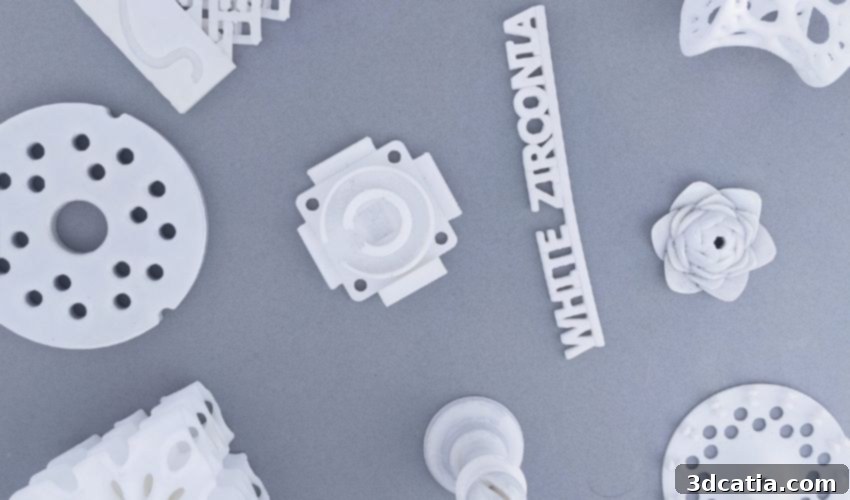
Mastering Zirconia 3D Printing: A Deep Dive into Advanced Ceramic Additive Manufacturing
Zirconia, scientifically known as zirconium dioxide (ZrO2), represents a class of high-performance ceramic materials distinguished by its exceptional mechanical properties, aesthetic appeal, and remarkable resistance to environmental stressors. Traditionally, zirconia has been extensively utilized in demanding applications through conventional machining processes, particularly within the dental industry. However, the advent of additive manufacturing, commonly known as 3D printing, has opened new frontiers for zirconia, enabling the creation of intricate, custom-designed components with unparalleled geometric freedom. This transformative approach allows manufacturers to overcome the limitations of traditional methods, paving the way for innovative applications across various sectors. But what specific additive manufacturing processes are compatible with zirconia? What critical features must be considered during its 3D printing? And what are the compelling advantages that make 3D printed zirconia a material of increasing interest? This comprehensive guide aims to shed light on all these facets, exploring the exciting world of zirconia additive manufacturing.
The journey of zirconia begins with zirconium, a fascinating chemical element first identified in 1789 by the renowned chemist Martin Heinrich Klaproth, and later isolated as a metal in 1824. Zirconia itself is formed by subjecting zirconium compounds to extremely high temperatures through a process called calcination. This transformation yields a ceramic material that boasts an impressive array of properties, making it invaluable across numerous industries. Zirconia stands out as a particularly fracture-resistant ceramic, possessing a toughness that rivals some metals. Its inherent biocompatibility makes it an ideal choice for medical and dental implants, while its excellent aesthetics—a natural white, opaque appearance—allows it to seamlessly blend with biological structures, especially natural teeth. Beyond these attributes, zirconia exhibits remarkable resistance to aggressive chemicals, corrosive liquids, gases, and extreme temperatures, ensuring its durability and performance in harsh operating environments. These combined characteristics solidify zirconia’s position as a premium engineering ceramic.
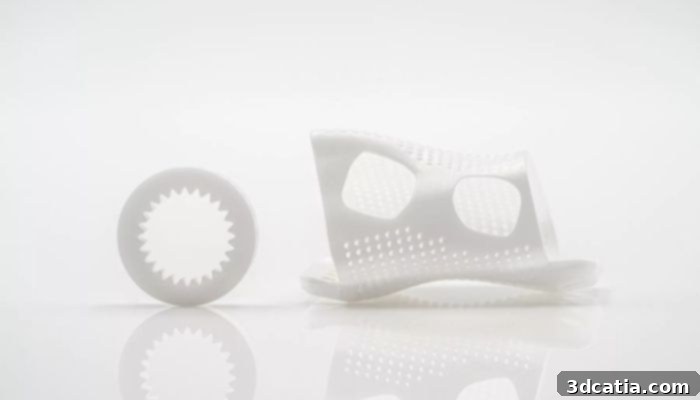
Intricate 3D printed components crafted with LithaCon 3Y 210 material from Lithoz (Photo Credits: Lithoz)
The Emergence of 3D Printed Zirconia in Additive Manufacturing
When discussing the additive manufacturing of zirconia, several parallels can be drawn with other advanced ceramics like aluminum oxide, or alumina. Zirconia is typically processed in a fine powder form, which can then be adapted for various 3D printing processes. One prominent method is material extrusion, often referred to as Bound Ceramic Extrusion (BCE) or Fused Filament Fabrication (FFF) for ceramic materials. In this indirect process, the zirconia powder is homogeneously mixed with a thermoplastic binder to create a filament. This filament is then fed into a 3D printer, heated, and extruded layer by layer to build the desired “green” part. It is crucial to understand that the part emerging from the 3D printer at this stage is not the final product. It is a fragile composite requiring extensive post-processing steps: debinding and sintering. Debinding involves carefully removing the polymer binder, typically through thermal or solvent-based methods, leaving behind a porous ceramic structure. Following this, the part undergoes sintering, a high-temperature thermal treatment in a specialized oven. During sintering, the zirconia particles fuse together, densifying the material and eliminating porosity. This critical step solidifies the zirconia’s final properties, including its mechanical strength, hardness, and wear resistance, while preventing the formation of defects and micro-cracks that could compromise the component’s integrity. The precision of these post-processing stages is paramount to achieving high-quality, defect-free zirconia parts.
Another significant pathway for 3D printing zirconia involves **photopolymerization processes**, such as Stereolithography (SLA) and Digital Light Processing (DLP), often grouped under Lithography-based Ceramic Manufacturing (LCM). In these methods, zirconia powder is suspended in a photocurable resin, creating a ceramic slurry. The printer then uses UV light to selectively cure layers of this resin, solidifying the zirconia-infused binder layer by layer to form the green part. These vat polymerization techniques are celebrated for their ability to produce parts with exceptionally high precision, fine details, and excellent surface finish. The resulting zirconia components often exhibit a high degree of density, which is a key advantage for performance-critical applications. It’s worth noting that zirconia inherently possesses a higher density compared to alumina, contributing to its greater overall weight, which can be an important design consideration. Similar to extrusion-based methods, photopolymerized zirconia parts also necessitate considerable post-processing, including thorough cleaning, debinding, and sintering, to achieve their final mechanical and material properties. The accuracy of these processes is critical for maintaining the tight tolerances often required for advanced ceramic components.
While the versatility of zirconia in additive manufacturing is undeniable, it is generally considered more challenging to 3D print than alumina. This increased difficulty can stem from factors such as specific material properties, slurry stability, and the intricacies of its sintering behavior. Consequently, zirconia materials and their processing often incur higher costs compared to those associated with aluminum oxide, despite their somewhat similar characteristics in certain applications. However, the superior strength, toughness, and aesthetic qualities of zirconia frequently justify this additional investment for high-performance and critical components.
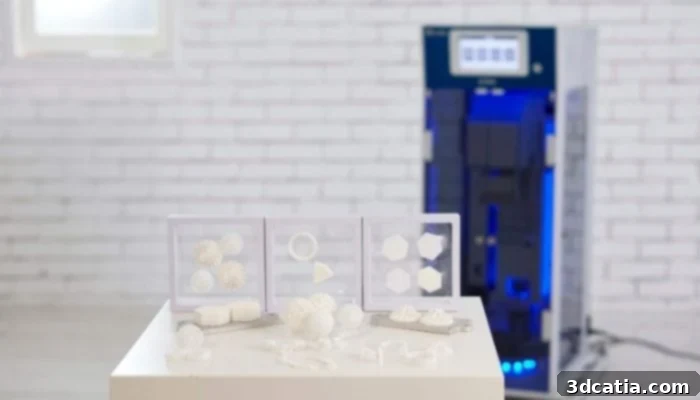
Zirconia can be precisely 3D printed through a variety of additive manufacturing processes (Photo Credits: KUAIPRINT)
Exploring the Diverse Applications of Zirconia 3D Printing
Zirconia’s unique combination of properties makes it exceptionally popular, particularly within the dental sector. Its opaque white appearance, excellent biocompatibility, low thermal conductivity, and appealing aesthetics make it an ideal material for crafting dental prostheses, crowns, bridges, and implants. Lighter than traditional metal alternatives, zirconia perfectly mimics the natural translucency and feel of human teeth, providing patients with both functional restoration and aesthetic satisfaction. While a significant portion of dental zirconia components are still produced through subtractive machining methods due to stringent regulations and certification requirements for medical devices, the landscape is slowly shifting. Advances in 3D printing technology are gradually enabling the fabrication of dental zirconia with the necessary precision and consistency, promising benefits like reduced material waste, faster production cycles, and highly customized patient-specific solutions.
Beyond dentistry, the broader medical market stands to gain immensely from 3D printed zirconia. The inherent biocompatibility and remarkable fracture resistance of zirconium dioxide, combined with the design flexibility and customization capabilities of additive manufacturing, unlock a vast potential for innovative medical devices. This includes custom orthopedic implants like hip and knee components, surgical instruments that require extreme hardness and wear resistance, and patient-specific prosthetics designed to perfectly fit an individual’s anatomy. The ability to create complex internal structures and porous surfaces through 3D printing can also enhance osseointegration for implants, improving long-term success rates. As research and development continue, the integration of 3D printed zirconia into mainstream medical applications is expected to accelerate, offering improved outcomes and enhanced patient care.
Furthermore, the utility of zirconia extends to a multitude of industrial applications. In the realm of electronics, its high dielectric strength and thermal stability make it suitable for insulators, sensors, and various electronic components operating in challenging environments. The jewelry and luxury goods sector benefits from zirconia’s lustrous appearance and durability, allowing for the creation of intricate designs that are both beautiful and long-lasting. In general manufacturing, zirconia’s excellent chemical inertness and outstanding shock resistance are invaluable for components exposed to corrosive chemicals, high temperatures, and abrasive wear. This includes parts for pumps, valves, nozzles, cutting tools, and components for the chemical processing industry. Its high hardness also makes it suitable for wear-resistant parts and precise tooling applications, offering extended service life and improved performance compared to traditional materials. The ability to 3D print these complex geometries precisely and efficiently significantly broadens the scope for zirconia in high-performance industrial settings, allowing for functional designs previously unattainable.
Advantages and Future Outlook of Zirconia Additive Manufacturing
The adoption of 3D printing for zirconia brings a host of significant advantages. Firstly, it offers unparalleled design freedom and geometric complexity, allowing engineers and designers to create intricate internal structures, lightweight lattices, and optimized geometries that are impossible or cost-prohibitive with traditional manufacturing. Secondly, customization and patient-specific parts become highly feasible, which is critical in medical and dental fields where unique anatomical requirements are common. Thirdly, additive manufacturing inherently promotes material efficiency and reduced waste, as components are built layer by layer, utilizing only the necessary material. This is particularly beneficial for expensive advanced ceramics like zirconia. Fourthly, 3D printing enables faster prototyping and production cycles, accelerating product development and time-to-market. Finally, it allows for improved performance through optimized designs, where parts can be engineered to maximize strength-to-weight ratios, enhance functionality, or integrate multiple components into a single, cohesive unit.
Despite these considerable advantages, challenges remain in the broader adoption of zirconia 3D printing. The high cost of specialized zirconia materials and the complexity of post-processing steps (debinding and sintering) are significant barriers. Ensuring consistent dimensional accuracy and achieving uniform density across larger or more complex parts also requires sophisticated process control. However, ongoing research and development are rapidly addressing these limitations. Innovations in material formulations, refined printer technologies, and advanced simulation tools are steadily improving the reliability, cost-effectiveness, and scalability of zirconia additive manufacturing. As these technologies mature and standardization efforts progress, 3D printed zirconia is poised to become an increasingly indispensable material, driving innovation across medical, industrial, and consumer sectors.
Considering the remarkable properties and evolving capabilities of additive manufacturing, would you consider 3D printing with Zirconia for your next project? We would love to hear your thoughts and experiences! Let us know in a comment below or connect with us on our LinkedIn or Facebook pages! Plus, don’t forget to sign up for our free weekly Newsletter to get the latest 3D printing news straight to your inbox. You can also find all our insightful videos on our YouTube channel for more in-depth content.
*Cover Photo Credits: Zetamix