
Mastering 3D Printing Post-Processing: Enhance Aesthetics, Functionality, and Efficiency
The journey of additive manufacturing, from a digital design to a tangible final product, involves a sophisticated multi-stage value chain. While the initial design and the intricate printing process often capture the most attention, the phase that follows the printer’s completion is equally critical: post-processing. This essential stage encompasses all operations performed on a 3D-printed part once it has emerged from the machine. Far from being a mere afterthought, post-processing techniques are fundamental to transforming raw prints into functional, aesthetically pleasing, and durable components. These techniques are incredibly diverse, including but not limited to rigorous cleaning, meticulous surface finishing, property-enhancing heat treatments like annealing or curing, and even precise coloring. Just as 3D printing processes themselves vary widely in their methodologies and material requirements, so too do the post-processing techniques, each tailored to specific materials and desired outcomes. But why is this often-overlooked step so vital in the grand scheme of 3D printing? How is this crucial market segment evolving and becoming increasingly automated? This comprehensive guide delves into the intricacies of post-processing, exploring its significance, diverse methods, myriad benefits, and current market challenges, providing a deeper understanding of its indispensable role in the additive manufacturing ecosystem.
Post-processing in 3D printing serves two primary, interconnected goals: significantly improving the aesthetic quality of manufactured parts and profoundly enhancing their intrinsic mechanical, thermal, or chemical properties. For instance, a part might undergo surface finishing to achieve an exceptionally smooth, uniform texture, which is crucial for end-use components in consumer products or medical devices. Alternatively, a component might be subjected to annealing or curing to boost its tensile strength, optimize its resistance to heat or chemicals, or improve its overall durability under specific operational conditions. It’s imperative to understand that while some post-processing techniques offer broad applicability across various 3D printing processes, many are highly specialized and technology-specific. A part produced via Fused Deposition Modeling (FDM), for example, will require a distinct post-processing approach compared to a sophisticated metal additive manufacturing component. Therefore, acknowledging and integrating post-processing considerations from the outset is not merely beneficial but absolutely essential when embarking on any 3D printing project, influencing material selection, design for manufacturability, and ultimately, the success of the final product.
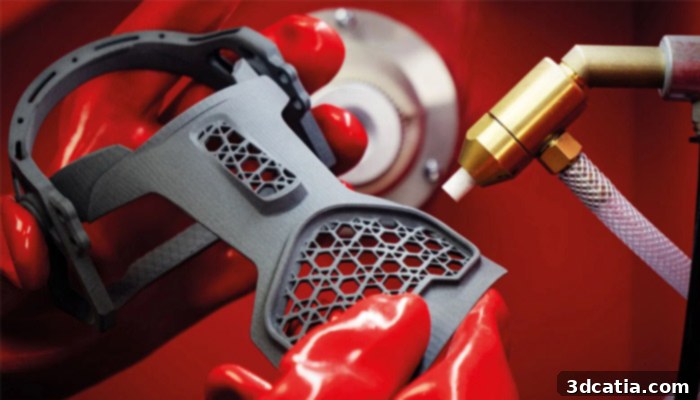
Post-processing is crucial for enhancing the aesthetics and functional performance of 3D printed parts (photo credits: Sinterit)
Essential Post-Processing Methods: A Detailed Overview
To provide a comprehensive understanding of the diverse post-processing landscape, let’s delve into the core categories of techniques widely employed in additive manufacturing. Each method addresses specific challenges and aims to elevate the printed part’s quality in distinct ways.
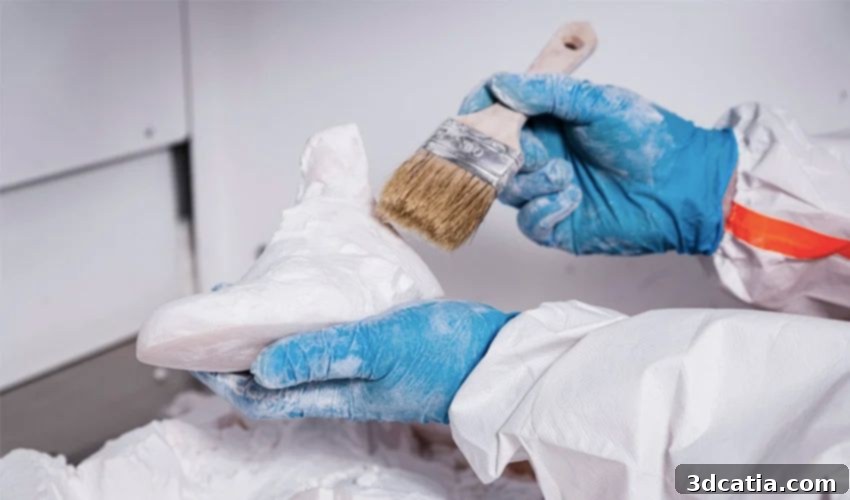
**1. Cleaning and Support Removal:** This initial and often mandatory step involves meticulously removing all residual material from the newly printed part. Depending on the 3D printing technology, this can mean clearing away excess powder from processes like Selective Laser Sintering (SLS) or Multi Jet Fusion (MJF), washing off uncured resin from Stereolithography (SLA) or Digital Light Processing (DLP) prints, or carefully detaching support structures generated by FDM or metal printing. Techniques vary widely, ranging from simple brushing, blowing with compressed air, or rinsing with solvents (like isopropyl alcohol for resin prints), to more specialized methods such as water jetting, media blasting, or even sophisticated ultrasonic baths for intricate geometries. For powder-based processes, powder removal can be a time-consuming and labor-intensive task, directly impacting overall manufacturing lead times. Similarly, dissolving or breaking away support structures, especially from complex FDM parts, requires precision to avoid damaging the delicate surfaces of the component. Effective cleaning is paramount not only for aesthetic reasons but also to prepare the part for subsequent post-processing steps, ensuring optimal adhesion for coatings or uniform heat distribution during curing.
**2. Heat Treatment: Annealing, Curing, and Sintering:** This category involves precisely controlled thermal processes designed to significantly alter and enhance the mechanical, thermal, and chemical properties of a 3D printed part. Annealing, specifically, aims to increase a part’s resistance to heat, tension, UV radiation, and general wear, while also improving its strength, stiffness, or thermal stability. This technique is predominantly applied to polymer parts, where processes like resin curing are essential. For instance, resin-based printing solutions, such as those from Formlabs, often feature dedicated “curing” machines (UV post-curing units) that utilize specific light wavelengths and temperatures to complete the photopolymerization process, thereby solidifying the part and achieving its final mechanical properties. For powder bed fusion technologies, particularly those involving binder jetting for metals or polymers, a two-stage heat treatment is often required: debinding (to remove the binder material) followed by sintering (to fuse the powder particles into a dense, solid part). Sintering typically takes place in a specialized furnace at temperatures approaching the material’s melting point, dramatically improving part density, strength, and overall integrity. These heat treatments are critical for transforming green parts into functional components suitable for demanding applications.
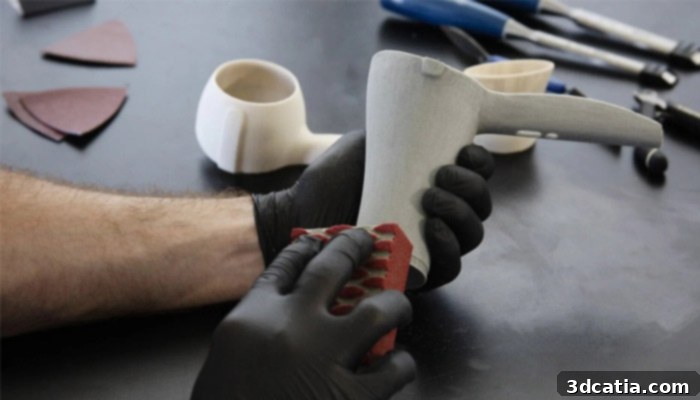
Heat treatments like annealing are vital for enhancing the mechanical properties of 3D printed parts (Photo credits: MakerBot)
**3. Surface Finishing:** Dedicated to optimizing the visual appeal and tactile quality of parts, surface finishing encompasses a broad array of methods. The primary objective is to improve the surface roughness, eliminate visible layer lines characteristic of many 3D printing processes, and achieve a desired texture or smoothness. Techniques include:
- **Smoothing and Polishing:** This involves processes like sanding (manual or automated), tumbling (using abrasive media in a rotating barrel), vibratory finishing, and chemical vapor smoothing. Chemical vapor smoothing, for instance, exposes parts to a solvent vapor that melts and reflows the surface, effectively eliminating layer lines and creating a smooth, injection-molded-like finish. Polishing further enhances reflectivity and smoothness, often using fine abrasives or specialized buffing wheels.
- **Blasting (Sandblasting/Bead Blasting):** Using abrasive media propelled at high speed, blasting cleans surfaces, removes loose particles, and creates a uniform matte finish. This can also improve paint adhesion and provide a specific tactile feel.
- **Infiltration:** This process fills pores or voids in the part with a resin or other liquid material, increasing strength, density, and improving surface finish by sealing imperfections. It’s particularly useful for porous powder-based prints.
- **Milling/Machining:** For parts requiring extremely tight tolerances or very smooth critical surfaces, traditional subtractive manufacturing techniques like CNC machining can be applied as a post-processing step. This allows for precision removal of material to achieve desired dimensions or finishes.
- **Coating/Painting:** Applying a layer of product, whether paint, lacquer, or a specialized coating, can dramatically change a part’s appearance, provide protection against environmental factors (e.g., UV, moisture), or even add functional properties like electrical conductivity.
Each method modifies the part’s surface, either by removing material (e.g., sanding) or adding a protective or aesthetic layer (e.g., spraying), to achieve a superior final product.
**4. Coloring and Dyeing:** The final objective of coloring is, naturally, to infuse the finished piece with a desired hue. Two primary methods are widely utilized today:
- **Dyeing:** More prevalent for polymer powder-based processes (like SLS), dyeing involves immersing the part in a liquid dye bath. The porous nature of these materials allows the dye to penetrate the surface, resulting in a vibrant, uniform, and durable color that is integrated into the material itself, rather than just a surface layer.
- **Painting:** More commonly employed for parts produced via FDM or other processes where surface penetration is minimal, painting applies a layer of pigmented material onto the part’s exterior. This offers a vast palette of colors and finishes (matte, gloss, metallic) and can also provide an additional layer of protection. The choice between dyeing and painting largely depends on the specific printing material, the desired aesthetic, and the functional requirements of the part, such as resistance to scratching or fading.
The Transformative Benefits and Persistent Limitations of Post-Processing in Additive Manufacturing
As evidenced by the diverse techniques discussed, post-processing is a cornerstone of professional 3D printing, providing immense value beyond the raw printed output. It is a key step not only to elevate the visual aspect of a part but, more importantly, to refine and enhance its final functional characteristics, making it suitable for real-world applications and even direct market consumption.
**Benefits of Post-Processing:**
- **Enhanced Aesthetics:** Post-processing can dramatically improve the visual appeal of 3D printed parts, often eliminating visible layer lines, improving surface smoothness, and allowing for a wide range of colors and textures. This is crucial for consumer products, prototypes, and presentation models where appearance is paramount.
- **Superior Functional Performance:** Through techniques like annealing, curing, and infiltration, parts can achieve significantly improved mechanical properties such as increased tensile strength, impact resistance, thermal stability, and chemical resistance. This allows 3D printed parts to meet demanding performance requirements for end-use applications in aerospace, automotive, medical, and industrial sectors.
- **Improved Durability and Longevity:** Surface coatings and treatments can protect parts from environmental degradation, including UV exposure, moisture, and abrasion, thereby extending their service life and reliability.
- **Achieving Tight Tolerances and Precision:** For applications demanding high dimensional accuracy, subtractive post-processing methods like CNC machining can precisely refine dimensions that might be difficult to achieve solely with the additive process.
- **Cost-Effective Material Alternatives:** Thanks to sophisticated post-processing, it’s possible to create plastic parts that exhibit characteristics remarkably similar to metal parts, but at a considerably reduced material and manufacturing cost, opening up new possibilities for lightweighting and budget-friendly production.
- **Masking the “3D Printed Look”:** Perhaps one of the most significant benefits is the ability to entirely remove the tell-tale signs of additive manufacturing, such as visible layer lines. This allows 3D printed components to seamlessly integrate with conventionally manufactured parts or stand alone as professional, high-quality end products, indistinguishable from those made using traditional methods like injection molding or machining.
- **Regulatory Compliance:** For industries like medical or aerospace, certain surface finishes, densities, or mechanical properties achieved through post-processing are often necessary to meet stringent industry standards and certifications.
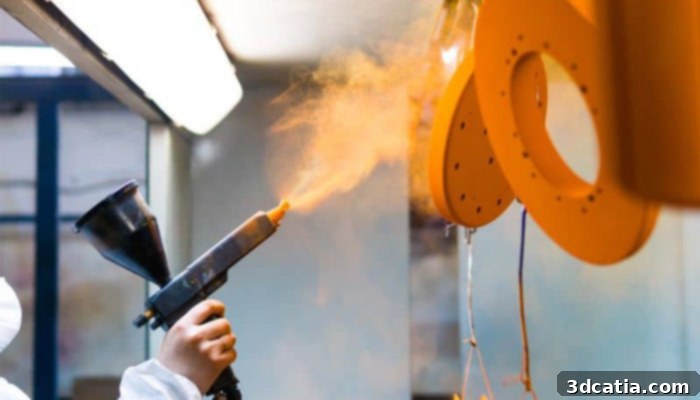
Diverse coloring techniques expand the aesthetic possibilities for 3D printed components (photo credits: BigRep)
**Limitations and Challenges of Post-Processing:**
Of course, despite its numerous advantages, post-processing also presents its own set of challenges and limitations, which the additive manufacturing market has been actively striving to overcome for several years.
- **Time Consumption:** One of the most significant barriers remains the considerable time required for post-processing. According to an annual study published by PostProcess Technologies, a significant 53% of participants cite post-processing cycle duration as their biggest challenge. Many professionals feel that these steps are still excessively time-consuming, preventing them from fully realizing the expedited manufacturing timelines that 3D printing itself promises. This bottleneck can severely impact throughput and overall production efficiency, particularly for high-volume manufacturing.
- **Labor Intensity and Skill Requirements:** Many post-processing techniques, especially manual cleaning, sanding, and polishing, are labor-intensive and require skilled operators. This can lead to increased labor costs and potential inconsistencies in quality due to human variability.
- **Cost Implications:** Beyond labor, specialized post-processing equipment, consumables (solvents, blasting media, dyes, coatings), and energy consumption can add substantial costs to the final part price, especially for complex or highly finished components.
- **Material Compatibility and Process Variability:** Not all post-processing methods are compatible with all 3D printing materials. Achieving consistent results across different materials, part geometries, and batches can be challenging, requiring careful process control and optimization.
- **Environmental and Safety Concerns:** Some post-processing techniques involve hazardous chemicals (solvents, resins, dyes) or generate fine dust particles, necessitating strict safety protocols, ventilation, and proper waste disposal, which adds another layer of complexity and cost.
The Imperative for Automation in Post-Processing
Given these challenges, the pursuit of automated post-processing solutions has emerged as a top priority for numerous professionals and innovators within the additive manufacturing sector. Automation offers a compelling pathway to mitigate the limitations of manual post-processing, ushering in a new era of efficiency, consistency, and safety.
Automated systems, often leveraging robotics, advanced vision systems, and intelligent software, can perform repetitive and labor-intensive tasks such as support removal, cleaning, smoothing, and even some finishing operations with unparalleled speed and precision. The benefits are multifaceted:
- **Increased Efficiency and Throughput:** Automated systems operate continuously without fatigue, drastically reducing cycle times and enabling higher production volumes, making 3D printing a more viable option for mass customization and serial production.
- **Enhanced Repeatability and Quality Consistency:** Machines perform tasks identically every time, eliminating human error and variability, thereby ensuring consistent part quality, surface finish, and mechanical properties across entire batches.
- **Reduced Labor Costs and Redeployment of Workforce:** By automating tedious tasks, businesses can significantly cut down on labor expenses. More importantly, it frees up skilled personnel to be reassigned to other strategic, value-added positions such as design, process optimization, or quality control.
- **Improved Worker Safety:** Automation minimizes human exposure to hazardous materials (solvents, powders) and dangerous machinery, creating a safer working environment.
- **Scalability:** Automated solutions are inherently more scalable, allowing manufacturers to easily ramp up production as demand increases without a proportional increase in manual labor.
Automation is unequivocally one of the most critical trends shaping the future of additive manufacturing, impacting both the printing process itself and, crucially, the post-processing phase. As the industry matures, we eagerly anticipate further groundbreaking innovations in this field, promising to unlock the full potential of 3D printing for industrial-scale applications.
Has this comprehensive exploration of 3D printing post-processing provided you with valuable insights into its indispensable role in additive manufacturing? We invite you to share your thoughts and experiences in a comment below, or engage with our community on ourLinkedIn,Facebook, and Twitter pages! Don’t forget to sign up for our free weeklyNewsletter here to receive the latest 3D printing news straight to your inbox! You can also find all our compelling videos on ourYouTube channel.
*Cover photo credits: Protiq