
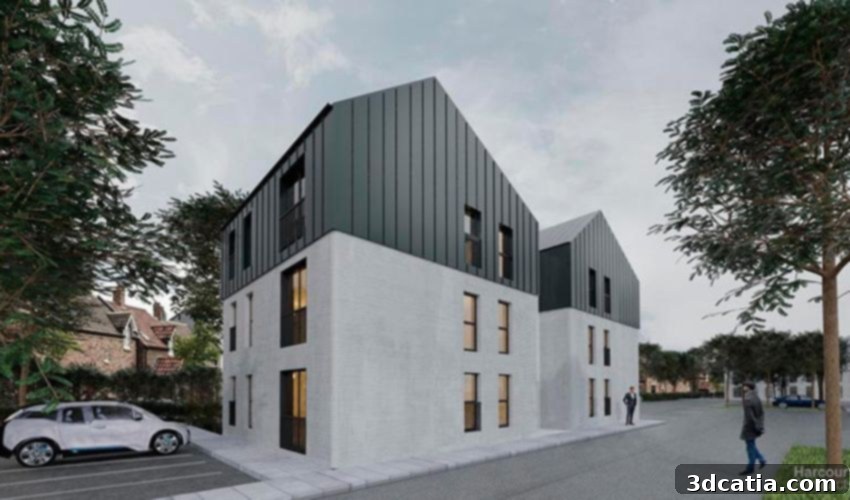
Pioneering Sustainable Living: Lancashire’s Groundbreaking 3D Printed Eco-Homes Initiative Set to Transform Affordable Housing in the UK
The United Kingdom is currently facing a significant housing crisis, marked by escalating property prices and a persistent shortage of affordable, high-quality homes. In this challenging landscape, an ambitious and truly innovative initiative has commenced in Lancashire, UK, aiming to deliver a revolutionary solution: the construction of 46 eco-friendly homes utilizing advanced 3D printing technology. This landmark project, spearheaded by Building For Humanity – a dedicated Community Interest Company (CIC) with a core mission to provide affordable, carbon-zero housing for individuals and families in genuine need – represents a beacon of hope for sustainable and accessible living. To bring this vision to fruition, Building For Humanity has forged a crucial partnership with Harcourt Technologies Ltd (HTL). HTL distinguishes itself as the sole distributor of cutting-edge COBOD equipment across Ireland, Northern Ireland, and the northern regions of Britain, positioning them as pioneers in advanced construction methods. Through their expertise, HTL will leverage state-of-the-art concrete 3D printing techniques to execute this substantial £6 million development. This undertaking is not merely another construction project; it is set to become the largest printed building endeavor in Europe, signifying a monumental step forward in modern construction. The profound expectation is that these affordably priced, 3D printed homes will yield immense benefits for the local community, offering not just shelter, but a sustainable pathway to improved quality of life.
The escalating cost of living, coupled with stagnant wage growth, has placed immense pressure on households across the UK. With house prices having surged by an alarming 15.5% compared to 2021, and average incomes failing to keep pace, the availability of truly affordable housing has never been more critical. Building For Humanity’s founder, Scott Moon, eloquently articulates the company’s foundational principle: to ‘ensure quality housing is accessible to everyone’. This ethos underscores a deep commitment to social responsibility, emphasizing the wellbeing of future residents and the broader community over conventional company profit margins. This project is meticulously designed to foster local prosperity and stability, with a stringent policy ensuring that the homes will be exclusively available to residents within the specific Council area where they are built. For this particular development, this means prioritizing the needs of the Borough of Hyndburn, Lancashire, directly serving the community whose land will host these innovative dwellings. Beyond economic considerations, Building For Humanity deeply recognizes the imperative of environmental stewardship. Their strategic approach aims to confront and resolve pressing housing challenges without compromising vital ecological values. The commitment is unwavering: to construct net carbon zero homes that boast exceptionally high energy efficiency. This focus on sustainability is particularly pertinent in an era of rapidly rising heating prices, offering long-term financial relief and environmental benefits to residents.
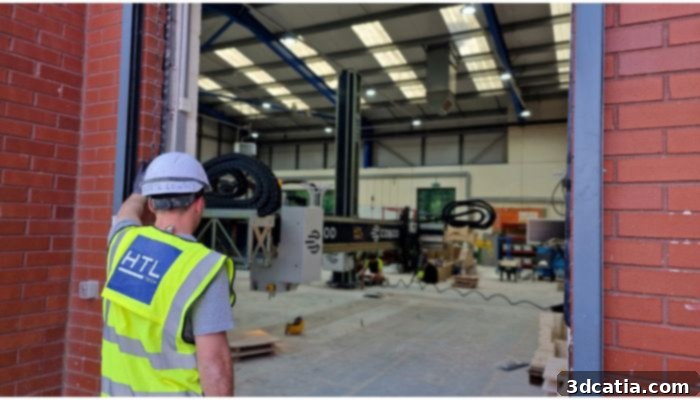
HTL recently installed a COBOD 3D Printer in Accrington and Rossendale College. [Photo credit: Harcourt Technologies Limited on LinkedIn]
The impact of this ambitious project extends far beyond merely providing housing; it also serves as a catalyst for bringing cutting-edge 3D printing education directly into the local community. A testament to this commitment is the integration of Accrington and Rossendale College into the development process. Critical parts of the structures have undergone rigorous testing at the college, which is now poised to launch specialized courses in concrete 3D printing. This educational initiative will empower local residents with valuable, future-proof skills, contributing to workforce development and innovation within the region. Harcourt Technologies Ltd (HTL) provides a compelling rationale for their strategic adoption of this advanced construction technology. Their analysis reveals profound efficiencies: a remarkable 30% reduction in overall build costs, a dramatic 50% decrease in construction print times, and an impressive 60% reduction in comparable construction wastes. These substantial financial and operational gains are not simply corporate advantages; they are designed to be directly transferred to the consumer. By optimizing the construction process through 3D printing, HTL can ensure that the final 3D printed homes remain genuinely affordable, fulfilling the project’s core mission. The HTL team itself is a formidable collective of seasoned professionals, boasting over two decades of combined experience across architecture, additive manufacturing, and comprehensive development. Their ranks include highly skilled architects, innovative engineers, and specialist 3D printing experts, ensuring a multidisciplinary approach to every aspect of the project. For the actual construction, HTL relies on the renowned COBOD gantry printers, industry-leading machinery known for its precision and reliability in producing components for large-scale construction. COBOD is globally recognized as a pioneer and leader in 3D printing technology, with their flagship BOD2 printer having been deployed in numerous groundbreaking projects worldwide, from tackling housing shortages in Guatemala to constructing India’s first two-story 3D printed building in India. This global track record underscores the proven capability and transformative potential of the technology being brought to Lancashire.
The true significance of this pioneering endeavor in Lancashire profoundly lies in its direct and tangible application for low-income families and individuals, who are often disproportionately affected by housing crises. Historically, many construction projects employing advanced 3D printing technology have been predominantly private ventures, typically resulting in higher costs that are ultimately passed on to the consumer. This model, while showcasing technological prowess, often renders such innovative housing inaccessible to the majority of individuals, thereby exacerbating existing inequalities. What sets the Building For Humanity project apart is its unwavering commitment to a charitable and community-focused mission. By intentionally leveraging the efficiencies of additive manufacturing within a framework dedicated to social impact, this project powerfully demonstrates that this revolutionary technology can deliver substantial benefits directly to the consumer, rather than solely augmenting company profits. This approach democratizes access to cutting-edge housing, proving that innovation can serve as a potent tool for social good. It heralds a new era where advanced construction methods can genuinely contribute to alleviating housing shortages and improving living standards for those who need it most. This model also offers a scalable blueprint for future initiatives, showing how 3D printing can be strategically deployed to build more resilient, affordable, and sustainable communities nationwide. For those interested in delving deeper into the specifics of this transformative project, further details can be found on Building For Humanity’s dedicated project page HERE. Additionally, comprehensive information regarding Harcourt Technologies Ltd’s innovative approaches and services is available on their official website HERE, providing a fuller picture of the technological backbone supporting this remarkable scheme.
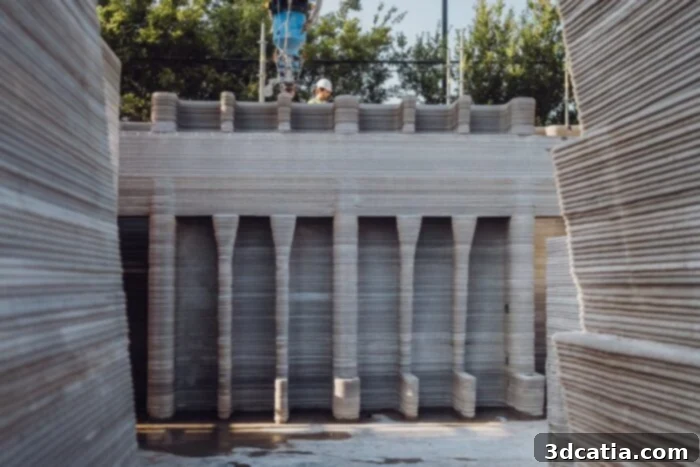
COBOD’s previous projects include a 3D-printed two-story home in Texas.[Photo credit: hannah-office.org]
This visionary project in Lancashire stands as a powerful testament to the transformative potential of 3D printing in addressing some of society’s most pressing challenges. By blending technological innovation with a profound commitment to social equity and environmental responsibility, Building For Humanity and Harcourt Technologies Ltd are not just constructing houses; they are laying the foundation for a more sustainable, affordable, and inclusive future. This endeavor sets a new benchmark for accessible, eco-conscious construction, demonstrating how advanced manufacturing can be harnessed for the greater good. It is a compelling example of how collaborative efforts between community-focused organizations and pioneering technology firms can yield tangible, life-changing results for vulnerable populations and inspire similar projects globally. We are eager to hear your thoughts on this groundbreaking initiative. What are your perspectives on the role of 3D printing in solving housing crises or promoting sustainability? Please share your insights in a comment below, or join the conversation on our LinkedIn,Facebook, andTwitter pages! For those who wish to stay abreast of the latest developments and innovations in the 3D printing world, don’t forget to sign up for our free weeklyNewsletter here, delivering the most current 3D printing news directly to your inbox. You can also explore a wealth of video content and project showcases on our officialYouTube channel, offering visual insights into the world of additive manufacturing.
Cover photo credit: Harcourt Architects