
A Year of Innovation: Recapping the Top 3D Printing Breakthroughs and Viral Moments of 2018
The year 2018 marked a period of extraordinary growth and fascinating developments within the dynamic world of 3D printing, also known as additive manufacturing. It was a year filled with anticipation as innovative machines launched onto the market, eager to be rigorously tested and evaluated. Legal landscapes shifted, sparking crucial debates around the implications of accessible manufacturing, while ambitious projects pushing the boundaries of human endeavor, such as preparing for construction in space, steadily advanced. Many of these groundbreaking events and discussions were captured on video, offering a unique visual record of the industry’s progress. Prominent global brands like HP, Ultimaker, and even entertainment giants such as Marvel frequently made headlines, collectively showcasing the immense capabilities of current 3D printing technology and providing tantalizing glimpses into its future potential. This curated collection invites you to revisit the most significant and captivating 3D printing videos from 2018, exploring the innovations that shaped the year and continue to influence the trajectory of this transformative technology.
1. HP Metal Jet: Redefining Metal 3D Printing
American technology giant HP made a significant splash in 2018 with the introduction of their revolutionary HP Metal Jet technology. This innovative machine fundamentally redefines expectations for metal additive manufacturing. At its core, the Metal Jet system leverages a sophisticated powder binding technique, drawing inspiration from the established principles of Metal Injection Molding (MIM). What sets it apart is its ability to deliver superior productivity and significantly reduced costs when compared to existing metal powder binding and sintering solutions. This advancement addresses critical challenges in metal 3D printing, making it more viable for large-scale production and a wider range of industrial applications. The introduction of Metal Jet firmly solidified HP’s position not only as a leading innovator in the professional 3D printer market but also as a key driver in making advanced metal additive manufacturing accessible and cost-effective for various industries worldwide. Its potential to accelerate the adoption of 3D printing for functional metal parts is undeniable, promising a future of faster prototyping and more efficient production.
2. The Complex Debate: 3D Printed Guns
One of the most contentious and widely debated topics in the 3D printing community in 2018 revolved around the legality and implications of 3D printed guns. The year saw a dynamic back-and-forth concerning whether these firearms, often undetectable by conventional security measures, should be legally permissible. While initial reports earlier in the year suggested a move towards legalization in the United States, this status was met with swift legal challenges and intense public scrutiny, causing the issue to swing in various directions throughout the year. The concept of a 3D printed gun first emerged publicly in 2013, immediately sparking a protracted legal battle concerning its commercialization and distribution, particularly the availability of blueprint files online. Despite some resolutions in the initial stages of that fight, the fundamental ethical, security, and regulatory questions surrounding accessible, untraceable firearms continue to be a significant and ongoing challenge for lawmakers, tech companies, and society at large. This ongoing debate underscores the profound societal impact that disruptive technologies like 3D printing can have.
3. Biolife4D: Bioprinting for a Healthier Future
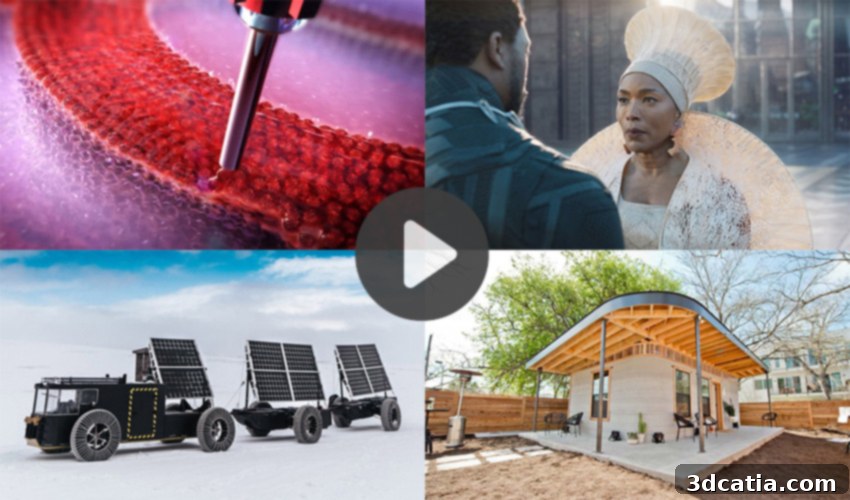
The medical sector stands as one of the most promising fields to embrace additive manufacturing, leveraging its capabilities to achieve truly groundbreaking advancements. Among the pioneering companies in this space is Biolife4D, a biotech firm dedicated to revolutionizing organ transplantation. This innovative company focuses on bioprinting, a specialized form of 3D printing that uses living cells to create functional tissues and, eventually, complex organs. Their primary mission is to develop viable 3D printed organs to address the critical and ever-growing global demand for organ transplants, which currently far outstrips supply. Biolife4D is at the forefront of pioneering significant advancements in tissue engineering, with a long-term goal to 3D print a complete human heart. While this ambitious project is still in its initial developmental stages, the progress made by companies like Biolife4D offers immense hope for the future of medicine, potentially saving countless lives by eliminating transplant waiting lists and reducing the risks associated with organ rejection. Their work represents a monumental step towards personalized medicine and regenerative therapies.
4. Searious Business: A 3D Printed Yacht from Plastic Waste
The escalating issue of plastic waste accumulating in our oceans and landfills demands innovative solutions, and 2018 highlighted efforts to tackle this global crisis head-on. Searious Business is one such organization, actively working to demonstrate the vast potential of recycling plastic waste through additive manufacturing. To vividly illustrate the possibilities and set a compelling example for circular economy principles, the company embarked on an ambitious project: producing a fully sailable 3D printed yacht constructed entirely from recycled plastic. This large-scale endeavor not only champions environmental sustainability but also showcases the structural integrity and versatility of recycled materials when processed through advanced manufacturing techniques. Complementing this grand vision, smaller-scale initiatives are also being developed to empower individuals. Earlier in 2018, the Protocycler was launched, a compact machine designed to enable users to recycle plastic waste into usable 3D printer filament right at home. These projects collectively underscore the transformative power of 3D printing in converting environmental challenges into sustainable manufacturing opportunities.
5. RepRap’s Airless 3D Printed Bike Tire
For any cyclist, the sudden deflation of a tire is a common and frustrating experience. However, 2018 brought a potential end to this predicament, thanks to innovative developments from RepRap, a startup that unveiled its ingenious 3D printed bike tire. RepRap’s solution eliminates the traditional air-filled inner tube, offering cyclists an entirely airless design that is impervious to punctures. This breakthrough allows for a much more serene and reliable riding experience, as the fear of flats becomes a thing of the past. The company highlighted that their innovative tire can be adapted to virtually any environment or terrain, providing enhanced versatility. What’s more, the airless design opens up unprecedented customization options, enabling cyclists to personalize the tread pattern and even the internal structure of their bicycle tires to suit specific performance requirements or aesthetic preferences. This year also saw other significant advancements in bicycle manufacturing through 3D printing, notably from Arevo, which debuted its robust and lightweight 3D printed carbon fiber bicycle frame, pushing the boundaries of material science and design in sports equipment.
6. Solar Voyage: A Sustainable Expedition to Antarctica
Clean2Antarctica, a Dutch association, made waves in 2018 with its commendable mission to promote a circular economy and inspire sustainable practices globally. Their work actively encourages organizations and individuals alike to develop and adopt sustainable alternatives to conventional methods. A highlight of their efforts was the launch of the Solar Voyage, an extraordinary expedition destined for the South Pole in Antarctica. Central to this pioneering journey was an electric vehicle, meticulously constructed with 3D printed components made from recycled plastic. This unique vehicle was designed to be entirely powered by solar energy, demonstrating the feasibility of fully sustainable transport even in the most extreme environments. The team commenced their remarkable trip in November of that year, embarking on a challenging and inspiring journey. The Solar Voyage stands as a powerful testament to the potential of combining renewable energy, recycled materials, and advanced manufacturing to create solutions that address pressing environmental concerns and pave the way for a more sustainable future. The results of such an ambitious and environmentally conscious expedition were eagerly anticipated by many.
7. ICON’s Affordable 3D Printed Housing Solutions
The construction industry is experiencing a profound transformation thanks to 3D printing, altering everything from the speed of construction to the very methodology of building houses. Leading this charge in 2018 was ICON, a Texas-based startup dedicated to revolutionizing affordable housing. Earlier that year, ICON successfully secured an impressive $9 million in funding to advance their ambitious project of creating cost-effective 3D printed homes. Their innovative approach aims to significantly reduce construction time and labor costs, making homeownership more accessible, especially in underserved communities. ICON is not alone in pushing the boundaries of additive manufacturing in construction. The year also celebrated another significant milestone: the first family in Nantes, France, successfully moved into a 3D printed social housing unit. These developments signal remarkable progress for the housing market, offering sustainable and rapid solutions to global housing shortages. The promise of 3D printing in construction extends beyond affordability, encompassing customizability, waste reduction, and the potential to build resilient structures in challenging environments.
8. The World’s First Fully 3D Printed Car: LSEV
3D printing has been an integral part of the automotive sector for some time, primarily used for prototyping, customizing specialized parts, and accelerating production cycles. However, 2018 witnessed a monumental leap forward with the announcement of the world’s first fully 3D printed car, the LSEV, slated for release in April 2019. This groundbreaking vehicle is the brainchild of the Italian manufacturer X Electrical Vehicle (XEV) and was prominently showcased at Formnext 2018, captivating audiences with its innovative design and manufacturing process. The LSEV significantly reduces the number of components traditionally required for car assembly, streamlining production and potentially lowering manufacturing costs. This not only demonstrates the immense potential of additive manufacturing in mass production but also opens new avenues for personalized vehicle design and rapid iteration. Beyond full vehicles, the automotive industry also saw other impressive advancements, such as the unveiling of the world’s first 3D printed titanium rim, showcasing how high-performance materials and 3D printing can create lighter, stronger, and more aesthetically complex parts. These developments collectively underscore the ongoing revolution in automotive engineering powered by additive manufacturing.
9. Inhabiting Space: 3D Printing Beyond Earth
The dream of long-term human habitation beyond Earth moved significantly closer to reality in 2018, thanks to the pioneering efforts of engineers at NASA. In collaboration with Autodesk, NASA has been actively developing concepts for 3D printed space habitats designed to support astronauts during extended missions on the Moon or future planetary expeditions to Mars. This ambitious project utilizes a sophisticated robotic extrusion process, combining materials readily available in extraterrestrial environments—specifically, a mixture of sediment found on the lunar surface—with recycled plastic brought from Earth. This ingenious approach addresses critical challenges of space colonization, such as material transport costs and the need for on-site manufacturing. By leveraging local resources and advanced 3D printing techniques, engineers are making substantial progress toward enabling sustainable construction in space, dramatically reducing the logistical complexities of transporting building materials from Earth. Further highlighting these efforts, NASA also organized contests and showcased projects like the MARSHA project, which explores designs for potential Martian habitats. The vision of future space explorers living in 3D printed structures is rapidly evolving from science fiction to tangible engineering goals.
10. Architectural 3D Printing: Enhancing Creative Design at Make
3D printing serves as an incredibly powerful medium for expressing and realizing creative visions, and a prime example of its application in high-level design was showcased by the architecture firm Make in 2018. This firm distinguishes itself not only through its unique employee-owned structure but also through its innovative practices aimed at designing the world’s most exceptional buildings, places, and spaces. Central to their workflow is an impressive farm of Ultimaker 3D printers, which plays a pivotal role in fostering a democratic design process. These printers enable Make’s architects and designers to rapidly create physical models, transforming abstract project concepts into tangible, detailed representations, from initial sketches to large, complex context models. This iterative and tactile approach significantly enhances precision, communication, and overall design quality. The role of desktop 3D printers in professional architectural practices was further underlined by Ultimaker’s own significant product launch earlier in the year: the Ultimaker S5, a professional-grade machine offering larger build volume and enhanced reliability, perfectly suited for demanding applications like those at Make. This synergy demonstrates how accessible 3D printing can empower creative industries to achieve unprecedented levels of innovation.
11. Black Panther Costumes: A Marvel of 3D Printed Design
The highly anticipated Marvel movie Black Panther captivated audiences worldwide upon its release in 2018, becoming a massive cultural and box office success. A significant contributing factor to its visual splendor was the elaborate and often futuristic costume design, where 3D printing played an indispensable role. Additive manufacturing made it possible to create a wide array of intricate, unique, and structurally complex components for the film’s stunning costumes and props, bringing the fantastical world of Wakanda to life with unparalleled detail and authenticity. From detailed armaments to regal attire, 3D printing allowed designers to achieve shapes and textures that would have been incredibly challenging, if not impossible, with traditional fabrication methods. Highlighting this creative collaboration, earlier in the year, we had the privilege of interviewing renowned designer Julia Körner, who shared insights into her design process and crucial role in fabricating some of the iconic 3D printed pieces featured in Black Panther. This innovative application underscores how 3D printing is blurring the lines between technology, art, and storytelling, setting new benchmarks for visual effects and costume design in cinema.
12. The Jet Suit: Bringing Iron Man to Life
For generations, the dream of human flight, often relegated to the realms of science fiction or the heroic narratives of characters like Iron Man, began to take a tangible form in 2018. Richard Browning, the visionary founder of Gravity Industries, brought us remarkably closer to this dream with his groundbreaking invention: a functional jet suit. This incredible feat of engineering, visibly inspired by the iconic Marvel character, extensively incorporates 3D printed metal parts to ensure both lightweight construction and structural integrity. Weighing a mere 27 kg, the suit is propelled by five powerful turbines strategically positioned on the wearer’s arms and back, enabling vertical takeoff and controlled flight. The jet suit garnered significant attention, even captivating high-profile figures such as actor Tom Cruise, demonstrating its immediate appeal and potential. Despite its current steep price tag of £340,000, the jet suit is already well on its way to hitting the market, signaling a revolutionary step in personal mobility and adventure. Browning’s innovation exemplifies how advanced materials and 3D printing can transform seemingly impossible concepts into breathtaking realities, pushing the boundaries of what humans can achieve.
Bonus: #In3Dsnaps – Engaging with Industry Experts
2018 was truly a year overflowing with remarkable innovations and exciting developments, and we had the distinct pleasure of exploring, analyzing, and bringing you the very latest in 3D printing news. One memorable highlight that allowed us to engage directly with the industry was our visit to In3Dustry, a prominent event where we connected with leading experts and innovators from across the additive manufacturing landscape. During this immersive experience, we took the opportunity to lighten the mood and quiz several industry professionals on their 3D printing trivia knowledge, capturing their insights and reactions in a fun, spontaneous format. This initiative, dubbed #In3Dsnaps, offered a unique perspective on the personalities shaping the industry and their passion for the technology. We encourage you to watch how they fared in our trivia challenge and explore many more captivating 3D printing videos from 2018, available for your viewing pleasure on our dedicated YouTube channel! These candid interactions not only provided entertainment but also a deeper appreciation for the community driving this incredible technological revolution.
We hope you enjoyed this comprehensive review of the top 3D printing videos and innovations that defined 2018. From industrial breakthroughs to profound societal impacts and ambitious projects pushing humanity’s frontiers, 3D printing proved its transformative power across countless sectors. What are your thoughts on these groundbreaking developments? We would love to hear your perspective! Please share your comments below or engage with us on our Facebook and Twitter pages. To stay fully informed and receive all the latest news, trends, and video highlights in the world of 3D printing directly in your inbox, don’t forget to sign up for our free weekly Newsletter!