
Revolutionizing Polymers: University of Leeds and KIT Pioneer 3D Printing & Machine Learning for Advanced Materials
International scientific collaboration stands as an indispensable pillar in nearly every field of research and development. The collective sharing of diverse techniques, specialized expertise, and innovative ideas is not merely beneficial, but absolutely fundamental to driving discovery and accelerating technological advancement across borders. Unsurprisingly, the rapidly evolving domain of 3D printing, or additive manufacturing, fully embraces this principle. A compelling recent example highlights this global interconnectedness: the esteemed University of Leeds in the UK and Germany’s prestigious Karlsruhe Institute of Technology (KIT) have significantly deepened their existing scientific partnership. They have proudly announced a new, ambitious project focused on exploring the transformative potential of integrating advanced machine learning algorithms with novel 3D-printed reactors. This groundbreaking initiative holds immense promise, with researchers aspiring to unlock new pathways for the development and optimization of high-quality polymers and advanced plastics, crucial materials for numerous industries worldwide.
This pivotal 3D printing research project, which initially took root and underwent its foundational stages at the University of Leeds, is now expanding its reach. Equivalent experimental components are currently under meticulous construction and undergoing preliminary testing at KIT’s state-of-the-art facilities. This collaborative endeavor exemplifies true international scientific exchange, involving significant cross-border travel and intricate logistical coordination. To facilitate this complex knowledge transfer, a dedicated PhD researcher from KIT spent a crucial period at Leeds, immersing themselves in the intricate software protocols and sophisticated experimental techniques developed by the UK team. This intensive training ensures that the expertise gained can be directly applied at KIT, where specialized 3D-printed parts will be manufactured. Subsequently, these newly fabricated components will journey back to Leeds for rigorous testing and comprehensive analysis, completing a seamless research loop that leverages the unique strengths of both institutions.
The bond between these two leading research powerhouses, the University of Leeds and KIT, is not a recent phenomenon; their collaborative journey began many years ago, built upon a foundation of shared scientific vision and mutual respect. In a landmark move in 2019, both institutions formally cemented their commitment by signing a Memorandum of Understanding (MoU). This agreement serves as a powerful symbol of their unwavering dedication to strengthening international cooperation, fostering joint research initiatives, and promoting academic exchange. Their extensive partnership spans an impressive array of critical research domains, reflecting the multidisciplinary nature of modern scientific challenges. These collaborative efforts include vital studies in climate change, cutting-edge advancements in artificial intelligence (AI) and robotics, the development of advanced materials, and sophisticated data analysis techniques. This broad spectrum of shared projects underscores the depth and breadth of their strategic alliance, positioning them as key players in addressing some of the world’s most pressing scientific and technological questions.
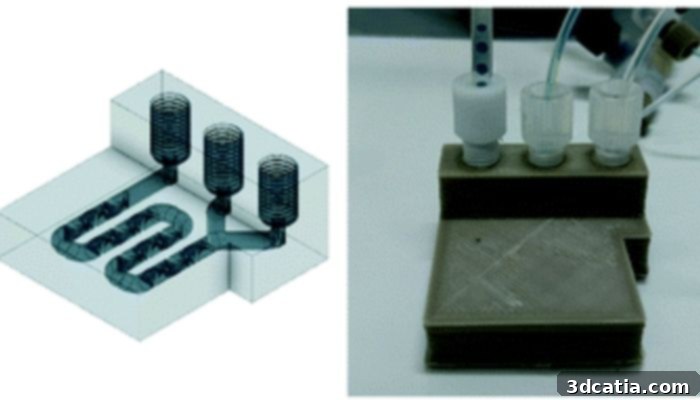
Advanced 3D-printed reactors, such as the one pictured, are revolutionizing chemical processes by enabling continuous flow chemistry. Unlike traditional batch reactions, flow chemistry allows for chemical reactions to run without interruption, offering enhanced control, greater safety, and improved efficiency in synthesizing various compounds, particularly for new polymer development. (Photo credit: Reaction Chemistry Engineering, 2020,5, 728-735)
The integration of 3D-printed reactors with machine learning represents a paradigm shift in materials science, particularly for polymer and plastic development. Traditional methods of synthesizing and optimizing these materials are often time-consuming, resource-intensive, and rely heavily on iterative, trial-and-error experimentation. By leveraging the precision and customization offered by 3D printing, researchers can rapidly design and fabricate complex reactor geometries optimized for specific chemical reactions. These custom reactors can dramatically improve reaction kinetics, selectivity, and overall yield, making the chemical synthesis process far more efficient. When combined with machine learning, the process becomes even more powerful. Machine learning algorithms can analyze vast datasets from experimental trials, predict optimal reaction conditions, and even suggest novel molecular structures or synthesis pathways. This accelerates the discovery process exponentially, reducing the time and cost associated with developing new materials and bringing them to market. The ultimate goal is to create a closed-loop system where AI-driven insights inform reactor design, which in turn generates new data for further AI optimization, leading to a virtuous cycle of innovation in polymer engineering.
Professor Thomas Hirth, who serves as the Vice-President for Transfer and International Affairs at KIT, underscored the profound significance of this enduring partnership. He stated, “The University of Leeds is a very important partner of KIT in the UK and Europe. This is reflected by the large range of topics covered by our increasingly close collaboration in research, academic education and transfer.” This sentiment highlights not only the strategic importance of the collaboration but also its multifaceted nature, extending beyond pure research into educational initiatives and the crucial transfer of knowledge to practical applications. Such international alliances are vital for tackling global challenges, pooling intellectual resources, and fostering a truly interconnected scientific community capable of pushing the boundaries of human knowledge and delivering tangible societal benefits. The synergy between these institutions reinforces the idea that innovation flourishes best in an environment of open exchange and shared ambition.
The potential impact of this research on polymer and plastic manufacturing is immense. High-quality polymers are indispensable in countless applications, from lightweight components in the automotive and aerospace industries to advanced biomedical devices, sustainable packaging solutions, and specialized electronics. The ability to precisely control their properties – such as strength, flexibility, thermal resistance, and biodegradability – through AI-driven 3D-printed reactors could lead to entirely new classes of materials with unprecedented performance characteristics. Furthermore, this innovative approach promises to significantly enhance the sustainability of polymer production. By optimizing reaction conditions, minimizing waste through continuous flow processes, and enabling the development of materials that are more durable, easily recyclable, or even biodegradable, the project contributes significantly to a circular economy model. This directly addresses critical environmental concerns associated with plastic waste and inefficient manufacturing, paving the way for greener industrial practices.
This collaborative spirit, uniting industry and academia, and spanning international borders, is a recurring theme in modern scientific innovation. Illustrative examples abound, showcasing the profound benefits of such synergistic efforts. A notable instance includes the pioneering work of Photocentric, an innovative company that recently secured a significant grant of £1 million from the UK Research and Innovation Agency. This substantial funding is dedicated to advancing their groundbreaking sustainable manufacturing method, aptly named LEAD (Low Energy Autonomous Digital Factory). The LEAD initiative aims to develop highly efficient, environmentally conscious production processes, demonstrating how industrial innovation can align with ecological responsibility and drive future manufacturing standards. Beyond national efforts, the global drive for standardization is also gaining momentum. For example, highly dedicated researchers in South Korea are actively engaged in efforts to standardize medical 3D printing and scanning on an international basis. Their critical objective is to establish universally recognized global conventions and protocols that will significantly enhance the quality, safety, and reliability of medical 3D printing applications worldwide, ensuring patient welfare and fostering broader adoption of these life-changing technologies. These diverse examples underscore a universal truth: complex challenges often require multifaceted, collaborative solutions that transcend geographical and institutional boundaries.
The dedicated research team is delving deep into the manufacturing processes of advanced polymers, strategically integrating artificial intelligence (AI) with cutting-edge 3D-printed reactors. This synergistic approach promises to revolutionize how new materials are discovered, developed, and optimized for various industrial applications, pushing the boundaries of materials science. (Photo credit: Roland Berger)
The collaborative project between the University of Leeds and Karlsruhe Institute of Technology exemplifies the cutting edge of materials science and advanced manufacturing. By thoughtfully combining the unique capabilities of 3D printing for rapid and customized reactor design with the powerful analytical and predictive strengths of machine learning, they are not just incrementally improving existing processes; they are laying the groundwork for a transformative approach to polymer and plastic synthesis. This innovative method has the potential to dramatically accelerate the development of next-generation materials, offering unparalleled control over their properties, reducing environmental impact, and opening up new possibilities across a multitude of industries. The success of such a venture hinges critically on robust international academic partnerships, proving once again that shared knowledge, diverse perspectives, and a commitment to interdisciplinary research are the most potent catalysts for scientific progress in the 21st century.
What are your thoughts on this inspiring international collaboration, harnessing the power of 3D printing technology to significantly advance the properties and applications of polymers and plastics? We invite you to share your insights and opinions in the comments section below, or join the conversation on our LinkedIn, Facebook, and Twitter pages! Don’t miss out on the latest advancements in additive manufacturing – remember to sign up for our free weekly Newsletter here, delivering the most current 3D printing news directly to your inbox! For visual content, you can also explore all our insightful videos on our YouTube channel, featuring interviews, demonstrations, and the latest innovations.
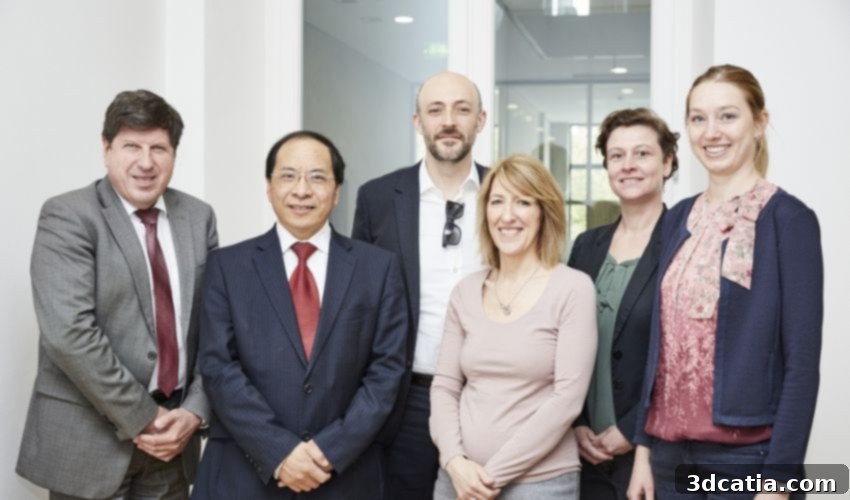
*The cover photo prominently features the 2018 delegation of distinguished professors from the University of Leeds, captured during their pivotal visit to KIT. Their discussions during this visit were primarily focused on laying the strategic groundwork for robust future cooperation and deepening academic ties between the two institutions, foreshadowing today’s advancements. Credit: Karlsruhe Institute of Technology