
3D Printing for Environmental Restoration: Innovative Solutions for a Greener Future
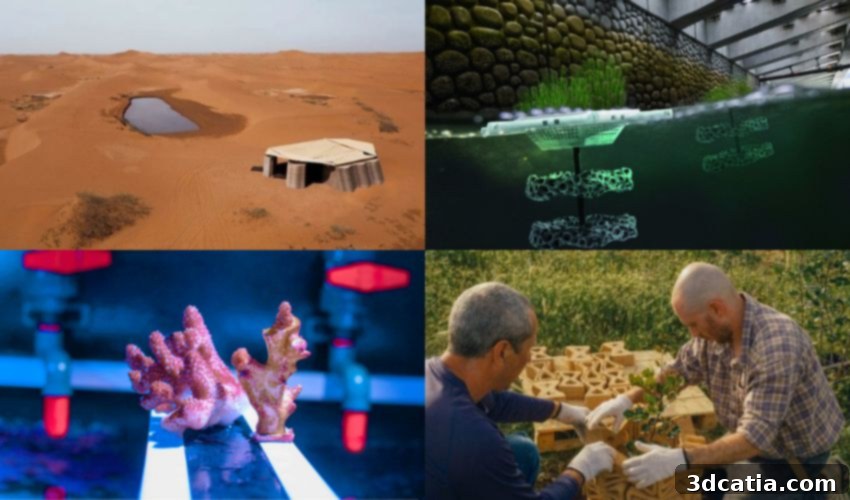
Across the globe, a diverse array of professionals, including designers, engineers, researchers, and artists, are increasingly leveraging the power of 3D printing to drive environmental restoration and promote regenerative manufacturing practices. What was once predominantly considered a prototyping tool has now evolved into a transformative technology, enabling innovative solutions that foster biodiversity, rehabilitate fragile ecosystems, and bolster conservation initiatives across various environments, from arid deserts to lush forests, meandering rivers, and vibrant coral reefs. These projects, which range from crafting prosthetic tree hollows to developing biodegradable shelters for young plants, vividly illustrate how digital design and locally adapted fabrication techniques can address critical ecological challenges with remarkable precision and a commitment to sustainability. 3D printing offers a versatile and effective means to support environmental initiatives around the world.
Prosthetic Tree Hollows: Aiding Wildlife in Australia
In a collaborative effort, McConnell Dowell, Inland Rail, and researchers from the University of Melbourne have successfully developed and installed 18 prosthetic tree hollows in central Victoria. This project aims to provide crucial support for endangered bird and mammal species. These artificial hollows are meticulously designed using laser scans of natural hollows, sophisticated computer modeling, and cutting-edge materials such as 3D printed wood and mycelium. The resulting structures offer a significantly more durable and biologically appropriate alternative to traditional nest boxes. This pioneering initiative represents the first of its kind on a global scale and demonstrates the potential of integrating modern fabrication technologies into large-scale infrastructure projects to significantly enhance environmental conservation efforts. Ongoing monitoring is providing researchers with valuable insights into species behavior, which will inform and guide future habitat restoration strategies. The use of 3D printing in this context showcases its adaptability and potential for creating tailored solutions for specific environmental needs.
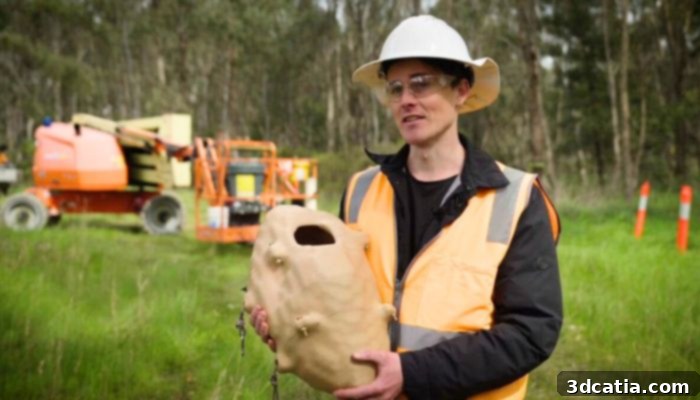
Prosthetic Tree Hollows (Photo Credit: McConnell Dowell)
Nereid: 3D Printed Marine Habitats for Coastal Restoration
At the prestigious World Design Congress in London, Zaha Hadid Architects, in collaboration with D-Shape, unveiled Nereid, an innovative digital marine habitat. This groundbreaking project is designed to facilitate the restoration of coastal ecosystems, particularly within Hong Kong’s North Lantau Marine Park. Nereid aims to stimulate the growth of phytoplankton and filter-feeding mollusks, which form the bedrock of the marine food chain. This initiative directly addresses the pressing issue of biodiversity loss, which is exacerbated by climate change, rapid urbanization, and pervasive pollution. By employing 3D printing technology with low-emission concrete and pH-neutral materials, Nereid replicates the intricate textures and porosity found in natural coral reefs. This creates safe and biomimetic structures that can be strategically installed across a variety of coastal environments. The precision and eco-friendliness of 3D printing make it an ideal technology for creating habitats that seamlessly integrate into marine environments.
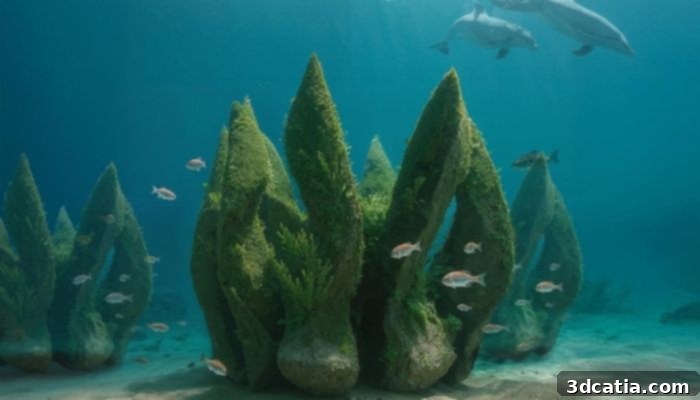
Nereid Marine Habitat (Photo Credit: ZHA)
TreeSoil: 3D Printed Shelters for Vulnerable Saplings
The successful cultivation of trees and plants can be particularly challenging in certain geographical regions, especially in arid and semi-arid environments. During their early stages of development, young plants are exceedingly vulnerable, making effective protection absolutely essential. This is the core concept underpinning the TreeSoil project. TreeSoil involves the creation of soil-based shelters using advanced 3D printing techniques, specifically employing a robotic arm. Developed in Israel by the Technion Material Topology Research Lab, the project seeks to shield young trees from a variety of detrimental environmental factors, including strong winds, intense sunlight, and other conditions that could potentially hinder their growth and development. The shelter is meticulously crafted from a carefully selected mixture of clay, sand, organic fibers, and cellulose. Once the 3D printing process is complete, the shelter is allowed to dry naturally. It is then carefully assembled around the young tree without the use of any adhesives or bonding agents. This ensures that the shelter is fully biodegradable and capable of breaking down naturally over time. As the tree matures and becomes more resilient, the shelter gradually disintegrates, releasing its constituent nutrients back into the surrounding soil, thereby enriching the environment. TreeSoil exemplifies how 3D printing can contribute to sustainable agriculture and reforestation efforts.
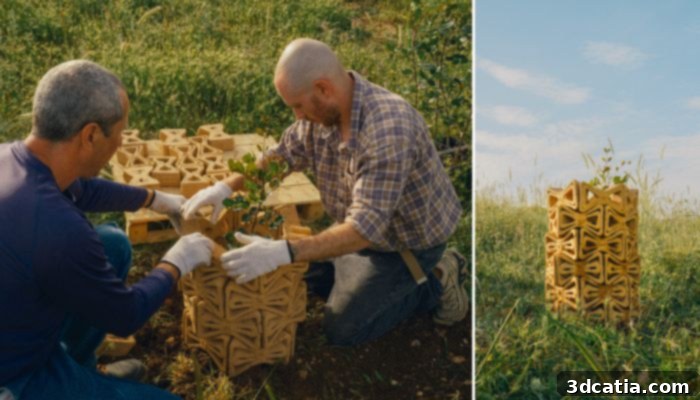
TreeSoil Shelter (Photo Credit: Edo Asoulin)
Revitalizing Coral Reefs with 3D Printed Tiles
Archireef is at the forefront of restoring damaged coral reefs by employing 3D-printed terracotta tiles. These tiles are carefully shaped to mimic the natural surfaces upon which corals typically settle. The tiles feature gentle, curved contours that provide young coral fragments with a stable and secure surface to attach to during their crucial early weeks, when they are most susceptible to environmental stressors. In a collaborative project with the Sino Group in Hong Kong, teams strategically placed hundreds of these meticulously designed tiles across a degraded stretch of seabed. This intervention effectively creates a new foothold, inviting corals, fish, and a diverse array of other marine life to return and re-establish themselves in the area. The tiles are intentionally lightweight and modular, allowing divers to easily carry and arrange them by hand. This avoids the need for heavy machinery in an environment that is already ecologically sensitive. Archireef’s approach recognizes the slow and steady nature of reef restoration. Rather than attempting to accelerate the process artificially, the tiles provide a stable foundation upon which the ecosystem can gradually rebuild, one fragment at a time. The use of 3D printing allows for the creation of complex and optimized structures that support the delicate process of coral regeneration.
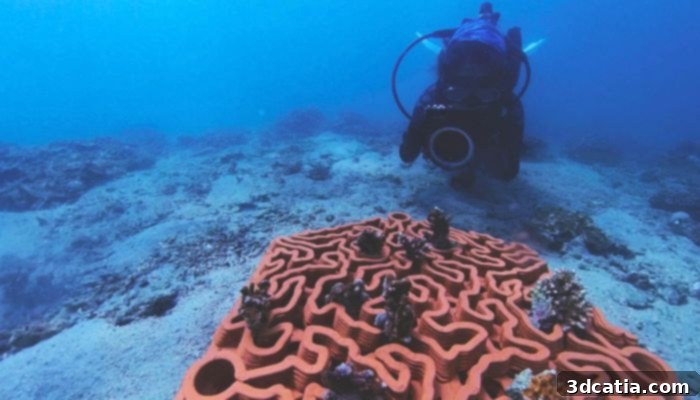
3D Printed Coral Reef Tiles (Photo Credit: Archireef)
Les Utopies Entomologiques: Providing Homes for Insects and Wildlife
Artist Raphaël Emine has realized a captivating project centered around creating habitats for insects and small wildlife within forest environments. Partnering with the 3D printing company WASP, Emine drew inspiration from the natural world to design these intricate structures. He incorporated structural patterns found in a variety of natural elements, including honeycomb cells, worm and spider webs, plant fractals, and geodesic mineral formations. The resulting creations are a series of small architectural marvels, complete with carefully designed tunnels, galleries, balconies, and corridors. These features provide the creatures with a dynamic and stimulating environment in which to live and thrive. Emine has created two installations of these projects, one in 2023 and another in 2024, utilizing the WASP 40100 LDM and Delta WASP 2040 Clay 3D printers. These installations are located in the Parc Maison Blanche in Marseille, France. This project exemplifies how 3D printing can be used to create aesthetically pleasing and ecologically beneficial structures that enhance biodiversity and support local ecosystems.
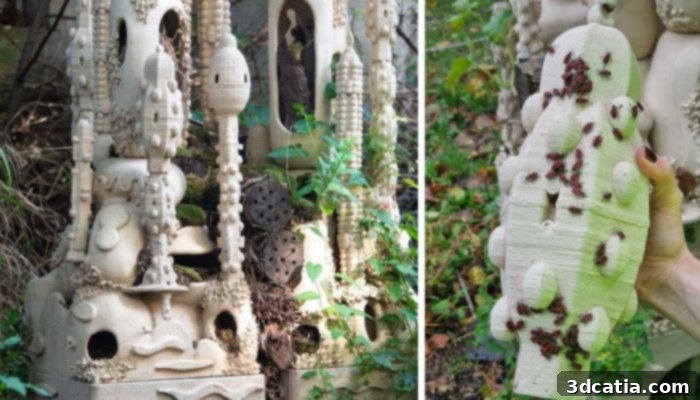
Insect Habitats (Photo Credit: Raphaël Emine via yankodesign.com)
Desert Ark: 3D Printed Reforestation Shelters in China
Desert Ark, an innovative project by the Chinese design studio designRESERVE, further demonstrates the potential of 3D printing to support environmental restoration efforts in extreme and challenging regions. Installed in the harsh Tengger Desert in Inner Mongolia, China, the complex comprises nine 3D-printed modules constructed from a durable mix of cement and sand. These modules are specifically designed to provide housing and support for volunteers engaged in reforestation efforts in the area. To ensure optimal print quality and structural integrity, the components are produced in a controlled off-site facility. They are then carefully transported to the desert, where they can be efficiently assembled in just two days, eliminating the need for extensive and disruptive excavation work. Each module is designed to serve a specific purpose, such as providing rest areas, cooking facilities, dining spaces, or sanitation facilities. The modules feature a distinctive wavy design and are equipped with insulated walls capable of withstanding extreme temperature fluctuations, ranging from –30 °C to 45 °C. The modules are strategically arranged around a central terrace, which is equipped with a retractable canopy and solar panels, providing a comfortable and sustainable living environment. Desert Ark provides all the essential infrastructure needed to support ecological work in remote and demanding environments. This project showcases the versatility and resilience of 3D printed structures in addressing environmental challenges in extreme climates.
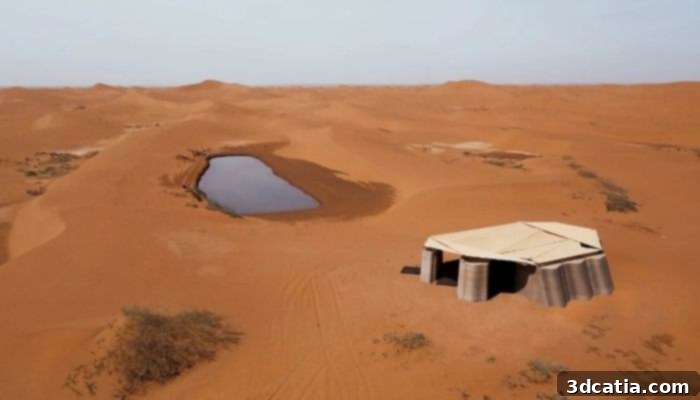
Desert Ark Reforestation Shelters (Photo Credit: Huaer Lin, Yong Hu, ATDEF team/designboom)
3D Printed Calcium Carbonate Coral Skeletons: Aiding Reef Recovery
Researchers at KAUST (King Abdullah University of Science and Technology) have developed a groundbreaking 3D printing approach with the aim of accelerating the restoration of vital coral reefs. Instead of relying on conventional concrete or metal substrates, the team has created eco-friendly calcium carbonate structures that meticulously mimic the natural skeletons of corals. These artificial skeletons provide coral micro-fragments with a significant head start in their growth and development. Their innovative CoraPrint method utilizes scanned coral geometries and a custom-designed calcium carbonate resin to produce non-toxic and highly detailed support structures. These structures can then be seeded with live coral fragments. Early aquarium tests have yielded promising results, positioning this technique as a potential game-changer in sustainable reef recovery efforts. The team is now planning to conduct extended field trials to assess how these 3D-printed structures perform under real-world ocean conditions and contribute to the long-term resilience of coral reefs. The use of calcium carbonate ensures that the structures are biocompatible and will eventually integrate seamlessly into the marine environment.
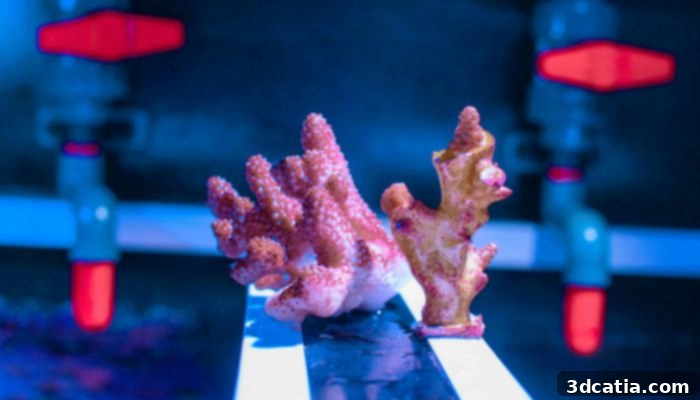
3D Printed Coral Skeletons (Photo Credit: KAUST/Anastasia Serin)
C-ecology: Ceramic Habitats for River Revitalization
Created by students at Tunghai University, the C-ecology concept proposes a novel approach to revitalizing urban rivers by utilizing 3D-printed ceramic modules to create artificial coral-reef-like ecosystems. These eco-friendly structures are designed to adapt to waterways of various sizes and create ideal habitats for a wide range of aquatic species. Furthermore, they improve water circulation and support overall ecological balance. The C-ecology project has already received recognition as a nominee for the prestigious 2022 Green Concept Award. The student team is currently in the planning stages to bring this innovative concept to real-world river environments, demonstrating how additive manufacturing can drive sustainable urban water solutions. If implemented successfully, the system could serve as a scalable model for cities seeking nature-based solutions to restore biodiversity in heavily modified or polluted waterways. The use of ceramic materials ensures that the structures are durable, non-toxic, and provide a suitable substrate for aquatic life to colonize. This project demonstrates the potential of 3D printing to create customized and ecologically beneficial solutions for urban environments.
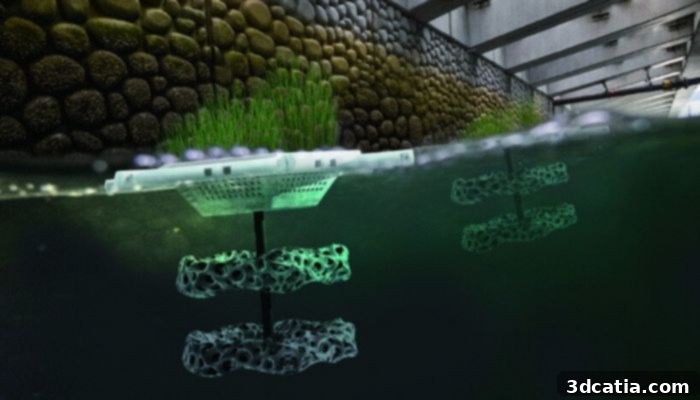
C-ecology River Habitats (Photo Credit: Tunghai University / Green Project Award)
Which project resonates with you the most? Share your thoughts in the comments below or connect with us on our LinkedIn or Facebook pages! Stay up-to-date with the latest 3D printing news by subscribing to our free weekly Newsletter. You can also explore our video content on our YouTube channel.