
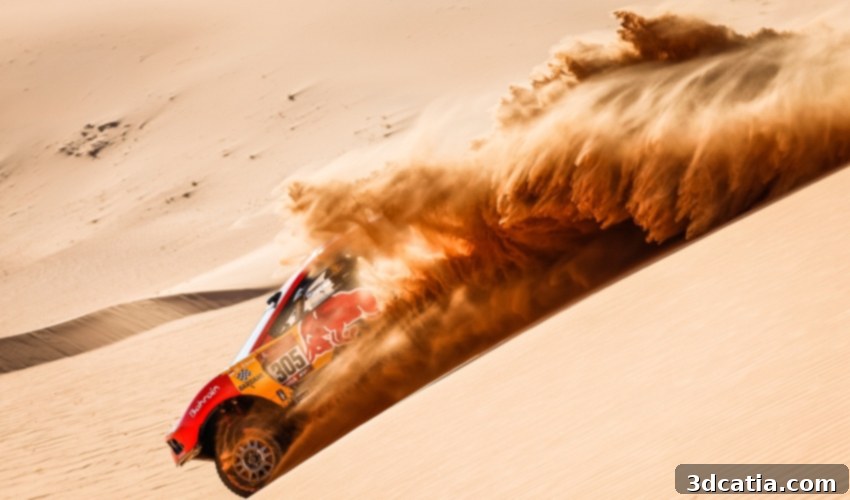
The Unseen Edge: How MakerBot Method X 3D Printing Propelled Prodrive and BRX at the Dakar Rally
The Dakar Rally, an annual odyssey since 1978, stands as one of the planet’s most formidable motorsport challenges. Two months ago, the Amaury Sport Organisation once again unleashed this brutal test of endurance and engineering, this time across the vast, unforgiving deserts of Saudi Arabia. With a staggering attrition rate – often fewer than seven out of ten cars even cross the finishing line – Dakar is synonymous with unparalleled difficulty. This year, however, a pioneering approach by Prodrive, a distinguished British motorsports and advanced engineering group, alongside Bahrain Raid Xtreme (BRX), introduced a technological advantage: the integration of MakerBot’s reliable Method X 3D printer directly into their support operations.
The BRX team, spearheaded by motorsport titans such as nine-time World Rally champion Sebastien Loeb and twenty-five-time rally legend Nani Roma, recognized that conventional logistics wouldn’t suffice for the demands of the rally. To maintain a competitive edge and ensure maximum uptime for their formidable Hunter T1 vehicles, they sought an innovative solution that could keep pace with the race’s dynamic and destructive nature. This foresight led them to deploy the MakerBot Method X, transforming their support truck into an on-the-go additive manufacturing hub.
On-Site Innovation: 3D Printing in the Heart of the Desert
Paul Doe, Chief Engineer at Prodrive, shared insights into this audacious strategy. “We carried this machine with us in the truck and printed remotely in the middle of nowhere; literally where you can’t see traces of civilization, yet here we are using this kind of machine with that industrial 3D printing technology,” Doe explained. This statement powerfully encapsulates the revolutionary aspect of their approach. Imagine the harsh environment of the Saudi desert – vast, isolated, and unforgiving – and then picture an industrial-grade 3D printer operating seamlessly within that very landscape, producing critical components on demand. It represents a significant paradigm shift in how support and logistics are managed in extreme motorsport events.
The decision to transport an industrial 3D printer into such remote conditions wasn’t merely a technological showcase; it was a pragmatic response to the Dakar Rally’s unique challenges. Mechanical failures are commonplace, and waiting for replacement parts to be shipped from a distant factory or even a centralized depot can mean invaluable time lost, potentially costing a team the race. By having the MakerBot Method X on board, Prodrive and BRX dramatically cut down on lead times for essential parts, empowering them to react to unforeseen issues with unprecedented speed and agility. “We took advantage of the speed of 3D printing parts in the middle of our test program,” Doe added, highlighting how this capability extended beyond race day, optimizing their entire preparation and testing phase.
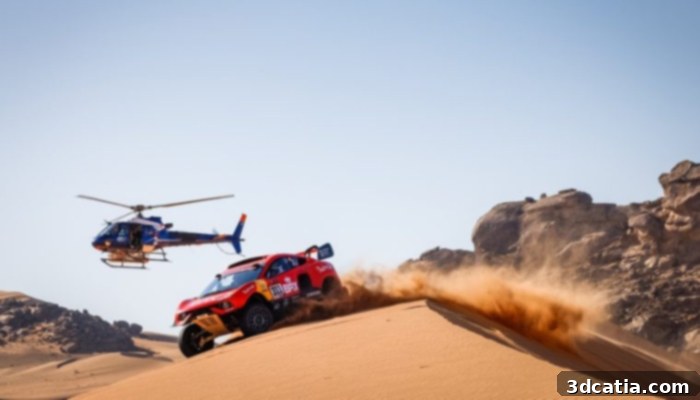
Unleashing Design Freedom and Rapid Iteration for Peak Performance
The immediate availability of the Method X granted the team an unparalleled advantage: the ability to prototype, test, and produce parts at an astonishing speed. This wasn’t just about replacing broken components; it was about continuous improvement and iterative design even as the rally progressed. Engineers could identify a potential area for optimization on a given day, design a revised part overnight, print it, and have it installed on the vehicle the very next morning. This dynamic workflow allowed Prodrive to experiment with diverse applications and refine existing designs in real-time, directly impacting vehicle performance and reliability.
Paul Doe articulated the profound benefits of this on-site additive manufacturing capability. “There is a massive list of benefits from using the MakerBot METHOD X compared to a normal production, such as speed and responsiveness,” he stated. In the high-pressure world of motorsports, where every second and every gram counts, the capacity for rapid response is invaluable. Doe elaborated further on the design process: “When it came to designing parts on the car, the first thought often starts with printing a part off the 3D printer to see how it would turn out. The ability to try the part first before committing to the final product allows us to make changes easily and quickly.” This iterative approach minimizes risk and maximizes efficiency. Instead of committing to expensive, time-consuming traditional manufacturing processes for a component that might need further revisions, the team could quickly produce a functional prototype, assess its fit and performance, and then iterate as needed.
The financial and temporal savings from this method were substantial. “This rapid iteration also allows us to stay pretty close to our production timeline, while also saving us a ton of money,” Doe affirmed. By circumventing the need for external suppliers or complex tooling, Prodrive maintained strict control over their development cycle and budget. This cost-efficiency and streamlined production process meant resources could be allocated more effectively, ensuring the team remained competitive without compromising on quality or innovative potential.
The Powerhouse: MakerBot Method X and Advanced Materials in Extreme Conditions
The success of Prodrive’s strategy hinged not just on the presence of a 3D printer, but on the capabilities of the specific machine and materials chosen. The MakerBot Method X is designed as a manufacturing workstation, capable of printing with real ABS (Acrylonitrile Butadiene Styrene). This is a crucial distinction, as many desktop FDM printers use modified ABS formulations that lack the full mechanical properties of true ABS. The Method X’s ability to print with real ABS ensures superior strength, rigidity, and critically, enhanced heat resistance – properties that are absolutely vital in the demanding environment of the Dakar Rally.
Furthermore, the team leveraged advanced materials, notably nylon carbon fiber. This high-performance composite material, when printed on the Method X, yielded truly impressive results. The manufactured parts boasted significantly improved performance levels, characterized by exceptional strength-to-weight ratios and remarkable lightness. This lightness is a constant pursuit in motorsports, where every gram shed can contribute to improved acceleration, braking, and handling. The combination of nylon carbon fiber and the Method X’s precision printing capabilities allowed Prodrive to create robust yet lightweight components that could endure the immense stresses of rally racing.
One of the most critical aspects was the material’s ability to withstand extreme temperatures. The Dakar Rally exposes vehicles to blistering desert heat externally, compounded by the intense thermal loads from powerful engines and friction from braking systems. Traditional FDM materials would simply not survive these conditions. However, the Method X, in conjunction with its specialized carbon print heads, enabled the creation of parts capable of resisting temperatures up to an astonishing 120ºC. This meant components could be reliably used in critical areas such as engine bays, where heat soak is extreme, and around the wheel sides near the brakes, which generate immense heat during rigorous racing. This capability unlocked new possibilities for on-demand part production that would have been unachievable with less capable additive manufacturing solutions.
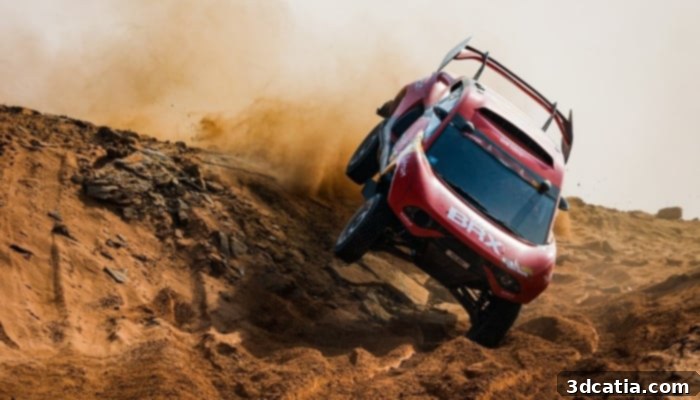
Over 30 car parts were produced for the Prodrive-run Bahrain Raid Xtreme team’s Hunter T1 using MakerBot’s nylon carbon fiber on the METHOD X 3D printer, demonstrating the printer’s versatility and reliability in extreme conditions.
Beyond Expectations: A Historic Fifth-Place Finish
While the Bahrain Raid Xtreme team concluded the arduous rally in an impressive fifth place, the outcome was celebrated not as a mere ranking, but as a resounding success. David Richards, Bahrain Raid Xtreme Team Director, articulated the sentiment perfectly: “We wouldn’t normally celebrate a fifth place, but this one is special. No new team has ever come to Dakar and achieved such a high result on their first attempt.” This remarkable achievement underscores the impact of Prodrive’s innovative strategy. For a debut team to navigate the complexities and challenges of the Dakar Rally and secure such a strong finish is truly exceptional, and a testament to their meticulous preparation and technological prowess.
Richards continued, emphasizing Prodrive’s established legacy of excellence: “Over the years, Prodrive has created some great teams who have gone onto achieve incredible results and I’m absolutely certain that the BRX team we have here today will do just that.” The 3D printing initiative played a pivotal role in this success, enabling the team to push the boundaries of design, engineering, and logistics. By providing an agile, on-demand manufacturing capability in the harshest environments, the MakerBot Method X empowered the BRX team to maintain peak performance, adapt to unexpected challenges, and ultimately, achieve a historic result that sets a new benchmark for rookie teams at Dakar.
This pioneering application of additive manufacturing at the Dakar Rally is more than just a success story for Prodrive and BRX; it’s a powerful demonstration of the transformative potential of 3D printing in extreme engineering contexts. It highlights how robust, industrial-grade 3D printers, combined with advanced materials, can provide a critical competitive advantage, streamline operations, and drive innovation in high-stakes environments. For more detailed information on this groundbreaking project, you can read the full press release HERE.
*All pictures courtesy of Bahrain Raid Xtreme (BRX)
The Future of Motorsports Engineering: Paving the Way with Additive Manufacturing
The integration of MakerBot Method X 3D printers by Prodrive and Bahrain Raid Xtreme at the Dakar Rally represents a significant leap forward for motorsports engineering. This endeavor showcased how on-site additive manufacturing can fundamentally alter the dynamics of support, maintenance, and performance optimization in the most challenging competitive environments. It’s no longer just about the skill of the drivers or the power of the engine; it’s also about the agility of the engineering team to adapt and innovate in real-time, leveraging advanced manufacturing technologies.
This success story will undoubtedly inspire other teams across various motorsport disciplines to explore similar strategies. The ability to rapidly design, print, and test functional parts using high-performance materials like nylon carbon fiber offers an unprecedented level of control over the vehicle’s development and operational lifespan. From customized brackets and aerodynamic components to specialized repair parts, the applications are vast. This case study from Dakar solidifies 3D printing’s role as a vital tool for achieving competitive advantage, cost savings, and accelerated innovation in the fast-paced world of professional racing and beyond. It’s a clear indicator that additive manufacturing is not just a prototyping tool but a critical element in future high-performance engineering.
What are your thoughts on Prodrive’s trailblazing use of 3D printing in such an extreme environment? We invite you to share your insights in a comment below or join the discussion on our Facebook, Twitter and LinkedIn pages! For the latest updates and breaking news in the world of additive manufacturing, make sure to sign up for our free weekly Newsletter here, delivered straight to your inbox!