
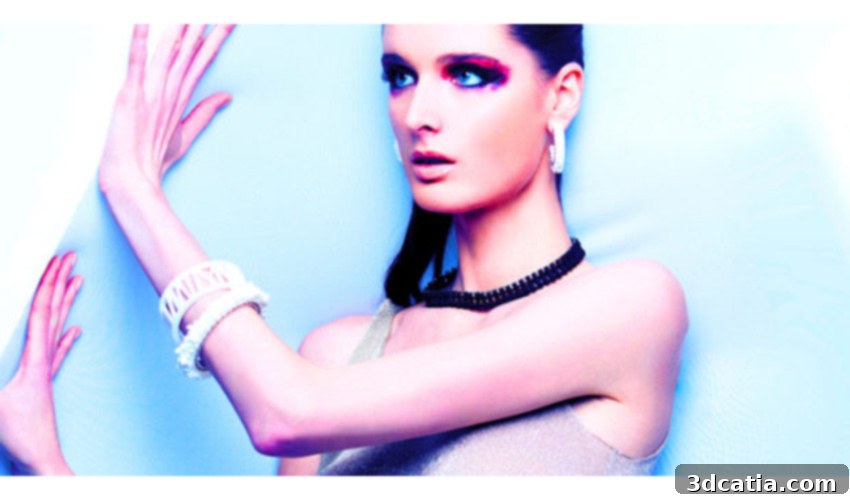
Unlocking Creativity: Diana Law and the Future of 3D Printed Jewelry Design
The world of design and manufacturing is undergoing a profound transformation, and 3D printing, also known as additive manufacturing, is at the forefront of this revolution. Its impact resonates across numerous industrial sectors, from aerospace to healthcare, and the intricate realm of jewelry is certainly no exception. Thanks to advancements in 3D printing technology, the creation of truly original, highly personalized, and one-of-a-kind jewelry pieces is not just a futuristic concept but a present-day reality. Among the pioneering artists embracing this innovative approach, Diana Law stands out. She has embarked on an inspiring mission to craft stunning 3D printed jewelry, garnering significant attention and admiration from both the fashion and technology communities. In an exclusive and insightful interview with 3Dnatives, Law delves deep into her distinctive methodology, her creative process, and her vision, offering us a compelling glimpse into the exciting future where jewelry design meets the power of 3D printing.
3DN: Could you introduce yourself and tell us a little bit more about your first steps into the 3D printing world?
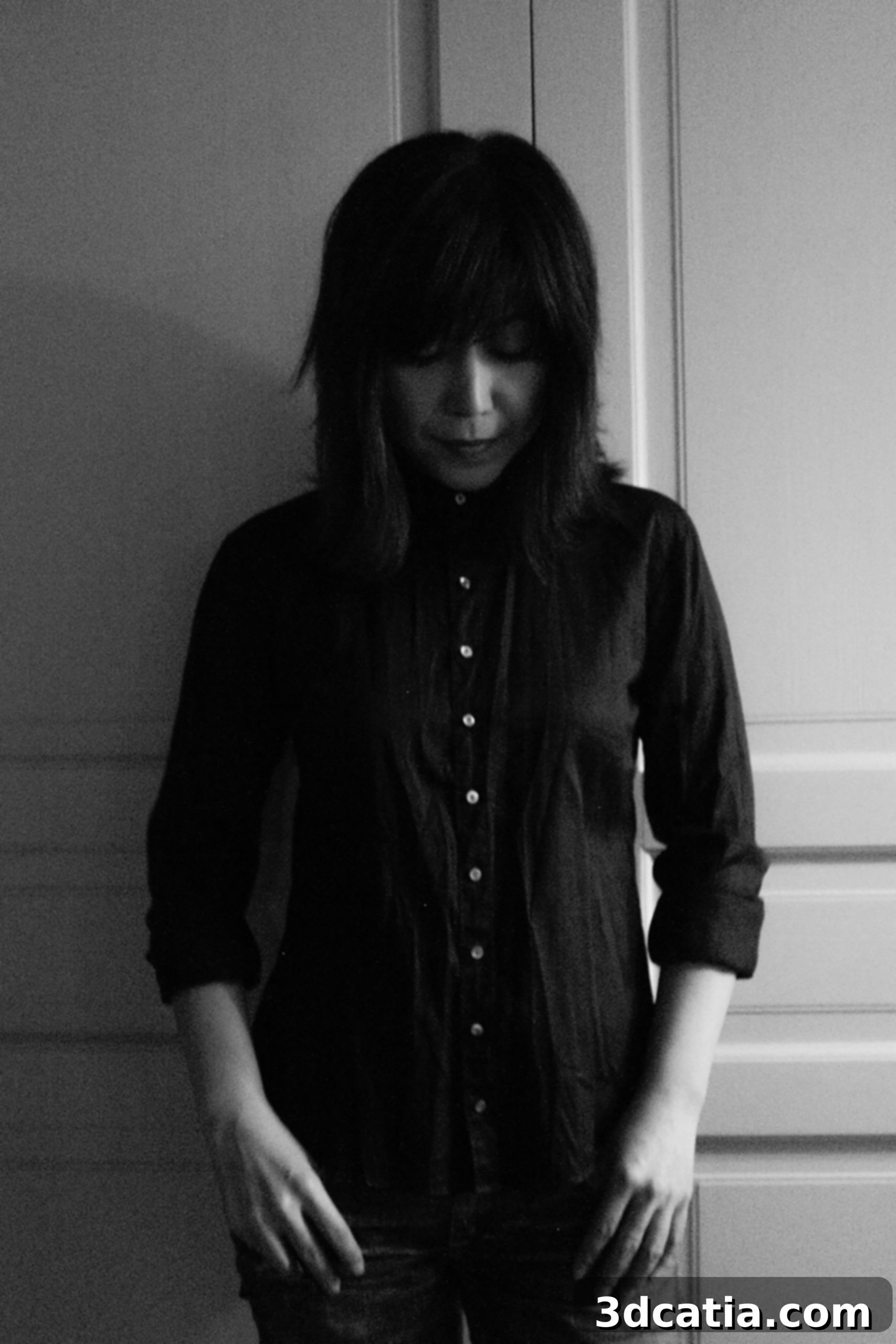
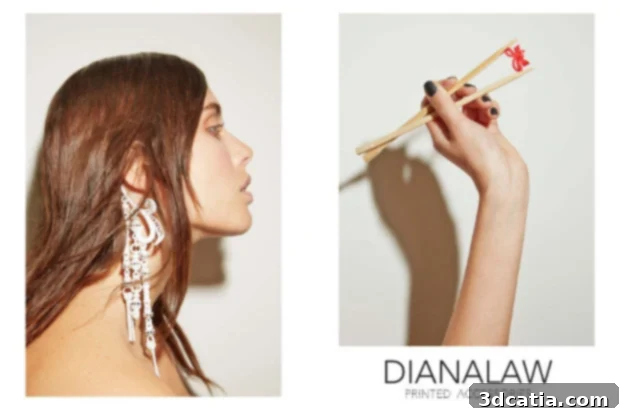
Diana Law, the visionary artist behind the exquisite 3D printed jewelry designs.
My journey began with a strong foundation in design and fashion, which I studied in France. A few years ago, I transitioned into the creation of jewelry, a field that, while incredibly rewarding, presents a unique set of challenges. Traditional jewelry manufacturing processes are often fraught with difficulties related to material weight, escalating production costs, intensive labor requirements, and lengthy delays from initial design to final product. These obstacles profoundly impact every stage, from the conceptualization of a piece to its physical realization. Recognizing these limitations, I actively sought an alternative to conventional methods that would allow my creative ideas to flourish without hindrance. 3D printing emerged as the perfect solution. As this revolutionary technology has matured and been refined over the years, it has become increasingly accessible and efficient, significantly lowering the barrier to entry for innovators in the jewelry market. For me, it has solved many of the systemic problems inherent in traditional jewelry making, opening up unparalleled possibilities for design and production.
3DN: What materials and technologies do you use in your creative process?
My diverse collections incorporate a range of materials, including both solid and flexible plastics, alongside durable stainless steel. For our plastic jewelry pieces, we primarily utilize the Selective Laser Sintering (SLS) process. This advanced additive manufacturing technique involves using a high-powered laser to selectively fuse very fine layers of nylon powder, building up the object layer by layer. SLS is particularly advantageous for jewelry due to its ability to create complex geometries and intricate details without the need for support structures, offering exceptional design freedom and precision, resulting in lightweight yet robust pieces.
When it comes to metal parts, the process involves a distinctly different printing methodology. We employ a binder jetting technique where a liquid binder is precisely deposited onto a thin layer of stainless steel powder. This binder acts as an adhesive, selectively binding the powder particles together. After the printing phase, the resulting “green” part undergoes a crucial post-processing step where it is infiltrated with bronze. This infuses the porous steel structure with molten bronze, creating a fully dense, strong, and visually appealing metal component. This method allows us to achieve robust metallic jewelry with intricate designs that would be challenging, if not impossible, to produce using conventional casting or fabrication techniques.
The entire workflow for our jewelry begins with a meticulous design process. Each piece is first conceptualized through a detailed drawing, which is then meticulously translated into a 3D rendering format using specialized CAD software. This digital model ensures accuracy and allows for precise adjustments. Subsequently, these digital files are securely transmitted to our manufacturing partners located across Europe. Once the 3D printing process is complete, the physical pieces are then directly shipped to our dedicated workshop in Paris. Here, our skilled artisans apply the crucial final touches, including polishing, assembly, and quality assurance checks, to ensure that every single piece meets our exacting standards of craftsmanship and aesthetic excellence before it reaches our customers.
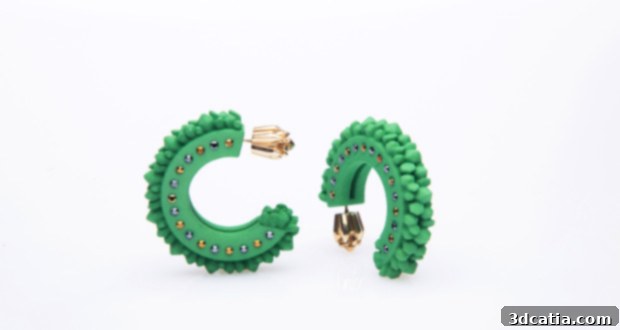
Intricate earrings created by Diana Law through the innovative power of 3D printing.
3DN: What fuels your creativity and provides inspiration for your unique designs?
My primary source of inspiration, I would unequivocally say, is life itself. The world around me is a boundless canvas of ideas. Everything I observe, from the subtle nuances of nature to the bustling energy of urban landscapes, contributes to my creative wellspring. The people I encounter, each with their distinct stories and styles, the rich tapestry of diverse cultures, breathtaking landscapes that evoke a sense of wonder, and even the ambient sounds that permeate our daily existence—the list is truly endless! These myriad small moments and sensory experiences from everyday life profoundly influence my work. They translate into the organic forms, geometric patterns, and often narrative elements present in my 3D printed jewelry, allowing each piece to carry a unique resonance and connection to the living world.
3DN: What are the key benefits and transformative impacts of 3D printing for the jewelry industry?
The advantages of integrating 3D printing into the jewelry industry are multifaceted and truly revolutionary. Firstly, the entire production line becomes significantly more streamlined and efficient to manage. I gain unparalleled flexibility in choosing my suppliers, and crucially, I am able to oversee and control the entire manufacturing process remotely from my computer, regardless of my physical location. This level of oversight and control was simply unimaginable with traditional techniques. Moreover, the turnaround time for receiving 3D printed designs is remarkably short compared to conventional methods, which in turn leads to a substantial reduction in overall production costs. This enhanced efficiency is a game-changer for independent designers and established brands alike.
Beyond speed and cost, 3D printing unlocks unprecedented levels of design complexity. Creating highly intricate, delicate, and geometrically complex structures, which would be either extremely difficult, time-consuming, or outright impossible with traditional crafting methods, is now not only feasible but also significantly easier to achieve. This freedom allows for truly innovative designs that push the boundaries of conventional aesthetics. Furthermore, 3D printing is inherently a more environmentally friendly manufacturing process. As an additive manufacturing technique, it builds objects layer by layer, adding material only where it’s needed. This drastically minimizes material waste compared to subtractive methods like carving or milling, where a significant portion of the raw material often ends up as scrap. This commitment to reducing waste is excellent news for our planet and aligns perfectly with growing demands for sustainable and responsible production practices within the fashion and luxury sectors. The ability to create unique, custom pieces on demand also contributes to sustainability by reducing overproduction. The benefits extend to rapid prototyping, allowing designers to quickly iterate on designs, test various forms, and refine concepts with minimal investment, leading to a faster and more efficient design cycle and ultimately, superior final products.
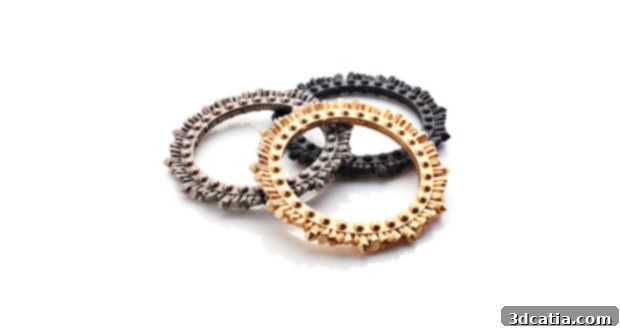
Artistic 3D printed bracelets meticulously designed by Diana Law.
3DN: Do you have any exciting future projects or innovations planned for your work?
Absolutely! My commitment to innovation is unwavering. I am dedicated to continuously pursuing research and development (R&D) work, particularly focusing on exploring new materials and advancing design methodologies for my upcoming collections. The goal is to constantly push the boundaries of what is possible with 3D printing in jewelry. I envision incorporating even more novel and sustainable materials, experimenting with dynamic and interactive designs, and further refining the aesthetic and functional aspects of each piece. My hope is to consistently introduce groundbreaking innovations and fresh ideas that will keep my collections at the forefront of contemporary jewelry design, offering truly unique and captivating pieces to my audience.
3DN: Any final words of inspiration or insight for our readers, especially regarding the broader impact of 3D printing?
My message to your readers is to be prepared to immerse yourselves in what is truly an exhilarating and transformative time for 3D printing technology. Its influence is expanding at an astonishing rate, redefining manufacturing capabilities across virtually every industry. Consider the vast array of items being manufactured with this technology: from robust bicycles and advanced vehicle components to sustainable housing solutions, intricate aircraft parts, and even monumental bridges. The innovation doesn’t stop there; remarkable gains are being made in highly specialized fields such as bio-printing, where scientists are developing tissues and organs. This widespread adoption underscores a fundamental truth: the future is not some distant concept; it is happening right now, actively shaping our present and paving the way for unprecedented possibilities. For the jewelry sector, this means unparalleled customization, rapid creation of intricate designs, and a more sustainable approach to crafting beauty.
If you’ve been captivated by these stunning pieces of 3D printed jewelry and the boundless creativity they represent, you’ll undoubtedly be intrigued by other innovative applications of additive manufacturing, such as these exquisite 3D printed pastries by Dinara Kasko, demonstrating the technology’s versatility across design disciplines.
What are your thoughts on the most significant benefits of 3D printing for the Jewelry industry? We’d love to hear your insights! Please share your opinions in a comment below, and don’t forget to follow us on Facebook and Twitter to stay updated on the latest innovations in additive manufacturing!