
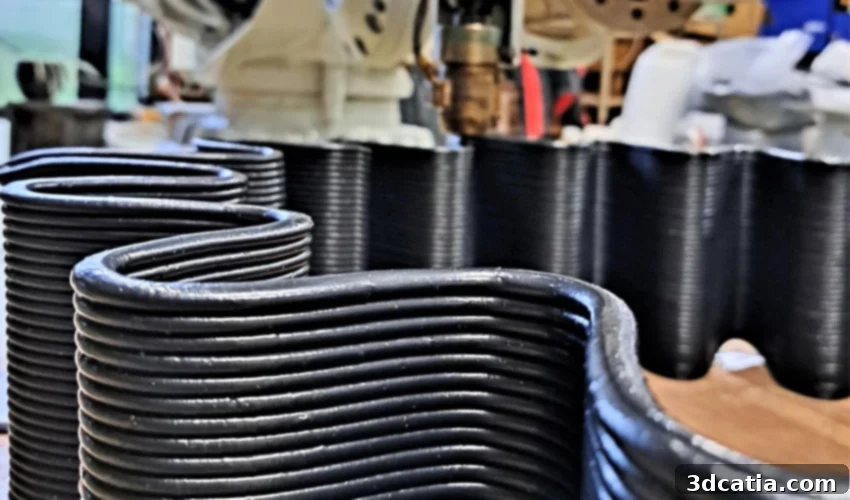
POOLP: Pioneering the Circular Economy with Large-Scale 3D Printing of Recycled Plastics
As we embark on a new year, the critical subjects of environmental impact and planetary preservation continue to gain unprecedented urgency. In this global context, the potential of additive manufacturing to revolutionize our approach to waste and carbon footprint reduction stands out significantly. Beyond its ability to create unique, personalized, and intricate objects, 3D printing offers a tangible pathway towards a more sustainable future. This is the guiding philosophy behind POOLP, an innovative French startup that emerged in the wake of the recent health crisis, driven by a profound commitment to ecological responsibility. POOLP has engineered a groundbreaking urban microfactory, centered around an advanced 3D printing unit capable of transforming everyday plastic waste into valuable products that boast high social, environmental, and aesthetic merit. Following their well-deserved victory at the 3D Print Paris 2022 Startup Contest, co-founders Lorenzo Fauvette and Thomas Sicouri generously shared insights into their journey, vision, and the disruptive power of their technology.
The Visionaries Behind POOLP: Architects with an Ecological Conscience
Lorenzo & Thomas: We are two architects, united by a profound ecological consciousness and a shared passion for integrating cutting-edge technologies into architecture, art, and design. Our core conviction is that specific technological advancements can dramatically enhance the environmental performance of our manufacturing and consumption paradigms. Both of us hold master’s degrees in algorithmic design, digital manufacturing, and robotics for the construction industry, obtained from the esteemed École Nationale de Ponts et Chaussées (ENPC). During our studies, we extensively utilized 3D printing primarily as a prototyping tool. However, it quickly became apparent to us that by scaling up this technology, 3D printing possessed immense disruptive potential across a multitude of sectors, far beyond mere prototyping. This realization ignited our desire to leverage its capabilities for impactful, sustainable innovation.
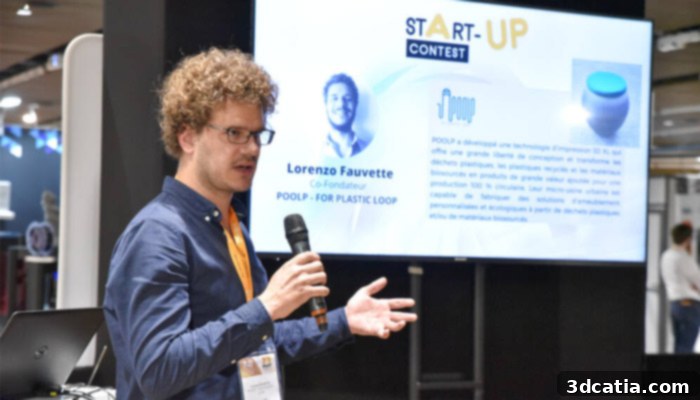
Lorenzo Fauvette, co-founder of POOLP, presenting the startup at the 3D Print Paris 2022 Startup Contest (photo credits: 3D Print)
POOLP’s Genesis: A Circular Solution for Plastic Waste
Lorenzo & Thomas: The inception of POOLP closely followed the completion of our master’s degrees at ENPC. With a strong entrepreneurial spirit, we both sought to establish a business that could make a tangible difference. It was during this period that we fully grasped the enormous potential of XL (extra-large) 3D printing, particularly within the domains of art and architecture. Beyond merely offering a novel approach to design and manufacturing, we strategically chose to harness the inherent flexibility and compactness of 3D printing, transforming it into a powerful instrument for plastic valorization. This commitment to sustainability, coupled with technological innovation, became the cornerstone of our venture.
Our journey began with extensive research and development into an XL 3D printing system capable of experimenting with a diverse array of recycled and/or bio-based materials. This dedicated effort ultimately gave birth to POOLP, founded on the revolutionary idea of utilizing plastic waste as the primary raw material for advanced 3D printing. The very name POOLP is an anacyclic wordplay, cleverly derived from our core concept of the circular economy: “Plastic LOOP.” When written backward, “Plastic LOOP” transforms into “POOL-P,” perfectly encapsulating the cyclical nature of our business model. In French, “POOLP” is phonetically similar to “poulpe,” the word for octopus, an animal renowned for its ability to metamorphose, change color, and adapt its shape—qualities that strikingly mirror the transformative capabilities of 3D printing itself.
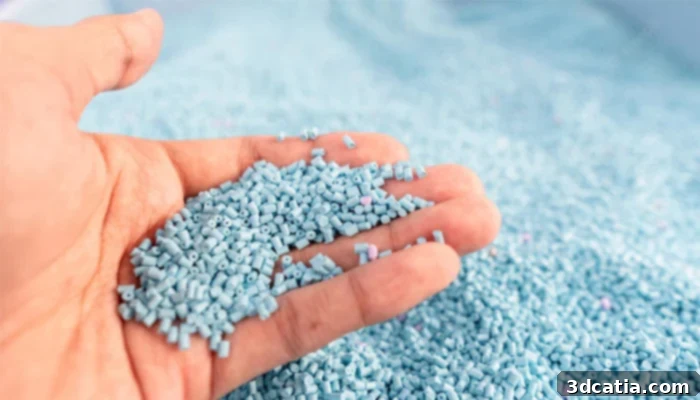
The startup’s name is based on the concept of circular economy (photo credits: black13kira)
Revolutionizing Urban Production: The Microfactory Concept and XXL Printing Technology
Lorenzo & Thomas: Contemporary urban landscapes are witnessing a progressive decline in traditional economic activities like crafts and local production, often replaced by burgeoning service sectors such as bars, restaurants, and residential developments. Our vision for the urban microfactory directly addresses this shift. We conceive it as a compact, self-contained production unit designed to seamlessly integrate into the dense urban fabric. Its primary objectives are multifaceted: to revitalize local economies, foster innovative local initiatives, and crucially, to forge powerful synergies among various stakeholders within the circular economy ecosystem. This includes recyclers and industrialists providing raw materials, craftsmen and designers for project conceptualization and development, and ultimately, citizens as the end-users and contributors to the waste stream.
Each POOLP urban microfactory is envisioned as a highly efficient production hub, operating within a quasi-closed circuit. Its core function is to valorize local plastic waste generated by the very territories in which it resides. Each facility will house multiple advanced additive manufacturing units, meticulously engineered to transform discarded plastics into finished products possessing significant aesthetic appeal, social relevance, and environmental value. POOLP’s microfactory concept champion an alternative philosophy of production and consumption. The fundamental idea is to take waste produced by individuals or industries within a defined geographical area and meticulously convert it into products that embody high aesthetic, social, and environmental worth. This endeavor extends to developing both highly functional items and unique artistic pieces. We firmly believe that by offering an endless array of forms through our production tool, we can fundamentally alter how society perceives waste, assigning it new and profound value. This ambitious vision fuels our long-term strategy: once our initial urban microfactory achieves operational efficiency and profitability, we plan to aggressively expand, establishing a robust network across France and beyond.
To develop a 3D printing technology that is both readily reproducible and capable of processing the widest possible spectrum of thermoplastic waste materials, while simultaneously upholding our stringent environmental commitments, we adopted an ingenious approach. We sourced previously utilized industrial machines, meticulously modified them, and then integrated them to construct a sophisticated robotic additive manufacturing unit. This bespoke system is specifically designed for the large-scale production of objects using recycled plastic waste. Our printing system employs the FGM (Fused Granulate Modeling) process. Unlike conventional FDM/FFF methods that deposit a plastic filament, FGM allows us to print directly from plastic granules and grit. This significant technological advantage translates into faster production times, considerably reduced raw material costs, and the unparalleled ability to utilize and extensively experiment with a broad and diverse range of recycled materials. This flexibility is key to our sustainable material strategy.
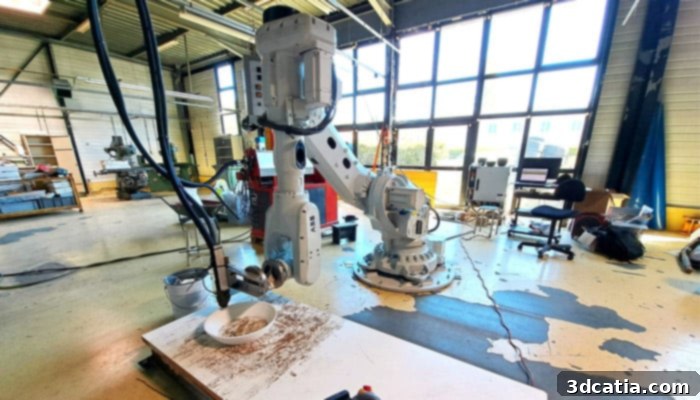
Photo Credits: POOLP
The core of our additive manufacturing unit is composed of a robust extruder, into which the precisely ground plastic material is introduced. This material is then fed to a highly accurate print head, which is expertly installed on a 6-axis ABB IRB 6700 robot. Through its dynamic and precise movements, this robotic arm is capable of transforming a complex virtual geometry into a tangible, real-world object with remarkable speed and precision. Recognizing the substantial investment costs associated with developing our first prototype additive manufacturing unit, we diligently pursued and successfully established strategic partnerships with key institutions and private companies that deeply believed in the project’s transformative potential. For their invaluable support and assistance from the very beginning, we extend our sincere gratitude to CNAM Paris, ABB Robotics France, and La Maison pour Rebondir de SUEZ.
Sustainable Materials and Future Horizons for POOLP
Lorenzo & Thomas: POOLP officially launched in July 2021, and we successfully implemented our advanced printing system in March 2022. Consequently, we are still actively engaged in an intensive R&D phase, continuously exploring and unlocking the full potential and myriad possibilities of our innovative system. Currently, our capabilities allow us to effectively work with various types of post-consumer plastic waste. To be clearer, this includes commonly recycled plastics such as polypropylene, often found in food containers, and polyethylene, typically used for bottle caps. We also extensively utilize post-industrial waste, sourcing materials directly from the food and pharmaceutical packaging industries. This involves recovering manufacturing waste that, for various reasons, is not directly reintroduced into the production cycle by the original manufacturers, thereby giving it a new life and purpose.
A fundamental principle of our manufacturing process is the deliberate exclusion of any additives or fillers designed to stabilize the material. This commitment is paramount because it ensures that all our finished products can be seamlessly recycled within the existing recycling channels across Europe, thereby maintaining a true closed-loop system. We meticulously minimize common material behavior issues such as shrinkage, warping, and others by precisely adjusting our printing parameters, optimizing for each specific type of recycled plastic. Looking five years into the future, our aspirations for POOLP are ambitious. We envision being able to process and work with an even wider spectrum of waste materials, extending beyond just plastics to include organic and other types of discarded resources. Geographically, we aim to have multiple micro-factories fully operational not only in Paris but also in other large, strategically important cities across France. Furthermore, Lorenzo holds a personal aspiration to export the POOLP concept internationally, with a particular desire to establish a micro-factory in Rome, the city where he spent his formative years. This global outlook underscores our commitment to making a worldwide impact on waste reduction and sustainable production.
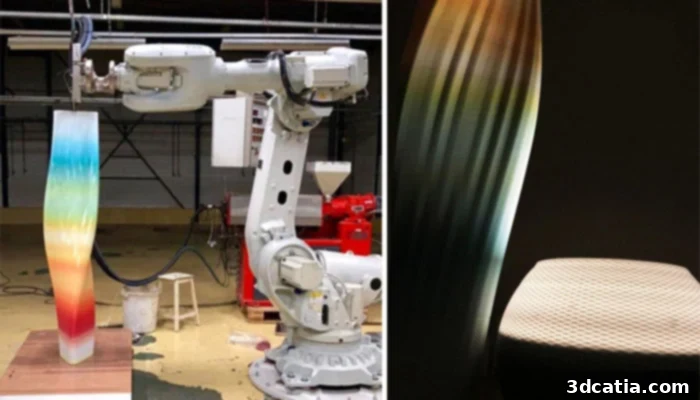
Example of 3D printed structures from POOLP (photo credits: POOLP)
Products of Purpose: Design, Furniture, and Art from Recycled Materials
Lorenzo & Thomas: At present, our primary focus is on the design and production of distinctive design and furniture objects. Our current product line includes stylish stools, functional coffee tables, elegant planters, and innovative lighting fixtures. We recently had the privilege of collaborating with the talented artist Nicolas Viallard, with whom we produced a captivating 70 cm x 70 cm sculpture. This remarkable piece was proudly exhibited at the 3D printing fair in Paris, demonstrating the artistic potential of recycled materials. Our products derive their value not solely from their utility as objects, but also significantly as a powerful manifesto—a tangible representation of a paradigm shift towards a new, more sustainable philosophy of production and consumption. Currently, our offerings are predominantly targeted towards enhancing the aesthetic and functional appeal of corporate lobbies, hotels, restaurants, retail stores, and similar commercial environments. In the long term, we harbor ambitious plans to considerably expand our range of proposals, catering to an even broader market segment and diverse applications.
Today, we direct our specialized co-design and manufacturing services primarily towards architects, designers, and artists. These professionals are individuals who not only aspire to unleash their creative potential but are also acutely aware of the urgent imperative to minimize their environmental impact and actively contribute to the ongoing ecological transition. We provide them with the tools and expertise to bring their sustainable visions to life, transforming waste into beautiful and meaningful creations.
3D Printing as a Catalyst for the Circular Economy
3D printing emerges as an exceptionally powerful and ideal tool for vigorously promoting the principles of the circular economy. One of its most profound advantages lies in its capability to produce highly complex geometries while simultaneously optimizing material usage with unparalleled efficiency. In POOLP’s specific application, this technology generates virtually no manufacturing waste, primarily because any minor offcuts or failures can be effortlessly reintegrated back into our production cycle. Furthermore, the advent of XL 3D printing empowers us to implement a highly efficient “just-in-time” manufacturing model. This means we only produce the precise number of parts that are actually needed, effectively eliminating overproduction and, consequently, preventing the accumulation of unsold inventory. Another significant and transformative advantage is the inherent ability to recover previously produced objects, revert them back into raw material—be it granules or grit—and subsequently use this regenerated material to manufacture entirely new products. This closed-loop process fundamentally redefines waste as a resource.
Moreover, our innovative microfactory system plays a crucial role in minimizing transportation costs and distances. By strategically locating production facilities as close as possible to both the demand centers and the sources of waste material—whether from local industries or inhabitants—we drastically reduce the environmental footprint associated with logistics. This localized approach enhances efficiency, reduces carbon emissions, and fosters a truly sustainable regional economic model.
Final Thoughts from POOLP: Join the Sustainable Revolution
Lorenzo & Thomas: If you are intrigued by our journey, our innovative approach, and wish to delve deeper into the transformative work we are doing at POOLP, we warmly invite you to connect with us. Please feel free to reach out via email at in**@***lp.eu. Additionally, you can follow our progress and engage with our community on Instagram at we_are_poolp and on LinkedIn. We would be absolutely delighted to engage in conversation with you, share more about our mission, and explore potential collaborations. Remember our guiding principle: IN WASTE WE TRUST!
What are your thoughts on POOLP’s innovative approach to combining 3D printing with recycled plastics for a circular economy? We invite you to share your feedback in a comment below or join the discussion on our LinkedIn, Facebook, and Twitter pages! Don’t forget to sign up for our free weekly Newsletter here to receive the latest 3D printing news directly in your inbox! You can also find all our compelling videos on our YouTube channel for more visual insights into the world of additive manufacturing.
*Cover Photo Credits: POOLP