

Desktop Metal Fiber 3D Printer: Redefining Industrial Composites with Micro Automated Fiber Placement Technology
Desktop Metal has long been recognized as a trailblazer in the additive manufacturing industry, primarily celebrated for its innovative metal 3D printers. Their offerings include the acclaimed Studio System, specifically engineered to bring metal 3D printing capabilities into office environments, and the groundbreaking Production System, designed for high-volume, mass manufacturing of metal parts. However, in a significant strategic move that underscores the company’s commitment to pushing the boundaries of additive manufacturing, Desktop Metal has unveiled a revolutionary new machine that ventures beyond its traditional metal domain. This new innovation, dubbed Fiber, is a state-of-the-art desktop 3D printer poised to transform the landscape of composite manufacturing.
The Fiber 3D printer introduces a new paradigm for producing high-resolution, industrial-grade parts using continuous fiber composites. At the heart of this innovation lies a proprietary new process called micro Automated Fiber Placement (μAFP) technology. This advanced technique has been meticulously developed and optimized specifically for composite materials, setting it apart from conventional 3D printing methods. The μAFP technology empowers users to fabricate incredibly robust and solid parts from a diverse array of advanced materials, all while offering a significantly lower cost of entry and operation compared to traditional, large-scale AFP processes that typically require substantial capital investment and specialized facilities. This strategic expansion into composites highlights Desktop Metal’s vision for a future where high-performance additive manufacturing is accessible across a broader spectrum of materials and applications.
Desktop Metal’s foray into composite 3D printing is a testament to its dynamic growth and strategic foresight. Having successfully raised over $400 million in funding within its first four years, the company continues to aggressively expand its footprint in the additive manufacturing market. This pivot towards composite 3D printing is particularly timely, as these materials are gaining immense traction across various industrial sectors due to their unparalleled strength-to-weight ratio and superior performance characteristics. The demand for lightweight yet incredibly strong components is soaring, driven by industries like aerospace, automotive, and sports equipment, all seeking to enhance performance, improve fuel efficiency, and extend product lifecycles.
The broader industry trend shows a clear acceleration in the adoption of continuous fiber 3D printing. A growing number of innovative companies are demonstrating the immense potential of this technology. Pioneers such as 9T Labs, Anisoprint, and moi composites serve as prime examples of this burgeoning segment, each contributing unique approaches to advanced composite additive manufacturing. By introducing its Fiber solution, Desktop Metal has firmly positioned itself in this exciting and rapidly evolving race, aiming to democratize access to high-performance composite manufacturing with a desktop-friendly system. This move not only diversifies Desktop Metal’s product portfolio but also reinforces its status as a comprehensive provider of cutting-edge additive manufacturing solutions.
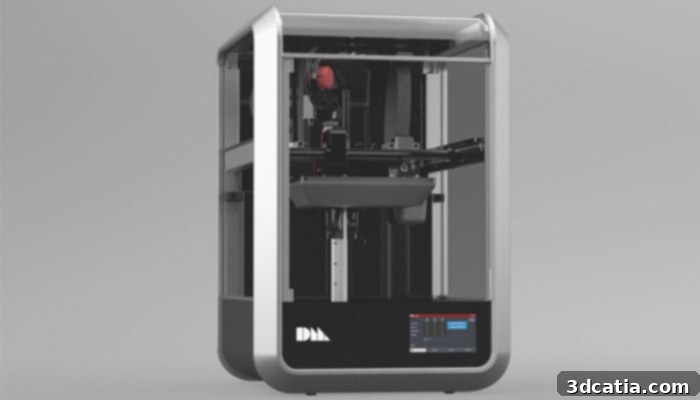
Desktop Metal’s Fiber 3D printer
Fiber: A Fusion of FFF and Advanced AFP Technology
The Desktop Metal Fiber stands out as the world’s first desktop 3D printer that seamlessly integrates fused filament fabrication (FFF) with the sophisticated capabilities of Automated Fiber Placement (AFP) technology. This innovative hybrid approach marries the accessibility and material versatility of FFF with the precision and structural integrity inherent in AFP, allowing for the creation of composite parts with unprecedented performance on a desktop footprint. The system features a highly advanced robotic tool changer, designed for exceptional versatility. This changer is capable of housing and dynamically switching between up to four different types of tools, including multiple FFF print heads. This multi-tool capability enables the use of various materials within a single print job, optimizing part properties and design complexity.
According to Desktop Metal, parts produced with the Fiber system are engineered to deliver extraordinary mechanical properties. These composite parts boast a strength that is up to two times greater than that of steel, while simultaneously being five times lighter. This remarkable strength-to-weight ratio is a critical advantage for applications where performance and efficiency are paramount. To make this advanced technology accessible to a wider industrial audience, Desktop Metal offers two distinct Fiber printer models through a flexible subscription service, typically requiring a minimum three-year commitment plan. This subscription model lowers the initial capital expenditure, making high-performance composite additive manufacturing more attainable for businesses of all sizes looking to leverage cutting-edge material science.
The Fiber product line features two primary models tailored to different performance requirements and budgets. The premium model, the Fiber HT, is available via subscription starting from $5,495 per year. This high-performance variant is meticulously engineered for the most demanding applications, capable of producing parts with continuous composites exhibiting an impressively low porosity of less than 1%. It can achieve continuous fiber loading of up to 60%, utilizing advanced matrix materials such as high-temperature thermoplastics including PEEK (Polyether Ether Ketone) and PEKK (Polyetherketoneketone). Structures created with the Fiber HT are designed to withstand extreme conditions, tolerating temperatures up to 250°C, and are fully compliant with ESD (Electrostatic Discharge) standards, making them ideal for aerospace, automotive, and electronics manufacturing.
Complementing the HT model is the Fiber LT, offering a more accessible entry point into continuous fiber 3D printing, available from $3,495 per year. The Fiber LT is designed to print continuous fibers with a porosity of less than 5%, primarily utilizing PA6 (Nylon 6) thermoplastics. This model also adheres to crucial ESD standards, ensuring its suitability for a variety of industrial applications that require electrostatic discharge protection. Both the Fiber HT and Fiber LT machines provide a generous build volume of 310 x 240 x 270 mm, offering ample space for fabricating a wide range of prototypes, tools, and end-use parts. This dual-model strategy ensures that Desktop Metal can address a broad spectrum of industrial needs, from high-performance, critical components to more general-purpose, yet still incredibly strong, composite parts.
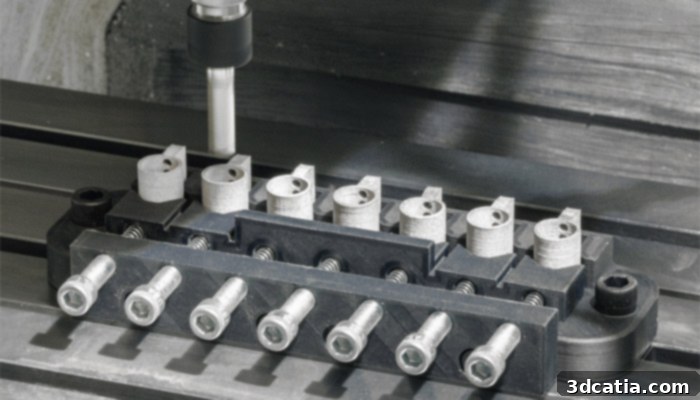
3D printed mounting system using the Fiber solution | Credits: Desktop Metal
When it comes to compatible materials, Desktop Metal offers an expansive and robust selection, enabling users to choose the optimal material for their specific application requirements. This impressive range includes a variety of high-performance thermoplastics, each designed to deliver exceptional mechanical and thermal properties. Among these are ESD-compliant carbon fiber reinforced nylon (PA6), which combines the inherent toughness of nylon with the stiffness and strength of carbon fiber, while also mitigating electrostatic buildup. The portfolio also includes glass fiber reinforced nylon, providing a cost-effective option for applications requiring enhanced stiffness and impact resistance. For the most demanding environments, Desktop Metal provides carbon fiber reinforced PEEK and PEKK filaments. These ultra-high-performance polymers offer outstanding mechanical strength, chemical resistance, and the ability to withstand extreme temperatures, making them ideal for aerospace and automotive components.
The manufacturer confidently asserts that parts produced using the Fiber system’s advanced continuous fiber composites achieve unparalleled performance metrics. These parts are significantly superior to conventional plastic components, exhibiting up to 60 times greater stiffness and 75 times greater strength than standard ABS plastic parts. This dramatic improvement in material properties unlocks a vast array of applications that were previously unattainable with traditional polymer 3D printing methods. The ability to produce parts with such exceptional strength and stiffness, combined with the inherent benefits of additive manufacturing like design freedom and rapid iteration, positions the Fiber system as a game-changer for industries requiring high-performance, custom-fabricated components.
Fiber 3D Printer: Transforming Industrial Applications
As is evident from its advanced capabilities, the Desktop Metal Fiber 3D printer is poised to become an indispensable tool for industries that critically depend on high-strength yet lightweight parts. Its unique combination of continuous fiber reinforcement and desktop accessibility addresses a long-standing gap in advanced manufacturing. The aerospace industry, for instance, stands to gain tremendously. Here, every gram saved translates into increased fuel efficiency and payload capacity. Fiber-printed components like brackets, ducts, and interior structures can significantly reduce weight without compromising structural integrity, while also offering excellent heat resistance crucial for aircraft environments. Similarly, the automotive industry can leverage the Fiber for lightweighting initiatives, fabricating custom structural components, tooling, and fixtures that enhance vehicle performance, safety, and energy efficiency.
Beyond these two prominent sectors, Desktop Metal highlights the versatility of Fiber for both the prototyping stage and the creation of robust tooling. For prototyping, the ability to rapidly produce functional, high-strength composite parts allows engineers to perform iterative testing with materials that closely match end-use specifications, drastically accelerating product development cycles. In tooling applications, Fiber can create durable jigs, fixtures, and molds that are lighter and more cost-effective than their traditionally manufactured metal counterparts, improving ergonomic handling and reducing lead times.
Desktop Metal is actively targeting a broad spectrum of industrial sectors with the Fiber solution. This includes not only automotive and aerospace but also consumer electronics, where lightweight and durable enclosures or internal components are highly valued. The sports industry can benefit from custom-fit, high-performance equipment. The medical sector can utilize Fiber for creating custom prosthetics, orthotics, and surgical guides that require both strength and biocompatibility. Furthermore, the education sector can employ Fiber for advanced engineering programs, enabling students to explore cutting-edge material science. Even the marine sector, requiring corrosion-resistant and strong components for harsh environments, presents significant opportunities.
David Hauber, Technical Director of Trelleborg Sealing Solutions Albany, Inc., eloquently articulates the significance of this advancement: “Despite all the advantages, polymer-based AM has been lacking in the strength needed for high performance applications, specifically a technology that bridges the gap between existing AM technology and automated fiber placement of high-performance composites as used in industry. After more than three decades of development, AM has finally reached a tipping point.” This statement underscores how Fiber addresses a critical need, bridging the divide between traditional polymer additive manufacturing’s limitations and the advanced capabilities of industrial fiber placement, making high-performance composites more accessible and applicable across diverse industries. The introduction of Fiber truly marks a new era for additive manufacturing, promising to unlock innovations previously constrained by material limitations.
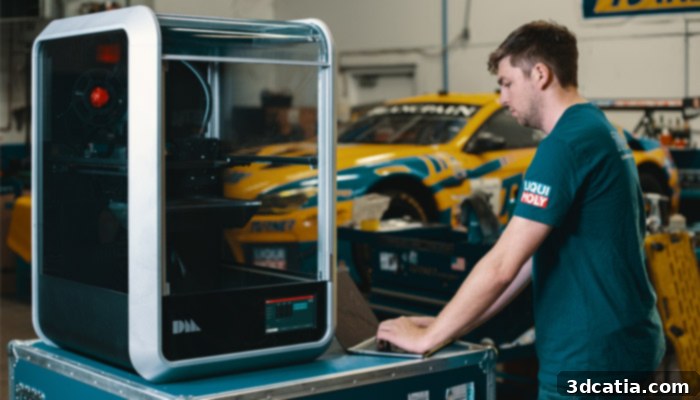
The new machine is expected to be particularly popular in the automotive sector | Credits: Desktop Metal
Desktop Metal’s Fiber 3D printer represents a significant leap forward in additive manufacturing, democratizing access to high-performance continuous fiber composites. By combining the versatility of FFF with the precision of μAFP technology, Fiber enables industries to produce parts that are not only exceptionally strong and lightweight but also cost-effective and rapidly fabricated. This innovation is set to accelerate product development, improve manufacturing processes, and open new possibilities for designers and engineers across numerous sectors. As the demand for advanced materials continues to grow, Desktop Metal’s Fiber solution positions itself as a pivotal tool for the next generation of industrial applications.
What are your thoughts on Desktop Metal’s revolutionary desktop Fiber 3D printer and its potential impact on industrial composite manufacturing? We invite you to share your insights by leaving a comment in the section below or engaging with us on our Facebook and Twitter pages! To stay informed about all the latest developments and breakthroughs in the dynamic world of 3D printing, remember to sign up for our free weekly Newsletter, delivering essential news directly to your inbox!