

Osseus Pisces-SA: Revolutionizing Anterior Lumbar Interbody Fusion with 3D Printed Spine Implants and Advanced Fixation
In a significant advancement for spinal surgery, American medical device innovator Osseus recently announced the successful launch and FDA 510(k) clearance of its Pisces-SA standalone Anterior Lumbar Interbody Fusion (ALIF) system. This cutting-edge system is meticulously engineered to provide unprecedented intraoperative flexibility, allowing surgeons to choose between bone screws and alternative fixation bone anchors based on specific patient needs and surgical conditions. The introduction of the Pisces-SA system underscores the profound impact of additive manufacturing, commonly known as 3D printing, in the medical sector. This revolutionary technology continues to transform healthcare, offering innovative solutions to complex health challenges in ways previously deemed impossible. From custom-fit prosthetics that dramatically improve patient quality of life to ambitious research exploring the creation of 3D printed organs, additive manufacturing’s capabilities are vast and ever-expanding. Within the medical field, the orthopedic industry, particularly spinal surgery, has emerged as a key beneficiary, with 3D printed bone implants setting new standards for patient outcomes, precisely exemplified by Osseus’s groundbreaking Pisces-SA system.
Founded in 2012 by seasoned medical device industry veterans Eric Hanson and Robert Pace, Dallas, Texas-based Osseus Fusion Systems was established with a clear and ambitious mission: to develop advanced medical products specifically designed for spinal-related injuries. Leveraging new and emerging technologies, most notably additive manufacturing, Osseus is steadfastly committed to the continuous improvement of its product portfolio and the expansion of its core capabilities, all while upholding the most stringent standards of quality and patient safety. This dedication is evident in the meticulous development process for the Pisces-SA ALIF Interbody System. Before seeking FDA clearance, the company’s dedicated researchers conducted an extensive series of rigorous tests. These comprehensive evaluations conclusively demonstrated that the Pisces-SA anchors offer significantly superior expulsion resistance compared to conventional fixation methods, a critical factor for long-term implant stability and patient recovery.
The Anterior Lumbar Interbody Fusion (ALIF) procedure itself is a well-established surgical technique used to treat various spinal conditions, including degenerative disc disease, spinal stenosis, and spondylolisthesis. During an ALIF procedure, the surgeon approaches the spine from the front (anteriorly) through the abdomen, removing the damaged intervertebral disc. A fusion device, or interbody cage, is then inserted into the disc space to restore disc height, decompress nerve roots, and create a favorable environment for bone fusion between the vertebrae. The standalone nature of the Osseus Pisces-SA system means it can achieve spinal stabilization without the need for additional posterior fixation, such as pedicle screws and rods, which can lead to less invasive surgery, reduced operative time, and potentially faster recovery for patients. This innovation streamlines the surgical process and reduces the overall surgical footprint, highlighting Osseus’s commitment to advancing minimally invasive solutions.
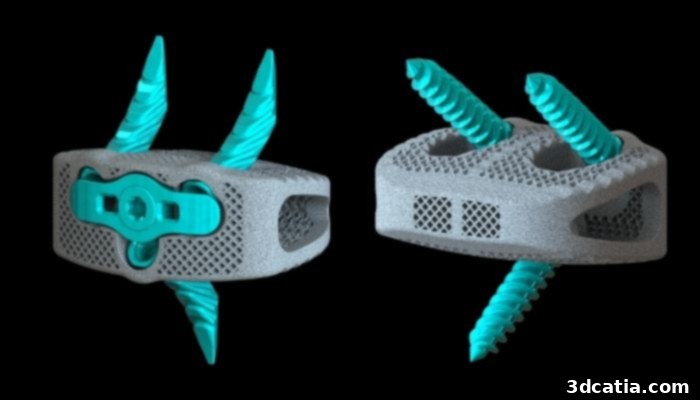
Photo Credits: Osseus
The Innovative Pisces-SA System: A Deep Dive into Features and Benefits
Rob Pace, Co-Founder and CEO of Osseus, articulated the company’s pride and vision regarding this pivotal launch. He stated, “Receiving FDA approval for the Pisces-SA is the culmination of relentless work from our R&D department and surgeon design team. We feel this product launch will solidify Osseus as one of the leading innovators in the spine industry. Since our inception, we have pushed the envelope creating minimally invasive products to help simplify and streamline procedures. This product hits that mark, and we are excited to introduce it to the market. This is a special day for our company and for the team of surgeons who have provided extensive input on this groundbreaking product.” This sentiment underscores the collaborative effort between engineers and medical professionals, ensuring that the Pisces-SA system meets the highest clinical needs while pushing the boundaries of what is possible in spinal fusion surgery.
Further testing confirmed that the Pisces-SA anchors demonstrate comparable performance to traditional screw-based standalone ALIF constructs in effectively stabilizing injured spinal segments. This equivalence, combined with enhanced features, positions Pisces-SA as a superior choice. What truly sets this system apart is its unprecedented level of expulsion resistance and segmental stabilization, achieved through an innovative alternative fixation method. The 3D printed spine anchors, likely crafted from biocompatible titanium, are designed with a highly porous interbody structure. This intricate lattice design is a hallmark of additive manufacturing, enabling robust bone ingrowth, which is crucial for achieving solid and lasting spinal fusion. The porous architecture mimics the natural cancellous bone, facilitating vascularization and osteoconduction, leading to a more biological fusion. Beyond its advanced material properties, the system boasts streamlined instrumentation, sophisticated anchor fixation technologies, and a guided locking plate that provides clear lock confirmation. These features collectively contribute to enhanced surgical precision, reduced operative time, and improved overall safety for both surgeon and patient.
The Osseus Pisces-SA ALIF system has already garnered significant positive attention and praise from leading surgeons and medical professionals within the industry. Its innovative features and remarkable versatility have been particularly highlighted. Dr. Michael Hisey, an orthopedic surgeon with the prestigious Texas Back Institute in Plano, expressed his enthusiasm: “I have used screws […], and I’ve used the blade-type constructs, but I’ve never used a device where you could make that choice intraoperatively. I really like that ability to make my decision at the time.” This surgeon’s testimonial underscores a key benefit of the Pisces-SA: the crucial intraoperative flexibility it offers. The ability for a surgeon to make real-time decisions regarding fixation methods based on the specific anatomical and pathological presentation of the patient is invaluable. This adaptability can lead to more customized patient care, optimize surgical outcomes, and significantly enhance confidence during complex spinal procedures.
The Transformative Power of Additive Manufacturing in Orthopedics
The success of the Osseus Pisces-SA system is a testament to the transformative power of additive manufacturing in orthopedics. Unlike traditional manufacturing methods, 3D printing allows for the creation of complex geometries and porous structures that are impossible to achieve otherwise. For spinal implants, this means designing cages with specific pore sizes and interconnectivity that actively promote osteointegration – the direct structural and functional connection between living bone and the surface of a load-bearing implant. This advanced surface technology encourages new bone to grow into and through the implant, securing it more firmly and reducing the risk of subsidence or loosening over time. Furthermore, 3D printing enables greater control over the implant’s mechanical properties, allowing for designs that balance strength with flexibility, potentially reducing stress shielding – a phenomenon where the implant carries too much load, causing the surrounding bone to weaken. The ability to customize implants for precise anatomical fit also reduces the need for extensive intraoperative shaping, further streamlining procedures and improving patient-specific care.
Osseus’s strategic adoption of additive manufacturing places it at the forefront of spinal innovation. By leveraging these advanced capabilities, the company is not only developing products that enhance surgical efficiency and patient safety but also driving the industry towards a future where medical implants are more biologically compatible and functionally superior. The Pisces-SA ALIF system represents a significant milestone, showcasing how focused research and development, combined with cutting-edge technology, can lead to solutions that profoundly impact patients’ lives. As additive manufacturing continues to evolve, we can anticipate even more sophisticated and personalized medical devices, ultimately leading to better health outcomes and a higher quality of life for individuals suffering from spinal conditions and other orthopedic challenges. The commitment of companies like Osseus to pushing technological boundaries will undoubtedly shape the future of medicine.
What do you think of the Osseus Pisces-SA ALIF system and its potential impact on spinal fusion surgery? We invite you to share your thoughts and insights in a comment below or join the conversation on our Linkedin, Facebook, and Twitter pages! Don’t miss out on the latest advancements and news in the additive manufacturing world – sign up for our free weekly Newsletter here, delivering the most current 3D printing updates straight to your inbox! Additionally, you can explore all our compelling video content on our dedicated YouTube channel.
*Cover Photo Credits: Osseus