
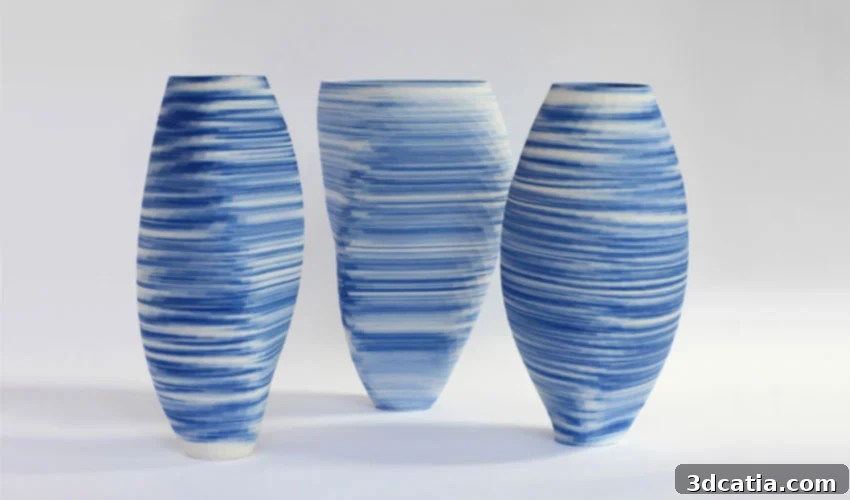
From Delft Blue to Digital Design: Olivier van Herpt’s Visionary 3D Printed Ceramics
For centuries, Delft pottery, universally recognized as Delft Blue, has captivated the world with its exquisite beauty, remarkable finesse, and unparalleled quality. These iconic Dutch pieces, steeped in a rich history dating back to the seventeenth century, represent a pinnacle of ceramic artistry. Today, as we navigate an era defined by rapid technological advancement, the unexpected yet harmonious marriage of this venerable tradition with cutting-edge 3D printing technology offers a truly compelling narrative. Designer Olivier van Herpt stands at the forefront of this convergence, presenting a breathtaking collection of 3D printed vases in the classic blue and white ceramic palette. His work not only pays homage to a cherished cultural heritage but also powerfully demonstrates how additive manufacturing technologies are profoundly reshaping virtually every sector, from culture and art to product design and even grand architectural visions.
The concept of producing vases through 3D printing is not, in itself, a novel innovation. The artistic and industrial design landscapes have seen numerous explorations into this realm, with notable contributions such as the distinct collection by Libera Rutilo and the imaginative range brought to life by Google Arts & Culture, among many others. The burgeoning list of designers and artists embracing this technique is a testament to its transformative power. The reasons are multifaceted and compelling: 3D printing offers an unprecedented degree of freedom in terms of geometric complexity, allowing for intricate forms and patterns that would be extraordinarily challenging, if not impossible, to achieve through traditional manufacturing methods. Furthermore, it expands the horizons for material experimentation, enabling creators to work with a diverse array of substances. Olivier van Herpt, however, has chosen a path that deeply resonates with his heritage. By opting for ceramics, he masterfully interweaves new technologies with the profound artistic legacy of Dutch history, creating pieces that are both forward-looking and deeply rooted in tradition. His innovative approach builds upon the evolving discourse surrounding 3D printing in the art world, a subject we have previously explored in our ranking of 3D printing applications in Art.
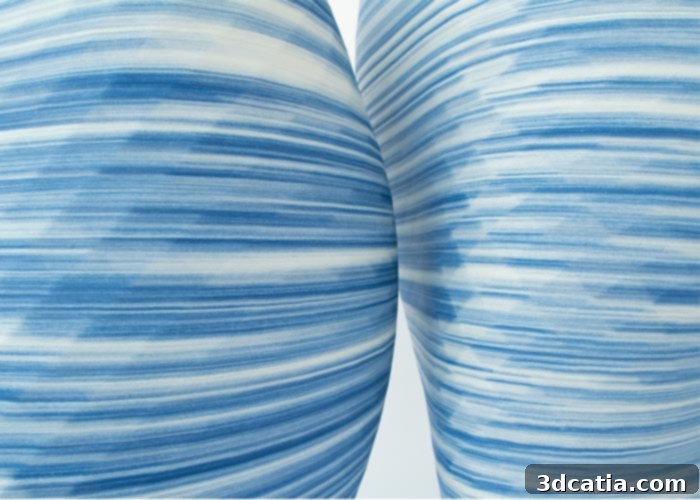
Photo credits: Olivier Van Herpt
To truly appreciate van Herpt’s work, one must understand the origins and evolution of Delft Blue. This iconic pottery was initially conceived as a brilliant improvisation, born out of a desire to emulate the highly prized, exquisite porcelain imported from China by the Dutch East India Company during the 17th century. Lacking the specific kaolin clay essential for true porcelain, Dutch potters ingeniously adapted, developing a unique tin-glazed earthenware known as faience. While distinct from Chinese porcelain, this new Delftware developed its own unexpected and captivating style. It embraced exotic oriental motifs and intricate decorative elements, yet retained a distinctly Dutch sensibility, quickly becoming a symbol of national artistry and prosperity. Olivier van Herpt recognized the profound cultural significance of this national product and embarked on a mission to modernize it, pushing its boundaries while respecting its core identity. His approach involved the meticulous development and continuous improvement of a ceramic 3D printer, a challenging endeavor given the complexities of printing with clay. Through relentless experimentation and technical refinement, he managed to perfect his machine to a point where it could precisely create an impressive collection of 14 stackable ceramic pieces. This custom-built printer, a marvel of engineering, is capable of producing ceramic objects reaching an astonishing height of 90 cm, all while maintaining remarkably thin walls and ensuring the structural integrity of a solid material. This achievement underscores a significant leap in the capabilities of ceramic additive manufacturing, opening new avenues for designers and artists.
One of the most distinguishing features of Olivier van Herpt’s Delft Blue collection lies in his innovative technique for applying the iconic cobalt blue pigment. Eschewing post-printing embellishment, the Dutch designer explains that he meticulously applies the cobalt blue by hand directly into the raw ceramic material *before* it is even fed into the extruder of the 3D printer. This seemingly subtle procedural shift has a profound impact on the final aesthetic. As the clay is extruded layer by layer, the manually embedded pigment creates a stunning blue and white radial gradient that seamlessly integrates into the structure of the vase. This method introduces an element of controlled randomness and organic fluidity, a testament to the artist’s direct intervention within an otherwise automated process. Van Herpt eloquently describes this unique blue motif as the “translation of human interaction by the machine,” a statement that encapsulates the philosophical core of his work. His vases transcend mere functionality or conventional decorative appeal; they serve as profound explorations into the dialogue between human craftsmanship and mechanical precision, between ancient traditions and contemporary technology. Each piece is not just an object but a narrative, a tangible representation of this intricate interplay. Beyond this groundbreaking Delft Blue series, Olivier van Herpt has continuously pushed the boundaries of design and technology, with a diverse portfolio that extensively features 3D printing in various applications. His full range of visionary projects can be explored on his official website, offering further insights into his innovative approach to design and material exploration.
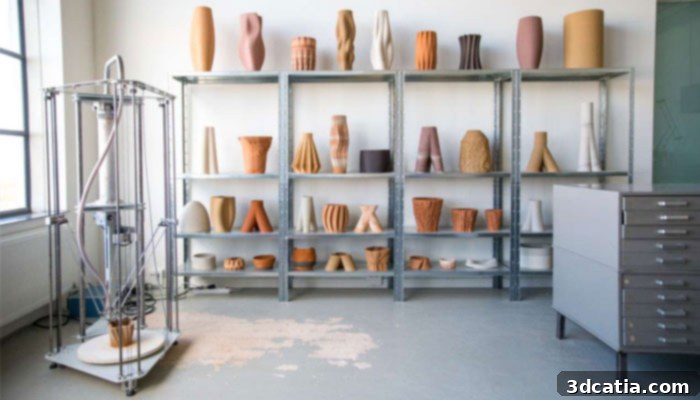
Olivier’s 3D printer and other vases
Olivier van Herpt’s pioneering work with 3D printed Delft Blue ceramics represents a pivotal moment in the intersection of art, history, and advanced manufacturing. By thoughtfully integrating centuries-old traditions with modern technological capabilities, he not only preserves a cherished cultural heritage but also reinvents it for a new era. His dedication to perfecting ceramic 3D printing and his philosophical approach to design elevate his creations beyond mere objects; they become statements on the evolving relationship between the human hand and the intelligent machine. Van Herpt’s ability to imbue digitally fabricated objects with the warmth and uniqueness typically associated with handcrafted goods speaks volumes about the potential of future design. It challenges us to reconsider our perceptions of authenticity, mass production, and bespoke artistry. His work paves the way for a generation of designers who will continue to push these boundaries, finding novel ways to blend the rich tapestry of the past with the boundless possibilities of the future. The collection stands as a powerful testament to how additive manufacturing can be utilized not just for industrial efficiency, but also as a profound tool for artistic expression and cultural commentary.
What are your thoughts on the groundbreaking work of this visionary Dutch designer? We encourage you to share your insights and reflections in a comment below, or join the conversation on our Facebook and Twitter pages! And to stay at the forefront of all the latest developments and innovations in 3D printing, remember to sign up for our free weekly Newsletter, delivering cutting-edge news directly to your inbox!