
Unlocking Bespoke Experiences: How 3D Printing is Revolutionizing Consumer Goods Customization
Defining “consumer goods” in today’s diverse market can be a complex task. From essential items like groceries purchased regularly to long-lasting investments such as vehicles and electronic devices, the spectrum is incredibly broad. Yet, a fundamental truth unites them: these products are acquired by end consumers seeking items that perfectly align with their personal needs, preferences, and desires. In this pursuit of individual fit, a manufacturing method stands out for its unparalleled ability to offer customization options for consumer goods: 3D printing, also known as additive manufacturing. This innovative technology often empowers the consumer to actively participate in the creation of their final product, as seen in the footwear industry where a custom sneaker can be designed after the wearer’s feet are meticulously scanned.
Thanks to the transformative power of additive manufacturing, the consumer goods sector is entering an exciting new era. It can now deliver not only custom-made products but also items that are inherently more efficient, comfortable, aesthetically pleasing, and practical than their mass-produced counterparts. This is where the profound added value of 3D printing truly lies: it significantly enhances a product’s functionality and caters precisely to the unique requirements of the end consumer. But beyond the theoretical benefits, how is this technology being applied in practical terms? Let’s delve into compelling examples across various key industries, including textiles, footwear, eyewear, cosmetics, sports, automotive, and even furniture. While this list offers a comprehensive overview, it is by no means exhaustive, as the market continues to reveal an ever-expanding array of innovative applications.
Eyewear: Customized to Your Face and Tastes
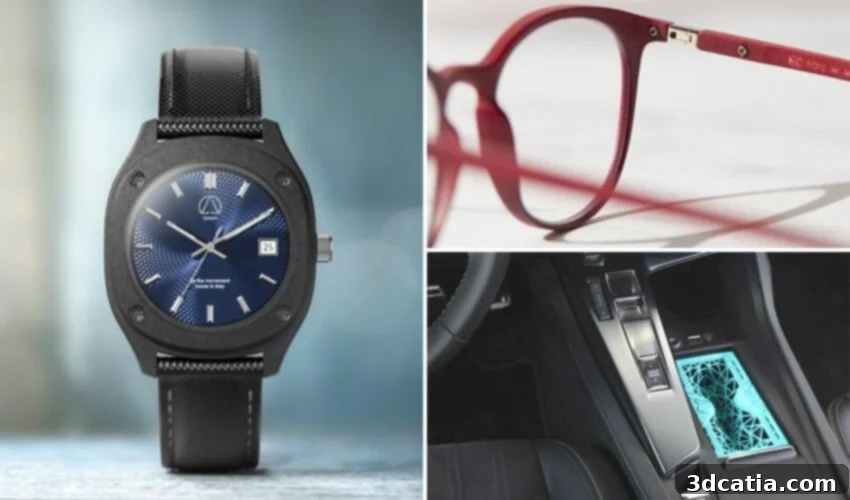
Among the most compelling applications of 3D printing for consumer goods is its capacity to tailor a product precisely to an individual’s unique body structure. The eyewear industry, in particular, has embraced this potential, allowing for unprecedented personalization. Imagine customizing your own eyeglasses or sunglasses with a 3D scan of your face, resulting in a perfectly fitted, one-of-a-kind frame. Leading eyewear manufacturers like the Spanish company Horizons Optical and the German company Youmawo are at the forefront of this revolution. The process is remarkably straightforward yet sophisticated. Both manufacturers utilize 3D scanning technology to capture intricate biometric data of the customer’s face. This data is then fed into specialized software, enabling the customer to virtually try on various frame designs and choose from an extensive range of colors and aesthetic options. Once the design is finalized, the chosen glasses are precisely 3D printed. Horizons Optical, for instance, leverages HP’s Multi Jet Fusion (MJF) technology, while Youmawo relies on EOS’s Selective Laser Sintering (SLS) technology. The significant advantages of employing additive manufacturing in this domain are multifaceted: it enables rapid production, facilitates the creation of highly complex and intricate designs that would be impossible with traditional methods, and allows for the use of advanced materials that result in lighter, yet stronger, and more comfortable frames. This fusion of technology and design ensures that each pair of glasses is not just an accessory, but a perfectly integrated extension of the wearer.
3D Printed Footwear: Unrivaled Comfort and Performance
When it comes to footwear, two crucial considerations immediately come to mind: the inherent uniqueness of every individual’s foot and the paramount importance of wearability and comfort. The sheer diversity in foot shapes and sizes worldwide makes the quest for the “perfect pair” of shoes an ongoing challenge for many. This is precisely where 3D printing steps in, offering a revolutionary solution for personalized footwear. The technology allows for shoes to be customized to an unprecedented degree, delivering benefits that are proving vital for foot health and performance. Consider the Athos climbing shoe, designed by a group of Spanish students at the Elisava School of Design. This innovative shoe offered amateur and professional climbers superior performance and enhanced comfort by meticulously accounting for the wearer’s specific anatomical needs and pressure points. Similarly, in the demanding world of classical dance, act’ble introduced a ballet shoe made using 3D printing. The core idea was to transform traditional ballet shoes, which are notoriously quick to wear out, from a disposable product into a sustainable, durable, and individually tailored solution that respects the dancer’s unique foot structure. The impact of 3D printing extends even further into the realm of insoles. Industry leaders like Wiivv and Dr. Scholl, a renowned name in foot care, have achieved significant breakthroughs with smartphone-enabled applications. These platforms allow customers to conveniently scan their feet from the comfort of their homes. This scan captures detailed biometric data, often mapping up to 400 unique points on the foot, which is then used to 3D print a personalized insole, offering bespoke support and unparalleled comfort for everyday activities and specialized athletic needs.
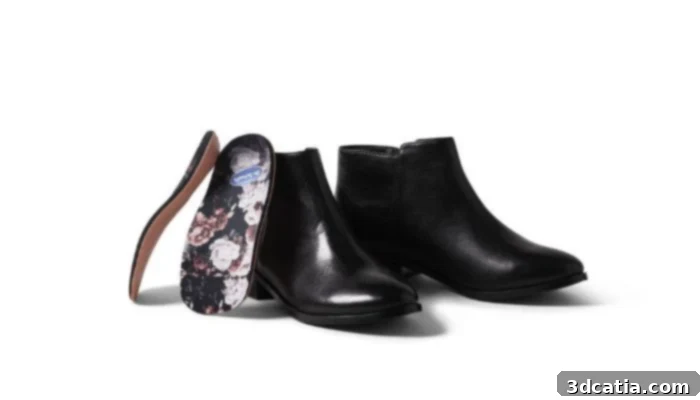
3D printing is used to produce personalized insoles (Photo credits: Dr. Scholl)
3D-Printed Clothing: Unique, High-End Fashion Pieces with Sustainable Flair
Fashion is an industry celebrated for its constant evolution, its quirky pieces, and an unending quest for originality among both designers and consumers. In an era often criticized for ‘fast fashion’ and overconsumption, 3D printing offers a compelling and sustainable alternative. This technology empowers both creators and wearers to assert their creative individuality through the fabrication of truly unique items, moving away from mass-produced uniformity. A prime example is Miranda Marquez, a visionary Spanish designer who champions the idea that consumers should be able to print their own custom clothing at home, a service she facilitates through her innovative website.
The possibilities extend to bespoke 3D-printed dresses, meticulously crafted based on detailed scans of the customer’s body. A renowned example resides in the Museum of Modern Art (MoMA) in New York: a striking 3D-printed design by Jessica Rosenkrantz and Jesse Louis-Rosenberg, known as the ‘Kinematics Dress’. The creation process is fascinating: after a comprehensive scan of the customer’s body, the fabric is digitally tessellated onto the digital form. This intricate, flexible structure is then brought to life as a dress using Selective Laser Sintering (SLS) technology, typically employing flexible nylon. This method ensures the garment is perfectly adapted to the customer’s aesthetic desires and precise body proportions, offering a truly personalized fit. Further showcasing their high-end fashion capabilities, the designers created the ‘Kinematic Petals Dress’ for the Museum of Fine Arts, Boston (MFA). Like its predecessor, this dress offers a customized fit tailored to the individual, featuring an astonishing 1600 unique pieces interconnected by over 2600 intricate hinges. Despite its apparent complexity, this marvel emerges from the 3D printer fully assembled and ready to wear, highlighting the extraordinary design freedom and direct manufacturing potential of additive manufacturing in haute couture. This shift enables designers to produce intricate, zero-waste garments and empowers consumers with unique, expressive fashion that transcends traditional manufacturing limitations.
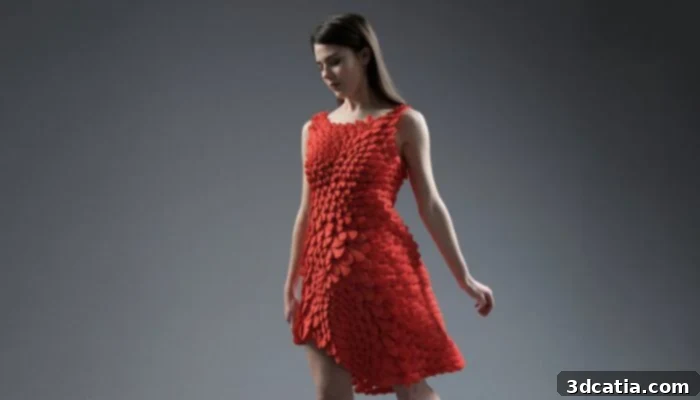
The Kinematic Petals Dress was created in 2016 using nylon and SLS technology. (Photo credit: NERVOUS SYSTEM)
Additive Manufacturing in Personalized Watchmaking
Another sector experiencing significant transformation through 3D printing, especially in terms of enhanced customization, is watchmaking. With the remarkable advancements and growth of 3D printing technologies in recent years, many innovative watch designers are increasingly adopting additive manufacturing to design and produce custom consumer goods more rapidly, all while maintaining impeccable quality. But what precisely makes 3D printing so advantageous for this intricate industry? As observed in other sectors, 3D technologies enable watchmakers to optimize material usage, significantly minimizing waste and thereby establishing a more sustainable and environmentally friendly production process. Depending on the specific design intent and the desired degree of personalization sought by the consumer, various additive manufacturing methods can be strategically employed to achieve optimal results.
A compelling example comes from the Swiss company SevenFriday, which ingeniously utilized Multi Jet Fusion technology to create FREE-D, an original timepiece distinguished by its impressive and unique organic design. By leveraging PA11 material, SevenFriday was able to manufacture intricate, lightweight, and exceptionally durable watch components, all while upholding the highest standards of quality. In parallel, the Italian brand Aion Watch is pushing the boundaries of watch design by developing the world’s lightest automatic watches. Weighing a mere 26 grams, these pioneering 3D-printed watches incorporate an advanced internal honeycomb structure. This ingenious design not only ensures the necessary structural rigidity but also achieves a remarkable 200% reduction in overall weight compared to conventional designs. Beyond their extraordinary lightness and high mechanical strength, these watches benefit from the inherent properties of carbon fiber, which also include excellent thermal insulation. This highlights the immense potential of utilizing high-performance, specialized materials in additive manufacturing to significantly enhance the characteristics and functionality of customized products, offering consumers not just a timepiece, but a tailored piece of engineering art.
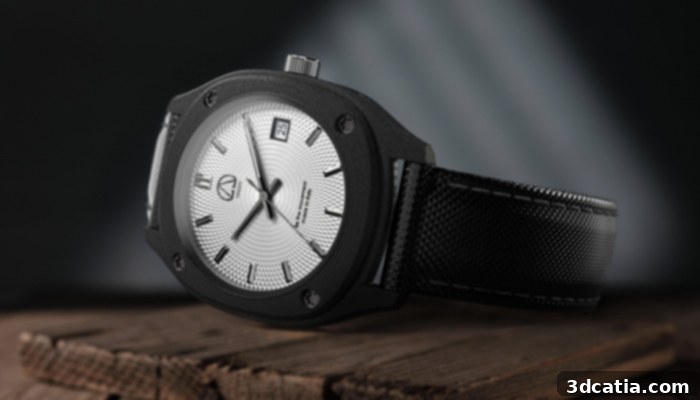
Photo credits: Aion Watch
3D Technologies in Cosmetics: Beyond the Surface
The cosmetics industry might initially seem an unlikely candidate for the integration of 3D technologies. However, this sector has surprisingly begun to embrace additive manufacturing, particularly for enhancing product personalization and consumer experience, in a multitude of inventive ways. One intriguing application emerged from an even more unexpected source: Formula 1. Back in 2020, the iconic motorsports entity leveraged 3D printing to craft distinctive perfume bottles. These three unique bottles, drawing inspiration from the sleek aesthetics of the automotive sector, were celebrated for their intricate and fascinating designs. This innovative use case vividly demonstrated the vast possibilities that additive manufacturing offers for creating visually striking and highly complex packaging solutions that capture attention and tell a story. Yet, packaging and bottles represent just one facet of 3D technologies’ adoption in cosmetics. Another notable example comes from the luxury beauty brand Dior. In this instance, Dior turned to sophisticated 3D scanning to provide each customer with a highly personalized skincare recommendation. This was achieved through a specialized device known as the Eve V, which enabled individual skin analyses, meticulously measuring various skin attributes such as skin sag, eye bags, and wrinkles. This precise analysis, coupled with artificial intelligence (AI), was then used to determine the most appropriate skincare regimen, specifically targeting the two most prominent skin concerns identified for that particular user. This extraordinary degree of personalization, tailoring skincare solutions to the unique dermatological profile of each individual, would have been virtually impossible without the advanced capabilities of 3D scanning, showcasing its potential to revolutionize customer service and product efficacy in the beauty world.
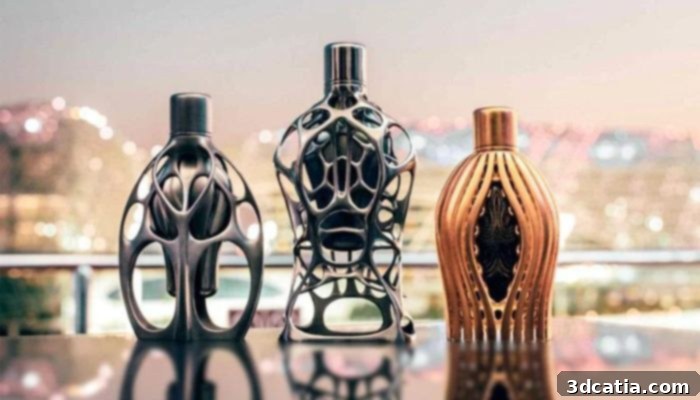
Photo Credits: Lovegrove Studio
Additive Manufacturing Enables Higher Performance in Sports
Additive manufacturing has consistently demonstrated its immense value for athletes across a myriad of sporting disciplines in recent years. The technology allows for sports equipment to be custom-tailored to meet the exact physiological and performance needs of an individual athlete, thereby offering significantly higher levels of comfort and, crucially, enhancing overall performance. Moreover, 3D printing inherently enables the creation of lighter-weight equipment, which is a particularly critical advantage in sports where speed, agility, and reduced load are paramount. Consequently, this technology plays a pivotal role in optimizing athletic potential and competitive edge.
The innovative work by Carbon vividly illustrates how additive manufacturing is being powerfully utilized in the sports industry. This pioneering company collaborated with Riddell, a leading sporting goods manufacturer, to print customized helmet shells specifically for NFL players. These advanced helmets distinguish themselves from conventional designs through their unique, intricately engineered lattice structures. Beyond the obvious benefit of customization for a perfect fit, the specialized elastomer material used in these helmets provides superior protection against impacts, as a substantial portion of the shock energy is absorbed and dissipated by the complex internal geometry, greatly enhancing player safety. Another compelling example is provided by the Californian bicycle manufacturer Superstrata, which in 2021 unveiled a groundbreaking carbon fiber bicycle frame. Weighing an astonishingly light 1.7 kg, this frame is not only exceptionally light but also boasts remarkable durability, reportedly being 61 times stronger than steel. The entire bicycle frame is printed in a single, seamless process using Arevo’s Direct Energy Deposition (DED) technology. According to Superstrata, this advanced manufacturing approach allows for up to 500,000 different configurations, which customers can meticulously select and customize via the company’s intuitive online store, offering an unparalleled level of personalization for cycling enthusiasts seeking both performance and individual style.
3D Printing For Customized Vehicles: Driving Personalization
In the dynamic world of automotive design and manufacturing, the application of additive manufacturing for customizing vehicles is rapidly becoming standard practice. Traditionally, adding bespoke accessories, upgrading, or modifying parts on a vehicle could be prohibitively expensive, making 3D printing an increasingly attractive and cost-effective alternative. These cutting-edge technologies empower car owners to create unique and highly personalized components for their vehicles, ranging from purely decorative accessories to essential functional parts. Beyond personalization, 3D printing offers significant advantages such as reduced weight and exceptional design flexibility, allowing for intricate shapes and precise detailing that would be challenging or impossible with conventional manufacturing methods. This makes it an affordable, accessible, and remarkably sustainable solution that collectively enhances the driver’s overall experience and connection with their vehicle.
A prime illustration of this trend can be found with the Ford brand, which has made 3D files openly available to allow customers to customize its Maverick model. This initiative enables all drivers, without exception, to 3D print components for its innovative “FITS System.” This system features eight convenient storage slots designed for attaching various accessories in the central console area or underneath the seats, all tailored to the specific needs and preferences of the users. Not to be outdone, Peugeot is also actively pursuing vehicle customization solutions. Through its LIFESTYLE store, the brand offers a range of accessories that are pleasant to the touch, lightweight, and easy to use. Peugeot conducts extensive research into its customers’ needs, opting to provide them with the greatest possible comfort and utility in their cars through the strategic adoption of 3D technologies, allowing for an elevated and highly personalized driving environment. This shift underscores a broader industry trend towards consumer-driven design and the limitless potential of additive manufacturing to redefine the automotive experience.
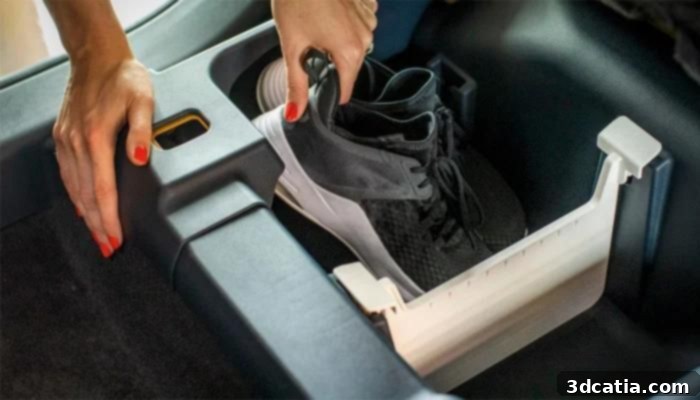
Photo credits: Ford
3D Printed Furniture: Innovating with Food Waste and Optimized Comfort
The world of 3D printing is a realm of continuous innovation, constantly discovering novel methods for creation, whether through pioneering technologies or groundbreaking materials. The industry tirelessly seeks advancements that push the boundaries of what’s possible. Krill Design, a Milanese startup, perfectly embodies this spirit of innovation. This remarkable company has mastered the art of 3D printing furniture using an unlikely but highly sustainable material: food waste, specifically orange peels, lemon peels, and coffee grounds. Indeed, Krill Design transforms these discarded food by-products into exquisite interior furnishings, including designer lamps, stylish magazine holders, and elegant flower pots. The process for creating this unique material, named Rekrill, is consistent regardless of the type of organic waste used. The initial step involves meticulously drying the waste, followed by a chopping process that micronizes it into fine particles. Finally, the resulting pelletized material is heated and extruded into a usable filament by standard FDM (Fused Deposition Modeling) 3D printers, such as those from Prusa and Creality. This pioneering manufacturing technique represents a paradigm shift towards greener production, as it significantly limits the reliance on virgin plastics, with all materials being 100% recycled, biodegradable, and compostable. This offers a truly circular economy model for furniture design.
Beyond sustainability, 3D printing is also revolutionizing ergonomic design. Steelcase, a major global player in office furniture, turned to additive manufacturing to develop an enhanced version of their acclaimed SILQ office chair. The goal was to create a chair more precisely adapted to the user’s morphology, thereby significantly improving comfort and support throughout the workday. The company collaborated with Fast Radius and Carbon, leveraging their expertise in 3D technologies. Thanks to these partnerships, armrests featuring an intricate lattice structure could be precisely 3D printed. These armrests were ingeniously divided into four distinct zones, with each section meticulously designed to adapt dynamically to the user’s posture and behavior. For example, whether a user rests an elbow or fully extends an arm, the SILQ chair intuitively modifies its support to optimize comfort. Furthermore, the integration of 3D printing into the manufacturing of the office chair yielded another substantial benefit: a remarkable 70% reduction in material usage compared to traditional production methods, proving that personalization and sustainability can go hand-in-hand in modern product design.
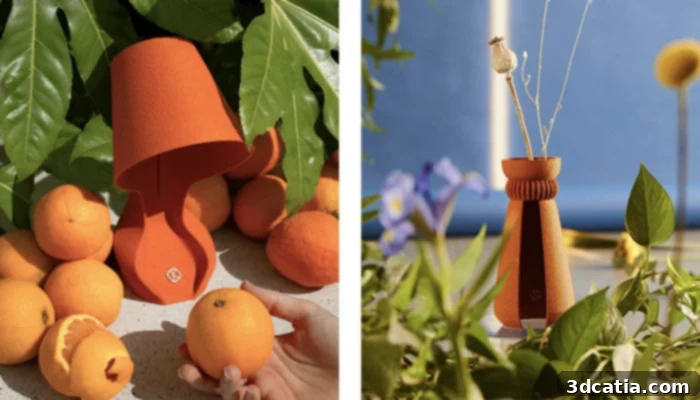
Photo credit: Krill Design
The examples highlighted across these diverse sectors unequivocally demonstrate the transformative power of 3D printing in the realm of consumer goods. From perfectly tailored eyewear and performance-enhancing footwear to unique fashion pieces, personalized timepieces, innovative cosmetic solutions, optimized sports equipment, customized vehicle components, and even sustainable furniture crafted from food waste, additive manufacturing is redefining what’s possible. It empowers consumers with unprecedented personalization, fosters innovation in design and materials, and champions more sustainable production practices. As this technology continues to evolve, we can expect even more bespoke, efficient, and environmentally conscious products to shape our future. What are your thoughts on these customized 3D printed consumer goods? Let us know in a comment below or connect with us on our LinkedIn, Facebook, and Twitter pages! Don’t forget to sign up for our free weekly Newsletter here to get the latest 3D printing news delivered straight to your inbox! You can also find all our engaging videos on our YouTube channel.