
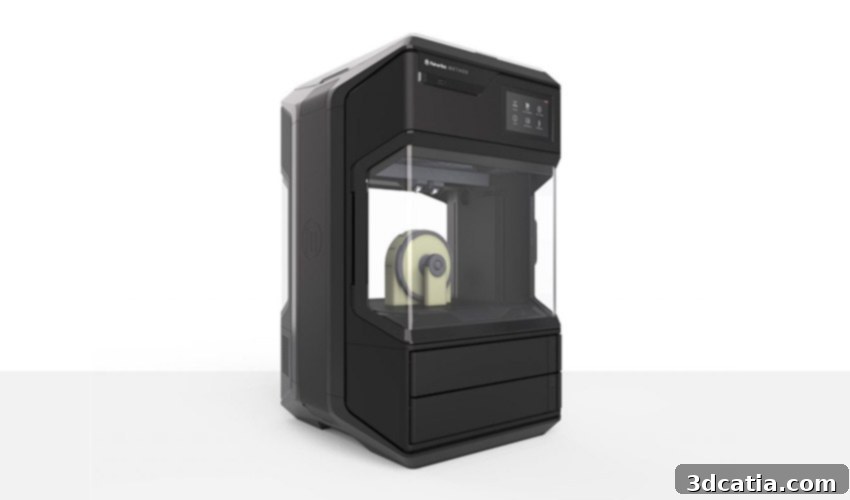
MakerBot METHOD: Unlocking Industrial 3D Printing with an Open Materials Platform
The MakerBot METHOD stands as a testament to professional desktop 3D printing, engineered specifically to empower industries with the capability to produce robust and precise parts for a myriad of industrial applications. Utilizing advanced Fused Deposition Modeling (FDM) technology, the METHOD series has always been at the forefront of enabling users to seamlessly integrate technical and engineering-grade materials into their workflow. Recognizing the evolving demands of additive manufacturing, MakerBot, a leader in the 3D printing space, embarked on a strategic initiative in November 2019 by introducing an experimental extruder developed by MakerBot LABS. This launch was accompanied by a comprehensive materials development program, designed to significantly broaden the spectrum of materials compatible with their cutting-edge machines. Building on the remarkable success and invaluable insights garnered from this program, MakerBot has recently unveiled a groundbreaking advancement: a new extruder that will fundamentally transform the METHOD platform into an entirely open materials system, thereby unleashing unprecedented versatility and innovation for its users.
This pivotal shift towards an open materials platform is a direct response to the overwhelming success of the METHOD Materials Development Program. This program, which saw prominent filament manufacturers qualify their specialized materials for use with the MakerBot LABS extruder, unequivocally highlighted a pervasive industry need for an even greater, more diverse availability of materials. In light of this, the renowned 3D printer manufacturer is taking a decisive step to fully open its platform, marking a significant milestone in desktop industrial 3D printing. Johan Till-Broer, VP of Product Development at MakerBot, articulated the profound impact of this decision, stating: “By transforming METHOD into an open materials platform, we provide our users with an incredibly powerful tool to realize their ideas. Engineers can now print a growing number of advanced third-party materials on an industrial 3D printing platform, which was designed to produce stronger and more accurate parts than competing desktop 3D printers.” This initiative not only democratizes access to a wider range of materials but also significantly enhances the METHOD’s utility, making it an indispensable asset for engineers and designers aiming to push the boundaries of innovation.
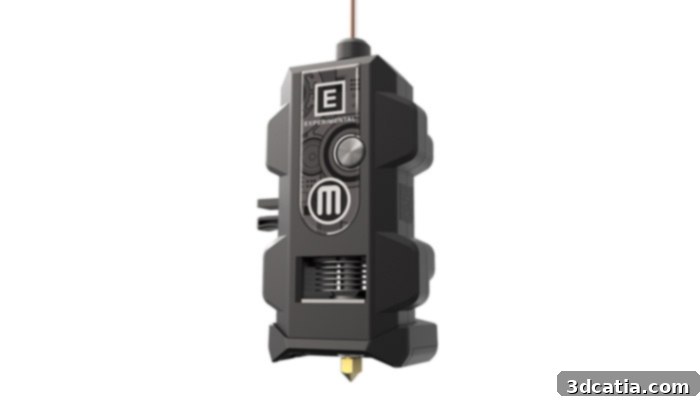
The MakerBot LABS experimental extruder for METHOD 3D printers | Credits: MakerBot
The landscape of desktop 3D printing has long been characterized by a notable limitation: very few machines are capable of processing engineering-grade materials, and even fewer offer the freedom to choose from a broad spectrum of suppliers. Historically, users have often been confined to a limited selection of manufacturer-qualified materials, restricting design possibilities and application scopes. However, recent industry data conclusively indicates a robust correlation between unrestricted material choice and the accelerated adoption of additive manufacturing within diverse corporate environments. Companies are increasingly recognizing that the right material can be the key differentiator in creating parts that meet specific functional, mechanical, and aesthetic requirements. This demand is further amplified by the rapid development of an extensive array of high-performance materials, each offering unique benefits essential for critical industrial applications across sectors such as aerospace, where lightweight yet strong components are vital; automotive, for durable prototypes and end-use parts; and medical, for biocompatible and sterilizable instruments and devices. Opening up the material ecosystem directly addresses this critical need, enabling businesses to leverage the full potential of additive manufacturing.
To effectively process engineering-grade materials, which often exhibit specific thermal and mechanical properties, the MakerBot METHOD platform is meticulously engineered with advanced features. A cornerstone of its capability is a fully enclosed 100°C heated chamber. This precisely controlled environment is crucial for preventing warping and improving layer adhesion, especially when printing with materials prone to shrinkage and internal stresses during cooling. Complementing this, a heated build plate ensures optimal first-layer adhesion and uniform cooling, contributing significantly to part accuracy and structural integrity. Furthermore, the METHOD incorporates sophisticated support material capabilities, utilizing soluble SR-30 supports from Stratasys, renowned for their strength and easy removal, alongside water-soluble PVA. These support materials are indispensable for realizing complex geometries, intricate overhangs, and internal features without compromising the final part’s surface finish or structural integrity. The introduction of the new experimental extruder pushes these capabilities even further. It features a significantly modified hot end capable of reaching temperatures up to 300°C. This higher thermal capacity is critical for melting and extruding a broader range of advanced polymers and composites, many of which require elevated processing temperatures to achieve optimal flow and fusion. This new extruder also provides users with extensive customization options for exploring and optimizing new materials, including easily interchangeable nozzle assemblies for different material types and diameters, as well as greatly expanded print settings that allow for fine-tuning parameters such as extrusion rate, retraction, and cooling profiles to achieve superior print quality and material compatibility. This level of control and adaptability is paramount for material scientists and engineers who need to experiment with and validate novel filaments for specialized applications.
MakerBot’s commitment to fostering an open and innovative ecosystem is further exemplified through its strategic collaborations with leading material science companies. The company is actively working in close partnership with renowned industry players such as BASF, a global chemical giant; LEHVOSS, a specialist in high-performance thermoplastics; Kimya, known for its technical filaments; and Jabil, a diversified manufacturing services company. These partnerships are instrumental in qualifying specific, high-performance materials for seamless integration and optimal performance with the experimental extruder. Through rigorous testing and development cycles, these collaborations ensure that third-party materials meet MakerBot’s stringent quality and reliability standards. As a result of these efforts, users can anticipate a dramatically expanded portfolio of compatible materials. This includes robust engineering thermoplastics like Polycarbonate (PC), which is prized for its strength, impact resistance, and thermal stability, making it ideal for durable prototypes and functional parts. The platform will also support advanced polymer composites such as carbon fiber-reinforced ABS (carbon ABS) and carbon fiber-reinforced PETG (carbon PETG). These composites offer significantly enhanced stiffness, strength-to-weight ratio, and dimensional stability, making them suitable for high-performance applications where traditional plastics fall short, such as in drone components, automotive brackets, or tooling. Additionally, materials like PETg ESD (Electrostatic Discharge) will be available, specifically formulated for printing parts that require protection against electrostatic discharge, which is critical for manufacturing components that come into contact with sensitive electronics in industries like consumer electronics, medical devices, and industrial automation. This comprehensive material library empowers engineers to select the perfect material for virtually any application, moving beyond conventional prototyping to produce truly functional end-use parts directly on their desktop.
The strategic decision to open the MakerBot METHOD platform to a wider range of third-party materials represents a significant leap forward for industrial desktop 3D printing. It addresses a critical industry need for greater material flexibility and choice, empowering engineers and designers with unparalleled opportunities for innovation. By democratizing access to high-performance polymers and composites, MakerBot is not only enhancing the capabilities of its own machines but also contributing to the broader acceleration of additive manufacturing adoption across diverse sectors. This move positions the METHOD as a truly versatile and indispensable tool for professionals seeking to prototype with precision, create functional jigs and fixtures, or even produce low-volume end-use parts with advanced properties. The ability to experiment with, qualify, and utilize specialized materials directly on a desktop platform significantly reduces barriers to entry for advanced manufacturing, fostering a more dynamic and competitive landscape. The MakerBot LABS Experimental Extruder for METHOD is readily available as an additional accessory, allowing current and new users to immediately leverage these expanded capabilities. For more comprehensive information and to explore the full potential of this groundbreaking development, interested parties are encouraged to visit the official MakerBot website HERE. We invite you to share your thoughts on this exciting announcement from MakerBot. What impact do you foresee this open materials platform having on your projects or industry? Engage with us by leaving a comment below or by connecting with us on our social media platforms, including Facebook and Twitter pages!