
3D-Printed Body-on-Chip: Revolutionizing Drug Testing and Medical Research with Ethical Innovations
The landscape of medical research and drug development is on the cusp of a profound transformation, thanks to the advent of advanced additive manufacturing techniques. Historically, the evaluation of new pharmaceutical compounds has heavily relied on animal testing, a method fraught with ethical concerns and often limited in its predictive accuracy for human physiology. However, groundbreaking advancements in 3D printing are paving the way for a more humane and effective alternative: the 3D-printed “body-on-chip.” This innovative technology promises to replace traditional animal experiments with sophisticated in-vitro models that more accurately mimic human bodily functions, thereby ushering in a new era of ethical and efficient drug discovery.
Scientists at the esteemed University of Edinburgh have achieved a significant breakthrough by successfully developing such a 3D-printed “body-on-chip” device. This pioneering system is ingeniously designed to simulate the complex journey of a drug through the human body, allowing researchers to meticulously examine its effects, efficacy, and tolerability in a controlled environment. The versatility of this plastic chip is remarkable, as it enables the testing of a wide array of medications, offering an unparalleled platform for pharmaceutical research. This crucial innovation holds the potential to substantially reduce, and eventually replace, the reliance on animal testing, addressing both ethical imperatives and scientific limitations associated with current practices.
The development of this state-of-the-art device marks a pivotal moment in medical science, promising a future where animals no longer endure suffering for the sake of medical advancement. With the “body-on-chip,” researchers can now analyze the behavior and interactions of various human organs in a far safer, more controlled, and more physiologically relevant manner than ever before. This remarkable “Body-On-Chip” device was conceived and brought to fruition as part of an intensive doctoral scholarship project. It benefited from extensive collaboration with the National Centre for Replacement, Refinement and Reduction of Animals in Research (NC3Rs), an organization dedicated to advancing scientific research while minimizing animal use. Furthermore, the project received vital financial support from Unilever, underscoring the broad industrial and ethical recognition of this technology’s importance.
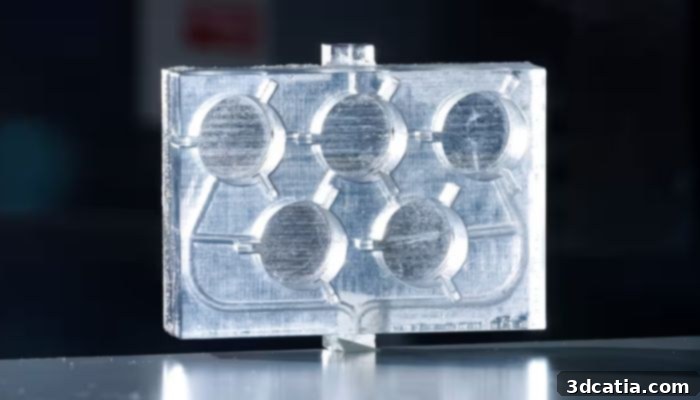
This monumental innovation, cultivated in the vibrant scientific hub of the Scottish capital, truly represents a world-first in both healthcare and biomedical research. The newly developed chip is an intricate microphysiological system, comprising five distinct chambers, each meticulously produced with the precision and flexibility afforded by 3D printing technology. These individual compartments are ingeniously engineered to replicate the vital functions of key human organs: the heart, brain, kidneys, lungs, and liver. Crucially, a sophisticated network of microfluidic channels connects these various organ compartments, simulating the human circulatory system and enabling the controlled distribution of medication throughout the integrated system, thereby mimicking systemic drug exposure.
Within this highly controlled laboratory environment, the sophisticated capillary system of the “body-on-chip” provides researchers with an unparalleled window into how and where new medical substrates are distributed throughout a simulated human circulatory system. It allows for detailed observation of how individual organs react to these compounds and, critically, how long the drug remains active within each organ compartment. To ensure that the conclusions drawn from these in-vitro models are accurately transferable to the human body, it is paramount that the “body-on-chip” devices maintain a uniform and consistent flow rate across different specimens. This reproducibility is vital for obtaining reliable and comparative data, a cornerstone of robust scientific inquiry.
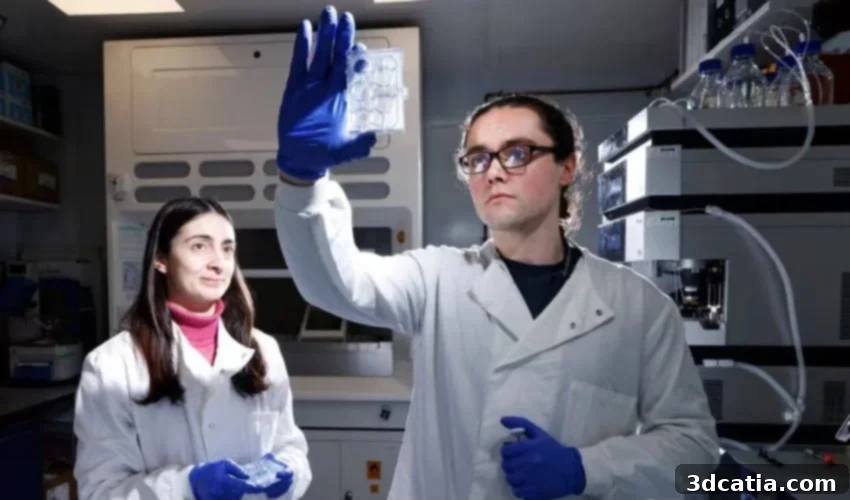
To address the critical need for uniform drug distribution and precise observation, University of Edinburgh scientists Liam Carr, the visionary inventor of the chip, and Dr. Adriana Tavares from the Edinburgh Centre for Cardiovascular Science (CVS), Carr’s PhD supervisor, collaborated with the Edinburgh College of Art. This multidisciplinary partnership was crucial in iteratively testing and refining different versions of the chip innovation. A key methodology employed to verify the even distribution of the drug within the intricate system is Positron Emission Tomography (PET). As Liam Carr explains, PET is instrumental in developing detailed 3D images that vividly illustrate the complex biological processes occurring inside the respective organs in real-time. PET is a well-established diagnostic imaging method in medicine that utilizes a safe, short-lived radioactive tracer to visualize metabolic activity and blood flow, making it ideal for tracking drug pharmacokinetics within the chip.
The Unprecedented Importance of the Body-On-Chip for Research
The strategic integration of PET technology offers a multitude of advantages, extending beyond merely tracking drug distribution. According to Carr, one of the primary benefits of PET in clinical settings is its ability to facilitate the early detection of subtle signs of serious conditions such as heart disease, various cancers, and neurological disorders. Applied to the “body-on-chip,” this imaging capability allows researchers to observe pathological changes at an early stage within the engineered tissues. Furthermore, Carr highlights the expansive potential for implementing sophisticated disease models within the device. For instance, a model of fatty liver disease could be meticulously integrated to gain crucial insights into how a diseased liver influences the function and health of other interconnected organs. This systemic approach is invaluable for understanding complex disease etiologies and therapeutic interventions. Carr further notes that by linking several such organ models, researchers could investigate the intricate interplay and cascading effects that different diseases have on one another, offering a holistic view of human pathophysiology.
This revolutionary methodology empowers researchers to accurately assess the systemic effects of novel drugs on an entire simulated body, representing nothing short of a substantial leap forward in the field of drug testing and development. As both researchers emphasize, this technology offers an unprecedented level of insight. Dr. Tavares particularly underscored the profound ethical importance of the “body-on-chip” for animal welfare: “This device shows really strong potential to reduce the large number of animals that are used worldwide for testing drugs and other compounds, particularly in the early stages, where only 2% of compounds progress through the discovery pipeline.” This statistic starkly illustrates the immense waste of animal lives for compounds that ultimately fail, making the body-on-chip an even more critical innovation for ethical and efficient pharmaceutical research.

Beyond the crucial ethical advantages, Dr. Tavares points out several other compelling benefits. These include a significant reduction in development costs by diminishing, and eventually eliminating, the need for expensive and labor-intensive animal testing. Furthermore, the “body-on-chip” promises to accelerate the typically protracted timeline for introducing new medicines to the market, bringing urgently needed therapies to patients more quickly. Crucially, the deployment of human-like microphysiological models, in contrast to the traditional live animal models, provides information on the effects of diseases and drug interactions that is far more relevant and predictive for human patients. This improved relevance leads to better decision-making in drug development and a higher success rate for compounds entering clinical trials. The novel methodology thus stands as both a profoundly more ethical and demonstrably more efficient alternative to conventional animal testing paradigms in pharmaceutical development. It holds immense promise to revolutionize healthcare, ensuring that future medical advancements are not only effective but also ethically sound and economically viable.
The development of 3D-printed body-on-chip technology represents a pivotal shift in how we approach drug discovery and medical research. By offering a sophisticated, ethical, and highly predictive platform, these microphysiological systems are set to redefine the standards of pharmaceutical development. The ability to model complex human physiology, track drug pharmacokinetics in real-time, and study intricate disease interactions within an in-vitro environment positions the University of Edinburgh’s innovation as a beacon for future biomedical advancements. This breakthrough not only promises to alleviate the ethical burden of animal testing but also to accelerate the delivery of safer and more effective therapies to patients worldwide, fundamentally transforming the landscape of healthcare for generations to come.
What are your thoughts on this incredible 3D-printed body-on-chip technology? Do you believe it will significantly reduce animal testing in the pharmaceutical industry? We invite you to share your insights and comments below, or engage with us on our LinkedIn, Facebook, and Twitter pages! Don’t forget to sign up for our free weekly Newsletter here, bringing the latest 3D printing news straight to your inbox! You can also find all our compelling videos on our YouTube channel for more insights into additive manufacturing and its applications.
*Cover Photo Credits: Murdo MacLeod/The Guardian