
Forging the Future Fleet: Johns Hopkins APL and NAVSEA Champion Additive Manufacturing for Naval Defense
The integration of metal additive manufacturing (AM) into critical military applications has historically faced significant scrutiny. Concerns surrounding material porosity, mechanical reliability, and production reproducibility were paramount, casting doubt on the technology’s suitability for the stringent demands of defense. However, through persistent research and technological advancements, these challenges have been systematically addressed and overcome. Consequently, defense organizations worldwide, including prominent entities within the United States, have increasingly embraced and invested in additive manufacturing capabilities. Recent headlines highlight the U.S. Defense Advanced Research Projects Agency (DARPA) committing substantial investments to predict the lifespan of 3D printed parts, alongside the U.S. Navy forging strategic partnerships, such as with Velo3D, to accelerate AM adoption. A pivotal development in this national effort came just last week with the announcement of a groundbreaking collaboration between Johns Hopkins University Applied Physics Laboratory (APL) and the Naval Sea Systems Command (NAVSEA), aimed at implementing advanced additive manufacturing solutions across naval operations.
At the heart of this partnership, APL is providing specialized assistance to NAVSEA in its comprehensive adoption of laser powder bed fusion (LPBF) technology. This specific form of metal additive manufacturing offers unique advantages for complex, high-performance components critical to naval defense. Through a rigorous program of extensive studies and meticulous testing, conducted in close collaboration with NAVSEA’s expert technical team, APL’s dedicated researchers are demonstrating that additive manufacturing is not merely a viable alternative but an absolutely essential technology for NAVSEA’s future operational readiness and strategic capabilities. Michael Presley, a distinguished additive manufacturing engineer in APL’s Research and Exploratory Development Department, articulated the underlying hesitation observed among many in adopting this technology: “most of the previous literature painted a picture of inconsistency.” This perception, rooted in earlier stages of AM development, presented a significant barrier. In direct response to this challenge, APL has embarked on a determined mission to fundamentally transform this outlook, leveraging robust scientific evidence and repeatable results to showcase AM’s true potential.

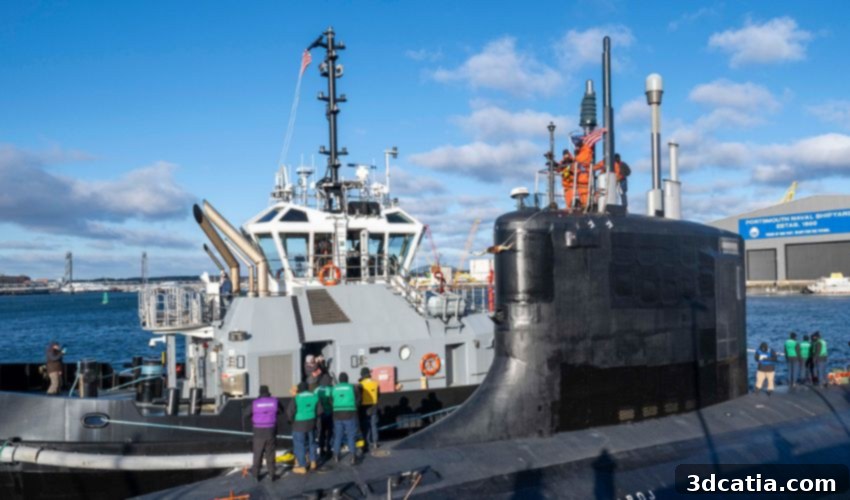
Additive manufacturing can enable repairs to be made at sea, significantly boosting operational readiness (Photo Credit: NAVSEA)
Pioneering Reliability: APL’s Extensive Research into Metal AM
APL researchers have undertaken a series of comprehensive and rigorous studies specifically designed to validate the unparalleled reliability and consistency of LPBF technology for demanding military applications. Their efforts are systematically dispelling lingering doubts and establishing new benchmarks for additive manufacturing in defense. In August of 2023, they published a seminal study that meticulously investigated the variability in the mechanical properties of additively manufactured stainless steel. This crucial research definitively proved that components fabricated using additive manufacturing can consistently achieve and maintain performance levels that are not only comparable to, but often exceed, those of traditionally manufactured parts. This finding alone was a significant step in building confidence within the defense sector, affirming the material integrity achievable through AM.
Building on this foundational work, in July of 2024, APL researchers delved deeper, examining the stability of Ti-6Al-4V mechanical properties across a diverse range of LPBF vendors and platforms. Titanium alloy Ti-6Al-4V is a critical material in aerospace and naval applications due to its high strength-to-weight ratio and corrosion resistance. The study’s findings were groundbreaking, demonstrating that industry-wide consistency in material properties is not only achievable but can be reliably standardized. This was a direct response to concerns about variations between different manufacturing ecosystems, showcasing the maturity of the technology. Further solidifying their research, in October 2024, they published another significant study that unequivocally demonstrated that precise and rigorous control over process parameters—such as laser power, scan speed, layer thickness, and powder characteristics—effectively eliminates previously held worries about porosity within additively manufactured parts. This level of control is vital for components subjected to extreme stress and environmental conditions in naval environments.
Collectively, these meticulously conducted studies from APL serve as compelling testimony to the undeniable viability and transformative potential of metal additive manufacturing, particularly for demanding naval applications. The benefits extend far beyond just the Navy; indeed, countless maritime projects across various sectors have strategically leveraged additive manufacturing over recent years, recognizing its unique advantages in terms of design freedom, production speed, and material efficiency. As Michael Presley emphasized, “What we’ve shown through rigorous research is that as long as you control your feedstock, process parameters and post-processing, you can get highly consistent material properties.” This statement encapsulates the scientific rigor applied, highlighting the critical triumvirate of inputs—the raw material (feedstock), the manufacturing process itself (process parameters), and the subsequent treatments (post-processing)—that, when meticulously managed, guarantee the desired consistency and reliability in the final additively manufactured components. This holistic approach ensures that parts produced are not just structurally sound but also meet the exacting performance specifications required for any mission-critical marine or military application.
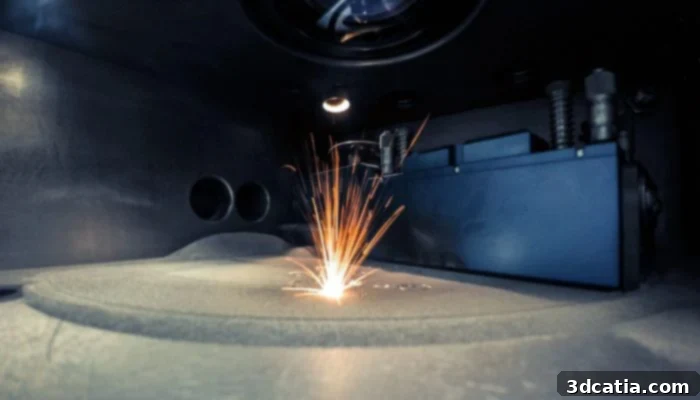
APL is primarily studying LPBF, but works with other types of AM as well, exploring the full spectrum of additive capabilities (Photo Credit: IMMENSA)
Ensuring Uniformity: Addressing Consistency Challenges Across Multiple Vendors
One of the most significant and persistent challenges facing NAVSEA, particularly as it scales its adoption of additive manufacturing, is the critical need to ensure uniform quality for parts sourced from a diverse array of different vendors. This seemingly straightforward requirement becomes immensely complex due to inherent differences in process control methodologies, the subtle variations in raw material properties, and the unique manufacturing conditions prevalent across various production facilities. Such irregularities can lead to unpredictable variations in the quality and performance of final parts, posing unacceptable risks for naval operations where component failure can have catastrophic consequences. To proactively address this multifaceted challenge, the APL team has undertaken the crucial task of establishing robust and clear standardization protocols. These standards are meticulously designed to guarantee that every single part, regardless of where or how it is manufactured within the supply chain, consistently meets NAVSEA’s rigorous performance and reliability requirements. This predictability is not just about quality assurance; it is the fundamental cornerstone that will enable the technology to be truly scalable and widely integrated across the entire naval enterprise, ensuring interoperability and consistent performance.
In response to this imperative, APL has been instrumental in developing and implementing advanced, standardized qualification approaches that empower NAVSEA to efficiently and reliably certify additively manufactured parts. This systematic framework includes comprehensive testing protocols, data analysis methodologies, and performance benchmarks that ensure adherence to the highest standards. Thanks to their pioneering research and deep expertise, NAVSEA has been able to critically review and update its official manufacturing standards and certification guidelines, integrating the best practices derived from APL’s findings. This strategic update has had a profoundly positive impact, notably resulting in a remarkable reduction of over 60% in the requirements for machine certification. This substantial streamlining of the certification process drastically reduces the administrative burden and accelerates the deployment of AM capabilities, all while meticulously upholding and even enhancing the strict reliability standards that are non-negotiable for naval applications. This achievement represents a significant leap forward, demonstrating how scientific research can directly translate into operational efficiency and enhanced security within the defense sector.
Transforming Operations: Real-World Use Cases and Future Vision for the Fleet
The extensive and rigorous work undertaken by APL is far from theoretical; it consistently translates into tangible, real-world applications that directly benefit the U.S. Navy fleet. James Borghardt, who serves as the program manager for Maritime Expeditionary Logistics in APL’s Force Projection Sector, succinctly articulated this mission: “We don’t just study additive manufacturing. We turn it into something the fleet can use.” This philosophy underpins every research initiative, ensuring that innovation leads directly to practical operational improvements. Already, additive manufacturing has proven its invaluable utility in numerous instances for on-demand repairs within the Navy. In a particularly illustrative case, naval personnel successfully utilized wire-laser directed energy deposition (DED)—another versatile additive manufacturing technique—to reverse-engineer a critical ship part that was not available in stock, delaying operations. Through the application of DED, they were able to fabricate the required component in an astonishingly short period of just five days. This stands in stark contrast to the traditional procurement methods, which would have typically taken anywhere from six months to a staggering two years to obtain the same part, highlighting AM’s immediate and profound impact on logistics and readiness.
“That’s what success looks like,” Borghardt affirmed, underscoring the revolutionary potential of these capabilities. “Reducing logistics delay time from months to days is a game-changer for operational availability.” This statement perfectly encapsulates the strategic importance of additive manufacturing for military forces, where every hour of operational availability can be critical to mission success and national security. Beyond mere time savings, the ability to produce parts on-demand reduces the need for vast physical inventories, cuts down on warehousing costs, and enhances supply chain resilience in austere or remote environments. This localized, rapid manufacturing capability fundamentally alters the logistics paradigm, providing naval forces with unprecedented flexibility and self-sufficiency.
Looking ahead, NAVSEA and APL share an ambitious vision to expand the application of additive manufacturing well beyond its current use for emergency repairs and replacements. Their ultimate goal is to leverage this transformative technology for the primary design and construction of mission-critical systems. For such a profound integration to occur, NAVSEA must cultivate an unshakeable confidence in the technology’s inherent reliability, consistency, and performance under the most demanding conditions. Justin Rettaliata, NAVSEA’s technical lead for additive manufacturing, articulated this aspirational objective: “Success means a world where we are leveraging additive manufacturing not just for crisis fixes but for primary design and construction.” This signifies a shift from additive manufacturing as a contingency tool to a core engineering and manufacturing methodology, enabling unparalleled design freedom, part consolidation, and performance optimization for future naval platforms. While acknowledging that they are not yet at this ultimate destination, Rettaliata expressed profound optimism: “We’re not quite there yet, but our work with APL is getting us closer every day.” This ongoing collaboration between APL’s scientific expertise and NAVSEA’s operational imperative is steadily paving the way for a future where additive manufacturing fundamentally reshapes naval strategy, engineering, and readiness. For more in-depth information about this crucial partnership and its impact, please click HERE.
We invite your thoughts on NAVSEA’s transformative partnership with Johns Hopkins APL. Share your insights and opinions in a comment below, or engage with us on our LinkedIn or Facebook pages! Additionally, stay informed with the latest advancements in 3D printing by signing up for our free weekly Newsletter, delivered directly to your inbox. You can also discover a wealth of educational and informational content on our dedicated YouTube channel. For further news and articles focusing on 3D printing innovations within the dynamic aerospace and defense sectors, explore our specialized content HERE.
Cover Photo Credits: U.S. Navy