
3D Printing Construction: CyBe and BIB Lead the Way for Sustainable, Affordable Housing in the Caribbean
The global demand for housing continues to outpace traditional construction methods, exacerbated by persistent shortages in skilled labor and raw materials. This significant challenge, however, has simultaneously unveiled an immense opportunity for innovation, positioning 3D printing in construction (3DCP) as a groundbreaking solution. Across the globe, companies are increasingly harnessing the power of additive manufacturing to erect diverse structures, from schools and sustainable villages to even unique projects like a parkour ground. In a recent and significant development for the Caribbean region, CyBe Construction, a leading specialist in 3D concrete printing technology, has forged a strategic partnership with local concrete experts Betonindustrie Brievengat (BIB) to embark on the construction of the first-ever 3D-printed buildings in the Caribbean, marking a new era for regional development.
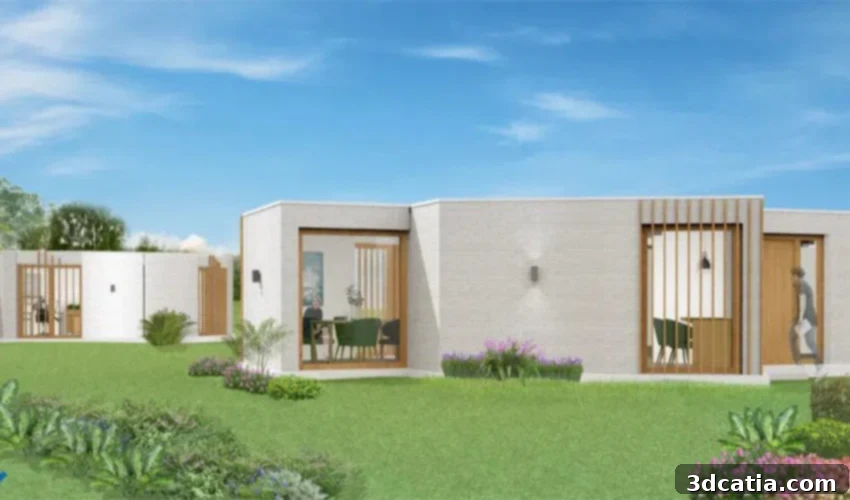
This pioneering initiative is taking shape on the picturesque island of Curaçao, situated off the coast of Venezuela. The collaborative vision for these future housing structures promises a blend of luxury and functionality, featuring lavish finishes, expansive open-plan living areas, and private patios. Berry Hendriks, CEO and Founder of CyBe Construction, articulated the core motivation behind this venture, stating, “It is increasingly difficult to build affordably. Thanks to concrete 3D printing, combined with the design of ‘Lyve by CyBe’ housing, we can solve this problem.” He further emphasized the strength of their partnership, adding, “As an experienced knowledge leader and technology provider, with concrete 3D printers on all continents, we have been able to add BiB as a strong and progressive partner for the Caribbean.” This collaboration leverages CyBe’s technological prowess and global experience with BIB’s deep understanding of the local market and construction needs, creating a robust foundation for success.
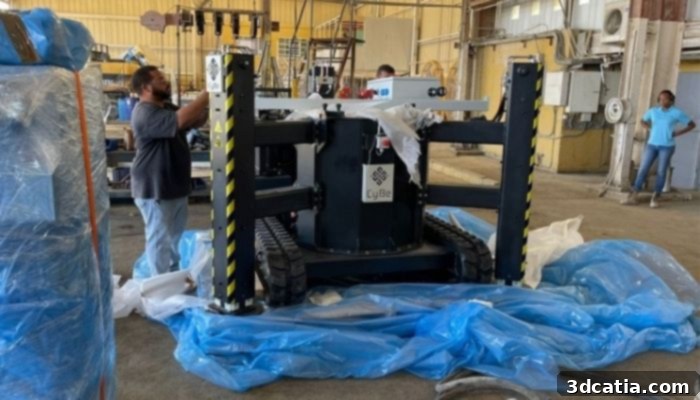
The “RC 3Dp” concrete 3D printer from CyBe Construction. (Photo Credit: CyBe Construction).
Innovating Construction: The Promise of 3D Printed Buildings in the Caribbean
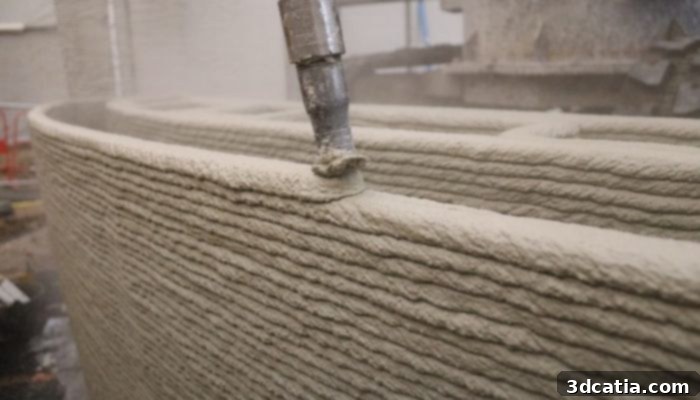
The integration of 3D printing into construction offers transformative benefits that are particularly relevant to regions like the Caribbean. One of the primary advantages is the remarkable acceleration of the construction timeline. Traditional building processes often span months or even years, but 3D printing can significantly reduce this, allowing for the rapid deployment of structures, which is crucial for addressing urgent housing shortages or quickly rebuilding after natural disasters. Furthermore, 3DCP contributes to substantial cost reductions. By automating much of the construction process, labor costs are minimized, and the precise, layer-by-layer deposition of material dramatically reduces waste compared to conventional methods. This efficiency not only saves money but also promotes environmental sustainability.
Beyond speed and cost, 3D concrete printing unlocks unparalleled design flexibility. Architects and designers are no longer constrained by the limitations of conventional molds and forms, enabling the creation of complex, organic, and aesthetically pleasing structures that were previously challenging or prohibitively expensive to build. This means the 3D-printed homes in Curaçao can be custom-tailored to local aesthetic preferences and environmental conditions, offering unique layouts and features like the mentioned open spaces and patios. Moreover, the inherent nature of 3D printing allows for greater precision and consistency, leading to higher quality structures with enhanced structural integrity.
CyBe Construction’s Global Expertise and Innovative Technology
For the Dutch company CyBe Construction, venturing into the Caribbean is a natural progression of its extensive global experience in 3D concrete printing. This is far from their first groundbreaking project. CyBe Construction has a notable track record, including the design and construction of the first 3D-printed research laboratory in Dubai, a testament to their innovative capabilities in cutting-edge infrastructure. They have also played a pivotal role in the construction of houses in the North of France, demonstrating their commitment to addressing residential needs with advanced technology. These prior successes have equipped CyBe with invaluable insights and refined methodologies, which they are now bringing to the Caribbean project.
The technology underpinning CyBe Construction’s projects is their proprietary range of concrete 3D printers, specifically the R 3Dp and the RC 3Dp models. The R 3Dp is a robust stationary unit, ideal for large-scale, on-site fabrication. The RC 3Dp, however, stands out for its unique mobility. Mounted on tracks, this printer can be easily deployed and repositioned across diverse construction sites, offering unparalleled flexibility and efficiency, particularly in remote or multi-location projects. This mobility is a critical asset for a geographically dispersed region like the Caribbean, allowing construction to happen where it’s needed most without complex logistical hurdles. This capability ensures that the transformative potential of 3D printing can reach various communities across Curaçao and potentially other islands.
Equally vital to CyBe’s innovative approach is their commitment to sustainable materials. For their projects, CyBe Construction typically utilizes its own specially formulated cement, known as “CyBe MORTAR.” This advanced material boasts a significantly reduced environmental footprint, containing approximately 30% less CO2 than traditional Portland cement, which is currently the most widely used material in the global construction industry. The production of conventional cement is a major contributor to global carbon emissions. By opting for CyBe MORTAR, the company not only ensures high structural performance but also champions eco-friendly construction practices. This focus on sustainability aligns perfectly with the growing global imperative for green building solutions and positions the Curaçao project as a model for environmentally conscious development.
The Curaçao Project: From Training to Community Impact
The ambitious housing venture spearheaded by CyBe Construction and Betonindustrie Brievengat in the Caribbean is already well underway, moving swiftly from planning to execution. A critical initial step involved the shipment of one of CyBe’s state-of-the-art 3D printers to Curaçao at the end of September. This deployment was immediately followed by comprehensive training sessions for local engineers and construction personnel, ensuring they are adept in the operation and maintenance of these advanced machines. This localized training is paramount, not only for the immediate success of the project but also for fostering a sustainable ecosystem of 3D printing expertise within the Caribbean, empowering the local workforce with cutting-edge skills.
Following the successful training phase, the design and conceptualization of the first building prototypes have commenced. These initial structures are envisioned to serve as vital community assets: modern offices and a welcoming café for the vibrant community of Willemstad, the capital of Curaçao. These pilot projects will not only demonstrate the practical application and aesthetic potential of 3D-printed buildings but also provide tangible benefits to the local populace, acting as functional landmarks that showcase innovation. The strategic partnership between CyBe Construction and Betonindustrie Brievengat is designed for long-term impact. Building on the momentum of these initial successes, the two companies are already planning for the construction of a third building in Curaçao, signaling a robust and expanding commitment to transforming the island’s infrastructure through additive manufacturing.
The “Lyve by CyBe” housing design philosophy is central to the project’s ability to deliver affordable yet luxurious residences. This approach integrates the efficiency of 3D printing with thoughtful architectural layouts that maximize space, natural light, and comfort. By optimizing material usage and streamlining the construction process through automation, CyBe and BIB can deliver higher quality homes at a more accessible price point than traditional construction allows. This combination of affordability and desirable features—such as open-plan designs and private patios—directly addresses the need for modern, comfortable living spaces in a cost-effective manner, creating truly livable and aspirational homes for the residents of Curaçao.
The Future of Caribbean Construction with 3D Printing
The introduction of 3D-printed housing in Curaçao through the collaboration of CyBe Construction and Betonindustrie Brievengat represents more than just a local building project; it signifies a pivotal moment for the entire Caribbean region. This initiative serves as a powerful case study, demonstrating how advanced manufacturing technologies can effectively address pressing housing needs, foster sustainable development, and stimulate economic growth. The success of this project could inspire widespread adoption of 3DCP across other Caribbean islands, offering a viable pathway to overcome construction challenges unique to island nations, such as material import costs and susceptibility to natural disasters.
Beyond housing, the skills and infrastructure developed through this partnership could catalyze innovation in various sectors, from commercial buildings and public infrastructure to specialized architectural projects. The capacity to rapidly construct durable, custom-designed structures with reduced environmental impact positions 3D printing as a cornerstone of future development in the Caribbean. It paves the way for a more resilient, efficient, and sustainable built environment, contributing significantly to the region’s long-term prosperity and quality of life for its residents. This venture is not just about building structures; it’s about building a future where innovative technology meets critical societal needs, setting a precedent for smart, sustainable growth across the archipelago.
What are your thoughts on CyBe Construction’s groundbreaking 3D-printed housing venture in Curaçao and its potential impact on the Caribbean? We invite you to share your insights in a comment below or join the conversation on our Facebook and Twitter pages. Don’t miss out on the latest advancements and news in the world of additive manufacturing; make sure to sign up for our free weekly newsletter, delivering all the essential updates in 3D printing directly to your inbox!