
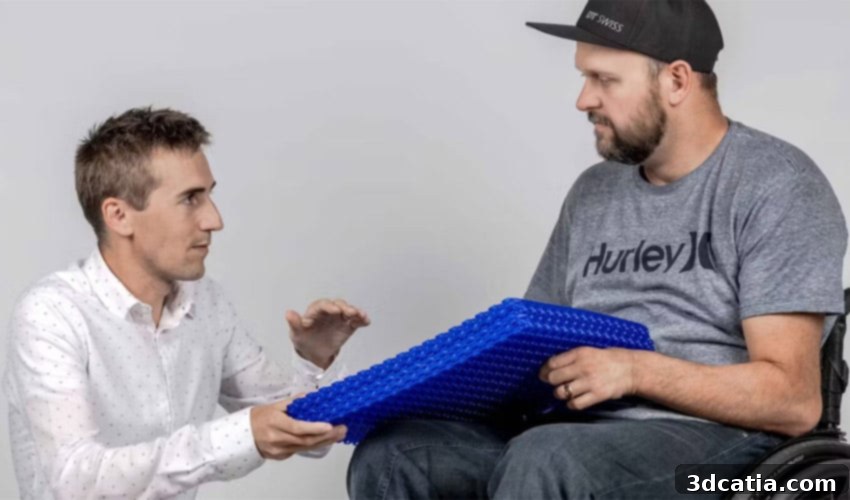
Revolutionizing Wheelchair Comfort: CSEM and SPS Develop 3D Printed Cushions to Prevent Pressure Sores
In a significant stride towards improving the quality of life for wheelchair users, CSEM, a leading Swiss technology innovation center, has collaborated with the Swiss Paraplegic Foundation (SPS) to develop an groundbreaking 3D printed medical-grade cushion. This innovative device, designed to be fully customizable and washable, represents a critical advancement, primarily aimed at preventing debilitating pressure injuries, also known as decubitus ulcers or bedsores. The partnership has meticulously engineered a sophisticated lattice structure for the cushion, not only to enhance breathability but also to optimize its overall weight. Currently, both organizations are actively seeking a manufacturing partner to help scale the production of this transformative device, making it accessible to a wider population of individuals with disabilities.
The Global Challenge of Disability and Pressure Injuries
Disability affects a substantial portion of the global population. According to data from the World Health Organization (WHO), approximately 10% of people worldwide, equating to about 650 million individuals, live with some form of disability. Within this group, a significant percentage – roughly another 10% – experience motor or physical handicaps that necessitate the use of a wheelchair, either intermittently or full-time. While wheelchairs provide essential mobility and independence, their prolonged use can unfortunately lead to a range of secondary health complications, with pressure ulcers being among the most prevalent and serious.
Pressure ulcers are severe skin and tissue injuries that develop from sustained pressure on specific areas of the body, often combined with shear forces and friction. These injuries typically occur over bony prominences such as the sacrum, ischium, and heels, where the soft tissue is compressed between the bone and an external surface like a wheelchair seat. This constant pressure restricts blood flow, leading to localized tissue ischemia and subsequent inflammation, necrosis, and ulceration. Once formed, pressure ulcers are notoriously difficult to treat, causing immense pain, increasing the risk of infection, and often requiring extensive medical intervention, including prolonged hospital stays. Beyond the physical discomfort, these wounds significantly diminish a person’s quality of life, limit their participation in daily activities, and impose substantial economic burdens on both individuals and healthcare systems.
Limitations of Traditional Wheelchair Cushion Solutions
Current medical practices offer various solutions to mitigate the risk of pressure injuries in wheelchair users. Custom-made support and seating cushions are widely available, designed to redistribute pressure and provide tailored support. These traditional cushions are typically manufactured from specialized foams, gels, or air bladders, cut and assembled to fit an individual’s specific anatomical requirements. While these solutions aim to be effective, they come with a significant set of drawbacks that often limit their accessibility and practicality for many users.
One of the primary challenges associated with conventional custom cushions is their exorbitant cost and complex production process. Each cushion must be individually designed and manufactured, a labor-intensive and time-consuming endeavor that requires specialized tools and skilled technicians. This bespoke manufacturing process contributes directly to their high price point, making them financially out of reach for a considerable number of individuals who desperately need them. Furthermore, the materials used in many traditional cushions are often dense and non-breathable, leading to heat build-up and moisture accumulation, which can exacerbate skin irritation and actually increase the risk of pressure ulcer formation. Adding to these issues, such cushions are typically difficult to clean effectively, posing a significant hygiene challenge and increasing the potential for bacterial growth and infection. Their bulk and weight can also be an impediment, reducing maneuverability and ease of use for many wheelchair users.
Additive Manufacturing: A Game-Changer for Medical Devices
In recent years, additive manufacturing, commonly known as 3D printing, has emerged as a revolutionary technology across various industries, particularly in the medical field. Its unique ability to construct complex geometries layer by layer, directly from digital designs, offers unprecedented opportunities for customization, material efficiency, and rapid prototyping. Unlike traditional subtractive manufacturing methods, 3D printing minimizes material waste and allows for the creation of intricate internal structures that were previously impossible to achieve. This design freedom is especially valuable in medical applications, where patient-specific solutions are often critical for optimal outcomes.
Additive manufacturing has already demonstrated its potential to significantly improve the daily lives of individuals with various disabilities. From custom-fitted prosthetics and orthotics that offer enhanced comfort and functionality, to personalized assistive devices that facilitate greater independence, 3D printing is continuously expanding the horizons of what’s possible in disability support. The technology allows for precise adjustments based on individual body scans, enabling devices to be perfectly tailored to a user’s unique anatomy, thereby maximizing comfort and therapeutic effectiveness. This capability is precisely what CSEM and SPS leveraged in their innovative approach to designing a superior wheelchair cushion.
CSEM and SPS’s Innovative 3D Printed Cushion
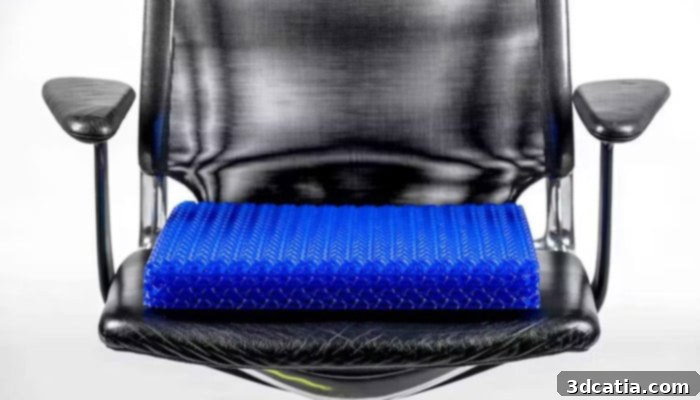
Thanks to 3D printing, the cushion offers better breathability (photo credits: SPS)
Understanding the limitations of existing solutions, CSEM and SPS harnessed the power of additive manufacturing to fundamentally redesign the wheelchair cushion. Their innovative approach began with a 3D scan of an existing cushion, providing a precise digital foundation upon which to build. Employing advanced design techniques specifically optimized for additive manufacturing, they were able to conceive and create an intricate lattice structure. This groundbreaking design is characterized by a network of interconnected air holes, which are instrumental in delivering significantly improved breathability compared to solid foam alternatives. The open nature of the lattice facilitates continuous airflow, effectively reducing heat build-up and promoting a cooler, more comfortable seating experience for the user.
The benefits of this meticulously engineered lattice structure extend beyond mere breathability. The open cellular design also plays a crucial role in superior temperature management and efficient moisture wicking. By allowing air to circulate freely and by reducing surface contact, the cushion helps to dissipate heat away from the body, preventing the moist, warm environment that often contributes to skin breakdown. Furthermore, any moisture, such as perspiration, can evaporate more readily or be wicked away through the structure, maintaining a drier and healthier skin microclimate. This multifaceted approach to cushioning directly addresses several key factors in the development of pressure injuries, offering a proactive and highly effective preventative measure.
The versatility of 3D printing allowed CSEM and SPS to strategically place material only where it was absolutely necessary, leading to a substantial reduction in the final cushion’s weight. This optimized material distribution not only enhances the cushion’s ergonomic properties but also makes it lighter and easier for users to manage, contributing to greater independence and mobility. While the specific 3D printing process employed for its creation has not been publicly disclosed, the initial results and positive feedback are profoundly encouraging, underscoring the success of their design philosophy. The medical-grade nature of the cushion further assures that it meets stringent safety and performance standards essential for healthcare applications, providing peace of mind for users and caregivers alike. Moreover, the inherent design of the lattice structure, combined with appropriate material selection, ensures that the cushion is easily washable, thereby guaranteeing superior hygiene and significantly reducing the risk of infection – a major step forward from traditional, hard-to-clean alternatives.
The Path Forward: Scaling Innovation and Seeking Partnerships
Having successfully developed and demonstrated the efficacy of their 3D printed wheelchair cushion, CSEM and SPS are now focused on the next crucial phase of their project: scaling up production. Their current objective is to find dedicated partners who can assist them in transitioning from prototype to high-volume manufacturing. This collaboration is vital to make this innovative technology widely available to the vast number of individuals who stand to benefit from it globally. The expertise of a manufacturing partner will be instrumental in optimizing production processes, ensuring quality control at scale, and navigating the complexities of bringing a medical device to market.
Christoph Joder, a key member of the team at CSEM, expressed immense pride in their achievements and shared optimism for the future: “We are very proud of what we were able to achieve with the current design and are grateful for the immediately positive feedback we have received from everyone. We remain confident about finding a partner and making this technology available to those who need it.” This sentiment underscores the collective belief in the transformative potential of their invention and their commitment to ensuring its accessibility. The journey from innovative concept to widespread availability is often challenging, but the clear benefits and strong initial reception provide a robust foundation for future success. More information about this pioneering project can be found HERE.
Enhancing Quality of Life for Wheelchair Users
The 3D printed medical-grade wheelchair cushion developed by CSEM and SPS represents more than just a technological innovation; it embodies a profound commitment to enhancing the quality of life for millions of wheelchair users. By directly addressing the critical issue of pressure injury prevention through superior design, materials, and manufacturing, this cushion promises to deliver unparalleled comfort, improved hygiene, and significantly better health outcomes. Users can look forward to reduced pain, fewer medical complications, and greater confidence in their ability to participate in daily activities without the constant worry of skin breakdown. The combination of customizability, breathability, light weight, and washability positions this cushion as a leading solution in assistive technology, offering a new standard of care.
The broader implications of this project are immense. It highlights the power of interdisciplinary collaboration between technology innovators and foundations dedicated to specific health challenges. Furthermore, it exemplifies how additive manufacturing can be strategically applied to solve real-world problems with highly personalized and effective solutions. As this technology scales, it holds the potential to reduce healthcare costs associated with pressure ulcer treatment, alleviate the burden on caregivers, and most importantly, empower wheelchair users to live fuller, more active, and healthier lives. The work of CSEM and SPS is a beacon of hope, demonstrating how advanced manufacturing can translate into tangible improvements in human well-being.
What are your thoughts on this revolutionary 3D printed wheelchair cushion and its potential impact? We invite you to share your comments below or connect with us on our LinkedIn, Facebook, and Twitter pages! Don’t miss out on the latest 3D printing news and innovations; remember to sign up for our free weekly Newsletter here, delivered straight to your inbox! You can also explore all our insightful videos on our YouTube channel.
*Cover Photo Credits: Schweizer Paraplegiker-Stiftung (SPS)