

The Raise3D DF2+ Review: Elevating Professional Resin 3D Printing with Enhanced Power and Workflow
Raise3D, a name synonymous with robust FDM 3D printers, has strategically expanded its footprint in the additive manufacturing landscape. Following its successful diversification into resin-based technologies with the launch of the DF2 at Formnext in 2023, the manufacturer is now reinforcing its commitment to high-precision DLP 3D printing with the release of the updated DF2+. Less than two years after its predecessor, the DF2+ emerges as a refined iteration, retaining the ergonomic design and user-centric experience that defined the original model while introducing a significant upgrade: a new, more powerful light source. This enhancement not only boosts print speeds but also broadens material compatibility, making the DF2+ suitable for a wider spectrum of resins, including highly demanding technical-grade materials essential for advanced professional applications.
This in-depth review focuses on the Raise3D DF2+, a machine meticulously engineered for professionals who prioritize unwavering reliability, exceptional precision, and a streamlined end-to-end workflow, from digital slicing to comprehensive post-processing. The DF2+ is a clear testament to Raise3D’s strategy to move further upmarket, solidifying its professional additive manufacturing offering across three pivotal technologies: FDM, resin (DLP), and the recently announced SLS technology. The upcoming Raise3D SLS printer, soon to be tested in the 3Dnatives Lab, underscores the company’s ambition to provide a holistic ecosystem for industrial-grade 3D printing solutions.
Unpacking the Raise3D DF2+: First Impressions of Professional Design and Build
The unboxing experience of the DF2+ immediately conveys its professional positioning. The packaging is meticulously organized, ensuring the safe transport of a machine designed for industrial environments. Upon unpacking, the printer’s substantial volume and futuristic aesthetic are striking – a design I’d even describe as almost Martian-inspired, signaling its advanced capabilities. For optimal functionality and to fully realize the seamless workflow envisioned by Raise3D, the DF2+ is ideally complemented by two dedicated post-processing machines: the DF-Wash washing station and the DF-Cure curing station. While sold separately, these units are indispensable components of the Raise3D resin printing ecosystem, designed to ensure consistent, high-quality results and reduce manual intervention.
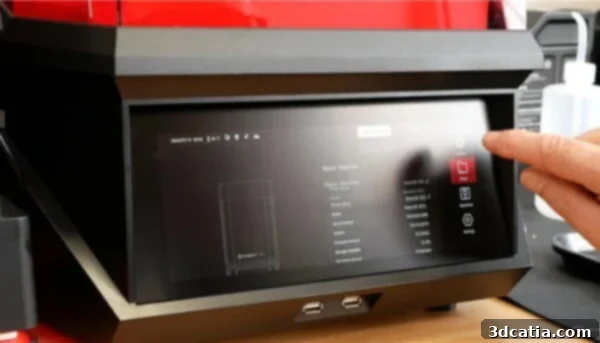
The large touchscreen on the front provides a good control experience.
A standout feature upon first glance is the prominent front panel touchscreen. Its generous size, exceptional brightness, and sharp definition immediately convey a sense of premium quality and robust engineering. This initial impression is further solidified by the overall construction of the machine, which exudes a solidity and durability expected from an industrial-grade device. The intuitive human-machine interface (HMI) provided by this display is critical for professionals, offering clear visuals and responsive interaction, which are key for efficient operation in demanding production environments.
Seamless Installation and Intuitive Start-Up
Setting up the Raise3D DF2+ is a remarkably straightforward process, presenting minimal hurdles for new users. Once the printer is physically placed and connected to power and network, the integrated touchscreen interface takes command, guiding you through a series of initial configuration steps. These steps include automatic build platform calibration, a crucial process ensuring consistent print accuracy, thorough component verification, and essential network configuration. While navigating the various menus initially requires a brief period of familiarization, and some advanced functions may feel slightly hidden, the learning curve is gentle, and users quickly become proficient with the system.
From an ergonomic perspective, the touchscreen’s responsiveness is highly commendable, contributing to a fluid user experience. However, a minor area for refinement lies in the organization of certain parameters, which could benefit from clearer structuring to enhance discoverability. Finding specific print settings or accessing advanced diagnostic tools might take a few extra moments at first. Despite this minor point, the overall design of the user interface is well-conceived, aiming to simplify complex operations. The DF2+’s print bed features an automatic locking mechanism for secure operation, with an included manual key providing an essential override for maintenance or specific operational needs, showcasing thoughtful engineering for both safety and flexibility.
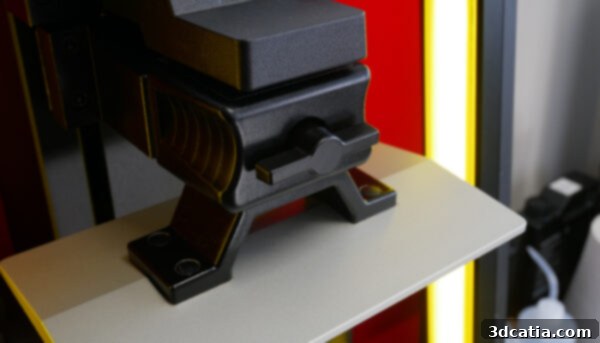
The DF2+’s print bed locks automatically, but a key included with the printer also allows manual control.
A detail that impacts daily usage, particularly in quiet professional settings, is the auditory feedback from the printer and its post-processing stations. Navigating menus often triggers distinct beeps. While the printer offers an option to deactivate these sounds, the post-processing machines emit persistent beeps during start-up, regardless of user settings. Furthermore, a noteworthy operational characteristic is the printer’s LED ribbons, which continuously blink once a print job is complete, persisting until an operator physically intervenes. While intended as a clear visual alert for job completion, this can become an intrusive feature, especially when initiating print runs at the end of the workday or before a weekend, potentially disrupting the work environment unnecessarily. Offering timed alerts or more configurable notification options could significantly enhance the user experience.
Powerful Software and Expanding Ecosystem Applications
Raise3D leverages its established software ecosystem to support the DF2+, featuring its proprietary slicer, IdeaMaker. This powerful software, already well-regarded by FDM machine users, has been specifically adapted for resin printing. The update includes a slightly reworked interface and optimized profiles tailored for DLP technology. The overall experience with IdeaMaker for resin is highly positive: it offers a wealth of options for customization, automatic support generation is robust and effective, and the print parameters are sufficiently advanced to satisfy experienced users seeking fine control over their prints. Features like hollowing, drain holes, and precise support structure customization are all readily available, making it a comprehensive tool for preparing complex resin models.
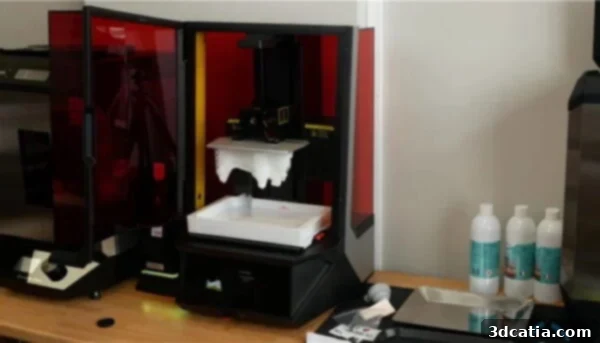
The Raise3D DF2+ can be connected remotely using the Raise3D Cloud, accessible via the web or ideaMaker.
Complementing IdeaMaker, Raise3D also provides the RaiseCloud platform, a cloud-based solution designed for remote print management and comprehensive fleet supervision. This platform holds immense potential for professional environments operating multiple machines, enabling centralized monitoring, job queuing, and data analytics. However, during the period of this review, the DF2+ was not yet fully integrated with the RaiseCloud platform, which somewhat limited its immediate utility for this specific machine. We anticipate that a forthcoming software update will bridge this gap, unlocking the full benefits of cloud-based management for the DF2+. Similarly, a mobile application is available for printer management, but it currently remains heavily optimized for FDM machines, leaving considerable room for improvement in its functionality and user experience when paired with a resin printer.
Exceptional Print Quality with Room for Workflow Refinement
Throughout this extensive testing period, I utilized a range of resins provided by Raise3D, including a standard resin, a High Detail resin, and a more technically demanding Tough 2K resin. Across all materials, the resulting print quality was consistently impressive and highly satisfactory. Models exhibited excellent definition, with exceptionally few visible layer lines, and remarkably crisp details. This was particularly evident with the High Detail resin, which allowed for the precise capture of intricate geometries and fine textures, demonstrating the DF2+’s capability for producing high-fidelity parts critical for prototyping, dental, or jewelry applications.
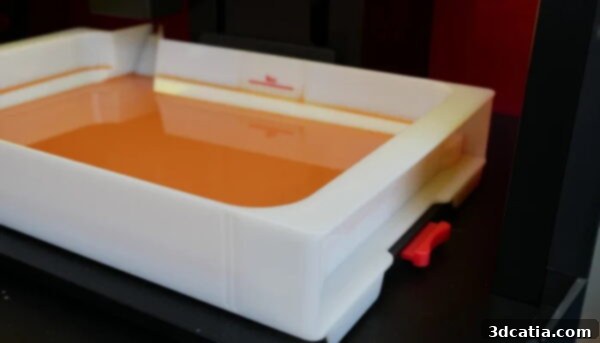
The resin tank (vat) can be removed and reinstalled in just a few moments using fixing clips.
The stability of the printing process was equally remarkable; no print failures were observed during any of my tests, and the machine demonstrated consistent performance across numerous print jobs. This level of reliability strongly supports the notion of a product specifically engineered to meet the stringent demands of professional environments, where consistent output and minimal waste are paramount.
However, not every aspect is entirely without its nuances. I observed that printed parts exhibited a tendency to adhere very strongly to the build platform, sometimes excessively so. Removing these parts could be quite challenging, especially for models with thin bases or delicate features, which were prone to breaking during the detachment process. This phenomenon appears to stem primarily from an overexposure of the initial layers, a common issue on many resin printers. Raise3D could significantly improve this aspect by offering more finely optimized base exposure profiles or providing clearer, more detailed recommendations for adjusting initial layer settings based on different resin types and part geometries. Such refinements would reduce post-processing effort and minimize part damage.
Another area where the workflow could be refined is the resin feeding system. While the automatic resin feeding mechanism functions effectively once properly set up, the initial installation procedure is somewhat restrictive. Users must first manually pour a small amount of resin into the tank before securely placing the cartridge onto the external dispensing station. Moreover, if a different type of resin is introduced, the feeding hose and pump system must be replaced entirely to prevent cross-contamination between materials. This adds a layer of complexity to daily operational management, particularly for users frequently switching resins. An integrated system, similar to those offered by other manufacturers, where cartridges load directly into the printer and manage contamination more seamlessly, could greatly simplify this critical step.
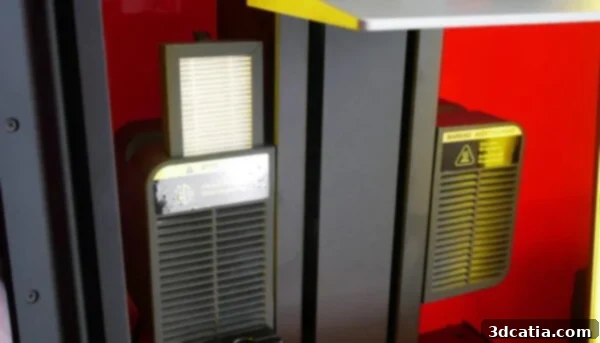
The DF2+’s internal filter helps reduce resin odors and fumes, although it is still important to use the printer in a well-ventilated area.
A more significant drawback, depending on the specific operational context, is the absence of a print resume function in the event of a power outage or intentional machine shutdown. Should the printer cease operation mid-job, whether due to an electrical interruption or manual shutdown, it will detect the interruption upon restart. However, instead of offering an option to resume the print from where it left off, the system merely prompts the user to remove the failed part and clean the build platform, effectively terminating the process. In professional settings where stable power supply isn’t always guaranteed, or in situations requiring planned interruptions, this limitation can lead to considerable material waste, lost production time, and a tangible impact on project timelines. Implementing a robust print resume feature would dramatically enhance the DF2+’s reliability for industrial applications.
Optimized Workflow and Automated Post-Processing
The comprehensive workflow offered by Raise3D with the DF2+ and its accompanying stations stands out as one of its most compelling advantages. The entire ecosystem is designed to be fluid, coherent, and highly optimized for professional environments, significantly reducing manual labor and potential for error. Once a print job is successfully completed on the DF2+, the build tray can be effortlessly transferred to the dedicated DF-Wash wash station. A key innovation here is the integrated RFID reading system, which automatically identifies the specific parameters associated with the resin used. This intelligent system then autonomously initiates an appropriate cleaning cycle, eliminating the need for manual adjustments and ensuring consistent, effective part cleaning every time.
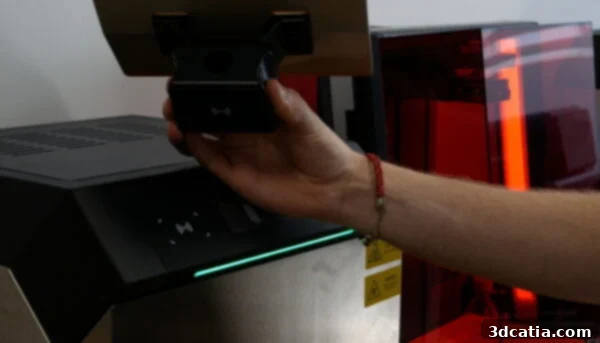
The workflow is greatly simplified by the use of RFID chips for material identification and semi-automation of post-processing.
The DF-Wash also boasts an automatic isopropyl alcohol (IPA) drainage system, channeling used solvent into a secondary, purpose-built tank. This feature is enhanced by a resistance sensor that actively monitors the liquid level, preventing any potential overflow. Should the liquid in the drainage tank reach a critical level, the system automatically shuts off the drainage, significantly facilitating maintenance and bolstering user safety by minimizing exposure to hazardous chemicals. This thoughtful integration underscores Raise3D’s commitment to creating a safe and user-friendly post-processing environment.
Following the washing phase, the cleaned build tray is then moved to the DF-Cure polymerization station. Here again, RFID technology plays a crucial role; the station automatically detects the necessary curing parameters based on the identified resin. This seamless identification triggers an automated post-polymerization cycle, guaranteeing optimal curing conditions specifically tailored to the resin used, all without requiring any operator intervention. This level of automation is invaluable for achieving consistent mechanical properties and surface finishes across all printed parts.
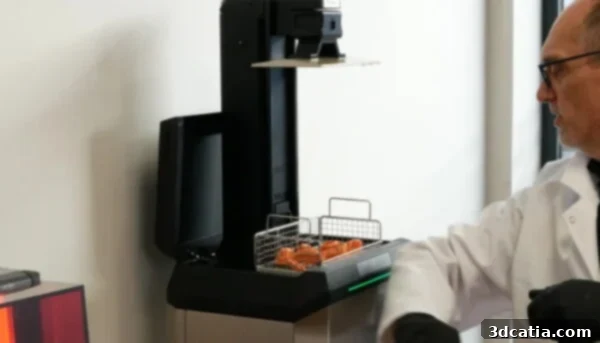
The post-treatment stations have sensors allowing automatic opening and closing by simply pressing the elbow.
Beyond this highly appreciated automation, both post-processing stations incorporate a touch-free opening system, activated by a simple wave of a hand or elbow. This ergonomic design is particularly practical and hygienic, especially when operators are wearing resin-covered gloves, further minimizing contamination risks and enhancing efficiency. Such attention to detail in ergonomics and hygiene is a strong contributor to an excellent user experience, aligning perfectly with the rigorous standards of professional and industrial environments where cleanliness and reduced handling are paramount.
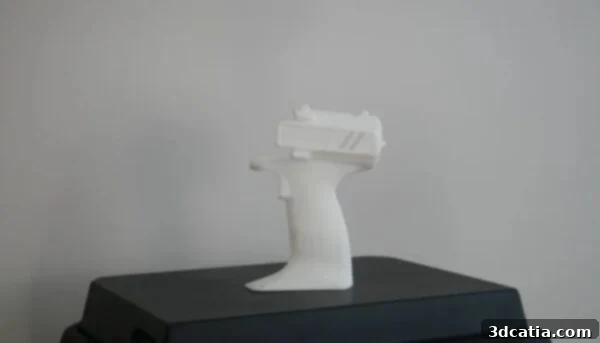
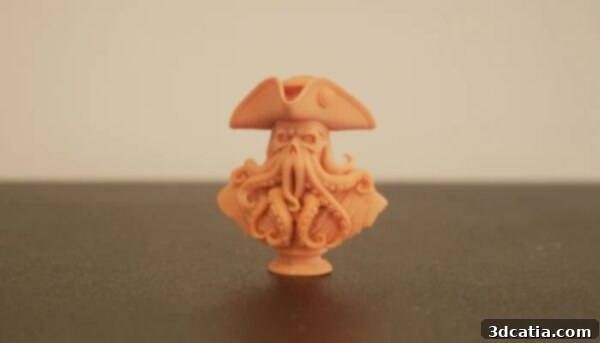

The combination of the Raise3D DF2+ printer with its integrated post-processing package forms a truly coherent and highly efficient solution. This integrated approach significantly streamlines the daily workflow while consistently maintaining the high quality standards that professionals demand. Despite a few minor points for improvement, such as the initial part adhesion and the absence of a print resume function, the DF2+ system delivers on its promise of precision, reliability, and a user-friendly experience for advanced resin additive manufacturing. Raise3D continues to demonstrate its commitment to building a comprehensive ecosystem, making the DF2+ a compelling choice for businesses looking to enhance their rapid prototyping and production capabilities with DLP technology.