
ADAPT: MIT’s New Consortium Driving Innovation in Additive Manufacturing and Digital Production
The Massachusetts Institute of Technology (MIT), a world-renowned American research institute synonymous with pioneering technological advancements, has proudly announced the establishment of a groundbreaking consortium dedicated to the rapidly evolving field of additive manufacturing. This new entity, aptly named ADAPT (which stands for Additive and Digital Advanced Production Technologies), is poised to become a central hub for collaboration, research, and education at the intersection of academia and industry. The core mission of this innovative business association is multifaceted: to identify and foster visionary research initiatives, to develop scalable educational platforms that prepare the future workforce, and to articulate exploitable strategic perspectives, all underpinned by a robust university-industry ecosystem designed to accelerate the adoption and advancement of additive manufacturing technologies.
Additive manufacturing, often more widely known as 3D printing, has transcended its initial reputation as a niche prototyping tool to emerge as a pivotal production method across a multitude of sectors. Its transformative potential is now recognized by a diverse range of stakeholders, from educational institutions shaping the next generation of engineers and designers to global industries seeking more efficient and flexible manufacturing solutions. Consequently, initiatives aimed at promoting and expanding its use are proliferating worldwide. These efforts often take the form of strategic consortia – much like the one Microsoft had launched three years prior to ADAPT – or through the integration of numerous school and university courses focused on 3D technologies. The overarching objective remains clear: to democratize access to and understanding of these advanced manufacturing techniques, thereby paving the way for more efficient production methods that yield significant benefits in terms of both cost reduction and accelerated time-to-market. ADAPT’s specific ambition is to cultivate a vibrant community of key strategic players within the additive manufacturing market, with the express purpose of harnessing unique resources and collective expertise to drive industry-specific projects and cutting-edge research.

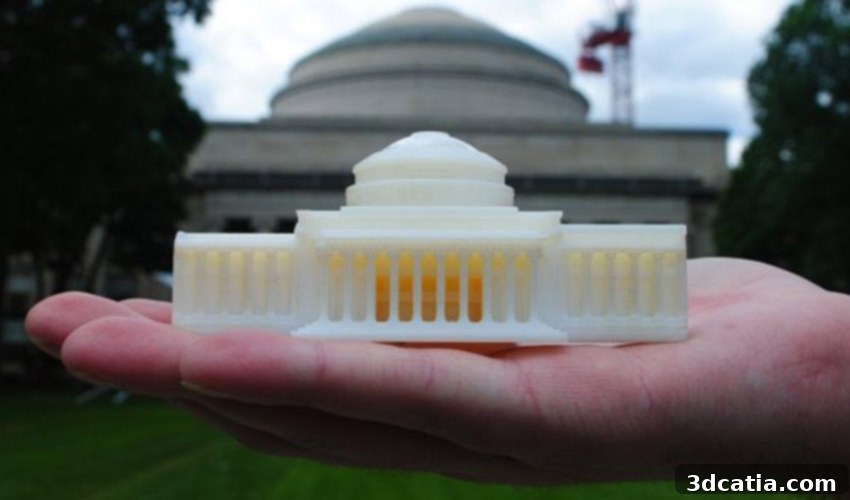
MIT will be the seat of this new consortium
ADAPT: Bridging Academia and Industry for Advanced Production
The formation of ADAPT marks a significant milestone in the journey of additive manufacturing, bringing together the unparalleled academic prowess of MIT with the practical insights and industrial scale of leading global corporations. This consortium is designed to be a dynamic interface where fundamental research translates directly into industrial application, and where real-world challenges inform academic inquiry. By creating a formalized structure for this collaboration, ADAPT aims to overcome traditional barriers between theoretical exploration and practical implementation, fostering an environment where innovation can flourish and be rapidly scaled.
The esteemed list of founding companies involved in this consortium reads like a who’s who of the industry, encompassing major players from various segments of the additive manufacturing ecosystem. Renowned innovators in hardware and software such as Autodesk, Renishaw, EOS, Formlabs, and Mimaki have committed their expertise and resources. Beyond these specialized additive manufacturing giants, the consortium also benefits from the deep industrial experience of large manufacturing groups like General Motors and Volkswagen, signaling the profound impact that advanced manufacturing technologies are expected to have on mass production and supply chains. The collective contributions from these industry leaders are critical; they will be strategically channeled to fund ambitious research projects exploring diverse additive manufacturing technologies, from material science breakthroughs to process optimization. Furthermore, these contributions will facilitate comprehensive strategic analyses of both the current capabilities and the projected future potential of these transformative technologies, ensuring that ADAPT’s research remains highly relevant and impactful for industrial adoption.
At the helm of ADAPT is Professor John Hart, a leading authority in the field and an Associate Professor of Mechanical Engineering at MIT. His vision for the consortium is both ambitious and pragmatic. Professor Hart emphasizes the inherently interdisciplinary nature of additive manufacturing, stating, “AM and the path toward a responsive, digital manufacturing infrastructure both within and between organizations — requires multidisciplinary expertise at the cutting edge of mechanical engineering, computer science, and materials.” This statement underscores the need for a holistic approach, integrating insights from diverse scientific and engineering disciplines to truly unlock the potential of advanced production technologies. He continues, expressing his profound excitement for the initiative: “I am thrilled to launch ADAPT to accelerate MIT’s efforts toward enabling the next generation of production technologies, wherein AM is a cornerstone.” Professor Hart’s leadership ensures that ADAPT will not only push the boundaries of fundamental research but also focus on practical applications that can redefine global manufacturing landscapes. The consortium is uniquely positioned to address critical challenges such as materials development, process control, design optimization for additive manufacturing, and the integration of these processes into existing digital manufacturing workflows.
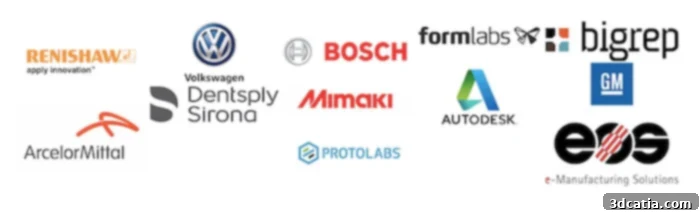
The companies behind ADAPT
Empowering the Next Generation: Education and Innovation at MIT
Beyond groundbreaking research and strategic analyses, a critically important facet of the ADAPT consortium is its commitment to nurturing the next generation of talent in advanced manufacturing. This involves creating a robust pipeline that directly links MIT’s bright and innovative students with leading industry players. This symbiotic relationship provides immense benefits: students gain invaluable real-world experience, mentorship, and exposure to cutting-edge industrial challenges, while companies gain access to fresh perspectives, novel ideas, and a highly skilled future workforce. To further facilitate this hands-on learning and research, a new, state-of-the-art advanced additive manufacturing laboratory is slated to open its doors at the technology institute. This lab, a brainchild of dedicated professors and enthusiastic students, will serve as a fertile ground for experimentation, innovation, and the development of new processes and materials, cementing MIT’s role as a global leader in additive manufacturing research and education.
Furthermore, ADAPT is dedicated to developing and implementing new, specialized training programs at MIT, designed to equip professionals and students with the critical skills needed to thrive in the evolving landscape of digital production. Among these pioneering programs is “Additive Manufacturing for Innovative Design and Production,” a meticulously crafted curriculum certified in collaboration with Protolabs, a leading provider of on-demand manufacturing services. This partnership ensures that the program’s content is not only academically rigorous but also directly relevant to industry needs, covering topics from advanced design principles for additive manufacturing to material selection and process optimization. These educational initiatives are crucial for scaling up the adoption of additive manufacturing, ensuring that there is a knowledgeable workforce capable of leveraging these technologies effectively. Such programs are essential for driving innovation, enabling companies to integrate 3D printing into their product development cycles and supply chains, ultimately fostering economic growth and technological leadership. For those interested in delving deeper into the consortium’s objectives, ongoing projects, and educational offerings, comprehensive information can be found on MIT’s dedicated website HERE.
The Broader Impact of ADAPT on the Future of Manufacturing
The establishment of ADAPT by MIT is more than just the creation of another research group; it represents a strategic, long-term investment in the future of manufacturing. The consortium’s work is anticipated to have far-reaching ripple effects, influencing not only the additive manufacturing industry but also broader technological innovation and global economic development. By fostering a collaborative environment, ADAPT is poised to accelerate breakthroughs in materials science, leading to the development of new alloys, polymers, and composites specifically tailored for 3D printing applications, thereby expanding the possibilities of what can be manufactured. Moreover, research into process control and automation will enhance the reliability and repeatability of additive manufacturing, making it suitable for even more critical industrial applications. This will contribute significantly to the decentralization of manufacturing, allowing companies to produce parts closer to the point of need, reducing logistical costs, and bolstering supply chain resilience.
Ultimately, ADAPT’s initiatives are designed to position additive manufacturing as a cornerstone of the next industrial revolution, transforming how products are designed, produced, and consumed. The synergy between MIT’s academic excellence and the industrial prowess of its partners will likely lead to standardized practices, improved software tools, and more accessible technologies, democratizing advanced manufacturing for a wider audience. This concerted effort will not only drive innovation within partner companies but also stimulate the growth of startups and smaller enterprises, creating new economic opportunities and jobs. The impact of ADAPT will extend to influencing policy-making, setting new benchmarks for sustainability in manufacturing, and preparing a global workforce for the demands of highly digital and agile production systems. As additive manufacturing continues to evolve, ADAPT will play a crucial role in shaping its direction, ensuring that its potential is fully realized for the benefit of industry, society, and future generations.
What are your thoughts on the ADAPT consortium and its potential to revolutionize additive manufacturing? We invite you to share your perspectives and engage in the conversation by leaving a comment below or by connecting with us on our Facebook and Twitter pages! Don’t miss out on the latest advancements and breaking news in the world of 3D printing; remember to sign up for our free weekly Newsletter, delivering all the essential updates straight to your inbox!