

The Future of Metal Additive Manufacturing: Market Growth, Key Drivers, and Innovations Reshaping Industry
The global landscape of industrial production is undergoing a profound transformation, with metal additive manufacturing leading the charge. A recent insightful report from the distinguished research firm Technavio paints a compelling picture of this burgeoning market. According to their comprehensive analysis, the metal AM segment is poised for extraordinary growth, projected to surge by an impressive $4.42 billion during the forecast period of 2020-2024. This significant expansion translates into a remarkable compound annual growth rate (CAGR) of 14%, signaling a robust and dynamic sector. This acceleration is not uniform across all industries but is expected to be primarily energized by the highly demanding automotive sector. The industry’s increasing embrace of additive manufacturing is driven by a critical need to produce components that are lighter, more intricately designed, and capable of superior performance—attributes that are particularly invaluable for the fiercely competitive motorsports segment. Furthermore, Technavio’s study highlights a parallel trend: a substantial increase in investment across research and development. This commitment underscores a collective industry effort by manufacturers to pioneer and adopt faster, more efficient, and truly innovative additive manufacturing processes to meet escalating market demands.
The past decade has been a pivotal era for metal 3D printing, witnessing a genuine revolution in technological accessibility and affordability. This surge can be attributed, in large part, to the emergence of innovative manufacturers dedicated to democratizing these advanced technologies by significantly reducing their prohibitive costs. Trailblazing companies such as Desktop Metal and Markforged have played a crucial role in this paradigm shift. By strategically leveraging systems akin to Metal Injection Molding (MIM), they have successfully introduced machines that were once priced in the hundreds of thousands, if not millions, of dollars, to a much broader market, making them accessible at a fraction of their former cost. It comes as no surprise, then, to observe the vigorous expansion of metal additive manufacturing. Beyond cost reduction, another powerful catalyst for growth is the increasing adoption of 3D printing technologies for the direct production of high-performance end-use parts. This trend is particularly evident in historically metal-intensive sectors like aerospace, automotive, and medical, which have long been significant consumers of advanced metals and alloys. The ability to rapidly iterate, customize, and produce complex, functional components on demand has fundamentally changed how these industries approach manufacturing and product development.
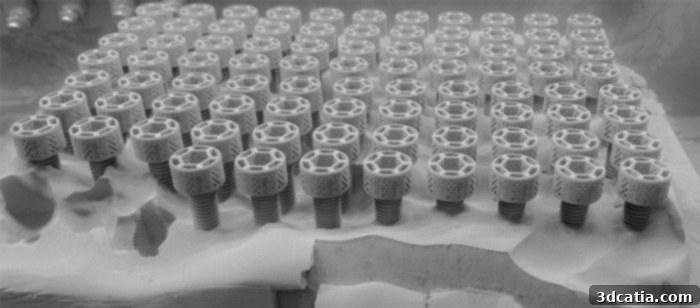
Metal additive manufacturing is revolutionizing production by enabling direct manufacturing of complex end-use parts.
Technavio’s latest study, aptly titled “Global Metal Additive Manufacturing 2020-2024,” not only projects a substantial progressive growth of $4.42 billion through 2024 but also meticulously details the geographical distribution of this expansion. North America is forecasted to be the leading region, accounting for an impressive 32% of the market share, closely followed by robust contributions from Europe and Asia Pacific. This year, the growth rate is anticipated to achieve 13.45%, reflecting sustained momentum. Reaffirming earlier observations, Technavio emphatically identifies the automotive market as the primary engine driving this remarkable increase. Manufacturers within the automotive industry are increasingly viewing metal AM as an indispensable tool for crafting lighter, more intricate, and ultimately higher-performance spare parts and final end-use components. This strategic shift empowers them to achieve superior performance metrics for their vehicles while simultaneously accelerating their time-to-market for new designs and products. This competitive advantage is particularly pronounced in high-stakes environments such as Formula 1 racing, where marginal gains can translate into significant competitive differentiation. Several elite F1 teams, including the iconic Scuderia Ferrari and Williams Martini Racing, have already integrated metal additive manufacturing extensively into their production workflows. They leverage 3D printing to create an array of critical components, ranging from advanced rear spoilers and aerodynamic body parts to intricate elements for gearbox assemblies, all designed to maximize performance and minimize weight.
Beyond the automotive powerhouse, metal additive manufacturing is carving out significant niches and delivering transformative solutions across a multitude of other vital application sectors. The aerospace industry, for instance, remains a cornerstone of AM adoption. Here, the ability to produce incredibly lightweight yet exceptionally strong components with highly complex internal structures is paramount for optimizing fuel efficiency, reducing overall aircraft weight, and enhancing performance in extreme operating conditions. From critical engine components to structural brackets and airframe parts, metal AM ensures precision and durability. Another burgeoning sector is molding and tooling, where additive manufacturing facilitates the creation of highly efficient conformal cooling channels within molds, drastically improving cycle times and product quality for traditional manufacturing processes. Furthermore, the medical sector stands out with particularly robust growth, significantly bolstered by the dynamic dental market. The strong demand for customized and patient-specific implants in North America, encompassing everything from dental crowns and bridges to orthopedic implants and surgical guides, is driving innovation and adoption. This represents excellent news for prosthetists, dentists, and patients alike, promising more personalized, effective, and rapidly produced medical solutions.
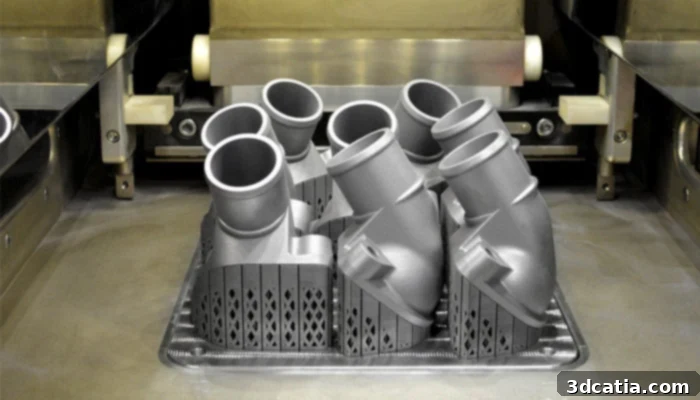
Metal additive manufacturing is experiencing rapid growth, significantly propelled by innovations within the automotive sector.
The pervasive growth of metal additive manufacturing is inherently linked to intensified investment in research and development. As the market becomes increasingly competitive and mature, manufacturers are compelled to continuously innovate, developing more sophisticated and efficient solutions that directly address the evolving requirements of industrial clients. This drive for innovation encompasses advancements in material science, machine speed and precision, post-processing automation, and software optimization. A leading Technavio analyst insightfully states: “Vertical integration is now preferred, and strategic alliances are more numerous: these two factors will further stimulate market growth over the forecast period.” This strategic shift towards vertical integration – where companies control more stages of the production process, from raw materials to finished parts – enhances efficiency, reduces costs, and improves quality control. Simultaneously, a proliferation of strategic alliances and partnerships between hardware manufacturers, software developers, material suppliers, and end-users fosters collaborative innovation and accelerates market penetration. These concerted efforts are collectively pushing the boundaries of what is possible with metal additive manufacturing, ensuring its sustained expansion and integration into an ever-wider array of industrial applications. For those interested in a deeper dive into these market dynamics and future projections, the comprehensive study can be purchased HERE.
The trajectory for metal additive manufacturing appears undeniably upward, promising continued innovation and transformative impact across various sectors. Its ability to create complex, high-performance, and customized parts with unprecedented speed and efficiency positions it as a cornerstone technology for the factories of the future. The convergence of technological breakthroughs, strategic industry collaborations, and an ever-expanding range of applications solidifies metal AM’s role as a critical driver of industrial progress. We invite you to share your thoughts on these exciting developments for the metal additive manufacturing segment. Do you foresee even greater integration into everyday manufacturing, or specific challenges that need to be overcome? Let us know your perspective in a comment below or join the conversation on our Facebook and Twitter pages! For all the latest news, trends, and innovations in the world of 3D printing, don’t forget to sign up for our free weekly Newsletter, delivered straight to your inbox!