
The Ultimate Guide to Resin 3D Printing: Understanding SLA, DLP, and MSLA Technologies
Resin 3D printing, also widely known as vat photopolymerization, stands as one of the most sophisticated and popular families of additive manufacturing technologies available today. Revered for its ability to produce incredibly precise, highly detailed, and aesthetically superior parts, it has become an indispensable tool across numerous industrial sectors. From crafting intricate jewelry and precision dental prosthetics to facilitating rapid prototyping for complex engineering designs, resin 3D printing consistently delivers results that meet the highest standards of quality and accuracy. This comprehensive guide will delve deep into the mechanics of how resin 3D printing works, explore its primary technological variations – Stereolithography (SLA), Digital Light Processing (DLP), and Masked Stereolithography (MSLA) – and highlight its expansive range of applications and future potential.
Understanding the Core Principles of Resin 3D Printing
At its heart, resin 3D printing relies on a fundamental principle: the solidification of a photosensitive liquid resin when exposed to ultraviolet (UV) radiation. This remarkable process, known as photopolymerization, allows for the creation of three-dimensional objects layer by painstaking layer. The liquid resin, often housed in a transparent tank or vat, contains monomers and oligomers that, when subjected to specific wavelengths of UV light, undergo a chemical reaction. This reaction causes them to link together, forming long, cross-linked polymer chains that solidify into a robust plastic material. The precision of this light exposure dictates the accuracy and detail of the final printed part, making the light source and its control mechanisms crucial to the technology.
While the underlying principle remains consistent, the method of delivering and shaping this UV light distinguishes the three primary categories of resin 3D printing: Stereolithography (SLA), Digital Light Processing (DLP), and Masked Stereolithography Apparatus (MSLA). Each method offers unique advantages in terms of speed, resolution, build volume, and cost, catering to a diverse array of manufacturing requirements.
Stereolithography (SLA): The Pioneer of Resin Printing
Stereolithography, or SLA, is the original form of vat photopolymerization. It was pioneered and patented in 1986 by Chuck Hull, co-founder of 3D Systems, marking a pivotal moment in the history of additive manufacturing. The SLA process employs a highly precise UV laser to meticulously draw and cure each layer of the object within a vat of liquid photosensitive resin. This laser beam is directed by a system of movable mirrors, known as galvanometers, which accurately guide the laser along the X and Y axes, tracing the cross-section of the part layer by layer. As each layer is cured, the build platform descends incrementally (or ascends, depending on the printer’s orientation), and a new layer of liquid resin is exposed to the laser, progressively building the desired three-dimensional object from the bottom up.
SLA printers are renowned for their exceptional surface finish and the ability to capture incredibly fine details, making them ideal for applications where aesthetic quality and intricate geometries are paramount. However, the point-by-point curing method of a laser can make SLA slower than other resin technologies, particularly for larger prints or multiple parts. Despite this, its precision remains unmatched in many scenarios, often preferred for its smooth surfaces and isotropic mechanical properties.
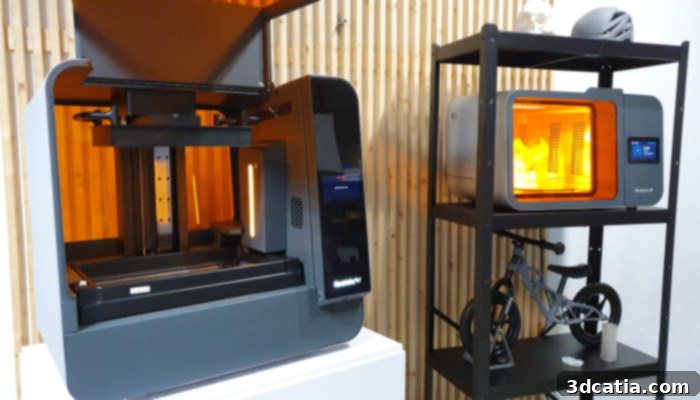
Formlabs’ Form 3L is a resin printer that uses the SLA printing process, demonstrating the high-quality output achievable with this technology. Check out our test!
Digital Light Processing (DLP): Speed Through Projection
Digital Light Processing, or DLP, offers a significant speed advantage over traditional SLA for many applications. This technology was originally developed and patented by Texas Instruments for use in projectors. In DLP 3D printing, instead of a laser tracing individual points, a digital light projector is used to project an entire image of each layer onto the resin tank simultaneously. The UV light from the projector is directed by a digital micromirror device (DMD) chip, which contains millions of tiny, individually controlled mirrors. These mirrors tilt to reflect or block the UV light, effectively “drawing” the entire cross-section of a layer at once.
Because an entire layer is cured in a single flash of light, DLP printers can achieve much faster print speeds, especially when producing multiple parts on the same build platform, as the curing time per layer remains constant regardless of the part’s complexity or quantity. This makes DLP particularly efficient for batch production and medium-volume manufacturing. While DLP printers generally offer excellent resolution, the quality can sometimes be tied to the projector’s pixel density, which might limit the maximum build volume without sacrificing detail, leading to a trade-off between print area and resolution.
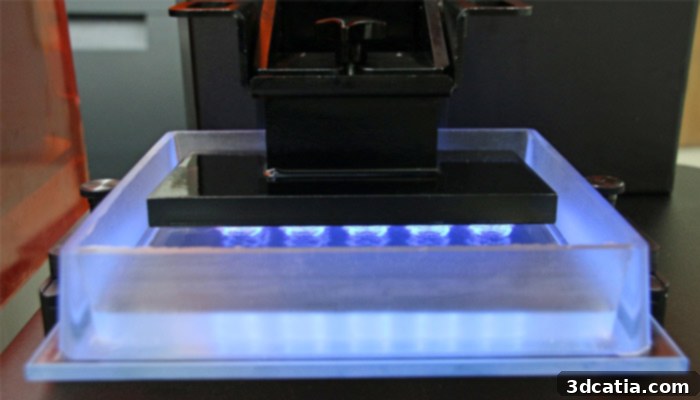
DLP allows you to create serial objects much faster than SLA, ideal for manufacturing batches of parts with consistent quality. Learn more about the capabilities of these technologies (photo credits: EnvisionTec)
Masked Stereolithography Apparatus (MSLA): Accessible High-Resolution Printing
Masked Stereolithography Apparatus, often simply referred to as MSLA (or sometimes LCD 3D printing), has rapidly gained popularity, particularly in the consumer and prosumer markets, due to its impressive balance of precision, speed, and affordability. Similar to DLP, MSLA cures entire layers simultaneously, but it does so by using an LCD screen as a dynamic mask for a broad UV light source, typically an array of UV LEDs. The LCD screen, composed of individual pixels, selectively blocks or allows UV light to pass through to the resin. By switching each pixel on or off, the LCD acts as a digital stencil, creating the 2D shape of each layer and curing the resin accordingly.
The primary advantage of MSLA lies in its cost-effectiveness. LCD screens are relatively inexpensive compared to DLP projectors or high-precision laser systems, making MSLA printers significantly more accessible. Furthermore, the resolution of an MSLA printer is determined by the pixel density of its LCD screen. With the continuous improvement in LCD technology, these printers can achieve incredibly high resolutions, producing parts with fine details comparable to SLA, and often faster due to whole-layer curing. The main considerations for MSLA include the finite lifespan of the LCD screen, which degrades over time due to UV exposure, and potentially lower light intensity compared to direct laser or projector systems, which can affect cure times for certain resins, especially those with high pigment content.
MSLA 3D printing is becoming increasingly popular, helping to reduce the entry cost of high-precision resin printing while offering remarkable detail and quality. Find out how it differs from SLA printing.
Shared Architecture and Fundamental Components
Despite their differences in light source and curing methodology, all three main resin 3D printing technologies (SLA, DLP, and MSLA) share a similar fundamental architecture and critical components necessary for the additive manufacturing process. Understanding these shared elements is key to grasping the overall functionality of resin printers and ensuring successful prints.
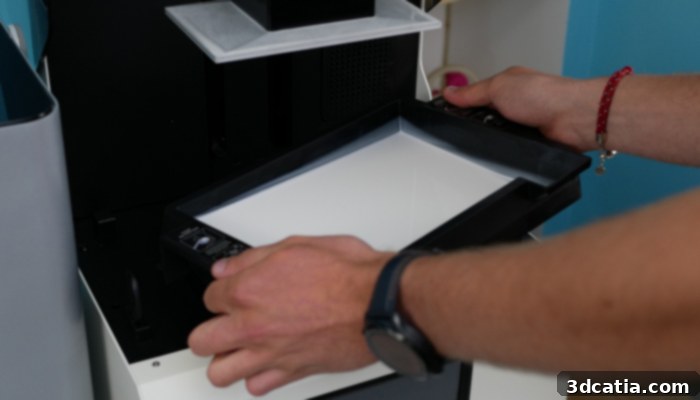
- A Resin Tank (Vat): This is a crucial component that holds the liquid photosensitive resin during the printing process. The bottom of the vat is typically transparent and features a non-stick film, often FEP (Fluorinated Ethylene Propylene) or nFEP (non-stick FEP), which allows UV light to pass through while preventing the cured resin from permanently adhering to the bottom. This film facilitates the delicate “peeling” or separation of each cured layer from the vat as the build plate moves, minimizing stress on the freshly formed part.
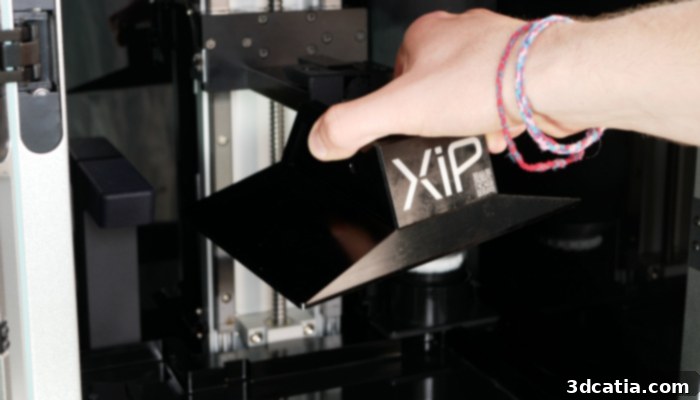
- A Printing Plate (Build Platform): Also known as a build platform, this component moves along the Z-axis, either descending into the resin or ascending out of it, depending on the printer’s design (bottom-up or top-down configuration). The first layer of the print adheres firmly to this plate, and subsequent layers build upon it, incrementally forming the final object. The precise, controlled movement of the build plate is critical for maintaining accurate layer height and overall dimensional accuracy of the printed part.
Technological Variants and Innovations in Resin Printing
Beyond the foundational SLA, DLP, and MSLA technologies, manufacturers are continuously pushing the boundaries of innovation, developing proprietary variants aimed at optimizing performance, enhancing precision, accelerating speed, or introducing new functionalities. These advancements highlight the dynamic nature of the resin 3D printing landscape and its ongoing evolution.
- Low Force Stereolithography (LFS) by Formlabs: Formlabs developed LFS as an evolution of traditional SLA, specifically implemented in their Form 3 and Form 3L printers. This technology aims to improve printing precision and reliability by significantly reducing the peel forces experienced during the printing process. Unlike older SLA methods where the part is directly peeled from the rigid vat floor, LFS utilizes a flexible tank and a compliant layer that gently separates the freshly cured layer from the tank. This minimized force results in more consistent prints, better accuracy, and the ability to print larger, more delicate parts with fewer failures, ultimately enhancing the overall printing experience and expanding the range of printable geometries.
- Digital Light Synthesis (DLS) by Carbon: Carbon’s DLS technology represents a significant advancement built upon the principles of DLP. Its standout feature is its remarkable printing speed, often several times faster than conventional DLP or SLA methods. DLS achieves this through a unique “continuous liquid interface production” (CLIP) process. It employs a special oxygen-permeable window at the bottom of the resin tank, which creates a “dead zone” – a very thin, uncured layer of resin that prevents the part from sticking to the window. This allows the printer to pull the part continuously out of the resin, rather than stopping and peeling after each layer, enabling unprecedented print speeds for production-grade parts, making it suitable for mass customization and high-volume manufacturing.
- Viscous Lithography Manufacturing (VLM) by BCN3D: BCN3D has patented VLM technology, which uses MSLA as its foundation but introduces advanced functionalities, most notably multi-material printing. VLM works by projecting UV light onto a thin film of highly viscous resin, which is deposited and controlled with high precision onto a moving conveyor belt-like surface. This approach allows for the printing of highly viscous resins that are typically challenging for traditional vat photopolymerization methods, opening doors for advanced engineering materials with enhanced mechanical properties. Its multi-material capabilities mean different resins can be used within a single print, enabling the creation of parts with varying mechanical properties, colors, or textures, significantly expanding design possibilities for complex functional assemblies.
These technological variants underscore the ongoing commitment to refine resin 3D printing, making it more versatile, efficient, and capable of addressing an even broader spectrum of industrial and creative challenges, pushing the boundaries of what is possible with additive manufacturing.
Essential Post-Processing for Resin 3D Prints
One of the critical aspects distinguishing resin 3D printing from other additive manufacturing methods is the mandatory post-processing required for all printed parts. Unlike FDM prints that often come off the printer ready for immediate use, resin prints emerge from the vat with a sticky, uncured layer of liquid resin on their surface. Furthermore, the initial polymerization during printing is typically only partial; the parts need additional curing to achieve their optimal mechanical properties. Proper post-processing is crucial for both aesthetic quality, functional performance, and safety.
- Washing (Cleaning): The first and most critical step involves thoroughly cleaning the printed part to remove any residual uncured liquid resin from its surfaces. This is typically done by submerging and agitating the part in a solvent, most commonly Isopropyl Alcohol (IPA) with a concentration of 90% or higher, or specialized resin cleaning solutions. Parts may be rinsed in multiple solvent baths to ensure complete removal of sticky residue. While manual washing is possible, for better consistency, efficiency, and safety, dedicated wash stations or ultrasonic cleaners are highly recommended. Proper ventilation and personal protective equipment (such as nitrile gloves and eye protection) are absolutely essential during this stage due to the chemical nature of both the resin and the solvents.
- Drying: After washing, the part must be thoroughly dried before proceeding to post-curing. Any lingering solvent can interfere with the final curing process or leave marks on the surface. Air drying is common, but compressed air can accelerate the process, especially for parts with intricate internal channels or hard-to-reach areas.
- Post-Curing (Post-Polymerization): Once clean and dry, the part undergoes a secondary curing process, often referred to as post-curing. This step involves exposing the cleaned print to a powerful UV light source, sometimes combined with heat, to fully solidify the resin and achieve its final material properties, including maximum hardness, strength, and chemical resistance. Post-curing significantly increases the part’s mechanical performance and durability, making it fit for its intended application. Specialized UV curing chambers are available, offering controlled and uniform exposure for optimal results, crucial for technical resins like dental or engineering materials.
- Support Removal: Due to the nature of resin printing, support structures are often necessary to prevent parts from deforming, collapsing, or failing to print during the process, especially for overhanging features or intricate designs. These supports are typically thin and designed to be easily removed after the washing stage but before final curing, as cured supports can be much harder to remove without damaging the part. While they can often be snapped off by hand, tools like flush cutters, pliers, or scalpels may be needed for intricate designs. Care must be taken to minimize damage to the part’s surface during support removal, and any small nubs left behind can be sanded or polished for a smoother, blemish-free finish.
- Surface Finishing: For applications demanding a perfect aesthetic finish, additional steps such as sanding, polishing, or painting may be performed. Resin prints often have very smooth surfaces inherently, but fine sanding can remove residual layer lines (though often imperceptible to the naked eye) or support marks. Polishing can enhance transparency or gloss, while painting allows for customized colors and appearances, opening up possibilities for highly realistic models or prototypes.
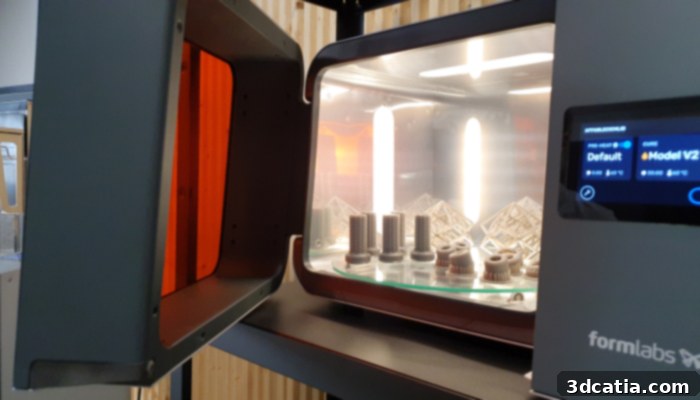
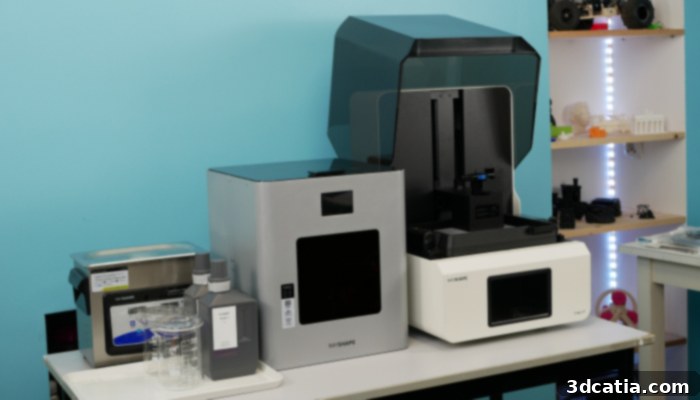
Cleaning and curing machines automate the post-processing process, ensuring more uniform results and enhancing the mechanical properties of resin prints, streamlining the workflow for professionals.
The Dynamic Resin 3D Printing Market and Its Diverse Applications
The resin 3D printing market is characterized by its remarkable breadth and diversity, offering solutions for virtually every scale and budget. From compact, affordable desktop MSLA machines perfect for hobbyists and small businesses to robust, large-format industrial SLA printers designed for high-volume production, there’s a resin 3D printer tailored to specific needs. This vast ecosystem of technologies and machines is driven by the unparalleled precision, intricate detail reproduction, and smooth surface finishes that resin prints consistently deliver, making them highly sought after in numerous professional fields.
These inherent qualities have cemented resin 3D printing’s position as a go-to technology across an impressive array of industrial and creative sectors:
- Jewelry: Resin printing is a game-changer for jewelers and goldsmiths. Special castable resins allow designers to create highly intricate wax-like patterns with fine filigree, delicate prongs, and complex geometries that can be directly used for investment casting (lost-wax casting). This significantly shortens production times, reduces labor, and expands design possibilities for bespoke and mass-produced pieces.
- Dentistry: The dental industry has extensively adopted resin 3D printing for its accuracy, speed, and availability of biocompatible material options. Applications include printing highly accurate dental models for diagnosis and planning, surgical guides for precise implant placement, clear aligners and retainers for orthodontics, custom impression trays, and even temporary crowns and bridges directly at the clinic or lab.
- Medical Industry: Beyond dentistry, the broader medical sector benefits from resin 3D printing for a wide range of applications. This includes printing anatomical models for pre-surgical planning, medical education, and patient communication; patient-specific prosthetics and orthotics; and research into drug delivery systems and advanced medical devices. The development of biocompatible and sterilizable resins further enables the creation of functional prototypes and even end-use parts.
- Aerospace and Automotive: Both sectors leverage resin 3D printing extensively for rapid prototyping of complex geometries, functional components with demanding specifications, and lightweighting initiatives. The ability to produce highly accurate prototypes quickly accelerates design cycles for engine parts, interior components, aerodynamic structures, and intricate housings, allowing for faster validation and iteration.
- Rapid Prototyping and Product Development: Across almost all manufacturing industries, resin printing is invaluable for quickly iterating design concepts. Its speed, precision, and ability to produce visually appealing, dimensionally accurate prototypes allow engineers and designers to validate aesthetics, ergonomics, and fit much earlier in the product development cycle, significantly reducing time-to-market.
- Consumer Goods and Art: From highly detailed miniatures and figures for gaming and collectibles to artistic sculptures, fashion accessories, and custom product designs, resin 3D printing enables creators to bring complex, visually rich designs to life with fidelity that other technologies struggle to match, empowering a new wave of personalized and intricate consumer products.
The continuous advancement in resin materials, including tougher, more flexible, heat-resistant, and specialized engineering resins, further expands the possibilities, allowing for the creation of functional parts with specific mechanical, thermal, and chemical properties. This growth trajectory, coupled with increasing accessibility and ease of use, ensures that resin 3D printing will continue to be a vital technology shaping the future of manufacturing, design, and innovation across global industries.
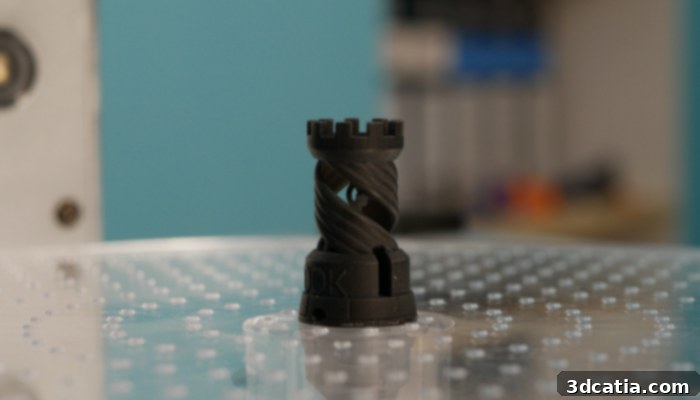
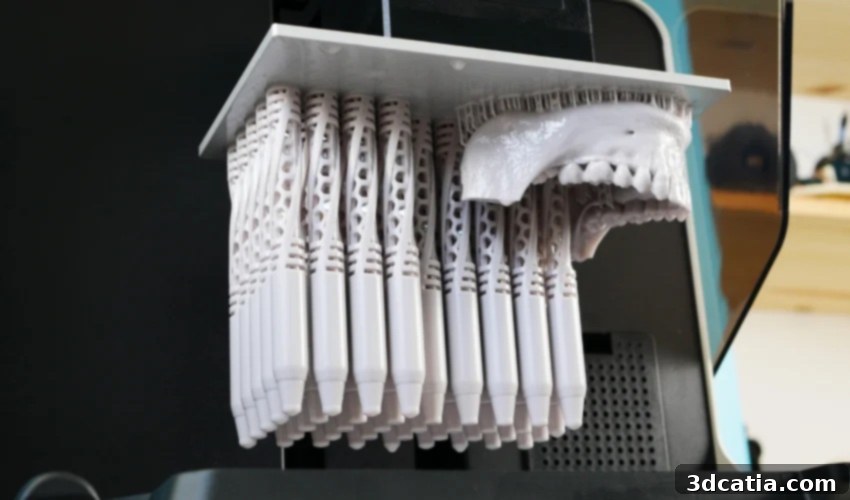
3D resin printing can be used to produce parts of any size with high precision and intricate detail, showcasing its versatility across various applications, from miniature prototypes to large-scale industrial components.
Conclusion: The Enduring Impact of Resin 3D Printing
Resin 3D printing, or vat photopolymerization, stands as a cornerstone technology in the realm of additive manufacturing, celebrated for its unparalleled ability to produce exceptionally precise and intricately detailed parts. Through its foundational technological variations – Stereolithography (SLA), Digital Light Processing (DLP), and Masked Stereolithography Apparatus (MSLA) – and the relentless innovation driven by manufacturers, this technology continues to unlock an ever-expanding universe of possibilities across countless fields. Whether the objective is rapid prototyping, the production of highly functional end-use components, or the realization of complex artistic creations, resin 3D printing has firmly established itself as an indispensable tool. Professionals across diverse industries rely on its capacity to deliver high-quality parts with a smooth surface finish and accuracy that meets stringent demands. As resin materials continue to evolve, offering improved mechanical properties and broader applications, and as printer capabilities advance further in terms of speed, resolution, and build volume, the influence and utility of resin 3D printing are only set to grow, further cementing its pivotal role in shaping the future of design and manufacturing.
What are your thoughts on resin 3D printing? Have you integrated it into your workflow or personal projects? We’d love to hear about your experiences and insights! Share your comments and perspectives below or connect with us on our LinkedIn, Facebook, and Twitter pages! Don’t forget to sign up for our free weekly Newsletter here, bringing the latest 3D printing news straight to your inbox! You can also find all our engaging videos and educational content on our YouTube channel.