
Revolutionizing Cycling: AREVO and Franco Bicycles Unleash the World’s First 3D Printed Continuous Carbon Fiber eBike Frame
AREVO, a pioneering Silicon Valley company, stands at the forefront of innovation, developing groundbreaking technology that facilitates the direct digital additive manufacturing of ultra-strong, remarkably lightweight composite parts. These advanced components are designed for high-volume end-use applications across various industries, pushing the boundaries of what’s possible in materials science and production. In a landmark announcement, AREVO revealed its strategic partnership with Franco Bicycles, a renowned bike manufacturer known for its commitment to quality and performance and a vision for the future of cycling.
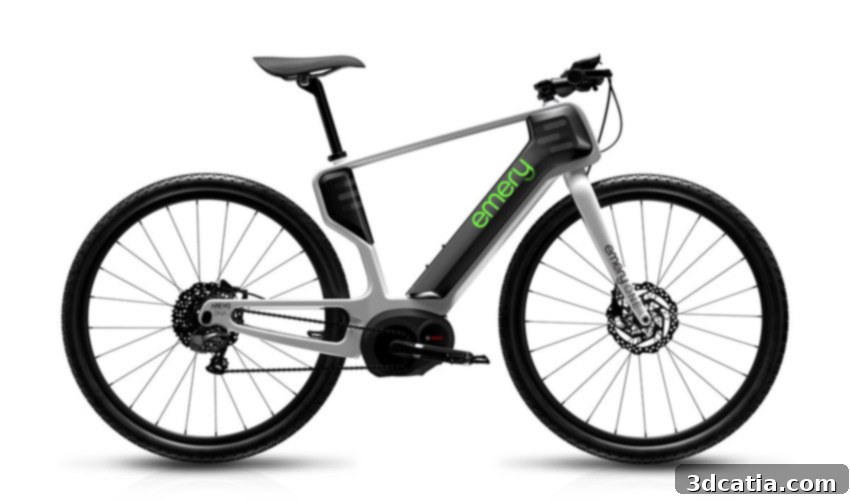
Together, these two visionary companies are set to deliver an unprecedented innovation to the cycling world: the world’s first 3D printed, continuous carbon fiber single-piece unibody frame. This revolutionary frame is destined to be the core of Franco Bicycles’ exciting new line of eBikes, marketed under the prestigious Emery brand. The inaugural model, aptly named the ‘Emery One‘ eBike, promises to redefine expectations for both performance and manufacturing efficiency in the electric bicycle market, offering an unparalleled blend of strength, lightness, and customization.
As its name suggests, the Emery One is an all-terrain city bike, meticulously engineered with sophisticated battery assistance to provide an unparalleled riding experience across diverse urban and natural landscapes. At the heart of this innovation lies AREVO’s cutting-edge 3D printing process. This proprietary technology masterfully integrates advanced software, state-of-the-art robotics, sophisticated machine learning algorithms, and high-performance thermoplastic materials. The primary objective of this intricate process is to grant designers unparalleled freedom in their creative endeavors, enabling them to craft intricate geometries and optimized structures that were previously unachievable through conventional manufacturing methods. Simultaneously, it ensures the creation of products that are not only exceptionally strong and durable but also inherently optimized for their specific application, from material distribution to structural integrity.
A significant advantage of AREVO’s approach is the potential for mass customization. Each Emery One eBike frame can be precisely tailored to individual riders’ specifications, taking into account factors like body geometry, riding style, and desired performance characteristics. This personalized design is then printed directly and efficiently, eliminating the need for expensive tooling changes. This level of personalization, once a luxury reserved for bespoke frames, is now accessible thanks to digital manufacturing. Jim Miller, the insightful CEO of AREVO, encapsulates this transformative shift, stating, “We have created a new paradigm for manufacturing that empowers businesses to create and source products locally by leveraging advancements in dynamic software and automation. This isn’t just about making parts; it’s about fundamentally reshaping how products are conceived, developed, and brought to market, fostering a more agile and responsive supply chain globally.”
The Dawn of Efficient and Localized Manufacturing
An Unprecedented Leap in Production Efficiency for Carbon Fiber Composites
The partnership between AREVO and Franco Bicycles represents more than just a product launch; it signifies a profound shift in manufacturing paradigms, particularly within the realm of high-performance composite materials. The development of the Emery One eBike frame serves as a powerful testament to the capabilities of AREVO’s additive manufacturing platform. As Jim Miller further elaborates, “The development of the eBike has proven that we can 3D print a new product when needed, at a low cost and localise the manufacturing process – significantly cutting down on the process and time it has taken historically to create bike frames.” This statement underscores a critical benefit: the ability to rapidly iterate, produce, and deploy innovative products with unprecedented speed and cost-effectiveness. In an industry often hampered by long lead times, expensive tooling, and complex global supply chains, this represents a monumental breakthrough, enabling greater agility and market responsiveness.
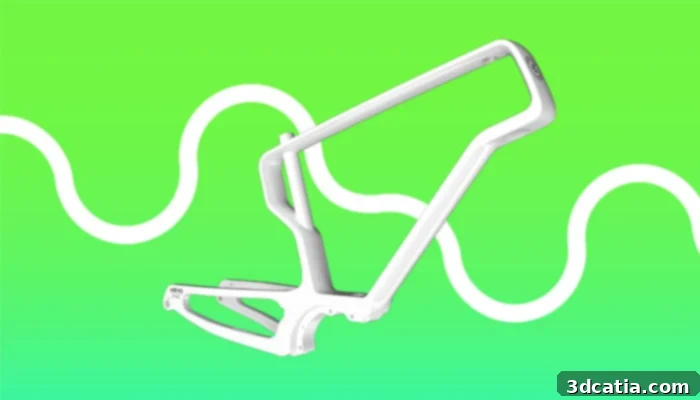
To put this into perspective, the traditional manufacturing of a high-performance bike frame, involving complex molds, labor-intensive lay-up processes for composite materials (such as carbon fiber prepregs), and extensive finishing, typically spans an arduous 18-month timeline from initial design concept to final production. AREVO’s revolutionary digital manufacturing process dramatically compresses this timeframe, reducing the entire production cycle to a mere matter of days. This extraordinary acceleration translates directly into a significant reduction in product development costs, enabling faster market responsiveness and allowing companies like Franco Bicycles to bring cutting-edge designs to consumers much more quickly. Furthermore, this method challenges the conventional wisdom that high-performance carbon fiber composite frames must be assembled from numerous individual parts, painstakingly glued and cured together. In stark contrast, the Emery One’s frame is fabricated as a single, continuous, monolithic structure, an engineering feat that promises superior performance.
The Advantage of Continuous Carbon Fiber and Unibody Design
The single-piece unibody construction, made possible by AREVO’s continuous carbon fiber technology, offers inherent advantages over traditional composite frames. Conventional composite frames, often composed of multiple tubes or sections joined together, can suffer from stress concentrations and potential weak points at the bonded interfaces. By eliminating these common failure areas, the Emery One frame achieves superior structural integrity, enhanced stiffness, and significantly improved durability. This translates into a more responsive and robust ride, capable of withstanding the rigors of various terrains while delivering exceptional power transfer from the rider to the wheels. The continuous nature of the carbon fiber strands, precisely placed by AREVO’s robotic system, ensures that load paths are optimized throughout the entire frame, distributing stresses more efficiently and preventing premature material fatigue.
Hector Rodriguez, Co-Founder of Emery Bikes, articulated the strategic rationale behind this groundbreaking collaboration, stating, “We chose AREVO technology because its iterative and flexible design represents the new age in composites manufacturing and we wanted to be the first bike company to help lead this revolution. AREVO’s continuous carbon fiber technology has been instrumental in achieving the ride quality and high-performance requirements we set out to accomplish with the Emery One.” Rodriguez’s statement highlights not only the technical prowess of AREVO’s platform but also Emery Bikes’ forward-thinking vision to embrace disruptive technologies and position themselves as pioneers in the evolving landscape of bicycle manufacturing. The ability to rapidly iterate designs based on performance testing and rider feedback is a game-changer, allowing for optimal product development and fine-tuning in a fraction of the time traditionally required for such advancements.
Beyond the Frame: The Broader Implications of AREVO’s Additive Manufacturing Technology
The impact of AREVO’s additive manufacturing technology extends far beyond the realm of eBikes and bicycle frames. This innovative approach heralds a new era for various industries seeking to produce high-performance, lightweight components with unparalleled efficiency and complexity. For manufacturers across sectors like aerospace, automotive, and sports equipment, the benefits are multifaceted: significantly faster design iterations, drastically reduced tooling costs, the enablement of true on-demand production, and the creation of a more resilient and localized supply chain. The ability to produce complex parts closer to the point of consumption reduces logistical complexities, mitigates supply chain vulnerabilities, and fosters greater economic stability and flexibility.
For consumers, the adoption of such advanced manufacturing processes translates into a host of tangible advantages. Unprecedented customization, once a niche offering reserved for elite athletes or luxury markets, becomes a scalable reality. This allows for products perfectly matched to individual needs, preferences, and physiological characteristics, leading to enhanced comfort, performance, and overall satisfaction. In the long run, the inherent efficiencies of digital manufacturing and reduced development costs could lead to more affordable high-performance bicycles and other specialized products, making cutting-edge technology accessible to a wider audience. The performance benefits, such as enhanced stiffness-to-weight ratios and superior durability, will also directly improve the user experience, whether on an eBike or other high-tech equipment.
A Significant Step Towards Sustainable Manufacturing Practices
Furthermore, AREVO’s continuous carbon fiber 3D printing technology offers significant environmental advantages that align with global sustainability goals. As an additive process, it inherently minimizes material waste compared to traditional subtractive manufacturing methods, which often generate substantial scrap during machining or cutting operations. The localized production model also plays a crucial role in reducing the carbon footprint associated with long-distance shipping of parts and finished goods across continents. Moreover, the creation of lighter, yet stronger, components for vehicles like eBikes contributes directly to overall energy efficiency, as lighter vehicles require less energy to move, extending battery range and reducing the overall environmental impact associated with vehicle operation. The use of advanced thermoplastic composites also opens doors for enhanced recyclability and material recovery, a crucial factor in transitioning towards circular economy initiatives.
The Future is Digital, Automated, and Composite-Driven
AREVO’s proprietary process leverages the full potential of continuous carbon fiber, where individual filaments are precisely laid down and fused, ensuring anisotropic properties are optimally aligned with expected load paths. This intricate control, guided by sophisticated software and advanced robotics, is where machine learning truly shines, continuously optimizing deposition patterns for maximum strength-to-weight ratios and structural integrity. Unlike traditional thermoset composites, which are often irreversible once cured and challenging to recycle, AREVO’s strategic use of high-performance thermoplastics offers greater flexibility in post-processing and a significant potential for material recovery and recycling, hinting at a more sustainable future for composite manufacturing as a whole.
This pioneering partnership between AREVO and Franco Bicycles serves as a powerful precedent, showcasing how advanced additive manufacturing can revolutionize not only the cycling industry but also various other sectors, from aerospace and automotive to medical devices and industrial equipment. The Emery One eBike is more than just a new product; it is a tangible embodiment of a future where design freedom, manufacturing efficiency, and personalized performance converge seamlessly through the transformative power of digital fabrication. It sets a new benchmark for what can be achieved when innovative technology meets visionary product development, promising exciting and far-reaching advancements for consumers and manufacturers alike, ultimately shaping a more efficient and sustainable industrial landscape.
You can find more detailed information on AREVO’s innovative technologies and groundbreaking projects by visiting their official website HERE.
What are your thoughts on the groundbreaking Emery One eBike and the implications of 3D printed continuous carbon fiber frames for the future of cycling? We invite you to share your perspectives and engage in the discussion by leaving a comment below or connecting with us on our Facebook and Twitter pages! Additionally, ensure you stay ahead of the curve in the rapidly evolving world of 3D printing by signing up for our free weekly Newsletter, delivering all the latest news, expert insights, and industry updates directly to your inbox!