
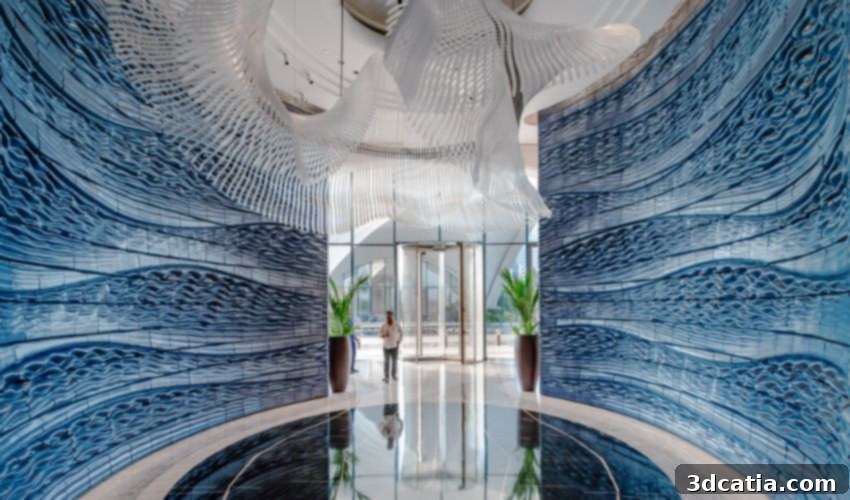
3D Printed Ceramic Walls Grace Luxury Dubai Hotel Lobby
The world of additive manufacturing continues to push boundaries, and the Dutch architecture studio RAP is at the forefront of this innovation. Renowned for using 3D printing to create intricate and captivating structures, RAP has recently unveiled a stunning project: two 3D-printed ceramic walls for the Jumeirah Marsa Al Arab, a luxurious five-star hotel in Dubai. This project, aptly named Blue Voyage, adds an element of artistic grandeur to the hotel’s lobby, seamlessly blending luxury with a touch of innovative design.
These impressive walls are strategically positioned at the hotel’s entrance, ensuring that they are among the first sights that greet guests. The design concept revolves around capturing the essence of ocean waves through flowing lines, curved shapes, and a material that interacts with light, mimicking the shimmering effect of sunlight on water. The result is a mesmerizing experience, as visitors feel as though they are walking between two gentle, undulating waves. The carefully chosen material reflects and refracts light, creating a dynamic interplay of shadows and highlights that enhances the overall aesthetic. The strategically placed chandelier further amplifies this sense of grandeur, adding a touch of elegance and sophistication to the space.
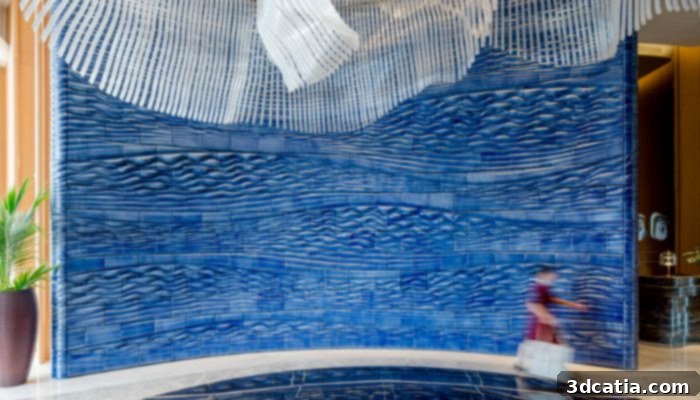
One of the two walls featuring the tiles.
The sheer scale of these walls is remarkable. According to Studio RAP, each wall measures an impressive 6 meters in height and 9 meters in width. However, it is not just the size that captivates; it is the meticulous craftsmanship and the 900 individual tiles that comprise the Blue Voyage installation. Each ceramic piece was meticulously 3D printed in RAP’s Rotterdam workshop, showcasing the precision and control that additive manufacturing offers. The design process involved parametric modeling, allowing for fine-tuning of the overall shape of the wall and adjustments to the design as needed throughout the creation process.
Studio RAP’s website highlights the significance of this project, stating: “Blue Voyage is among the largest 3D-printed ceramic architectural installations in the world. It embodies Studio RAP’s ongoing pursuit of uniting computational design with craftsmanship, using advanced fabrication techniques to bring expressive, durable, and site-specific elements into contemporary architecture.” This statement encapsulates the studio’s commitment to pushing the boundaries of architectural design through the integration of cutting-edge technology and traditional craftsmanship.
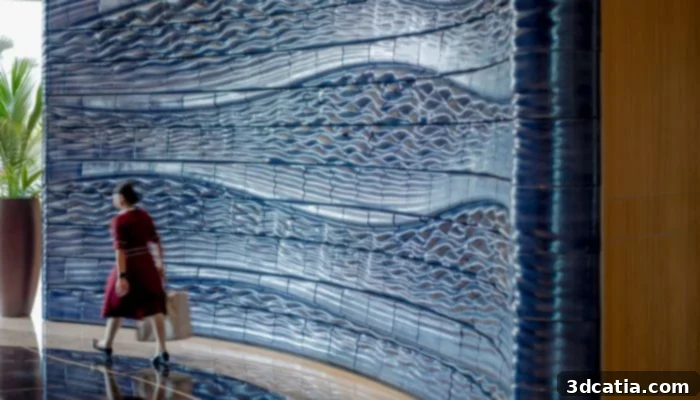
The installation itself is said to evoke the movement of waves.
The 3D printing process was executed with precision using Kuka robotic arms in the Netherlands. To ensure the highest quality and aesthetic appeal, the firing and glazing of the individual tiles were entrusted to Royal Tichelaar, a renowned Dutch pottery company known for its expertise and craftsmanship. The collaboration between Studio RAP and Royal Tichelaar highlights the importance of combining innovative technology with traditional skills to create truly exceptional architectural pieces.
If you find yourself in Dubai, a visit to the Jumeirah Marsa Al Arab is highly recommended. Even a brief stop in the lobby to admire the Blue Voyage walls is an experience worth having. A night at this luxury hotel comes at a premium, exceeding €1,500, reflecting the opulent ambiance and attention to detail that define the property. For those interested in delving deeper into the specifics of the Blue Voyage project, you can find more detailed information HERE.
The use of additive manufacturing in architecture is rapidly transforming the way we design and build structures. This innovative technology allows for the creation of complex geometries and intricate designs that would be impossible to achieve with traditional construction methods. Architects and designers are increasingly embracing 3D printing to create unique and visually stunning buildings, pushing the boundaries of what is possible in the built environment. The Blue Voyage project serves as a prime example of how 3D printing can be used to create expressive, durable, and site-specific architectural elements that enhance the overall aesthetic and functionality of a space.
The advantages of using 3D printing in architecture extend beyond just design freedom. Additive manufacturing can also lead to significant cost savings and reduced construction times. By eliminating the need for molds and tooling, 3D printing allows for the creation of custom-designed components on demand, reducing waste and streamlining the construction process. This technology also enables the use of sustainable materials, such as recycled plastics and bio-based composites, further minimizing the environmental impact of construction projects. As 3D printing technology continues to evolve, we can expect to see even more widespread adoption of this innovative approach in the architecture and construction industries.
The Blue Voyage project is not just a testament to the capabilities of 3D printing; it is also a celebration of the collaboration between technology and artistry. Studio RAP’s expertise in computational design, combined with Royal Tichelaar’s mastery of ceramic craftsmanship, has resulted in a truly exceptional architectural installation. This project demonstrates the power of collaboration in pushing the boundaries of innovation and creating spaces that inspire and captivate. As we move forward, it is essential to foster collaboration between designers, engineers, and manufacturers to unlock the full potential of 3D printing in architecture and create a more sustainable and aesthetically pleasing built environment.
The impact of the Blue Voyage project extends beyond the walls of the Jumeirah Marsa Al Arab hotel. This installation serves as a showcase for the possibilities of 3D printing in architecture, inspiring other designers and architects to explore the potential of this technology. By demonstrating the ability to create complex, durable, and visually stunning architectural elements, the Blue Voyage project is helping to drive the adoption of 3D printing in the construction industry and paving the way for a more innovative and sustainable future for the built environment.
The success of the Blue Voyage project is a testament to the vision and dedication of Studio RAP. Their commitment to pushing the boundaries of architectural design through the integration of cutting-edge technology and traditional craftsmanship has resulted in a truly remarkable architectural achievement. As they continue to explore the potential of 3D printing and other advanced fabrication techniques, we can expect to see even more innovative and inspiring projects from this talented team in the years to come. The Blue Voyage project will undoubtedly serve as a benchmark for future architectural installations, inspiring designers and architects to embrace the possibilities of additive manufacturing and create spaces that are both functional and aesthetically pleasing.
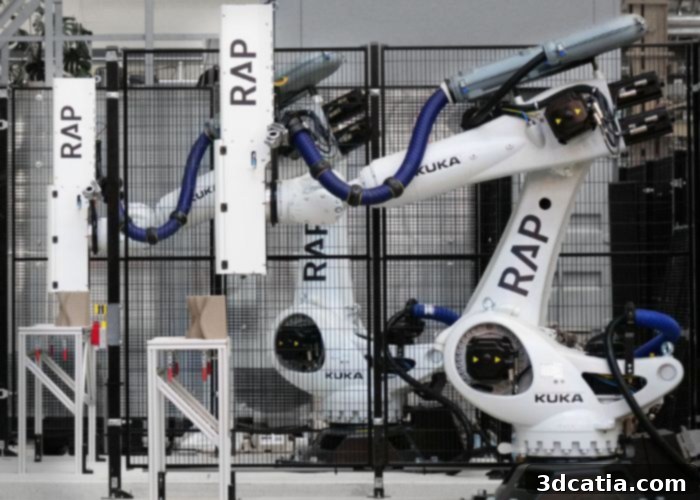
Studio RAP uses additive manufacturing and robotic arms.
What are your thoughts on the increasing applications of additive manufacturing in the field of architecture? Share your insights in the comments below or join the discussion on our LinkedIn and Facebook pages. Stay up-to-date with the latest 3D printing news by subscribing to our free weekly Newsletter, delivered directly to your inbox. You can also explore our video content on our YouTube channel.
*All Photo Credits: Studio RAP / Riccardo De Vecchi