
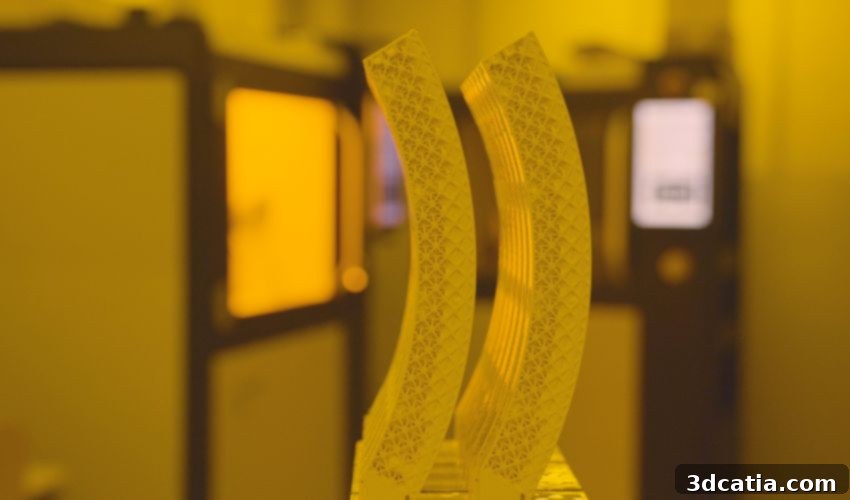
Lithoz CeraFab System S320: Revolutionizing Ceramic 3D Printing for Aerospace & Semiconductor Series Production
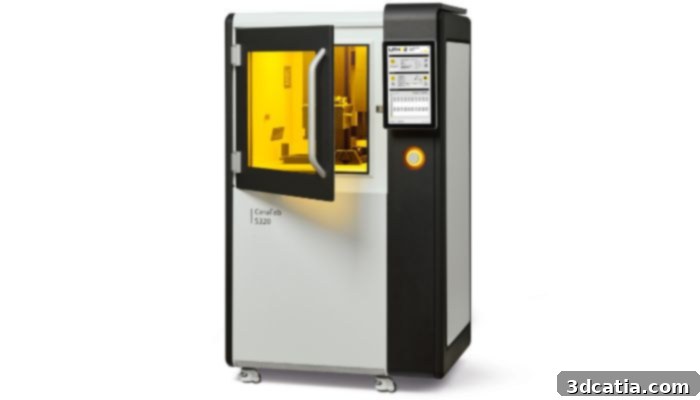
Lithoz stands at the forefront of innovation, dedicated to delivering unparalleled high-performance solutions for the technical ceramics industry. Their commitment is consistently demonstrated through groundbreaking developments, including advanced ceramic materials, the proprietary LCM (Lithography-based Ceramic Manufacturing) technology, and the renowned CeraFab System series of 3D printers. Building on this legacy of excellence, Lithoz proudly introduces its latest innovation just in time for Formnext: the new CeraFab System S320 ceramic 3D printer. This state-of-the-art system is specifically engineered for the efficient serial production of medium-sized components, targeting the stringent demands of high-growth sectors such as the aerospace and semiconductor manufacturing industries. The CeraFab S320 is set to redefine what’s possible in ceramic additive manufacturing, pushing the boundaries of precision, scalability, and application versatility.
CeraFab S320: Boosting Series Production for Medium-Sized Ceramic Parts
The CeraFab System S320 ceramic 3D printer emerges as Lithoz’s strategic response to the escalating industry demand for larger, more precise parts produced in significant volumes. This innovative machine is poised to dramatically enhance production capacity, facilitating the efficient manufacturing of medium-sized ceramic components on an industrial scale. The core of this advancement lies in the seamless integration of Lithoz’s proven LCM technology with an impressively large build platform. Measuring a generous 246 x 130 x 320 mm, the S320’s build envelope is a remarkable five times larger than that of the CeraFab S65. This substantial increase in build volume directly translates into a higher maximum number of parts per print job, making the scaling up of the LCM process not just feasible, but highly efficient for mass production.
Beyond its expansive build volume, the CeraFab S320 distinguishes itself with exceptional operational speed, capable of processing up to 150 layers per hour with layer thicknesses reaching up to 200 µm. This rapid printing capability, combined with a fine resolution of 60 µm, ensures both speed and precision. Its advanced 4K projection system further solidifies the S320’s position as a perfect complement to the existing ultra-precise S65, offering a comprehensive solution for diverse additive manufacturing needs. These powerful features make the CeraFab S320 an indispensable tool for the series production of high-performance ceramic components across various industrial and demanding aerospace applications. Its ability to combine speed, size, and precision marks a significant leap forward in ceramic additive manufacturing, enabling industries to tackle complex challenges with unprecedented efficiency.
Transforming Semiconductor Manufacturing with Advanced Ceramic AM
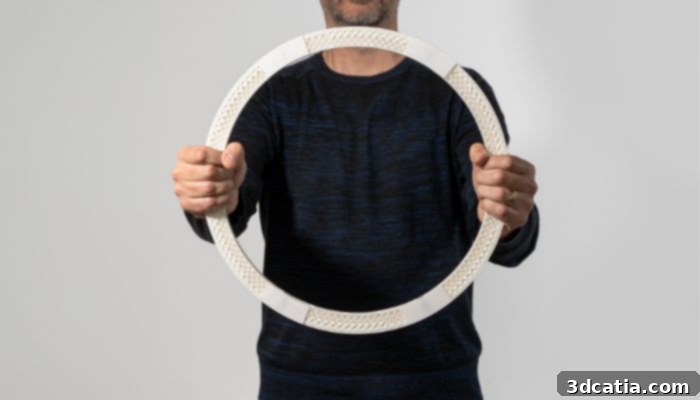
Lithoz’s CeraFab printers have already been instrumental in achieving significant breakthroughs across various industrial applications, particularly within the semiconductor sector. A prime example is the collaboration with Alumina Systems, which leveraged Lithoz LCM technology to manufacture a complex semiconductor Atomic Layer Deposition (ALD) ring with an impressive diameter of 15 inches. This component is critical in semiconductor manufacturing processes, where maintaining a constant and precise gas flow and pressure is paramount, especially when working with highly reactive gases. For such demanding environments, alumina ceramics are the material of choice due to their exceptional chemical stability, high thermal resistance, and excellent dielectric properties.
The synergistic combination of these high-performance ceramics with Lithoz’s advanced 3D printing process offered a multitude of advantages for the production of the gas distributor ring. Alumina Systems specifically highlighted the significant reduction in manufacturing costs achieved through additive manufacturing. Moreover, the freedom of design afforded by LCM technology allowed for the creation of more lightweight and thin-walled inner structures, leading to a substantial boost in overall performance and efficiency of the ALD process. The ability to create intricate internal channels and optimized geometries, which are often impossible or prohibitively expensive to produce with conventional manufacturing methods, showcases the transformative power of ceramic 3D printing. This breakthrough underscores how Lithoz technology enables the realization of sophisticated designs with the required precision and cost-efficiency, driving innovation in semiconductor equipment.
Advancing Aerospace and Industrial Gas Turbines with 3D-Printed Ceramic Cores
In sectors characterized by exceptionally high requirements and demanding operational environments, the CeraFab S320 truly excels, showcasing its strengths in areas such as aerospace and industrial gas turbines. The aerospace industry, for instance, faces immense pressure to develop aircraft engines that are not only environmentally friendly but also exceptionally fuel-efficient. Achieving these critical objectives necessitates continuous innovation in turbine design and the implementation of highly efficient cooling systems. These advancements, in turn, demand the production of components with incredibly complex geometries and superior material properties, capable of withstanding extreme conditions.
This is precisely where LCM technology, powered by the CeraFab S320, proves invaluable. Its capacity to efficiently produce functional components with intricate internal structures and high precision opens new avenues for innovation. For instance, the CeraFab S320 has already demonstrated its capabilities by producing advanced 3D-printed ceramic cores for aircraft turbine blades, often made from superalloys, as well as ceramic casting cores specifically designed for industrial gas turbines. In both these applications, the system’s remarkable precision, maintained at an impressive 60 µm, and its ability to flawlessly implement highly complex designs were pivotal in achieving superior end results. The optimized design of the cooling channels, facilitated by additive manufacturing, has led to a tangible increase in the efficiency of aircraft engines, reducing fuel consumption and emissions.
Beyond performance enhancements, the CeraFab S320 offers significant advantages in accelerating the product development lifecycle. Its ability to rapidly prototype and iterate complex ceramic components can drastically reduce development times, thereby significantly speeding up time to market for new aerospace and industrial gas turbine technologies. This responsiveness to market demands for quicker innovation and deployment further underscores the new ceramic 3D printer’s critical role in meeting the dynamic requirements of the modern aerospace and energy industries. The S320 is not just a printer; it’s a catalyst for faster, more efficient, and more sustainable innovation in these vital sectors.
Experience Lithoz Innovations at Formnext
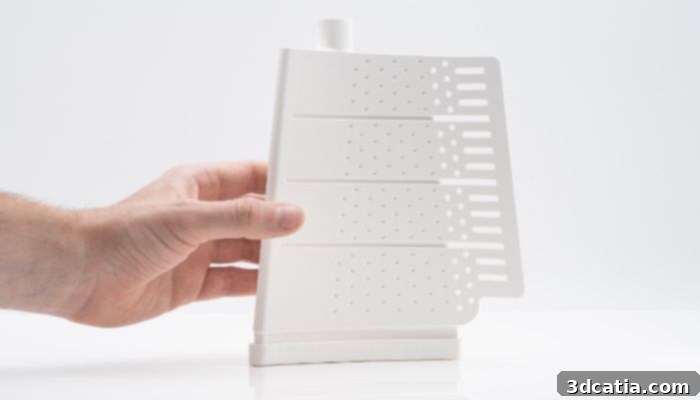
The upcoming Formnext exhibition provides an ideal platform for Lithoz to showcase the transformative capabilities of the CeraFab S320 and its wide array of applications. Visitors to Lithoz’s stand C49 in Hall 11.1 will have the unique opportunity to witness firsthand the printer’s performance and explore specific, high-value applications. The exhibit will feature tangible examples of the groundbreaking components mentioned, including the semiconductor ALD ring, advanced industrial filter devices, and highly intricate ceramic casting cores and radomes specifically designed for aerospace use. This is an unparalleled chance to gain insights into the latest advancements in ceramic additive manufacturing and to understand how Lithoz solutions are driving forward industrial innovation.
Beyond industrial applications, Formnext will also highlight Lithoz’s latest breakthroughs in the medical and dental fields. A compelling display will be a replica of the 3D-printed subperiosteal jaw implant crafted from zirconia, which made headlines earlier this year as part of a world-first surgical procedure. This showcases the versatility and biocompatibility of ceramic 3D printing for patient-specific medical devices. This allows attendees to get a comprehensive understanding of the new CeraFab S320’s capabilities and other cutting-edge Lithoz solutions directly on site. For those eager to delve deeper into the CeraFab S320 ceramic 3D printer and its extensive applications, additional information can be found by clicking HERE.
What are your thoughts on the new CeraFab System S320 ceramic 3D printer from Lithoz and its potential impact on advanced manufacturing? We invite you to share your insights in a comment below or join the conversation on our LinkedIn, Facebook, and Twitter pages! For the latest updates and breaking news in the world of 3D printing delivered directly to your inbox, don’t forget to sign up for our free weekly newsletter here. You can also explore all our informative videos and content on our YouTube channel.
*All Photo Credits: Lithoz