
Enhancing Animal Welfare: How 3D Printing Transforms Meerkat Enrichment at Cincinnati Zoo
In a groundbreaking collaboration, the Cincinnati Botanical Garden and Zoo in the United States has partnered with GE Additive to leverage the innovative power of 3D printing for a project designed to help captive animal species mimic crucial wild behaviors. This initiative, spearheaded by advanced metal additive fabrication techniques, focuses on creating sophisticated animal enrichment devices. The core objective of this particular project was to develop a specialized feeder that would actively encourage meerkats to engage in natural foraging situations, mirroring the complex challenges and rewards they would encounter in their wild habitats. By doing so, the animals are empowered to better develop and maintain their intrinsic wild instincts, effectively overcoming some of the inherent challenges associated with life in captivity. This pioneering effort raises a fundamental question: how can cutting-edge 3D technology profoundly influence and improve the behavioral patterns and overall well-being of animal species residing in zoos?
The Cincinnati Zoo, renowned globally for its dedication to animal care and conservation, is a vibrant home to more than 2,000 animals, representing a diverse array of species. A cornerstone of its mission is an unwavering commitment to providing impeccable, species-appropriate care for each resident. David Orban, the zoo’s esteemed Excellence Manager, plays a pivotal role in this endeavor. Along with his dedicated team, Orban is responsible for meticulously documenting the daily lives of the animals, observing their interactions with their environment, and identifying opportunities for enhancement. His focus for this project specifically honed in on meerkats, with the goal of enriching their lives and enhancing their natural instincts within their captive environment. Orban articulated the vision behind the project, stating, “We have come up with the idea of creating a more complex feeder that will extend the duration of foraging, in turn, extending the physical activity and mental stimulation of the animals, leading to more natural behavior.” This statement underscores the deep understanding of animal psychology and the need for sustained engagement. While the ambition was clear, the project presented several challenges. One significant hurdle was ensuring seamless communication and understanding between the diverse teams involved, ranging from highly specialized engineers at GE Additive to experienced zoologists and animal caretakers at the zoo, and vice versa. Another crucial aspect was educating the Cincinnati Zoo team on the vast and intricate possibilities that 3D printing technology could offer in the realm of animal enrichment, moving beyond conventional methods and inspiring innovative solutions.
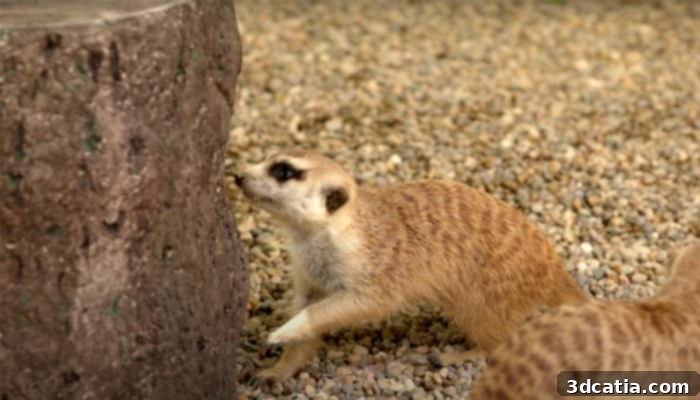
The primary aim of this pioneering project is to encourage the natural foraging behavior of meerkats, fostering their innate instincts through innovative 3D-printed enrichment.
The zoo’s specific requirements for the animal enrichment device were twofold yet critical: it needed to be highly functional in promoting natural behavior and seamlessly blend into the existing habitat with a natural aesthetic. To meet these precise specifications, engineers from GE Additive in Cincinnati embarked on a detailed information-gathering process, closely collaborating with the zoo’s animal caretakers. This collaborative approach was essential to understanding the meerkats’ specific needs, behavioral patterns, and the environmental context. Through extensive discussions and brainstorming sessions, the combined team of zookeepers and GE Additive engineers began to exchange innovative design ideas for the new feeder. The inherent advantages of additive manufacturing, often referred to as 3D printing, became immediately apparent in this context. Unlike traditional manufacturing methods that are often limited by geometric complexity and tooling costs, additive manufacturing offers unparalleled design freedom. It allows for the integration of virtually any type of shape, intricate angle, complex internal structure, or realistic texture that is required, whether the final product is intended to be crafted from robust metal or durable plastic materials. This flexibility was crucial for creating a device that not only performed its function but also looked and felt organic within the meerkats’ enclosure, enhancing the mimicry of a natural environment and encouraging interaction without appearing artificial.
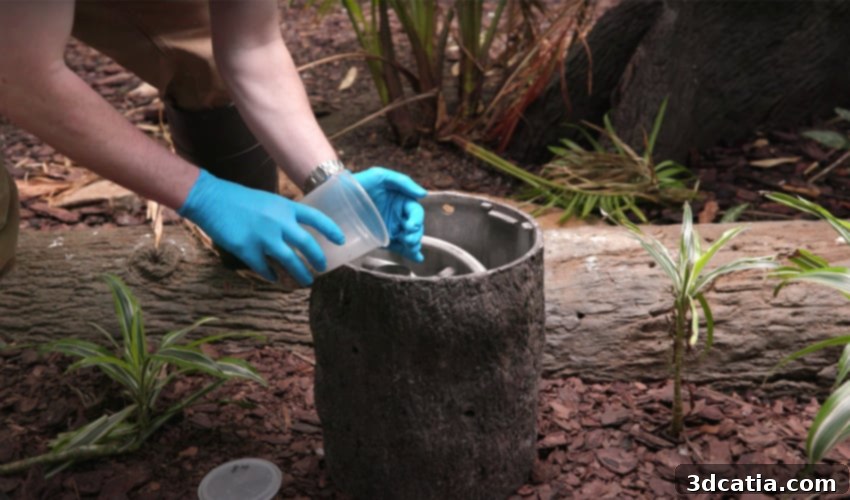
The culmination of this collaborative design process resulted in a sophisticated device engineered to randomly dispense food into the meerkat habitats, effectively simulating the unpredictable and rewarding foraging experiences that these animals would naturally encounter in the wild. This intentional randomness is key to preventing learned patterns and keeping the animals engaged and mentally stimulated. A crucial aspect of the design was to deliberately disconnect the direct interaction between human caretakers and the animals during the feeding process. This separation is vital for fostering more independent and natural behaviors, as the animals learn to rely on their own instincts for food acquisition rather than anticipating human intervention. The exterior of the device was meticulously designed to replicate the appearance and texture of a weathered tree trunk, complete with a realistic bark-like surface. This biomimetic design ensures that the feeder blends seamlessly into the naturalistic enclosure, making it an integrated part of their environment rather than an obvious man-made object. Internally, the feeder houses a central enclosure specifically designed for crickets, which serves as the primary food source. From this central chamber, a network of tubes of varying lengths extends, ultimately exiting the device at different, strategically chosen points outside. This ingenious mechanism ensures that depending on the specific tube a cricket selects to navigate, it will take a different, unpredictable amount of time to emerge from the device. This provides a staggered delivery of crickets to the meerkats at various, unprogrammed intervals, creating a dynamic and engaging foraging challenge that continuously stimulates their natural hunting and problem-solving instincts. The varying paths and unpredictable timing are essential for mimicking the natural variability of finding food in the wild, promoting sustained interest and cognitive engagement over extended periods.
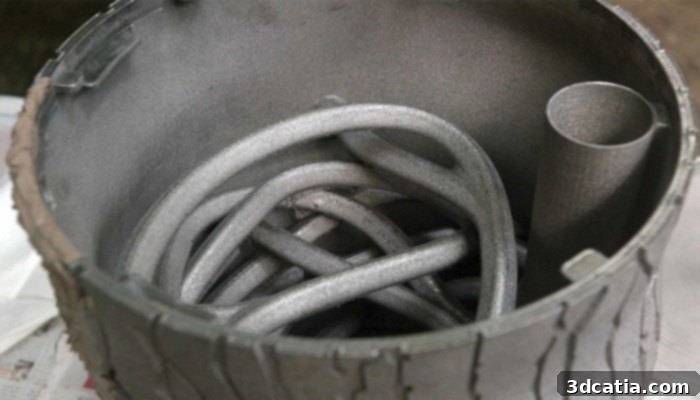
GE Additive utilized advanced 3D metal printing techniques to meticulously create the robust and functional prototype feeder, pushing the boundaries of animal enrichment technology.
Shannon Jagodinski, GE Additive’s chief engineer, provided valuable insights into the iterative design and testing process, highlighting the meticulous attention to detail required for such a specialized application. She commented, “After this feeder concept was selected, I had some questions. How big is a cricket and what size tube do they need to crawl through?” This seemingly simple inquiry underscores the practical challenges that bridge engineering principles with biological realities. The team proactively sought and received crucial information from the zoo’s expert insect team, which was vital for designing the internal mechanics. Following this, extensive prototyping and testing commenced. Engineers printed prototype tubes with three distinct diameters and conducted trials within a dedicated cricket enclosure at the zoo. This hands-on, empirical approach allowed them to precisely determine which tube size facilitated optimal cricket movement while preventing premature escape or blockages, ensuring the feeder’s reliability and effectiveness. However, the successful implementation of this innovative design, particularly when utilizing sophisticated additive manufacturing processes like Selective Laser Sintering (SLS) technology, required engineers to meticulously consider several critical technical concepts to optimize the design for efficiency and practicality. Among these, they rigorously evaluated the optimal orientation of the part on the construction plate – a factor crucial for minimizing support structures, improving surface finish, and ensuring structural integrity. Another significant consideration was the precise and thorough removal of residual powder (dust) in post-processing. Given the feeder’s intended use with sensitive animals, ensuring complete cleanliness and material safety was paramount, demanding stringent quality control measures to prevent any potential ingestion of minute powder particles.
The impact of this collaboration extends far beyond the immediate goal of enriching meerkat lives. This project vividly demonstrates the transformative potential of advanced manufacturing technologies, particularly 3D printing, in addressing complex challenges in diverse fields such as animal welfare and conservation. The ability to create highly customized, durable, and biologically appropriate enrichment devices opens up new avenues for zoos and wildlife sanctuaries worldwide. Traditional manufacturing methods often struggle with the bespoke nature of such products, making them either cost-prohibitive or geometrically impossible. Additive manufacturing, however, thrives on complexity without incurring additional costs, making it an ideal solution for developing unique tools that cater to the specific needs and behaviors of individual species. This successful prototype paves the way for future innovations, where zoos can partner with engineering firms to design and produce a range of enrichment items, from complex puzzle feeders that mimic natural foraging patterns to structural enhancements that encourage climbing, burrowing, or other species-specific behaviors. The long-term benefits include improved physical health, reduced stress levels, and enhanced cognitive functions for captive animals, contributing significantly to their overall quality of life and potentially aiding in future conservation breeding programs by maintaining natural instincts. This partnership sets a precedent for interdisciplinary innovation, where cutting-edge technology serves as a powerful ally in the ongoing efforts to protect and enrich the lives of animals.
Building on the success of this pioneering prototype, GE Additive has already committed to delivering several additional feed devices to the Cincinnati Zoo. This ongoing partnership signifies a sustained commitment to animal welfare through technological innovation. The zoo eagerly anticipates the full implementation of these feeders and looks forward to welcoming visitors once again, celebrating its reopening in a post-health crisis environment, allowing the public to witness firsthand the positive impact of such advanced enrichment. For those interested in delving deeper into this remarkable project and exploring more news and updates from the Cincinnati Zoo, further information can be found on their official website HERE. This collaboration exemplifies how innovation can directly contribute to improving the lives of animals in human care.
The implementation of these advanced 3D printed animal feeders represents a significant leap forward in the field of zoo animal enrichment. What are your thoughts on how these bespoke devices could further revolutionize animal welfare practices in zoological institutions globally? We invite you to share your insights and engage in the conversation by leaving a comment below or by connecting with us on our vibrant Facebook and engaging Twitter pages! Don’t miss out on the latest advancements and breaking news in the exciting world of 3D printing; remember to sign up for our free weekly Newsletter, delivering all the essential updates directly to your inbox. Stay informed and be part of the future of additive manufacturing and its incredible applications!