
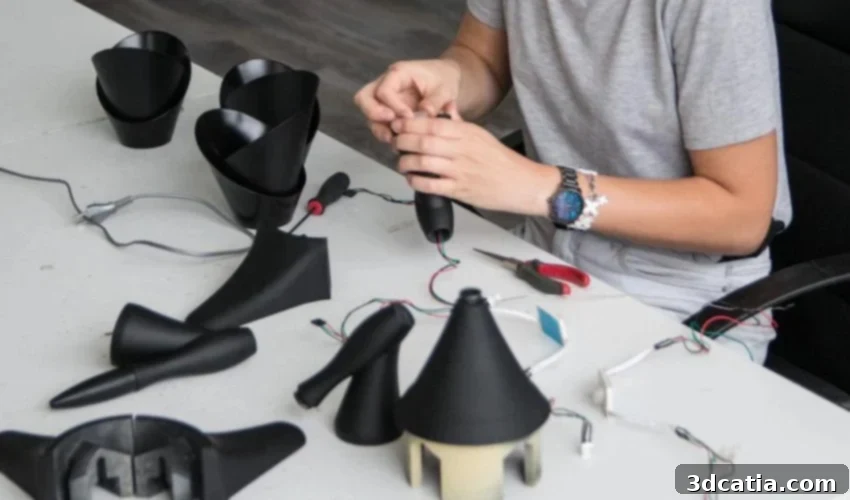
Mastering the Final Touch: 10 Indispensable Reasons Why 3D Printing Post-Processing is Crucial for Quality and Performance
When contemplating the realm of 3D printing, the immediate thought for many often gravitates towards the fascinating process of materializing an object layer by layer. However, the journey of additive manufacturing extends far beyond the print bed. It encompasses a comprehensive series of stages, beginning with initial design and optimization, moving through slicing and the actual 3D printing, and culminating in the often-underestimated yet critically important phase: post-processing. This final step, executed after a part has been additively manufactured, plays a pivotal role in defining its ultimate aesthetic appeal, functional performance, and mechanical integrity. Ignoring post-processing is akin to leaving a masterpiece unfinished. But why exactly is it so crucial? How can manufacturers and designers leverage its diverse methods? And what specific benefits does it bring to the table? This article delves deep into these questions, offering a detailed exploration of the transformative power of post-processing and presenting 10 compelling reasons why it unequivocally deserves your full attention.
#1: Ensuring Superior Part Quality
One of the most fundamental reasons post-processing is indispensable in 3D printing is its direct impact on achieving the stringent quality standards required for functional and professional parts. Freshly printed components, regardless of the technology used, frequently exhibit minor imperfections. These can range from visible layer lines, often a hallmark of FDM prints, to residual powder on SLS parts, or minor surface irregularities. Post-processing techniques are specifically designed to address and eliminate these defects. Methods such as precise sanding, meticulous polishing, controlled sandblasting, or advanced vapor smoothing work to create exceptionally smooth and uniform surfaces. By meticulously refining the surface and geometry, post-processing ensures that parts not only look professional but also meet critical quality benchmarks for their intended application, guaranteeing optimal performance and longevity. This attention to detail transforms a raw print into a high-quality, finished product ready for its purpose.
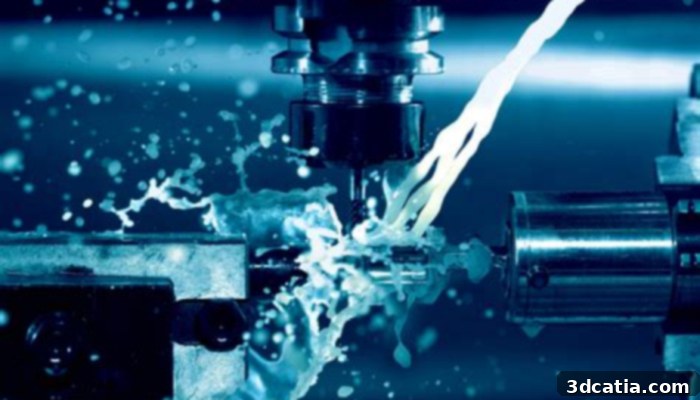
Machining is a post-processing method that removes material to ensure dimensional accuracy and optimum surface finish (photo credits: TPI Texas)
#2: Improving the Aesthetics of a Part
Beyond mere functional quality, the visual appeal and aesthetic presentation of 3D printed parts are often paramount, particularly in sectors such as product design, prototyping, and consumer goods. Post-processing unlocks a vast array of possibilities for enhancing a part’s appearance, moving beyond the raw, sometimes industrial look of a print. Techniques allow for the complete elimination of unsightly print marks, resulting in flawless surfaces. Furthermore, designers can add specific aesthetic finishes such as textured effects, vibrant color applications through painting or dyeing, or even metallic sheens via electroplating. This enables 3D printed parts to not only fulfill their technical specifications but also to meet the demanding aesthetic and branding criteria of customers and markets, creating products that are both functional and visually captivating. A well-finished part significantly boosts market perception and user satisfaction.
#3: Enhancing Mechanical Properties
Post-processing extends beyond superficial improvements, offering profound enhancements to the structural integrity and durability of 3D printed parts. Techniques such as various forms of heat treatment, including annealing or hot isostatic pressing (HIP), can significantly improve the mechanical properties of materials. Heat treatment processes help in eliminating residual stresses introduced during the printing process, refine the material’s microstructure, and consequently increase a part’s strength, ductility, and resistance to fatigue. Similarly, specialized surface finishing techniques or the application of protective coatings can provide an additional layer of defense against corrosion, abrasion, or other forms of wear. These enhancements are critical for parts operating in demanding environments, ensuring extended operational life and reliability, making the difference between a functional prototype and an end-use component.
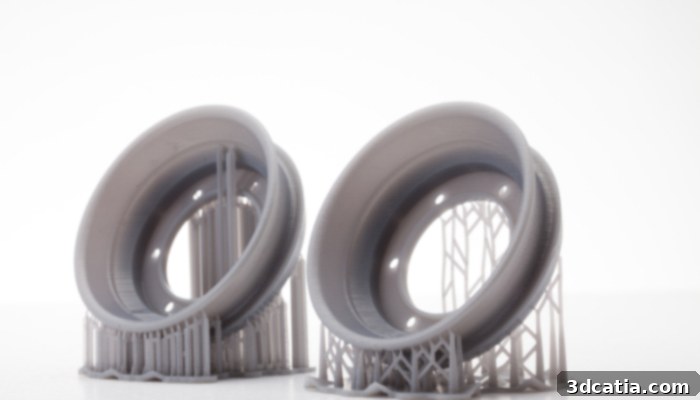
Supports can be essential for successful 3D printing, but should be removed during post-processing (photo credits: Formlabs)
#4: Efficient Support Removal
In many 3D printing processes, particularly FDM and SLA, support structures are an unavoidable necessity. They are crucial for stabilizing overhanging geometries, intricate features, and bridging elements during the additive manufacturing process, preventing collapse and ensuring print success. However, once the print is complete, these supports become extraneous and must be carefully removed. Often, support removal can leave behind unsightly marks, rough patches, or traces on the part’s surface, which can compromise both aesthetics and functionality. Post-processing offers a variety of methods for effective support removal, ranging from manual cutting and sanding to waterjetting, abrasive blasting, or chemical dissolution for soluble supports. Proper post-processing ensures that supports are completely and cleanly detached without causing damage to the part, leading to an optimum surface finish and preserving the intended design.
#5: Thorough Cleaning of Parts After Printing
Certain additive manufacturing technologies, such as powder bed fusion (e.g., SLS) or vat photopolymerization (e.g., SLA, DLP), leave residual material on or within the printed part. For powder bed technologies, parts emerge encased in unfused powder. For resin prints, uncured liquid resin often adheres to the surface. Before a part can be used or undergo further processing, it is imperative to thoroughly clean it and remove any excess or uncured material. Common cleaning methods include immersion in solvent baths (such as isopropyl alcohol for resins), ultrasonic cleaning, or specialized depowdering stations utilizing compressed air and brushes. This crucial step not only frees the part from unwanted material but also ensures a cleaner, more uniform surface finish, which is vital for subsequent steps like painting, coating, or assembly, and for safe handling and use.
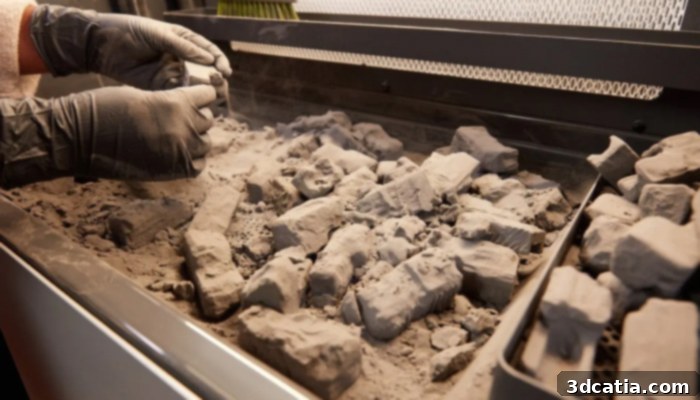
Depowdering removes excess powder from 3D printed parts (photo credits: Formlabs)
#6: Preparing Parts for Other Manufacturing Processes
In many advanced manufacturing workflows, 3D printed parts are not standalone components but rather elements that will be integrated into larger assemblies or undergo subsequent traditional manufacturing operations. This can include precise machining for critical tolerances, welding with other components, bonding, or further assembly stages. Post-processing plays a vital role in preparing parts for these downstream processes. It involves eliminating any surface imperfections that could hinder perfect fitment, adjusting dimensions to exact specifications through subtractive methods, and potentially reinforcing mechanical properties where necessary. By meticulously preparing the printed part, post-processing ensures seamless integration into the overall manufacturing process, preventing issues of compatibility or performance compromise and supporting a holistic approach to complex product creation.
#7: Modifying and Enhancing Material Properties
Some sophisticated post-processing treatments are designed to fundamentally alter or enhance the inherent properties of the materials used in 3D printing. For instance, parts printed with photopolymer resins require post-curing, typically with UV light, to fully solidify the material and improve its mechanical strength, hardness, temperature resistance, and long-term durability, while also preventing yellowing. Beyond curing, specialized surface treatments or infiltration processes can modify chemical, electrical, or thermal properties. Examples include applying conductive coatings for electrical applications (e.g., EMI shielding), making parts watertight for fluid containment or submersion, or enhancing biocompatibility for medical devices. These modifications allow 3D printed parts to be tailored precisely for specific, high-performance applications across diverse and demanding environments.
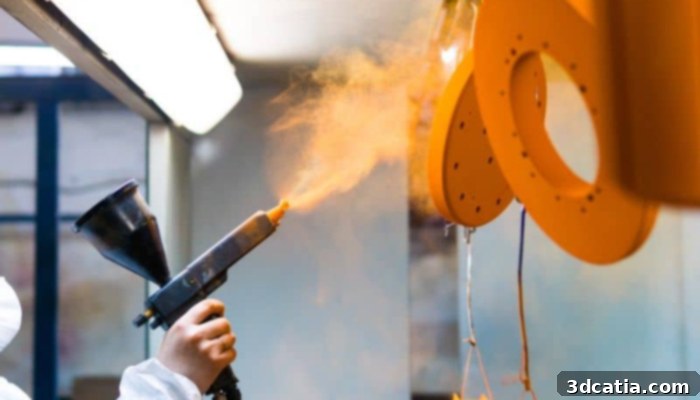
Painting or coating 3D printed parts enhances their aesthetics and adds a layer of protection (photo credits: Bigrep)
#8: Reducing and Relieving Residual Stress
The rapid heating and cooling cycles inherent in many 3D printing processes, particularly in metal additive manufacturing, can induce significant internal residual stresses within the printed parts. These hidden stresses are problematic as they can lead to unwanted warping, distortion, or even premature part failure, especially under load or over time. Post-processing, specifically through controlled heat treatment processes like annealing or stress relief baking, becomes vital in mitigating these issues. By carefully heating and slowly cooling the part, these treatments allow the material’s microstructure to relax, effectively reducing internal stresses. This process significantly improves the part’s dimensional stability, enhances its long-term reliability, and ensures that the component performs as designed without unexpected failures due to internal tensions.
#9: Ensuring Compliance With Industry Standards and Regulations
In highly regulated industries such as aerospace, automotive, medical, and defense, 3D printed parts are not merely expected to function but must also adhere to incredibly strict standards and regulations concerning quality, safety, and performance. Post-processing is a cornerstone in achieving this compliance. This can involve a spectrum of activities, from rigorous cleaning to ensure biocompatibility for medical implants, to precise dimensional inspection and non-destructive testing (NDT) to verify structural integrity for aerospace components. Specific surface finishes may be required to meet hygiene standards, or material treatments to achieve fire retardancy. Post-processing often includes extensive testing, laboratory analysis, and specific certifications, providing documented proof that parts meet all applicable industry benchmarks, legal requirements, and operational safety protocols.
#10: Optimizing Functional Surface Properties
Beyond visual aesthetics, post-processing is instrumental in fine-tuning the functional surface properties of 3D printed parts, which are critical for their performance in specific applications. This involves carefully adjusting parameters such as surface roughness, gloss level, texture, and even friction coefficients. Techniques like advanced polishing can drastically reduce surface roughness, ideal for minimizing friction in moving parts or improving aerodynamic flow. Sandblasting can create a uniform matte finish that enhances paint adhesion or provides a tactile feel. Furthermore, specialized surface coatings can impart properties such as enhanced wear resistance, improved lubrication, antimicrobial capabilities, or even specific electrical insulation or conductivity. By precisely modifying these surface characteristics, post-processing enables engineers to optimize parts for their exact functional requirements, maximizing efficiency and performance in complex systems.
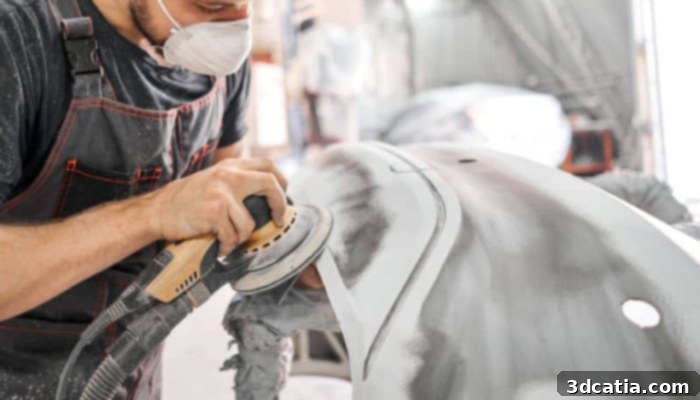
Sanding 3D prints makes surfaces more uniform and homogeneous (photo credits: Bigrep)
In conclusion, 3D printing post-processing is far more than an afterthought; it is an integral and indispensable phase that transforms raw, unfinished prints into high-quality, functional, and aesthetically pleasing components. From ensuring precise quality standards and enhancing mechanical strength to meeting stringent regulatory compliance and optimizing surface properties, the benefits are comprehensive and critical. By investing in and understanding the diverse post-processing techniques available, manufacturers can unlock the full potential of additive manufacturing, delivering parts that are not only innovative in design but also superior in performance and longevity. Ignoring this crucial stage risks undermining the entire 3D printing effort.
Do you regularly post-process your 3D printed parts? Which reasons resonate most with your applications, making post-processing a vital step in your workflow? Share your insights and experiences in a comment below or connect with us on our LinkedIn, Facebook, and Twitter pages! Don’t forget to sign up for our free weekly newsletter here to receive the latest 3D printing news straight to your inbox! You can also find all our compelling videos on our YouTube channel.