
America’s Leading Composite 3D Printer Manufacturers: Driving Innovation in Advanced Materials
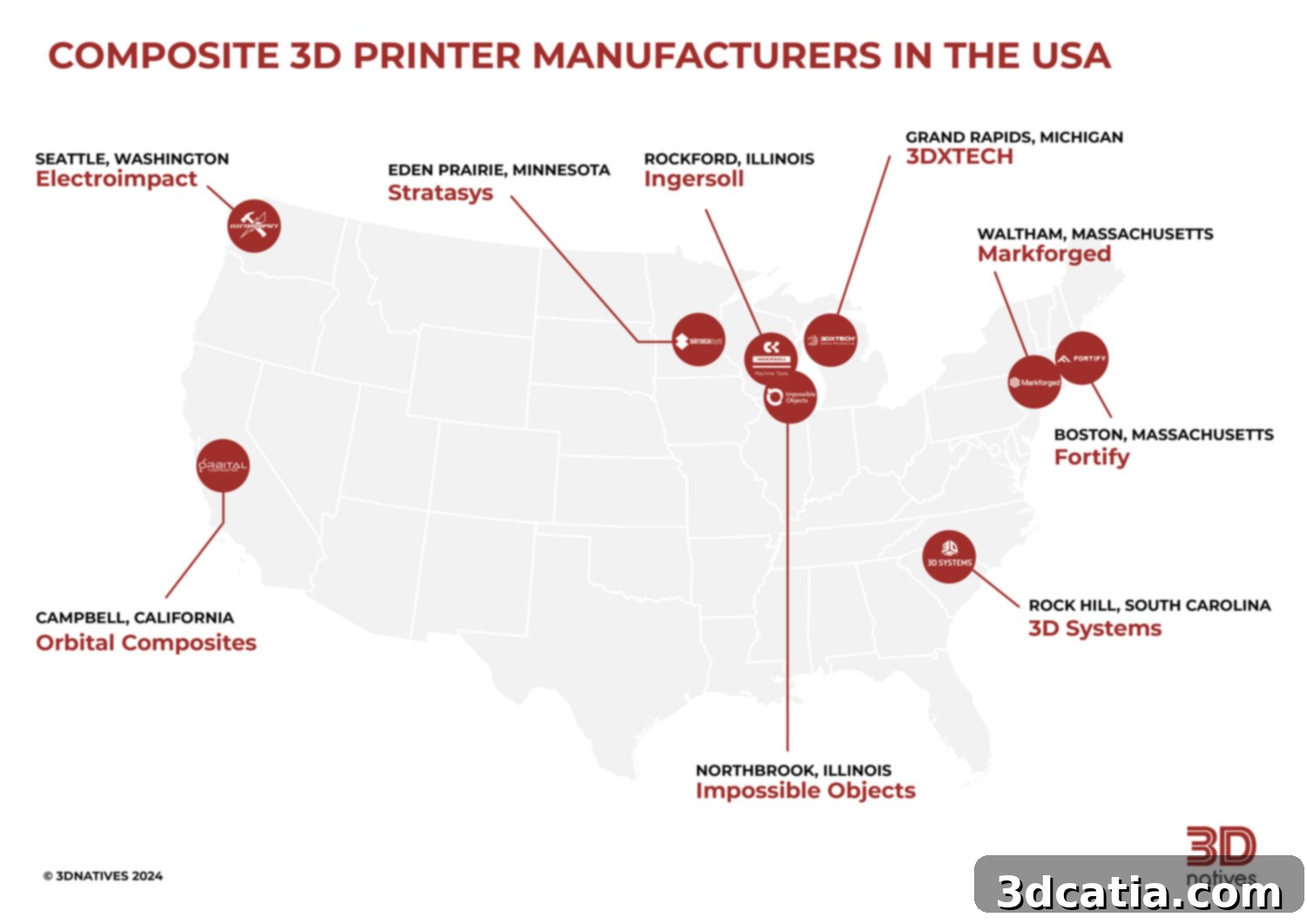
The United States proudly maintains its position as the global epicenter for additive manufacturing, boasting an unparalleled concentration of 3D printer manufacturers, innovative material developers, dynamic startups, and comprehensive 3D printing service providers. This vast and rapidly evolving landscape can often make it challenging to identify the key players driving specific technological advancements. Previously, we have explored the American metal AM solution providers and manufacturers of FDM printers under $5000, delving into the crucial segments of polymers and metals. However, the additive manufacturing sector’s innovation extends far beyond these traditional categories. A particularly exciting and rapidly expanding domain within the USA is composite 3D printing – a technology renowned for creating parts with superior strength-to-weight ratios, enhanced durability, and remarkable functional properties.
Composite 3D printing combines the design freedom of additive manufacturing with the exceptional performance of composite materials, such as carbon fiber, glass fiber, and Kevlar, embedded within polymer matrices. This synergy unlocks unprecedented possibilities for industries requiring high-performance components, including aerospace, automotive, defense, and sporting goods. As this technology matures, a cohort of pioneering American companies is leading the charge, developing cutting-edge composite 3D printers and materials that are redefining manufacturing capabilities. In this comprehensive guide, we take a closer look at the leading American manufacturers of composite 3D printers, examining their unique contributions, technological innovations, and strategic locations across the country. Join us as we explore the enterprises shaping the future of advanced composite additive manufacturing.
3D Systems and Inkjet Composite 3D Printing Excellence
It is hardly surprising to find 3D Systems prominently featured on a list of leading additive manufacturing innovators. As one of the oldest and most venerable 3D printer manufacturers globally, 3D Systems commands an extensive and diverse portfolio of printing solutions that far exceeds many of its competitors. This broad spectrum naturally includes advanced offerings for composite 3D printing. A standout example is the ProJet MJP 5600, a system engineered specifically for the precise 3D printing of large-format, multi-material composite parts within a single build. This sophisticated machine leverages 3D Systems’ proprietary MultiJet Printing (MJP) process, an inkjet-based technology akin to material jetting, which precisely jets photocurable plastic resins or casting wax materials layer by layer. The MJP 5600’s unique capability lies in its ability to combine flexible and rigid photopolymers, such as 3D Systems’ Visijet multi-material composites, to achieve bespoke mechanical properties and custom performance characteristics. This allows for the creation of complex parts with varying material properties across different sections, optimizing them for specific applications. Beyond the MJP platform, 3D Systems also facilitates composite 3D printing on other machine lines, including select SLS (Selective Laser Sintering) 3D printers and their robust Titan series of FDM (Fused Deposition Modeling) printers, demonstrating a versatile approach to composite additive manufacturing across multiple technologies.
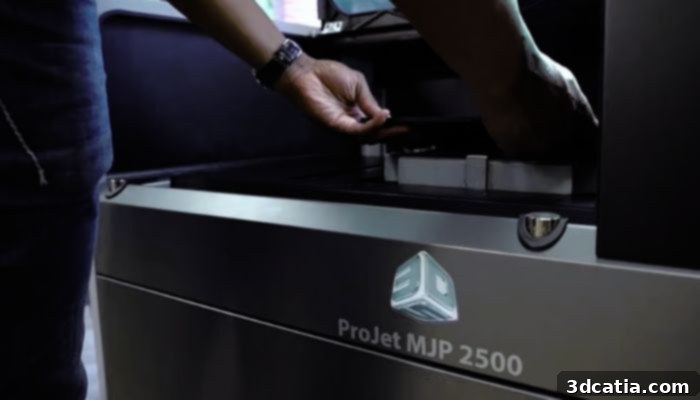
Photo Credits: 3D Systems
3DXTECH and the Advanced Gearbox CF2 3D Printer
Hailing from Grand Rapids, Michigan, 3DXTECH stands as another significant American provider of composite 3D printing solutions. While widely recognized for its extensive and arguably industry-leading portfolio of high-performance materials, including a vast array of carbon fiber reinforced filaments, 3DXTECH has also made notable strides in hardware development. The company offers a specialized printer designed explicitly for demanding carbon fiber and glass fiber 3D printing applications: the Gearbox CF2. This printer is meticulously engineered to excel with composite materials, particularly those reinforced with carbon fiber. Key features include an actively heated build chamber capable of reaching temperatures up to 135ºC, which is crucial for managing warp and ensuring optimal layer adhesion for advanced engineering plastics. Furthermore, the Gearbox CF2 comes equipped with pre-optimized print settings for popular 3DXTECH materials, streamlining the printing process for users. Its hardened system components are specifically designed to withstand the abrasive nature of composite materials, ensuring longevity and consistent performance even when printing with highly filled filaments. This comprehensive approach to both materials and hardware positions 3DXTECH as a vital contributor to the advanced composite additive manufacturing market.

The Gearbox range from 3DXTECH (photo credits: 3DXTECH)
Electroimpact: Pioneer in Large-Scale Composite Additive Manufacturing
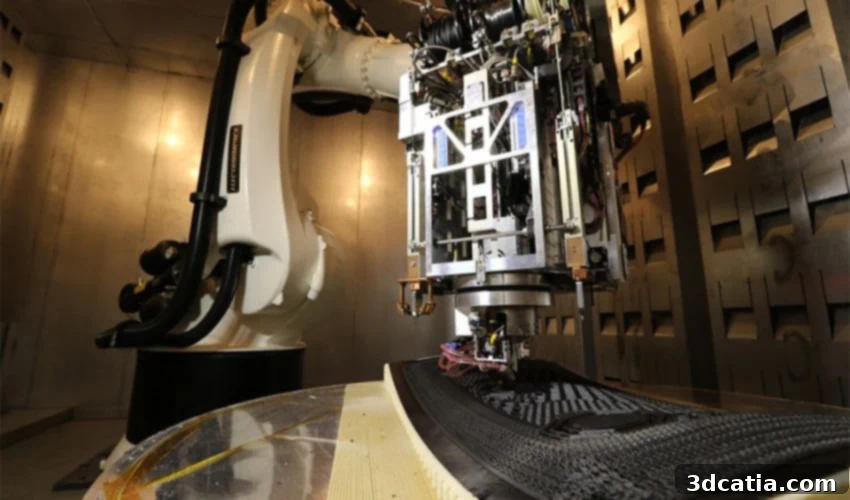
Operating from Washington state, Electroimpact has established itself as a global leader in the design and manufacturing of aerospace tooling and automation systems. Leveraging its deep expertise in precision engineering and robotics, the company has strategically ventured into additive manufacturing, developing a groundbreaking advanced FFF (Fused Filament Fabrication) 3D printing process. This innovative system is known as the Scalable Composite Robotic Additive Manufacturing (SCRAM) system, a sophisticated 6-axis continuous fiber-reinforced 3D printer. The SCRAM system stands apart by enabling the tool-less creation of aerospace-grade integrated composite structures, a capability that represents a significant leap forward in manufacturing efficiency and design freedom. Electroimpact proudly labels this as “True 3D” printing, distinguishing it from what they describe as “2.5D printing” offered by many other processes. Their system’s key advantage is that layers are not confined to a stack of parallel planes, allowing for truly complex geometries, including variable density cores, internal lattice structures, and optimized load paths that would be impossible with traditional manufacturing or less advanced additive techniques. The SCRAM solution is also highly versatile, supporting a wide array of high-performance materials such as PAEK materials, Nylons, and water-soluble thermoplastics, alongside various composite reinforcements like carbon fiber, glass fiber, and boron fiber. This makes Electroimpact a critical player for industries requiring large, complex, and high-performance composite parts.
Fortify and Its Innovative Photopolymer-Based Composite 3D Printing
Founded in 2016 and based in Boston, Fortify is at the forefront of transforming industrial manufacturing through novel materials and advanced process capabilities, particularly targeting applications like RF modules for satellites and other electronic devices. Their pioneering approach centers around the FLUX 3D printers, which utilize Fortify’s proprietary Digital Composite Manufacturing (DCM) process. This innovative technology marries photopolymers with functional additives, such as reinforcing fibers and various particles, which are precisely suspended and strategically aligned within a resin matrix during the printing process. The key differentiator of DCM is its ability to actively control the orientation of these reinforcing elements, allowing engineers to dictate anisotropic material properties within the printed part. Upon UV curing, this meticulous control results in parts exhibiting an expansive range of material characteristics, often at significantly higher speeds compared to other composite 3D printing methods. By integrating material science with advanced manufacturing, Fortify is enabling the creation of components with optimized dielectric properties, enhanced mechanical strength, and superior thermal management, opening new avenues for high-performance electronic and structural applications.
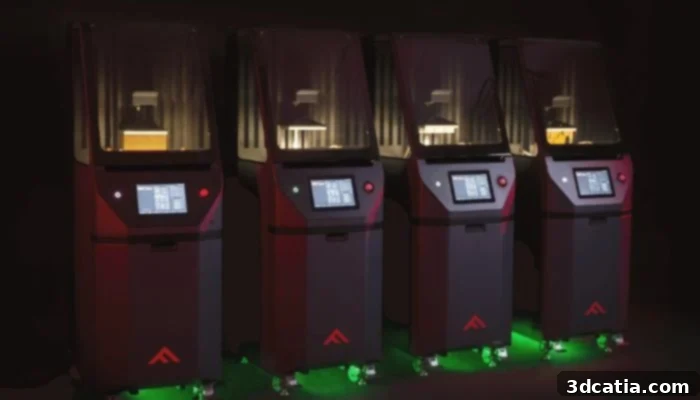
The FLUX ONE (photo credits: Fortify)
Impossible Objects: Revolutionizing Composite 3D Printing with CBAM
Impossible Objects unequivocally earns its place among the elite American composite 3D printer manufacturers. This company is singularly focused on the creation of high-performance composite parts, driven by its unique, patented composite-based additive manufacturing (CBAM) technology. Their ambitious mission statement is to “produce the world’s strongest additively manufactured composite parts at injection molding speeds.” Through their CBAM 25 and CBAM-2 systems, Impossible Objects claims an extraordinary capability: manufacturing industrial-grade composite parts at a rate up to 1600% faster than other carbon fiber 3D printing systems currently available. This remarkable speed, combined with the superior material properties achieved, represents a paradigm shift for high-volume, high-performance applications. Beyond sheer speed, their systems incorporate advanced features like a real-time detection and avoidance system. This intelligent integration allows for automatic print monitoring and correction during the build process, significantly enhancing reliability and yield. Furthermore, Impossible Objects’ technology boasts compatibility with highly advanced polymers such as PEEK (Polyether Ether Ketone), enabling the production of parts capable of withstanding extreme temperatures and harsh chemical environments, making them ideal for demanding aerospace, defense, and industrial applications.
Ingersoll: Large-Format, Hybrid Composite 3D Printing Solutions
Ingersoll Machine Tools, a long-established American enterprise acquired by the Camozzi Group in 2003, has successfully transitioned its formidable expertise in large-scale machining into the realm of additive manufacturing. For composite 3D printing, Ingersoll offers its flagship MasterPrint® 3X, a truly innovative large-format, industrial, hybrid 3D printer. This remarkable machine integrates additive and subtractive manufacturing capabilities, allowing for the simulation, 3D printing, and precise milling of extra-large composite parts in a continuous, single-piece workflow. The MasterPrint® 3X’s hybrid nature is its core strength, supporting multiple interchangeable modules that include 3D printing, milling, fiber placement, tape laying, inspection, and trimming. This versatility makes it an indispensable tool for sectors demanding massive, high-precision composite structures, such as aerospace (for wing components and fuselage sections), naval (for submarine and ship structures), and even large-scale automotive applications. In addition to the MasterPrint® 3X, Ingersoll provides other advanced solutions like the MasterPrint® Continuous Filament, designed for continuous fiber-reinforced polymers, and other specialized systems such as the MasterPrint® 5X, MasterPrint® Linear, and MasterPrint® Robotic, showcasing their commitment to diverse, industrial-grade composite manufacturing needs.
Markforged: A Household Name in Industrial Composite 3D Printing
Markforged has rapidly become one of the most recognizable and highly regarded American manufacturers in the composite 3D printing space. While the company has recently diversified its offerings by venturing into metal binder jetting, its foundational strength and primary reputation are built upon its industrial and desktop composite 3D printing solutions, coupled with an extensive array of high-performance materials. A defining characteristic of Markforged’s portfolio is that all eight of its printer models, including the recently launched FX10™, are fully compatible with continuous fiber 3D printing. This capability allows for the embedded reinforcement of parts with continuous strands of carbon fiber, fiberglass, Kevlar, or high-strength, high-temperature fiberglass, imparting exceptional strength and durability akin to machined aluminum. To further enhance user experience and industrial integration, Markforged provides access to “The Digital Forge.” This sophisticated cloud-based platform unifies software, printers, and materials, creating a seamlessly controlled ecosystem for additive manufacturing. This holistic approach underscores Markforged’s unwavering commitment to making industrial additive manufacturing accessible and reliable for a wide range of engineering and production applications, from tooling and fixtures to end-use parts in demanding environments.
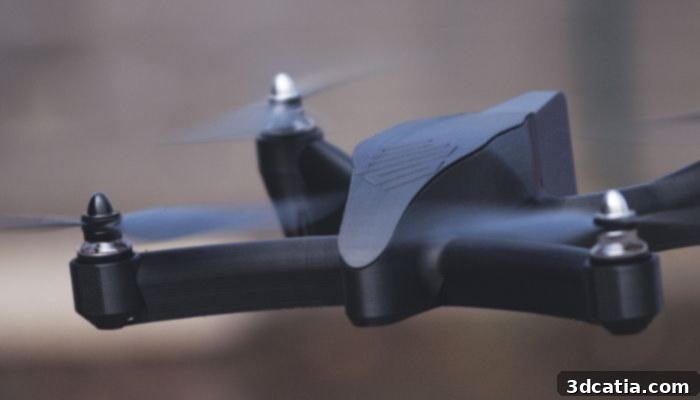
A drone made with a Markforged composite 3D printer (photo credits: Markforged)
Orbital Composites: Sending Composite AM to Space and Beyond
Orbital Composites, based in Campbell, California, distinguishes itself among American manufacturers of composite 3D printers through its prominent work in the aerospace sector, a specialization reflected in its very name. However, Orbital Composites is more than just a service provider; it is renowned for its large-scale, composite 3D printing “factories,” operating under the compelling motto to “leverage the power of robots like never before.” The company offers a suite of advanced systems, including the Orbital e-, Orbital S-, Orbital F-, and AMCM platforms, all designed for multi-axis, large-scale manufacturing. These sophisticated robotic systems are adept at producing high-performance composite components for a diverse range of applications, including oversized structures like wind turbine blades, intricate satellite parts, robust rocket components, and many other large-format industrial pieces. By combining advanced robotics with specialized composite additive manufacturing processes, Orbital Composites is pushing the boundaries of what is possible, enabling the rapid and efficient production of critical components that meet the stringent demands of aerospace and other high-tech industries.
Stratasys and its Robust F123CR Series for Carbon Fiber Composites
Another venerable and globally recognized manufacturer gracing this list is Stratasys. This Israeli-American company, much like 3D Systems, commands an extraordinarily broad portfolio of additive manufacturing solutions, spanning numerous 3D printing technologies. Within this expansive range, composite 3D printing holds a significant position, particularly through their F123CR Series. This series is specifically engineered to facilitate the creation of robust, industrial-grade parts reinforced with carbon fiber, delivering exceptional strength and stiffness. Comprising the F190CR and F270CR systems, these FDM (Fused Deposition Modeling) 3D printers are distinguished by their compatibility with a wide spectrum of high-performance materials. This includes specialized composite filaments such as ABS-CF10 and Nylon-CF10, which integrate chopped carbon fibers into engineering thermoplastics. These materials, combined with the reliability of the F123CR platform, allow manufacturers to produce jigs, fixtures, tooling, and even end-use parts that require superior mechanical properties and environmental resistance, making Stratasys a foundational player in the industrial composite AM landscape.
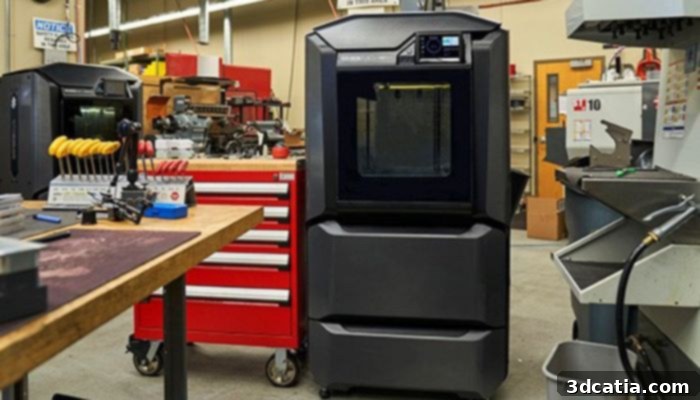
Photo Credits: Stratasys
The American additive manufacturing market is a hotbed of innovation, and the segment for composite 3D printers exemplifies this dynamism. From established giants like 3D Systems and Stratasys leveraging their extensive experience, to specialized innovators such as Markforged, Fortify, and Impossible Objects pushing the boundaries of material science and process speed, these companies are collectively driving the future of manufacturing. Their diverse approaches—encompassing multi-jetting, advanced FDM, robotic fiber placement, and photopolymer-based systems—demonstrate a commitment to solving complex industrial challenges with high-performance composite materials. The growth in this sector highlights the increasing demand for parts that offer exceptional strength-to-weight ratios, enhanced durability, and design freedom across critical industries like aerospace, automotive, and defense. We hope this comprehensive overview has provided valuable insights into the leading American manufacturers shaping this exciting domain. What are your thoughts on these trailblazers in composite 3D printing? Did we overlook any crucial players that deserve recognition? Let us know your perspectives in the comments below or reach out to us on our LinkedIn, Facebook, and Twitter pages! For the very latest updates in the world of 3D printing, remember to sign up for our free weekly newsletter here, delivering breaking news directly to your inbox! You can also explore our extensive video library on our YouTube channel for more in-depth content.
*Cover Photo Credits: Electroimpact