Guides
#Working3D: Six Questions for Manager of 3D at Children’s Hospital
3D printing has had a profound impact on the medical community, and one area where the technology is really showing its usefulness is in pediatrics. Children have more variable anatomy than adults because their bodies are still developing, so when…
- 3 min read
- Guides
- Six more stories

3D printing has had a profound impact on the medical community, and one area where the technology is really showing its usefulness is in pediatrics. Children have more variable anatomy than adults because their bodies are still developing, so when the need for unique surgical operations arises, 3D visualization can provide valuable insights. 3D printing can create surgical models and guides for surgeons and families to better understand a patient’s anatomy. For instance, if a tumor is in an unusual or difficult-to-access location, the 3D lab could print a model of the patient’s tumor, as well as the surrounding organs, to help develop their surgical approach. Patients and their families, as well as physicians, benefit from seeing this physical representation.
Children’s Nebraska, located in Omaha, is one of a handful of pediatric hospitals in the country that has its own 3D printing lab. To learn more about how the lab leverages the technology, as well as what it is like to work with it, we spoke to Gabe Linke, the Manager of 3D at Children’s. Linke helped build the hospital’s 3D printing operation from the start—and we wanted to learn how.
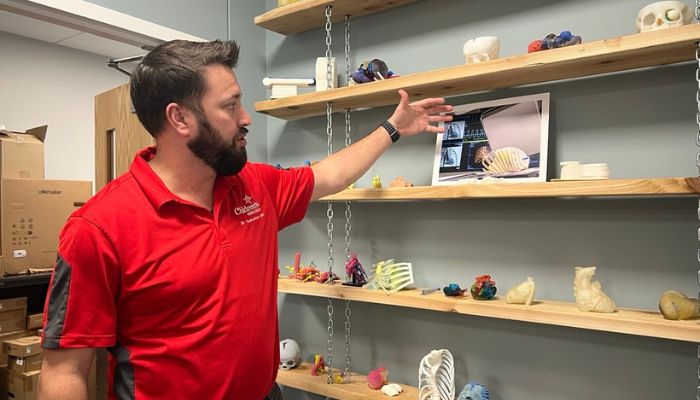
The gallery in the 3D printing lab (Photo Credit: 3Dnatives)
3DN: Could you introduce yourself?
More from the desk
Six other notes from the rest of the bench.
 News3D Printed Robots to Be Used in Search-and-Rescue OperationsIn Search-and-Rescue operations, timing and flexibility is often key to successful results. It is often integral not only that rescue efforts happen as quickly as possible to guarantee the maximum number of survivors in a crisis, but that responses be…
 NewsAdditive Manufacturing Plays A Growing Role in the Jewelry IndustrySmarTech Analysis has published a new study dedicated to the additive manufacturing market, this time focusing on the jewelry sector. According to the report, the 3D printed jewelry market is expected to reach a value of $989 million by 2031,…
 NewsTop 5 Videos: When Basketry Meets 3D Printing…The first video of our selection this week focuses on the Crossing Parallels project which examines the potential link between basketry and 3D printing. So how can 3D technologies help to take this craft skill to the next level? Designer…
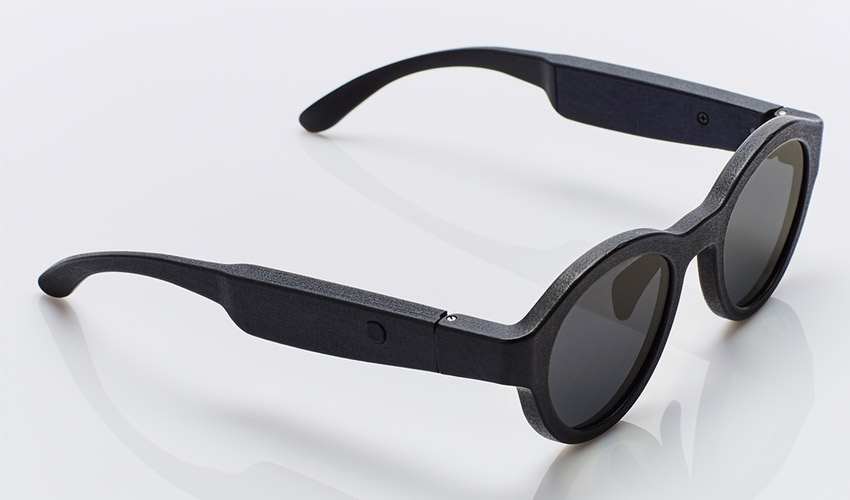 News3D Printed Smart Glasses to Help Dyslexic ChildrenAbeye is a young French company supported by Atol Les Opticiens. The medtech startup manufactures electronic glasses intended to improve everyone’s well-being. After the success of its first pair, Spectalert, which detects falls in the elderly, Abeye is now launching&hellip
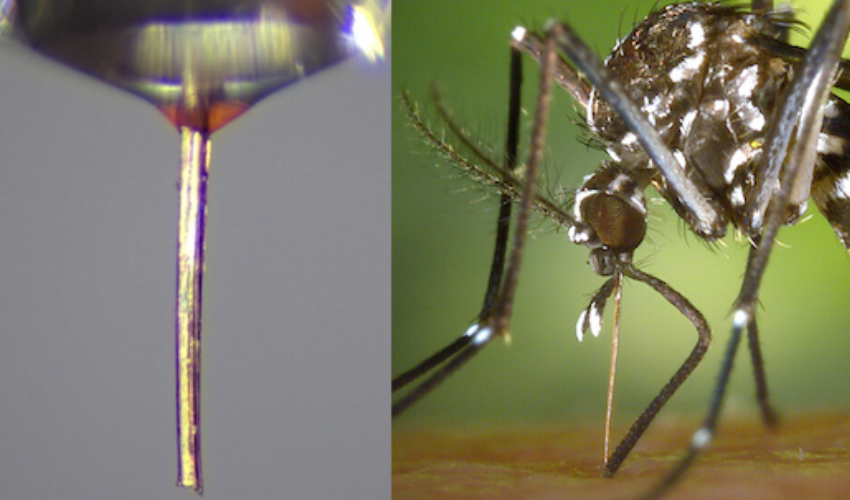 ApplicationsMosquito Proboscis Repurposed as a Micro Nozzle for High Resolution 3D PrintingMost people think of mosquitoes as pests, not as tools for next-generation micro-fabrication. Yet researchers at McGill University have shown that the proboscis of a deceased female mosquito can serve as a biodegradable micro nozzle for high-resolution 3D printing. With…
 NewsThe NOVUM Project is using Cellulose to Create a Novel Sustainable 3D Printing MaterialNOVUM is a project seeking to develop a 3D printing system from cellulose led by consortium of 10 European partners. Cellulose is a biopolymer making up the wall of plant cells, notably wood, and has a number of advantages, the…