Guides
#Working3D: Six Questions for a Footwear Engineer
We have seen in numerous projects how 3D printing is being used to make shoes. This is especially the case for the consumer goods sector, where we are seeing particularly fashionable examples, but also sports shoes, which enable greater performance…
- 3 min read
- Guides
- Six more stories
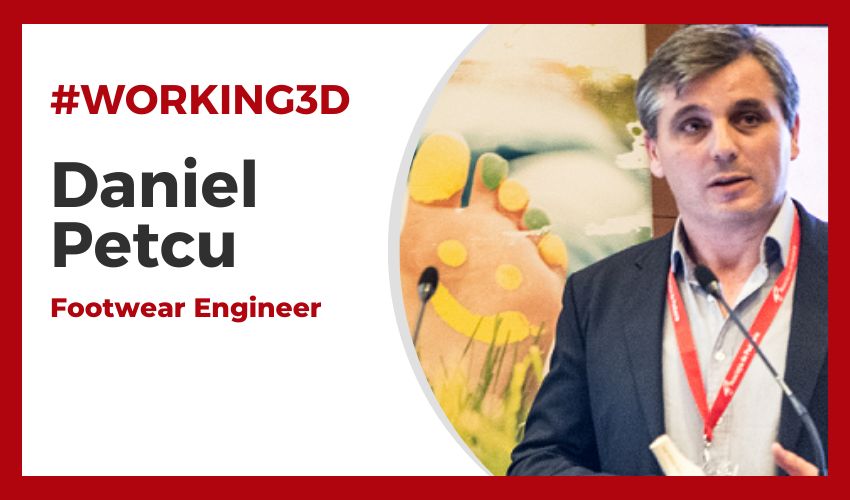
We have seen in numerous projects how 3D printing is being used to make shoes. This is especially the case for the consumer goods sector, where we are seeing particularly fashionable examples, but also sports shoes, which enable greater performance for athletes. However, it is also relevant for the orthopedic shoe industry, which focuses on creating footwear that contribute to the health of their wearers. Daniel Petcu focuses on the latter in his work as a footwear engineer. He has already been involved in numerous projects and designed the first complete 3D-printed orthopedic shoe presented in a case study at OTWorld 2024 in Leipzig, where he also wore a pair of 3D printed footwear created for him. We asked him a few questions to find out more about the work of a footwear engineer and the challenges he faces on a daily basis.
3DN: Could you introduce yourself?
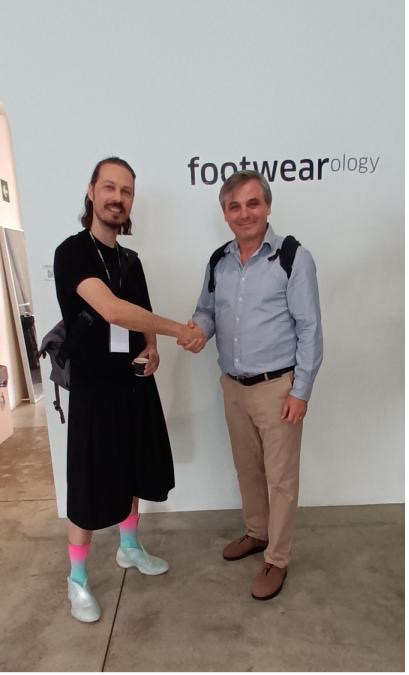
Petcu (right) meeting Philippe Holthuizen founder of Fused Footwear at Footwearology’s event in Barcelona.
I am a footwear engineer with a Ph.D. awarded based on a thesis focused on foot orthoses for diabetic feet. My interest is in the area of medical footwear (including foot orthoses) which is not included in the scope of practice of footwear engineers, so it was an extensive self-education process to gain knowledge in the Pedorthics field. I have developed the new concept of Pedorthic Information Modeling, defined as the environment for the digital representation of the aesthetic, physical, and functional characteristics of the information model of medical footwear.
The concept was translated into practice through a Grasshopper visual programming code and 3D-printing of foot orthoses and orthopedic footwear. The Pedorthic Information Modeling concept and the Grasshopper code are being continuously developed and tested to be further validated by practice. They have been presented at significant events such as OTWorld in Leipzig, Germany (2022, 2024), IVO-OST in Koln, Germany (2022), FootPRINT3D in Barcelona, Spain (2023), International Rhino User Meeting in Wroclaw, Poland (2024), Pedorthic Association of Australia Conference (2024).
More from the desk
Six other notes from the rest of the bench.
 NewsThe Most Exciting Innovations at RAPID + TCT 2025RAPID + TCT 2025 has closed its doors! But thankfully, we still have plenty of content from the largest additive manufacturing and industrial 3D printing event in North America. This includes a video on some of the coolest 3D printing…
 MaterialsAll You Need to Know About Wood 3D PrintingWhen we talk about additive manufacturing and materials, we often think of plastics or metals. However, the current offering has grown significantly over the years and we can now produce parts with a wide variety of materials, from ceramics to…
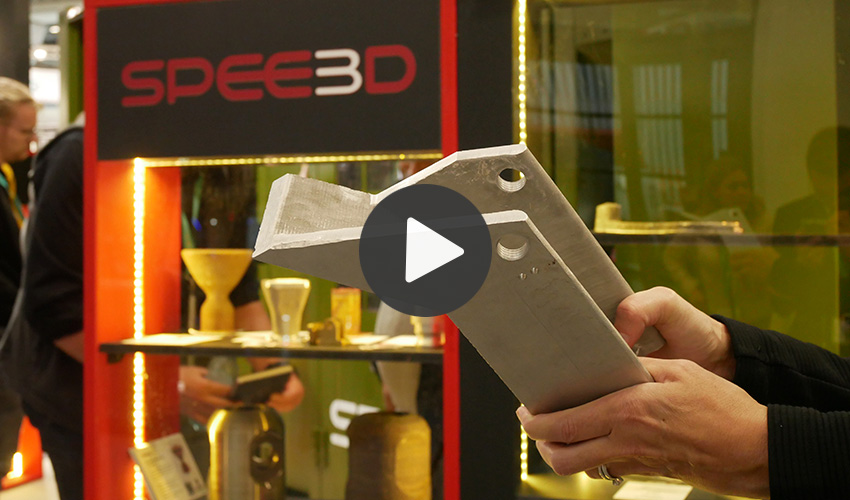 NewsSPEE3D’s Cold Spray Additive Manufacturing Technology & EMU for On-Demand ManufacturingSPEE3D is an innovative provider of metal-based additive manufacturing technologies. The Australian company focuses on the development and distribution of machines and integrated system solutions using its patented Cold Spray Additive Manufacturing technology. The products enable
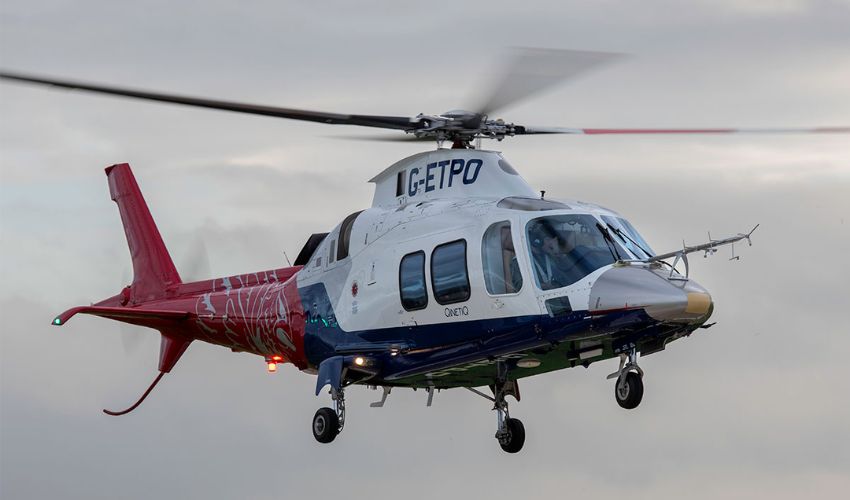 ApplicationsCan Recycled Titanium 3D Printing Secure the UK’s Defense Supply Chain?British defense leader QinetiQ has reached a milestone in “circular” defense manufacturing with the successful maiden flight of a 3D-printed structural component made from recycled titanium. The test, conducted by QinetiQ’s Flight Test Organisation at MOD Boscombe Dow
 NewsSML and Palari to Join Forces To Make 3D Printed, Sustainable Neighborhoods in CaliforniaTo combat housing shortages and to help the construction industry become more environmentally friendly, additive manufacturing is increasingly seeming to be a viable option. And it is mainly for these reasons that more and more companies in the sector have…
 News3D Printing Has Brought a Dinosaur to LifeNo, you’re not dreaming: in a few years’ time, dinosaurs could well be sharing our everyday lives… Thanks to 3D printing! A team of researchers from the University of Isla Nublar have announced that they have succeeded in recreating the…