Applications
Can Recycled Titanium 3D Printing Secure the UK’s Defense Supply Chain?
British defense leader QinetiQ has reached a milestone in “circular” defense manufacturing with the successful maiden flight of a 3D-printed structural component made from recycled titanium. The test, conducted by QinetiQ’s Flight Test Organisation at MOD Boscombe Dow
- 3 min read
- Applications
- Six more stories

British defense leader QinetiQ has reached a milestone in “circular” defense manufacturing with the successful maiden flight of a 3D-printed structural component made from recycled titanium. The test, conducted by QinetiQ’s Flight Test Organisation at MOD Boscombe Down in Wiltshire, featured a 3D printed hinge mounted on a QinetiQ-owned A109S helicopter.
The aircraft is currently being developed for the world-renowned Empire Test Pilots’ School (ETPS). The printed part serves as a critical attachment point for an Air Data Boom: a high-precision external probe used to measure airspeed and angle of attack. In flight testing, the structural integrity of this hinge is significant. A failure could trigger severe aerodynamic vibrations or lead to the boom snapping, which would compromise the sensitive instrumentation data required for pilot training. Designed by QinetiQ and fabricated by Additive Manufacturing Solutions Limited (AMS Ltd.), the hinge was produced using titanium recycled from a decommissioned aircraft. This flight marks a significant step in proving that flight-critical hardware can be successfully salvaged from scrap and returned to the sky through additive processes.
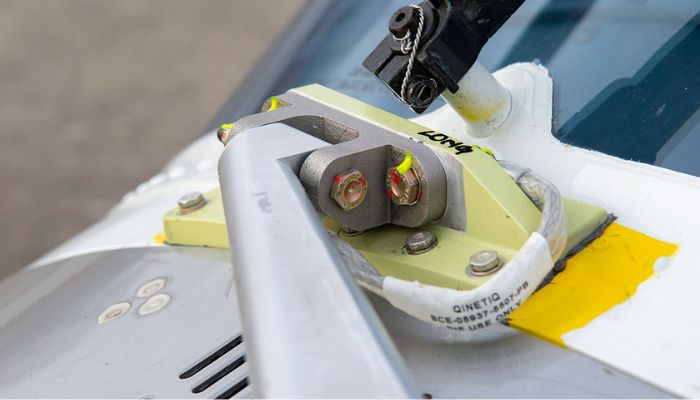
The hinge is a flight-critical component. (Photo Credit: QinetiQ)
Why 3D Print the Hinge?
AMS Ltd. has a proprietary atomization process that creates powder out of recycled scrap metal. According to QinetiQ, this process acheives 97& efficiency and minimizes material loss. While it wasn’t revealed which powder bed fusion process specifically was used to create the hinge, AMS has in-house laser and electron beam powder bed fusion capabilities, so it was likely one of those processes. QinetiQ also reported that AMS’s manufacturing process uses 93.5% less CO2e compared to traditional supply chains.
More from the desk
Six other notes from the rest of the bench.
 NewsTop 5 Videos: 3D printing against COVID-19This week we found the top 5 videos about 3D printing and the way additive manufacturing is changing production. The technology has infiltrated many sectors, from medical to automotive – check our selection of the week to keep up with the innovations! If you enjoy these, you&hell
 ApplicationsAutonomous In-Space Manufacturing Moves Closer to RealityBased in Massachusetts, COSM Advanced Manufacturing Systems announced that it will begin working on the final development of electron beam metal 3D printing systems for a variety of future in-space, lunar and Martian applications. The work is funded by a…
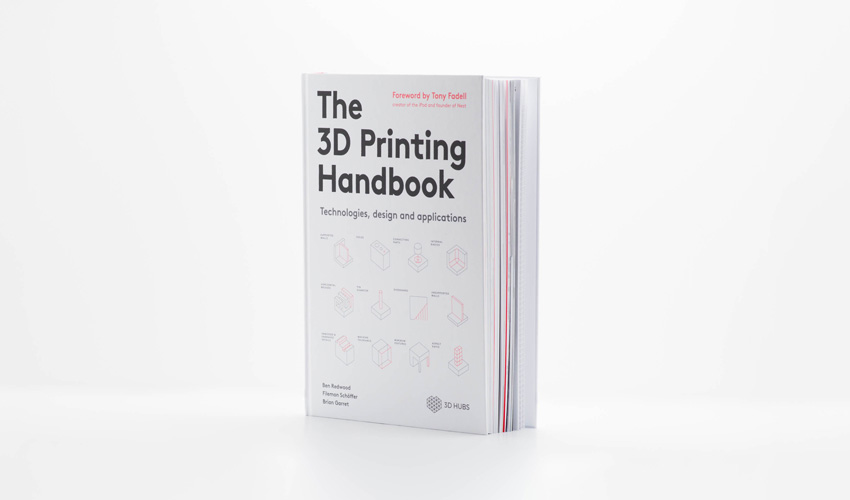 GuidesGiveaway: The 3D Printing Handbook by 3D Hubs & Interview!3D Hubs are a big name in the 3D printing industry, linking thousands of local 3D printing services together to provide a huge variety of 3D technologies and materials. Expanding beyond just being a 3D printing service, 3D Hubs have…
 Applications3D Printing Gives a New Face to an Injured CyclistIn July 2021, Dave Richards’ life changed dramatically during a bike ride with two friends in the UK’s Somerset region. The group of cyclists collided with a drunk driver who was on the phone at the wheel. Dave went under…
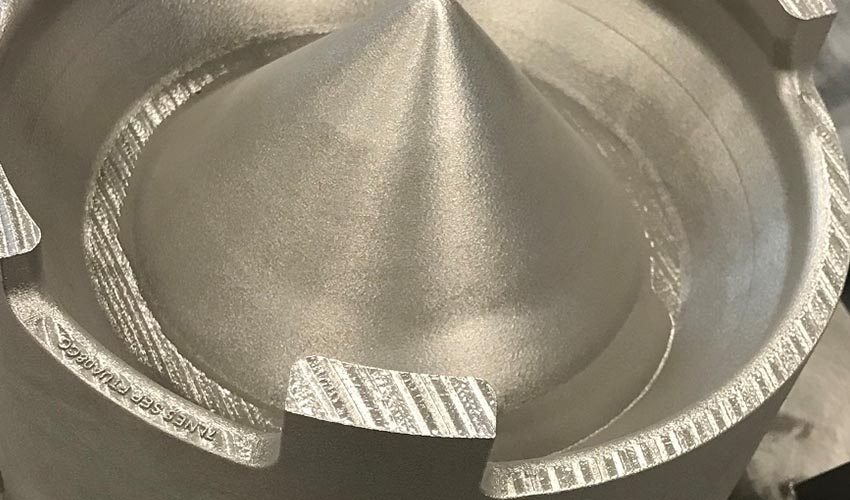 ApplicationsUS Air Force and GE’s collaboration on metal AM reaches first milestoneIn mid-2019, GE Additive and GE Aviation approached the US Air Force to propose a metal additive collaboration program to address its specific sustainment, readiness and affordability needs. It’s the US Air Force’s Rapid Sustainment Office (RSO) that is in…
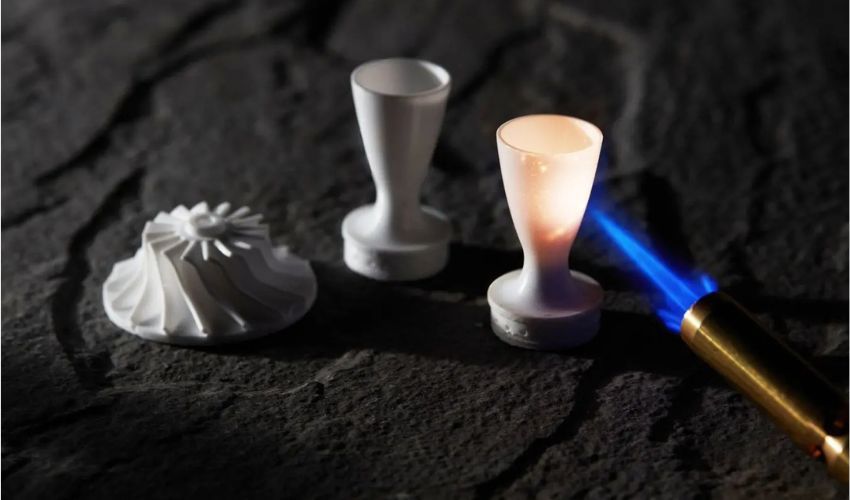 MaterialsWhat Are the Characteristics of Alumina in 3D Printing?Alumina, also known as aluminum oxide, is a technical ceramic material that occurs naturally in bauxite, a rock that also contains iron oxide. Bauxite is typically purified using Bayer’s process, which extracts a white powder that can then be transformed…