News
Wood 3D Printing Is Being Used for More Eco-Friendly Lights
Though best known for polymers and metals, more than ever 3D printing is widening its horizons when it comes to material development. This is especially the case when it comes to more sustainable materials. And what could be more eco-friendly…
- 3 min read
- News
- Six more stories
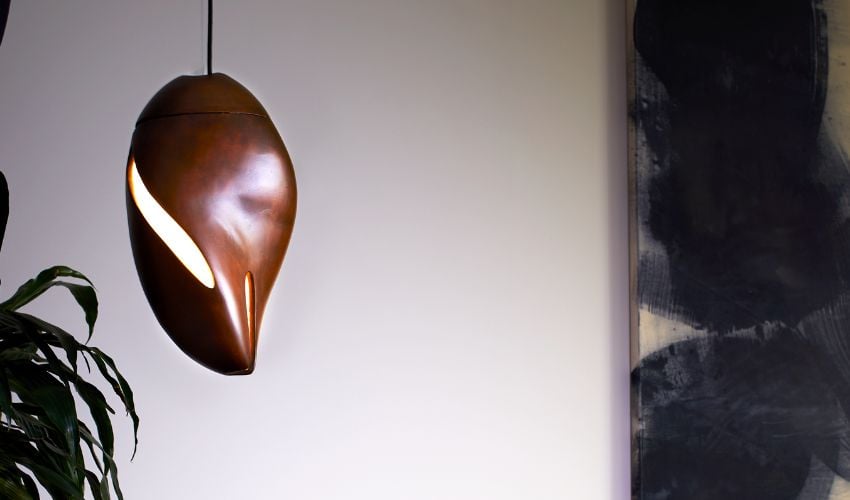
Though best known for polymers and metals, more than ever 3D printing is widening its horizons when it comes to material development. This is especially the case when it comes to more sustainable materials. And what could be more eco-friendly than wood itself? At least that is the thought process of Forust and Desktop Metal. With the release of the Shop System™ – Forust Edition, the companies are seeking to make high-volume, affordable wood 3D printing using binder jetting. The technology has already been adopted for a number of projects including the creation of 3D printed decorative pendant lights, called Cocoon, through a collaboration with the designers HagenHinderdael.
As mentioned, Cocoon is the brainchild of Forust and HagenHinderdael, an award-winning creative practice who wish to combine suitable design and innovative technology in their immersive installations. Helmed by Sofia Hagen and Lisa Hindardael, the company pursues an approach that explores the relationship between immersive art and biophilic design, a concept that in and of itself aims to increase the connection between people and nature within buildings. And this has been achieved through the creation of Cocoon, a 3D printed, sustainable, decorative pendant that transforms wood waste into an organic, technologically advanced light.
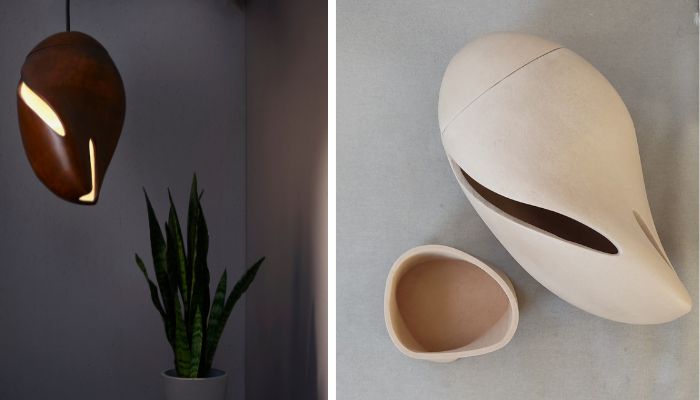
The finished (left) and unfinished (right) Cocoon (photo credits: Anders Gramer)
Using Wood 3D Printing to Create Cocoon
Cocoon is the culmination of a variety of different concepts. However, the ultimate goal was to create a light that not only was sustainable, but which also resembled an organic structure, speaking to the natural materials used. And this was certainly achieved. Thanks to the use of Forust and Desktop Metal’s innovative wood 3D printing technology, Cocoon was developed using an innovative process that is able to reduce timber waste. The final part is thus not only eco-friendly, but fully degradable.
More from the desk
Six other notes from the rest of the bench.
 ApplicationsAmerican 3D Printers to Speed Up Repairs on Ukraine’s Front LinesIn Ukraine’s continued fight against Russia, the use of 3D printers has taken on an ever-growing role. The transportable, on-site, on-demand nature of additive manufacturing has proven to be a real boost to the Ukrainian war effort. Applications are varied…
 NewsMIT researchers 3D print miniature magnetic multi-material pumpA research team at MIT’s Microsystems Technology Laboratories (MTL) has designed a 3D printed diaphragm pump that is operated magnetically. Portable and effective, the new pump demonstrates the potential of additively manufactured devices. The scientists behind the project hope t
 NewsNew Technology From Carbon Co-Founder Promises Faster Multi-Material Resin Printing3D printing just keeps on evolving. Most recently, Stanford engineers, including Joseph DeSimone, have designed a new 3D printing method that they claim is 5 to 10 times faster than the quickest high-resolution printer currently available. Not only that, but…
 NewsTitomic to 3D Print Callaway Golf ClubsTitomic is an Australian additive manufacturing company that has recently announced a partnership with Callaway Golf, one of the world’s largest golf club manufacturers. Titomic will be bringing their expertise to the US to produce more innovative and successful golf&hellip
 ApplicationsPitch 3D from 3DHEALS in In (3D) ustry, boosting the medical sector3DHEALS is a platform for 3D printing and bioprinting specialised in the health sector. This platform is already known for its different events in the USA and has joined up with partners like IN (3D) USTRY. Several European countries has also…
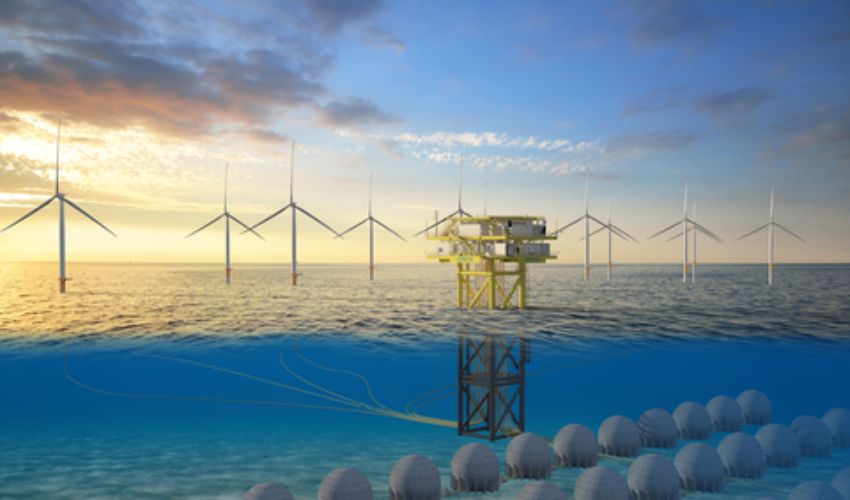 NewsUS, Germany Invested Millions in Subsea Energy Storage Utilizing 3D PrintingAt a time when climate change is becoming an increasing threat to our planet, it is critical to start adopting sustainable energy sources and technologies. The project Stored Energy in the Sea (StEnSea) was developed in 2012 for that reason.…