Applications
American 3D Printers to Speed Up Repairs on Ukraine’s Front Lines
In Ukraine’s continued fight against Russia, the use of 3D printers has taken on an ever-growing role. The transportable, on-site, on-demand nature of additive manufacturing has proven to be a real boost to the Ukrainian war effort. Applications are varied…
- 3 min read
- Applications
- Six more stories

In Ukraine’s continued fight against Russia, the use of 3D printers has taken on an ever-growing role. The transportable, on-site, on-demand nature of additive manufacturing has proven to be a real boost to the Ukrainian war effort. Applications are varied as well with everything from frontline uses like manufacturing weapons components and drones, to the civilian sector in construction and medical care for victims of the conflict, and even using 3D scanning in an effort to uncover justice amidst the chaos. Now, it is once again safe to say that 3D printing has stepped back into service as the United States has announced the handover of several large, industrial-grade 3D printers that are capable of providing the Ukrainian armed forces with spare parts and 3D printed replacements for their battlefield equipment.
Speaking at the Center for New American Security (CNAS) think tank, US Under-Secretary of Defense for Acquisition and Sustainment William LaPlante stated that the industrial 3D printers were delivered to Ukraine last month and that Ukrainian engineers had recently completed their training on how to use the devices. “It’s going right in-theater and they’re printing all their repair parts,” explains LaPlante, highlighting the main objective for these printers – to manufacture parts for Ukrainian vehicles, aircraft and machinery on-location that can be used to make repairs much faster than waiting on traditional parts and supply chains.
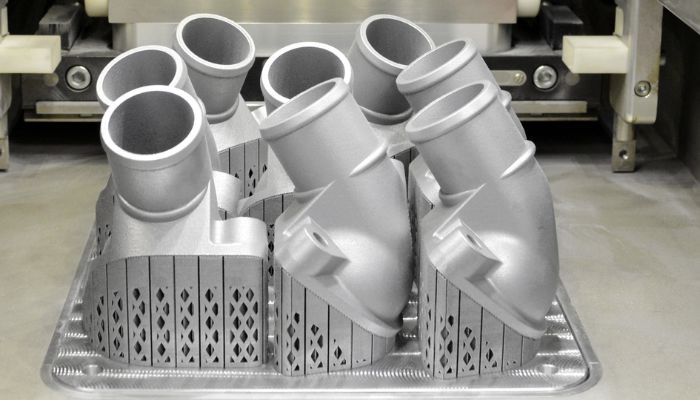
3D printing has already been used to manufacture spare parts in the automotive industry using methods such as laser powder bed fusion (Photo credits: Mercedes-Benz)
While the exact type or model of the industrial 3D printers was not specified, given their large size and purpose (LaPlante mentions that the printers are the size of a small truck), we can assume that they could any number of industrial 3D printers. Some potential include either binder jetting or powder bed fusion 3D printers that are able to construct multiple parts in a single batch out of metal or ceramic, though are not always this large. Alternatively, they may include direct energy deposition (DED) printers which are often used specifically for metal-based repairs and tend to be very large.
More from the desk
Six other notes from the rest of the bench.
 NewsQR codes to avoid piracy in 3D printingCurrently anyone with the necessary knowledge of 3D printing could reproduce almost anything. In relation to this, intellectual property in additive manufacturing is an issue that worries more and more within the industry. Companies like Disney have released patents to attack pir
 NewsTop 5 Videos: Using FDM to Print Ceramic and Metal FilamentsIn this week’s top 5, check out the latest webinar from 3Dnatives, “How Can You Use FDM to Print Ceramics and Metals?” Though ceramic and metal filaments are becoming increasingly common, especially for those using FDM for industrial purposes, there…
 News#3DExpress: New York Stock Exchange to Start Delisting Proceedings Against Velo3DNow that September is here, the 3D printing market is once again waking up after the summer vacation to prepare for a sure-to-be busy year with major events coming up at the end of 2024 and the beginning of 2025.…
 NewsWhat to Expect at IMTS 2022This week, people from around the world are flocking to Chicago for the 33rd edition of the International Manufacturing Technology Show (IMTS), the largest and longest-running industry trade show in the Western Hemisphere. IMTS 2022 is already underway, taking place…
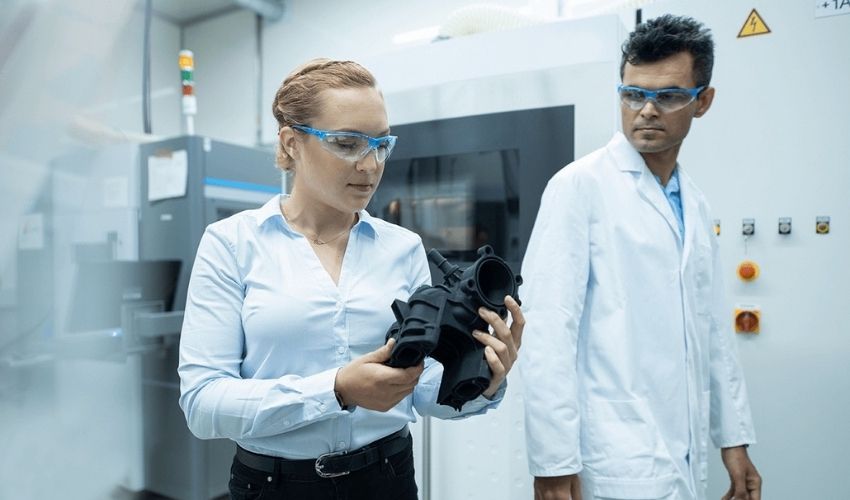 NewsForward AM and Xuberance Announce Additive Manufacturing Technical Center in ChinaInterest in additive manufacturing, specifically in the Asia-Pacific region, continues! Forward AM is joining companies like EOS and Arburg, and has opened a new Additive Manufacturing Technical Center (AMTC) in Shanghai, China. The new center is a collaboration between Forward&h
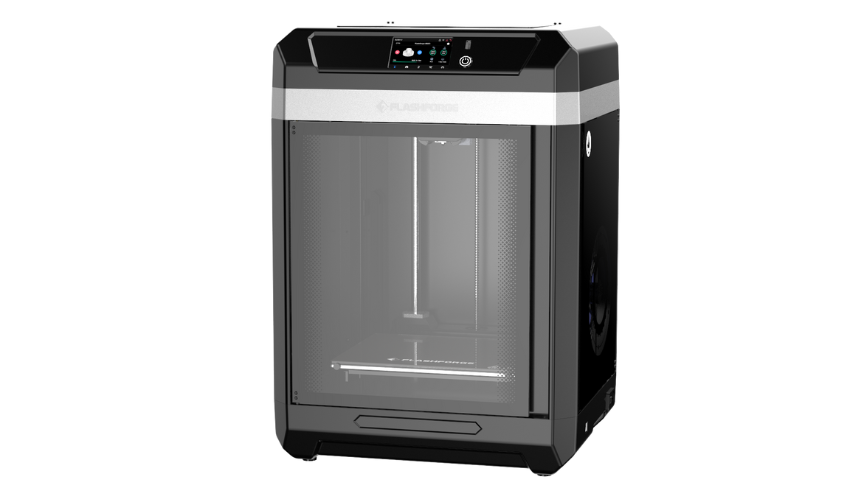 PrintersGuider 3, the New Professional 3D Printer from FlashforgeChinese manufacturer Flashforge has announced the launch of a new professional FDM 3D printer, the Guider 3. Designed for the production needs of small and medium-sized businesses, the machine is fast, with a compact and lightweight design to ensure flexible…